The best graphics cards GPUs for gaming laptop buyers in 2026 are judged less by the model name alone than by the laptop’s GPU power limit, cooling system, VRAM, and intended resolution: a high-power RTX 5060 can deliver better value than a low-power RTX 5070 in a thin chassis.
Our top picks
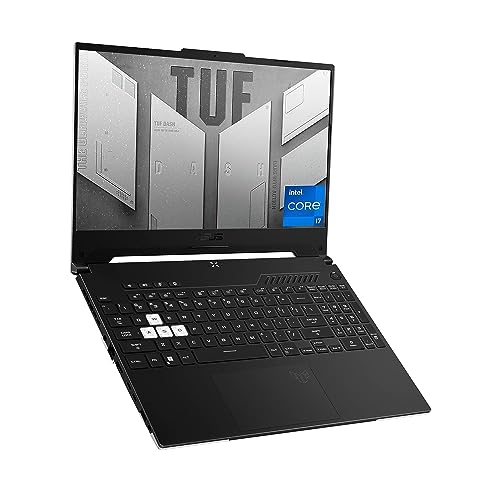 ASUS TUF Dash 15
- Gameplay graphics are silky smooth with the NVIDIA…
- A MUX Switch lets the GPU communicate directly…
- Use your gaming laptop to stream and multi-task…
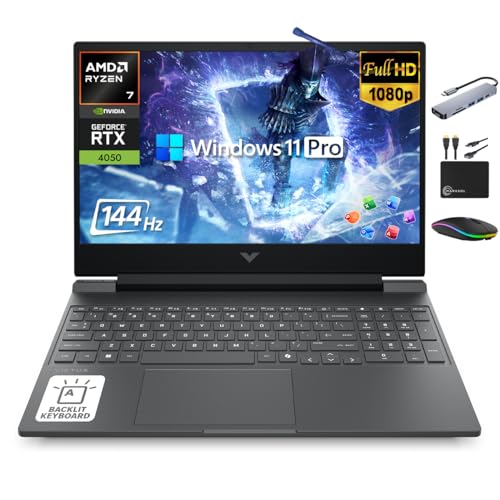 HP Victus 15.6" Gaming Laptop 144Hz 2025-2026
- 【32GB RAM + 1.5TB Storage (1TB SSD +…
- 【HIGH PERFORMANCE AMD Ryzen 7 7445HS + NVIDIA…
- 【15.6" FHD IPS 144Hz display】Reduce frustrating lag and…
 NIMO 17.3 FHD AI Gaming Laptop
- 【Ryzen 9 8945H for Heavier Multitasking】Powered by AMD…
- 【AMD Integrated Graphics for Everyday Visual Work】AMD integrated…
- 【32GB 5600MHz DDR5 RAM & 1TB SSD】With 2…
| Product | Key specs | |
|---|---|---|
| ASUS TUF Dash 15 | Gameplay graphics are silky smooth with the NVIDIA… A MUX Switch lets the GPU communicate directly… Use your gaming laptop to stream and multi-task… | Check price |
| HP Victus 15.6" Gaming Laptop 144Hz 2025-2026 | 【32GB RAM + 1.5TB Storage (1TB SSD +… 【HIGH PERFORMANCE AMD Ryzen 7 7445HS + NVIDIA… 【15.6" FHD IPS 144Hz display】Reduce frustrating lag and… | Check price |
| NIMO 17.3 FHD AI Gaming Laptop | 【Ryzen 9 8945H for Heavier Multitasking】Powered by AMD… 【AMD Integrated Graphics for Everyday Visual Work】AMD integrated… 【32GB 5600MHz DDR5 RAM & 1TB SSD】With 2… | Check price |
 ASUS ROG Strix G16 ASUS ROG Strix G16 | Experience next-level performance with Windows 11 Home, an… Multitask seamlessly with 32GB of DDR5-5600MHz memory and… Immerse yourself in stunning visuals with the ultra-fast… | Check price |
As an Amazon Associate we earn from qualifying purchases at no extra cost to you.
What to compare before choosing a laptop GPU
Laptop graphics processors are not equivalent to their desktop versions, and the same laptop GPU can perform very differently from one notebook to another. Manufacturers configure each chip within a power range, then combine it with different cooling hardware, memory, displays, and firmware limits.
For a useful comparison, check these four specifications in the exact laptop configuration:
- Total graphics power: the GPU’s configured wattage, often shown as TGP or a similar manufacturer specification.
- VRAM: dedicated graphics memory, which affects high-resolution textures, ray tracing, and future game support.
- Cooling capacity: heat pipes, vapor chambers, fan size, exhaust area, and whether the system can sustain its rated power.
- Target resolution: 1080p, 1600p, or 4K changes which GPU tier makes financial and practical sense.
Features such as DLSS, frame generation, ray tracing, and AV1 video encoding can improve the experience, but they should supplement—not replace—an evaluation of native rendering performance and memory capacity.
Laptop GPU comparison by power and VRAM
| GPU family | Typical laptop power range | VRAM | Best-fit resolution | Practical position in 2026 |
|---|---|---|---|---|
| GeForce RTX 4050 Laptop | 35–115 W | 6 GB | 1080p | Entry-level modern gaming |
| GeForce RTX 4060 Laptop | 35–140 W | 8 GB | 1080p to 1600p | Strong value when priced well |
| GeForce RTX 4070 Laptop | 35–140 W | 8 GB | 1600p | Premium mid-range, but configuration-sensitive |
| GeForce RTX 5060 Laptop | 45–115 W | 8 GB | 1080p to 1600p | Current mainstream choice |
| GeForce RTX 5070 Laptop | 50–115 W | 8 GB | 1600p | Efficient upper-mainstream option |
| GeForce RTX 5070 Ti Laptop | 60–140 W | 12 GB | 1600p | Better long-term balance for demanding games |
| GeForce RTX 5080 Laptop | 80–175 W | 16 GB | 1600p to 4K | High-end enthusiast gaming |
| GeForce RTX 5090 Laptop | 95–175 W | 24 GB | 1600p to 4K | Maximum laptop GPU tier |
These are broad configuration ranges rather than guaranteed performance figures. A 140 W GPU normally has more sustained performance headroom than a 60 W version of the same family, but the result also depends on processor power sharing, temperature limits, memory speed, and the game.
Best GPU choice by gaming situation
| Buyer situation | Recommended GPU tier | Why | What to avoid |
|---|---|---|---|
| Competitive 1080p gaming on a budget | RTX 4050 or RTX 5060 | Enough performance for high frame rates with sensible settings | Paying extra for a 4K screen |
| New AAA games at 1080p | RTX 5060 or RTX 5070 | Better headroom for ray tracing and demanding presets | 6 GB VRAM if the laptop is intended for many years |
| 1600p gaming on a 16-inch laptop | RTX 5070 Ti or high-power RTX 5070 | 12 GB VRAM and stronger sustained performance suit the resolution | Low-power GPUs paired with high-refresh 1600p displays |
| Ray tracing and texture-heavy games | RTX 5070 Ti or RTX 5080 | Extra compute performance and memory reduce compromises | Choosing only by advertised boost clock |
| 4K gaming or creator workloads | RTX 5080 or RTX 5090 | 16–24 GB VRAM provides more room for high-resolution assets | Thin designs that cannot sustain high wattage |
| Frequent travel | RTX 5060 or efficient RTX 5070 in a 14–16-inch chassis | Lower weight, heat, and charger size are easier to live with | Very high-power models if portability matters daily |
Power limit matters more than the badge suggests
Consider two laptops using the same RTX 5070 Laptop GPU. One may configure it at roughly 60 W in a slim 14-inch chassis, while another gives it around 115 W in a thicker 16-inch model. The second machine generally has more thermal and electrical headroom, particularly during long gaming sessions.
Do not compare wattage in isolation. A high power limit is useful only if the cooling system can maintain it. Look for multiple heat pipes or a vapor chamber, separate CPU and GPU cooling paths where available, two substantial fans, and unobstructed intake vents. Reviews and manufacturer specifications should also distinguish between maximum dynamic power and a lower sustained operating limit.
For a rough value calculation, suppose a higher-power laptop costs $250 more and delivers an average 20% higher frame rate in the games you play. If the cheaper model produces 60 frames per second, the faster configuration may reach approximately 72 frames per second. That is about 12 additional frames per second for $250, or roughly $20.83 per extra average frame per second. This is not a universal performance metric, but it illustrates why a modest price premium can be worthwhile when both machines have similar screens and build quality.
Resolution, refresh rate, and VRAM
A 1080p display places less rendering demand on a GPU than a 2560 × 1600 display. A 1600p panel contains about 78% more pixels than 1080p, so the graphics processor must work harder even before higher texture quality or ray tracing is enabled.
For 1080p esports gaming, an RTX 4050 can be sufficient, especially when paired with a 144 Hz or 165 Hz panel. For visually demanding single-player games, an RTX 5060 offers a more comfortable balance. At 1600p, the RTX 5070 Ti is more attractive because its 12 GB of VRAM gives additional room for high-resolution textures and future releases.
Eight gigabytes remains usable for many games, but it leaves less margin at 1600p with ultra textures and ray tracing. Six gigabytes is best treated as a value-oriented 1080p capacity. If you intend to keep the laptop for four or five years, prioritize 12 GB or more when the price difference is reasonable.
Cooling and ownership realities
Gaming laptops accumulate dust in the intake mesh, fans, and heatsink fins. Restricted airflow can cause lower sustained clocks, louder fans, and inconsistent frame rates. Keep the rear and underside vents clear, use a hard surface rather than bedding, and inspect the intake every few months in a dusty environment.
Common mistakes include buying a high-refresh 1600p panel with an entry-level GPU, assuming every RTX 5070 has the same performance, and ignoring the charger. A 175 W high-end GPU may require a large power adapter, adding noticeable travel weight. Some laptops also share thermal capacity between the CPU and GPU, so a powerful processor does not automatically improve gaming performance.
Monitor long-session behavior rather than a short benchmark peak. A laptop that briefly reaches a high boost clock but then reduces power after ten minutes may be slower in practice than a slightly less ambitious model with stronger cooling. Check sustained gaming results, operating temperatures, fan noise, and whether performance mode requires the laptop to be plugged in.
Which GPU offers the best value?
The RTX 5060 is the safest mainstream recommendation for buyers targeting 1080p or moderate 1600p gaming, provided the laptop uses a sensible power limit and has 8 GB of VRAM. The RTX 4060 remains attractive when heavily discounted, especially in a well-cooled model.
For a premium 1600p machine, the RTX 5070 Ti is a more convincing step up than a low-power RTX 5070 because its 12 GB memory capacity and higher performance are better matched to the display. The RTX 5080 is appropriate when ray tracing, high refresh rates, or demanding creative workloads justify the price. The RTX 5090 Laptop is a specialist choice: its cost, chassis size, heat, and charger weight make sense mainly for buyers who want the fastest available laptop configuration and accept desktop-like compromises.
Final buying checklist
- Confirm the exact GPU wattage, not just the GPU family.
- Match the GPU to the panel resolution and refresh rate.
- Prefer 8 GB VRAM for modern 1080p gaming and 12 GB or more for long-term 1600p use.
- Check sustained performance and cooling, not only maximum boost frequency.
- Include charger size, fan noise, weight, and upgrade limitations in the total ownership decision.
- Compare the complete laptop configuration: GPU, CPU, RAM, display, storage, and cooling all affect gaming value.