Key takeaways
- Five car thermostats compared by OE opening temperature, design and fitment, including fail-safe and integrated housing units for modern engines.
Disclosure: As an Amazon Associate, I earn from qualifying purchases.
A thermostat is a small part with an outsized job: holding your engine at the one temperature it was designed to run at. Stuck closed, it overheats the engine. Stuck open, the engine runs cold, the heater blows lukewarm air, fuel economy drops and a coolant-temperature code often follows. The five picks below cover the main buying situations: a premium conventional stat, a standard OE-style replacement, a fail-safe design, and two integrated housing units for modern engines whose thermostat no longer comes out on its own. Every pick carries a common factory opening temperature, because matching the original spec matters far more than any brand claim.
How to Choose
Match the OE opening temperature exactly. The stamped temperature (180, 190, 195, 203 degrees Fahrenheit and so on) is where the stat starts to open, and your engine was calibrated around that figure. A “colder” thermostat is not an upgrade on a modern car: the ECU expects design temperature for correct fueling, emissions control and oil moisture burn-off. Run cooler and you get worse heater output, richer running and often a P0128 code. Nor can a colder stat fix genuine overheating: fully open, any thermostat stops being the system’s restriction.
Diagnose before you buy. Overheating has many causes: low coolant, a failing water pump, a clogged radiator, a dead fan, a blown head gasket. A thermostat is only one suspect. The honest test is free: suspend the old stat in a pan of water with a cooking thermometer, heat slowly, and note when it starts to open and whether it opens fully. On spec means your problem is elsewhere.
Know which type your car uses. Older engines take a bare wax-pellet thermostat in a separate housing. Many modern engines use an integrated unit, built into a plastic or aluminum housing and replaced as one assembly. Some newer designs are electronically controlled (MAP thermostats), with a heating element the ECU uses to open the stat early under load; those need the correct electronic unit, not a plain mechanical one. The parts are not interchangeable.
Standard vs fail-safe. A conventional thermostat that fails usually sticks wherever the wax motor dies, often closed. A fail-safe adds a second stage: if temperature climbs far beyond normal because something else failed, a piston locks the valve permanently open so coolant keeps circulating, which can save an engine during a fan or pump failure. The trade-offs: once locked open a fail-safe is spent, some drivers report them locking after a severe spike rather than a true failure, and a standard stat that fails closed at least announces itself on the gauge. Neither design is wrong; choose with your eyes open.
Plan the small parts. Always fit a new gasket or O-ring, clean both mating surfaces, and note whether your stat has a jiggle valve (a small pin in the flange). It goes at the top, usually 12 o’clock, so air can escape past the closed stat during filling.
The 5 Best Thermostats for Cars
1. Stant 45358 SuperStat Premium Thermostat

Specs:
– Start-to-open temperature: 180°F (82°C)
– Design: SuperStat V-notch, non-linear valve for gradual flow control
– Piston: 25% larger diameter than a standard Stant thermostat
– Flange: stainless steel, 54 mm diameter, thicker than standard
– Gasket: not included; order the application-specific gasket
The SuperStat suits an older engine calling for a 180-degree, 54 mm stat whose owner wants steadier gauge behavior. Instead of snapping open and shut, the V-notch meters flow progressively, reducing the temperature cycling a cheap stat shows on the gauge. The oversized piston adds force to open against coolant pressure at high rpm and load. It is a bare thermostat, so budget for the correct gasket, and confirm the 180 rating matches your factory spec; classic applications for this flange size ran 180 or 195, which are not substitutes.
2. MotoRad 270-180 Engine Coolant Thermostat

Specs:
– Start-to-open temperature: 180°F (82°C)
– Construction: stainless steel with a copper-case wax element
– Dimensions: 1.91 x 1.91 x 1.39 inches
– OE interchange numbers: Honda 19301-P07-306, Toyota 90916-03079
– Fit type: vehicle-specific OE replacement
MotoRad’s standard line is the straightforward OE-style replacement: a copper case and wax compound formulated for a fast, consistent response, in an original-equipment design that drops into the factory housing. This 270-180 covers Honda and Toyota applications specifying a 180-degree stat. Nothing exotic, and that is the point: for a daily driver with a confirmed fault, a standard stat from an OE supplier in the correct temperature and flange size beats no-name and premium parts alike.
3. MotoRad 7228-195 Fail-Safe Thermostat

Specs:
– Start-to-open temperature: 195°F (91°C)
– Design: Fail-Safe two-stage; locks fully open after a severe overheat event
– Construction: stainless steel
– Fitment: wide range of GM cars and trucks using the 195-degree spec
The 7228-195 is the fail-safe option for the many GM applications built around a 195-degree stat. In normal service it behaves like any other thermostat. If another failure drives temperature far past normal, the second stage locks the valve wide open so coolant keeps moving. Understand the bargain: a locked-open fail-safe will not reset, so an overheat from a failed fan still ends with a thermostat replacement, and the engine runs cold until you fit it.
4. Dorman 902-3035HP OE FIX Thermostat Housing Assembly

Specs:
– Type: integrated thermostat and housing assembly (thermostat not serviced separately)
– Housing material: aluminum, an OE FIX upgrade over the original plastic housing
– Includes: thermostat and sealing gasket
– Applications: select Chrysler and Dodge models with the 3.6L Pentastar V6 (200, Town & Country, Grand Caravan, Journey, Avenger)
On the 3.6L Pentastar, the factory thermostat lives inside a plastic housing known to warp and crack with age and heat cycles, and the stat is not sold as a drop-in part for it. Dorman’s OE FIX assembly replaces the whole unit with an aluminum housing and a factory-calibration thermostat already installed: the correct way to service an integrated design, rather than prying a bare stat into a housing never meant to open. Match the assembly to your exact year and model; Pentastar applications use more than one housing shape and outlet angle.
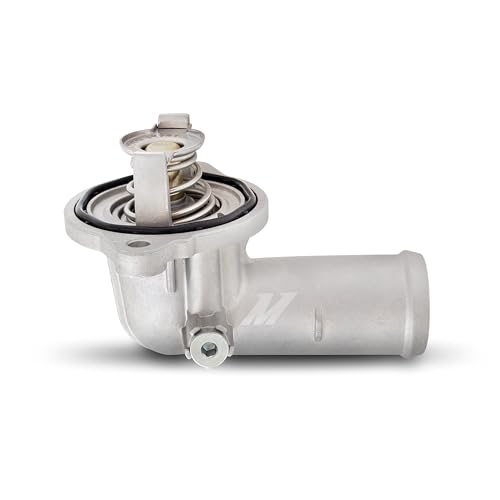
5. Mishimoto MMTS-WRA-12E Thermostat with Housing
Specs:
– Opening temperature: 194°F (90°C), the factory rating for the application
– Applications: Jeep Wrangler JK 2012-2018 with the 3.6L V6
– Type: thermostat with housing, direct-fit assembly
– Seal: new gasket included
– Warranty: Mishimoto lifetime warranty
The Wrangler JK’s 3.6L uses the same integrated layout, and Mishimoto’s assembly is a direct-fit replacement keeping the stock 194-degree rating rather than chasing a lower number. That restraint matters in a market full of “racing” thermostats far colder than stock: in a street-driven JK, factory temperature keeps the ECU, heater and oil strategy working as designed. Fit it with its new seal, torque bolts evenly in stages, and bleed the system thoroughly; the Pentastar circuit traps air after being opened.
Usage and Buying Notes
Work on a completely cold engine, full stop. Never loosen a housing or radiator cap on a hot, pressurized system: coolant above water’s boiling point can erupt and cause severe scalds. Drain enough coolant to drop the level below the thermostat before opening the housing. Coolant is sweet-tasting and highly toxic to pets, so wipe up every spill and store drained coolant sealed and labeled.
When the housing comes off, scrape away all old gasket material and clean both faces; most “bad new thermostat” leaks are old gasket residue or a warped plastic housing. Fit the new stat spring-toward-engine, jiggle valve at the top. Tighten housing bolts evenly to the specified torque, especially on plastic housings, which crack if one bolt is run down hard first.
Refilling is where most DIY thermostat jobs go wrong: air trapped behind a closed stat can overheat an engine within minutes even with a perfect new part. Fill slowly, use the factory bleed screws if fitted, run the engine with the heater on full hot until the stat opens and the level settles, then recheck after a full heat cycle and again next morning.
Finally, judge by behavior: a healthy system warms up promptly, holds a steady gauge and gives strong cabin heat. If temperature still climbs, look elsewhere: pump, radiator, fan, hoses, head gasket.
FAQ
Is a 160 or 180 degree thermostat an upgrade for a stock car?
No. Your engine was calibrated for its factory temperature, and the ECU manages fueling and emissions around that figure. A colder stat runs the engine below its design point, weakens heater output, can trigger a P0128 code, and adds no cooling capacity, because a fully open thermostat is not the system’s restriction at any rating.
How do I test a thermostat before installing or condemning it?
Suspend it in a pan of water with a thermometer, clear of the pan’s bottom, and heat slowly. It should begin opening at its stamped temperature and be fully open roughly 15 to 20 degrees above it. If it never opens, opens far off spec, or fails to close as the water cools, replace it.
What is the difference between a fail-safe and a standard thermostat?
A standard stat opens and closes at its rated temperature, and if its wax motor dies it can stick closed. A fail-safe adds a second stage that locks the valve permanently open if temperature climbs far beyond normal, keeping coolant circulating during another component’s failure. The lock does not reset, so a triggered fail-safe must be replaced.
Can I replace just the thermostat inside an integrated housing?
Usually not. On integrated designs the thermostat is built into the housing assembly, and the housing itself often warps or cracks. Replace the complete assembly with the correct unit for your engine, using the new gasket or seal supplied with it.
Why is my engine overheating right after a thermostat change?
Usually trapped air: a pocket behind the new stat blocks circulation and stops the stat sensing true coolant temperature. Bleed the system using the factory procedure and bleed points, confirm the stat went in spring-toward-engine, and verify the rating matches the original before suspecting the part.
Conclusion
The right thermostat matches your engine’s factory temperature, flange or housing design, and control type: the Stant SuperStat for a premium bare stat, the MotoRad 270-180 for a standard OE-style replacement, the MotoRad Fail-Safe for locked-open protection, and a Dorman or Mishimoto assembly for an integrated design. Test the old part before blaming it, bleed the air out afterward, and the system should hold temperature as intended.
More from Amazon
Programs that pair well with the guide above. Offers and eligibility are set by Amazon and may change.
Free shipping on eligible items, Prime Video and more. Eligible new members can start with a free trial.
Start a Prime free trialAudiobooks and podcasts to listen to on the go. Eligible new members can start with a free trial.
Try Audible freeAd-free music streaming. Eligible new subscribers can start with a free trial.
Try Music Unlimited freeA free business account with business pricing and bulk-buying tools for work, shop or home office.
Create a business accountAs an Amazon Associate we earn from qualifying purchases.