Key takeaways
- Compare the best crankshaft position sensors from Delphi, ACDelco, Bosch and more, with fitment checks, relearn tips and common failure signs.
Disclosure: As an Amazon Associate, I earn from qualifying purchases.
The crankshaft position sensor is one of the most important inputs your engine computer has. It reports crankshaft position and engine speed, and the computer uses that signal to time spark and fuel injection. When the sensor fails, the result is often a crank-but-no-start condition, random stalling at lights, a tachometer that drops to zero while driving, or a check engine light with codes in the P0335 to P0339 range.
Before you buy anything, though, understand that those same symptoms have many other causes. A weak battery, a failing fuel pump, ignition problems, damaged wiring, or even a stretched timing chain can all mimic a bad crank sensor. The picks below cover the most common applications with OE or OE-supplier parts, but they only fix the car if the sensor is actually the fault.
How to Choose
Confirm the diagnosis first. A stored crank sensor code is a starting point, not proof. The strongest confirmation is a scan tool showing zero or erratic RPM while cranking, or an oscilloscope showing a weak, noisy, or missing waveform. Swapping parts on a guess gets expensive fast, especially when the real fault is a corroded connector or a chafed harness.
Match the exact application. Crank sensors are not interchangeable. Match the OE part number or a verified cross-reference for your year, make, model, and engine. On GM LS engines, for example, the reluctor wheel tooth count matters: 24x and 58x engines use different sensors, and installing the wrong one guarantees a no-start.
Know your sensor type. Most modern sensors are Hall effect designs with a three-wire connector that output a clean digital square wave. Older magnetic variable-reluctance sensors use two wires and produce an analog signal whose strength depends on the air gap between the sensor tip and the reluctor ring. Order the type your engine was built with.
Buy OE or OE-supplier brands. This is one part where cheap no-name sensors are a false economy. Out-of-box failures and weak signals that fade when hot are common with bargain sensors, and the labor to do the job twice costs more than the part saved. Delphi, ACDelco, Bosch, Denso, and NTK supply sensors to the factories, and their aftermarket parts are the safer buy.
Check relearn requirements. Some engines, notably many GM applications, need a crankshaft position variation relearn with a capable scan tool after sensor replacement. Skip it and the computer may set misfire codes even with a good sensor installed.
The 5 Best Crankshaft Position Sensors
1. Delphi SS10206 Engine Crankshaft Position Sensor

Specs:
– Part number: Delphi SS10206
– Replaces: ACDelco 213-354, GM 12560228, Standard Motor Products PC278 and PC278T, Dorman 917-754
– Fitment: GM LS and Vortec V8 trucks and SUVs, including Silverado, Sierra, Tahoe, Suburban, and Escalade applications
– Output: Digital signal engineered for a high signal-to-noise ratio
– Design: OE-quality construction with a wide operating temperature range and heat-resistant materials
Delphi supplied sensors to GM on the assembly line, and the SS10206 is the OE-supplier replacement for a huge number of LS-powered trucks and SUVs. Its listing emphasizes accurate crankshaft position and engine speed data through a precision-designed sensing gap, which is exactly what these engines need to avoid hot-restart and random-stall complaints. If your GM truck cranks with no tach movement, confirm the waveform, match your reluctor tooth count, and this is the sensor to install.
2. ACDelco Gold 213-4761 Engine Crankshaft Position Sensor

Specs:
– Part number: ACDelco 213-4761
– GM Original Equipment number: 88864687
– UPC: 707773715260
– Function: Monitors crankshaft position and rotational speed for the engine control module
– Line: ACDelco Gold, GM Original Equipment
For GM owners who want the part the factory trusts, the 213-4761 is a GM Original Equipment sensor sold under the ACDelco Gold line. ACDelco describes its crankshaft position sensors as GM-recommended replacements for the vehicle’s original components, built to the same connector, bracket, and signal specifications as the part that came off. Fitment on ACDelco sensor numbers is highly application-specific, so verify your exact year, model, and engine against the OE number before ordering.
3. Bosch 0261210170 Original Equipment Crankshaft Position Sensor
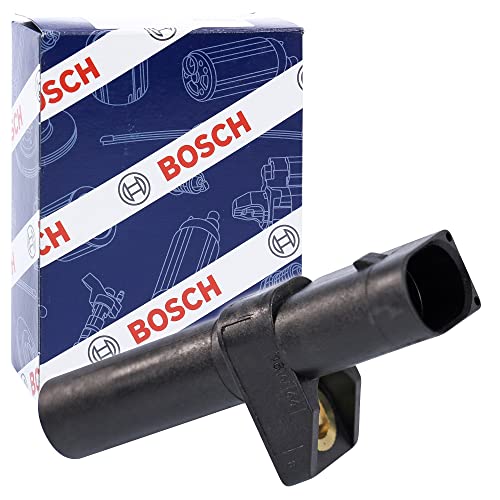
Specs:
– Part number: Bosch 0 261 210 170
– Replaces OE numbers: 0031532728, 0031532828, 05080352AA, 5080352AA, 6519050000, MN960274, MN960372
– Cross-reference: Standard Motor Products PC497
– Fitment: Select Mercedes-Benz C, CL, CLK, CLS, E, G, ML, R, S, SL, and SLK models, including AMG applications
– Design: Actual OE sensor with precise digital measurement of rotational speed across a wide temperature range
A failing crank sensor is a classic cause of a Mercedes that cranks endlessly when hot and starts fine when cold, and the Bosch 0261210170 is the actual original equipment part for a long list of Mercedes-Benz models. Bosch notes that this sensor is not an imitation but the same part fitted at the factory, engineered for the underhood heat these engines produce. Cross-check your old sensor’s OE number against the replacement list above, since Mercedes used several similar-looking sensors across model years.
4. A-Premium 39180-2B000 Engine Crankshaft Position Sensor

Specs:
– Reference numbers: 39180-2B000, PC934, 5S12470, SU13885, Dorman 907-787
– Fitment: Hyundai Elantra 2011-2020, Accent 2012-2019, Tucson 2013-2018, and Veloster; Kia Soul 2010-2019, Forte, and Rio 2012-2019; Dodge Attitude 2011-2014
– Engines: 1.6L, 1.8L, and 2.0L four-cylinder applications
– Connector: 2-pin blade terminals, black housing, one sensor per box
– Coverage: Backed by a one-year unlimited-mileage guarantee per the listing
Hyundai and Kia’s 39180-2B000 sensor covers an enormous number of Elantras, Souls, Fortes, and Rios, and heat-related failure on these cars typically shows up as stalling that restarts after a cool-down. This A-Premium replacement matches the factory reference numbers and connector, and the listing backs it with a one-year unlimited-mileage guarantee. It is the value pick on this list, so confirm the signal with a scan tool after installation and keep your receipt in case the car tells you the part is not up to the job.
5. Genuine Hyundai 39180-2B000 Crankshaft Position Sensor

Specs:
– Part number: Genuine Hyundai/Kia OEM 39180-2B000
– Fitment: Hyundai and Kia models using the 39180-2B000 sensor, including Elantra, Accent, Tucson, Veloster, Soul, Forte, and Rio applications
– Type: Factory original equipment part
– Contents: One crankshaft position sensor
If your Hyundai or Kia is a keeper, the genuine factory 39180-2B000 removes all doubt about signal quality and connector fit. This is the same part the dealer sells, made to the original specification for these engines. It pairs naturally with the A-Premium pick above: same application, two philosophies. Choose the genuine part when the car is hard to access, when a previous aftermarket sensor has already failed, or when you simply want to do this job once.
Usage and Buying Notes
Disconnect the negative battery cable before you start, and let the engine cool fully. Many crank sensors sit low on the block or near the bell housing, close to hot exhaust parts, and burns are a real risk on a recently driven car.
While the old sensor is out, inspect what it was reading. A damaged, cracked, or rust-jacked reluctor or tone ring will defeat a brand-new sensor, because the air gap and tooth pattern matter as much as the sensor itself. Check the connector pins for green corrosion and the harness for chafing where it passes near brackets and exhaust components. A surprising number of “bad sensors” are actually bad connections.
After installation, clear the codes and watch live RPM data on a scan tool during cranking and a full warm-up. If your engine requires a crankshaft variation relearn, perform it or have a shop do it; otherwise the computer may keep setting misfire codes with a perfectly good sensor. Finally, remember that crank and cam sensor codes are often confused: some engines set a camshaft code when the real fault is the crank sensor or stretched timing components throwing the correlation between the two signals off. Diagnose the pair together before replacing either one twice.
FAQ
What are the symptoms of a failing crankshaft position sensor?
The classic signs are cranking with no start, random stalling that may restart after cooling, a tachometer that drops out while driving, rough running, and codes from P0335 to P0339. Because fuel pump, ignition, battery, and wiring faults can produce identical symptoms, confirm with a scan tool or oscilloscope before replacing parts.
Can I drive with a bad crankshaft position sensor?
It is not a good idea. A sensor that is failing intermittently can stall the engine without warning in traffic, leaving you without power steering or brake assist momentum. A car that stalls randomly or refuses to hot-restart should be diagnosed promptly rather than driven until it quits completely.
Why does my car still not start after replacing the crank sensor?
Common reasons include a wrong sensor for the reluctor tooth count, a damaged tone ring, corroded connector pins, a harness fault, a required relearn that was not performed, or the original problem never being the sensor at all. Go back to live data: if the computer still shows no RPM while cranking, trace the signal path rather than fitting another sensor.
Does a new crankshaft position sensor need a relearn procedure?
Some engines do. Many GM applications require a crankshaft position variation relearn with a capable scan tool so the computer can accurately detect misfires. Without it, the car may run but set misfire codes. Check the service information for your exact vehicle after any crank sensor replacement.
Is a crankshaft position sensor the same as a camshaft position sensor?
No. The crank sensor reports crankshaft position and engine speed, while the cam sensor reports which stroke each cylinder is on. The computer compares the two signals, so a fault in one can set a code for the other, and a stretched timing chain can confuse both. They are related, but they are different parts in different locations.
Conclusion
A crankshaft position sensor is a small part with total authority over whether your engine runs, which is exactly why diagnosis matters more than the purchase. Confirm the signal fault, match the OE number and reluctor type, and buy from an OE or OE-supplier brand such as Delphi, ACDelco, Bosch, or the vehicle maker’s genuine parts line. Do that, inspect the ring and connector while you are in there, and complete any required relearn, and the replacement should be a one-time fix rather than the start of a parts-swapping habit.
More from Amazon
Programs that pair well with the guide above. Offers and eligibility are set by Amazon and may change.
Free shipping on eligible items, Prime Video and more. Eligible new members can start with a free trial.
Start a Prime free trialAudiobooks and podcasts to listen to on the go. Eligible new members can start with a free trial.
Try Audible freeAd-free music streaming. Eligible new subscribers can start with a free trial.
Try Music Unlimited freeA free business account with business pricing and bulk-buying tools for work, shop or home office.
Create a business accountAs an Amazon Associate we earn from qualifying purchases.