Key takeaways
- Compare the best radiator flush and cooling system cleaners for rust, scale and sludge, plus honest limits, safe use steps and disposal rules.
Coolant does not last forever. As its corrosion inhibitors wear out, rust, mineral scale and oily sludge build up inside the radiator, heater core and engine water jacket. The temperature gauge creeps higher, cabin heat weakens, and the fluid in the overflow tank turns the color of weak tea. A chemical radiator flush loosens and suspends those deposits so they drain out instead of staying behind to contaminate the fresh fill.
Disclosure: As an Amazon Associate, I earn from qualifying purchases.
Be clear about what these products are, though. A flush cleaner removes loose scale, light rust and sludge. It cannot unclog a radiator core whose tubes are physically blocked, repair a failing water pump or stuck thermostat, or restore a system run on plain tap water for a decade. Used as part of a coolant change on a system that is dirty but mechanically sound, the five cleaners below cover everything from a quick maintenance flush to a multi-day rust treatment.
How to Choose
Match the cleaner to the contamination. Rust-colored water calls for a rust-focused formula (Thermocure or BlueDevil). White or tan mineral crust points to a descaling cleaner (Liqui Moly, Prestone). Milky, oily residue after an oil cooler or head gasket repair needs a degreasing flush (BlueDevil again) — a plain descaler will not cut oil.
Check the working time. Some cleaners work during a 10 to 30 minute idle with the heater on. Others are designed to circulate while you drive for hours or days, which suits heavier rust but demands more planning. Pick the schedule you will actually follow.
Confirm material compatibility. Modern systems mix aluminum heads and radiators with plastic tanks and rubber hoses. Every pick here is non-acidic or acid-free and stated safe for cooling system metals and plastics, but read the label against your owner’s manual anyway, especially on older copper-and-brass radiators.
Size the dose to your system. A 300 ml concentrate may treat up to about 10 liters of cooling water, while a ready-to-use quart treats one typical system of up to 3 gallons. Large truck and SUV systems may need a second bottle — check the dosage on the label rather than guessing.
Plan the whole job, not just the bottle. You also need distilled water, the correct fresh coolant, a drain pan sized for the full system capacity, and a sealed container for the used fluid.
The 5 Products
1. Prestone AS105 Total Cooling System Cleaner — Best All-Round Maintenance Flush

Specs:
– 22 fl oz bottle, model AS105 (part AS105Y)
– 2-in-1 formula: light flush or heavy-duty cleaning modes
– Non-toxic, non-acidic formula, safe for all cooling system metals
– Treats the radiator, heater core and hoses in one pass
Prestone’s AS105 is the default recommendation for a system that is due for a coolant change and looks tired rather than ruined. Its two-mode approach is genuinely useful: a short run for a light flush at routine service, or an extended cleaning cycle when deposits are heavier. The non-acidic formula is a low-anxiety choice for mixed-metal systems with aluminum components, and it works on the whole circuit — radiator, heater core and hoses — drawing metal oxides into solution so they leave with the drain water. For thick rust, a dedicated rust treatment below works harder, but for regular maintenance this is the bottle most owners should reach for.
2. BlueDevil 00203 Radiator Flush and Oil Degreaser — Best for Oil-Contaminated Systems

Specs:
– 32 fl oz (1 quart) bottle, part 00203
– 3-in-1 formula: radiator flush, oil degreaser and rust remover
– Dual-action cleaning for grease, oil residue, rust and build-up
– Multi-vehicle formula, one bottle per system
Most flushes assume the dirt in your cooling system is mineral or rust. BlueDevil’s 3-in-1 is built for the other failure mode: oil. If a leaking oil cooler, a repaired head gasket or a transmission cooler fault has left a greasy film or milky scum in the coolant, a descaler alone will smear it around rather than remove it. This formula degreases while it flushes, and also tackles rust and general build-up, so it covers mixed contamination in a single treatment. Run it per the label directions with the heater on so the heater core gets cleaned too. If your system is oil-free, a simpler cleaner is enough — but after any oil-in-coolant event, this is the appropriate tool.
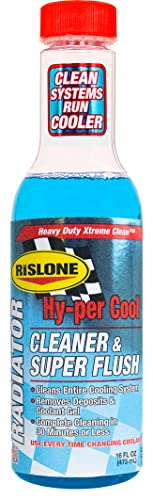
3. Rislone Hy-per Cool Radiator Cleaner and Super Flush — Best Fast Treatment
Specs:
– 16 fl oz bottle, part HFL400
– Fast-acting cleaner designed to remove deposits that cause overheating
– One bottle treats a typical passenger-car cooling system
– Safe for aluminum, plastic and other cooling system materials
Rislone’s Hy-per Cool Cleaner and Super Flush suits owners who want the cleaning step done in a single short session rather than a drawn-out drive cycle. Drain the old coolant, refill with water plus the cleaner, run the engine so it circulates through the block, radiator and heater core, then drain, rinse and refill with fresh coolant. It targets the deposit build-up that insulates heat-transfer surfaces and raises operating temperatures. It is a maintenance-strength cleaner, not a rescue treatment: heavy rust or a partially blocked core needs the stronger, slower options on this list — or a radiator shop, not a bottle.
4. Liqui Moly Radiator Cleaner 2051 — Best Concentrate for Scale and Lime

Specs:
– 300 ml concentrate can, SKU 2051
– One can treats 4 to 10 liters of cooling water
– Contains no acids or alkalis; pH around 8.7
– Run time of 10 to 30 minutes at operating temperature
– Neutral toward rubber and plastics; compatible with antifreeze
Liqui Moly’s cleaner is a concentrate aimed squarely at lime scale, oil and grease residues and sludge — the deposits left by hard tap water top-ups and overdue coolant. One small 300 ml can treats up to 10 liters of cooling water, which covers most cars. Add it, set the cabin heater to maximum so it circulates through the heater core, idle at operating temperature for 10 to 30 minutes depending on contamination, then drain and rinse thoroughly before refilling. Its acid-free, alkali-free chemistry is gentle on seals and hoses — a good fit for European vehicles and any system needing descaling without aggressive chemistry.
5. CRC Thermocure Cooling System Rust Remover — Best for Heavy Rust

Specs:
– 32 fl oz bottle, model TC001
– Treats cooling systems up to 3 gallons
– Water-based chelation formula (Evapo-Rust technology)
– Non-toxic, non-corrosive and non-flammable
– Removes rust, scale and deposits without acids
Thermocure is the specialist for the worst case short of replacement: a system full of orange, rusty water, common on older vehicles and iron-block engines run with too much water and too little coolant. Instead of acid, it uses the same water-based chelation chemistry as Evapo-Rust, binding to iron oxide and lifting rust away while leaving sound metal, plastic and rubber alone. The trade-off is time: it cleans over an extended period of normal driving, so plan to run it for days, until the drained fluid comes out clear. It will not reopen tubes completely plugged with compacted debris, but for widespread surface rust it does what quick flushes cannot.
Usage and Safety Notes
Start with a cold engine — always. Never open the radiator cap or a drain on a hot, pressurized system; coolant at operating temperature can erupt and cause severe scalds. Let the vehicle sit for several hours, confirm the upper hose is cool and squeezable, and only then open anything.
Work methodically: drain the old coolant into a pan, close the drain, add the cleaner with clean water, run the engine with the heater on maximum so the heater core is flushed too, let everything cool again, drain, and rinse with water until it runs clear. Refill with the exact coolant type and mixture your manufacturer specifies, bleed air per the service procedure, and recheck the level after the first drive.
Handle every drop of drained fluid as hazardous waste, because it is. Used coolant is toxic — ethylene glycol tastes sweet and is lethal to pets and wildlife in small amounts. Wipe up spills immediately, store drained fluid in a sealed, labeled container, and take it to a hazardous waste facility or recycling point that accepts coolant, per your local rules. Never pour it on the ground or into any drain.
Finally, keep expectations honest. If the engine still overheats after a correct flush and refill, the problem is mechanical — a clogged radiator core, failing water pump, stuck thermostat or combustion leak — and further bottles will only delay the real repair.
FAQ
How often should I use a radiator flush?
Only when the coolant is being changed and shows contamination, or at the interval your owner’s manual sets for coolant service. A clean, healthy system does not benefit from extra chemical flushes between services.
Can a flush fix an overheating engine?
It can help when overheating is caused by loose scale, rust and sludge restricting flow or insulating surfaces. It cannot fix a physically clogged radiator core, a failing water pump, a stuck thermostat or a head gasket leak — those need parts and repair.
Do I have to drain the old coolant before adding the cleaner?
Yes, in almost every case. These cleaners are added to clean water in a drained system so they can work at full strength and carry deposits out with the rinse, rather than being diluted by old coolant.
Is a flush safe for aluminum radiators and plastic tanks?
The products listed here are non-acidic or acid-free and are stated safe for all cooling system metals and plastics. Still, follow the label’s run time exactly — leaving any cleaner in far longer than directed is where problems start.
What do I do with the old coolant and flush water?
Collect all of it, including rinse water with coolant residue, in sealed containers and deliver it to a hazardous waste or coolant recycling point under local rules. Never dump it on soil or into drains.
Conclusion
For most drivers changing coolant on a system that is dirty but sound, the Prestone AS105 covers the job with the least fuss. Choose BlueDevil 00203 when oil contamination is part of the mess, Rislone Hy-per Cool for a fast single-session clean, Liqui Moly 2051 for economical descaling, and CRC Thermocure when rust dominates and you can give it days to work. Pair any of them with fresh, correct coolant and responsible disposal, and the flush stays what it should be: routine maintenance, not a last resort.
More from Amazon
Programs that pair well with the guide above. Offers and eligibility are set by Amazon and may change.
Free shipping on eligible items, Prime Video and more. Eligible new members can start with a free trial.
Start a Prime free trialAudiobooks and podcasts to listen to on the go. Eligible new members can start with a free trial.
Try Audible freeAd-free music streaming. Eligible new subscribers can start with a free trial.
Try Music Unlimited freeA free business account with business pricing and bulk-buying tools for work, shop or home office.
Create a business accountAs an Amazon Associate we earn from qualifying purchases.