Key takeaways
- The best radiator caps match factory pressure exactly. Compare 13, 15 and 16 psi picks, a GM surge tank cap and a 1.3 bar option, plus safety rules.
Disclosure: As an Amazon Associate, I earn from qualifying purchases.
A radiator cap is not a lid. It is the pressure regulator for the whole cooling system: its spring-loaded pressure valve holds the system at a set pressure so coolant can run hotter without boiling, and its vacuum valve lets coolant flow back from the overflow tank as the engine cools. When the pressure valve weakens with age, the system boils at a lower temperature, pushes coolant out, and produces overheating and coolant loss that look exactly like a failing water pump, thermostat, or head gasket. The catch is that a cap is a specification part, not an upgrade part: the right cap matches your vehicle’s factory pressure rating, neck size, and cap style exactly. The five picks below cover the most common ratings and styles, from a 13 psi standard cap for older cars to a pressurized surge tank cap for modern GM vehicles.
How to Choose
Start with the pressure rating, and match it exactly. The rating is stamped on the original cap and listed in the owner’s manual, and common values are 13, 15, 16, and 18 psi, or 0.9, 1.1, and 1.3 bar on many imports. A higher-pressure cap is not an upgrade. Raising system pressure beyond the factory specification adds stress to every aging hose, the heater core, and the radiator’s tanks and seams, and it can turn a harmless seep into a burst hose or a split tank. Buy the rating the vehicle was built for.
Next, match the neck size and depth. Caps come in standard and mini sizes with different filler neck diameters and depths, and a cap that physically twists on can still seal poorly if the depth is wrong. Compare the new cap against the old one side by side before installing it.
Then confirm where your pressure cap actually lives. On many modern cars there is no cap on the radiator at all: the pressure cap sits on the expansion or degas tank, and it is usually a threaded plastic cap rather than a metal cam-on cap. Ordering a radiator neck cap for a car that seals at the reservoir leaves you with the wrong part, so check your engine bay first.
Finally, pay attention to the vacuum valve, the small disc in the center of the cap’s underside. It matters as much as the pressure valve. As coolant cools and contracts, the vacuum valve opens to draw coolant back from the overflow tank. A stuck vacuum valve creates a vacuum in the system instead, and the visible symptom is radiator hoses that suck flat and collapse as the engine cools.
The Best Radiator Caps
Gates 31336 Radiator Cap

Specs:
– Pressure rating: 16 psi
– Type: OE-equivalent replacement cap, mini size
– Filler neck fitment: 32 mm inside diameter, 16 mm neck depth
– Cap depth: 1.06 in; shell diameter: 2.59 in
– Construction: metal with machined finish
– System: designed for coolant recovery (overflow tank) systems
Gates builds this cap as a direct OE-equivalent replacement, which is exactly what a radiator cap should be. The 31336 covers the very common 16 psi mini-cap fitment used across a wide range of import cars, and its dimensions match the 32 mm neck it was designed for, so the seal seats the way the factory intended. Corrosion-resistant metal construction and a proper sealing gasket separate a cap like this from a no-name part whose spring calibration is anyone’s guess. If your car calls for a 16 psi mini cap, this is the specification-first choice.
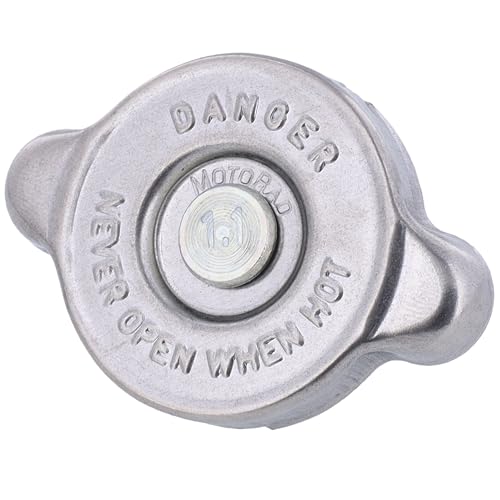
Stant 10233 Radiator Cap
Specs:
– Pressure rating: 16 PSI
– Type: mini radiator cap
– Filler neck fitment: 32 mm inside diameter, 16 mm deep neck
– System: coolant recovery design, draws coolant back from the overflow tank
– Function: pressure valve and vacuum valve in one assembly
Stant built its name on caps and thermostats, and the 10233 is its 16 PSI mini cap for the same broad family of 32 mm filler necks. Its recovery-system design is the important detail: as the engine cools, the vacuum valve opens and the cap brings coolant back from the overflow tank, keeping the radiator full and air out of the system. Air pockets cause erratic temperature readings and poor heater output, so a cap that manages the return flow properly does more than hold pressure. Choose it when your application lists a 16 PSI mini cap and you want the cap specialist’s version.
Stant 10229 Radiator Cap

Specs:
– Pressure rating: 13 PSI
– Type: standard-size radiator cap
– Finish: black
– Fitment: older domestic and import cars built for a 13 psi system
– Function: spring-loaded pressure valve with vacuum return valve
Plenty of older cars were designed around 13 psi, and putting a more common 16 psi cap on them is a mistake: the extra pressure works directly against decades-old hoses, radiator tanks, and heater cores. The 10229 is the standard-size 13 PSI cap for those systems, listed for older applications from makers such as Acura, Honda, and Nissan. It does the unglamorous job correctly, holding the lower pressure the system was engineered for and venting to the overflow only when it should. If your original cap is stamped 13, this is the rating to replace it with, full stop.
ACDelco GM Original Equipment RC98 Surge Tank Cap

Specs:
– Pressure rating: 15 PSI
– Type: surge tank (pressurized expansion tank) cap
– GM part number: 15075118
– Line: GM Original Equipment
– Fitment: GM vehicles with a pressurized coolant surge tank
This pick makes the point from the How to Choose section concrete: on many GM vehicles, the cap that holds cooling system pressure is not on the radiator but threaded onto the pressurized surge tank, and the RC98 is the genuine GM part for that job, rated at 15 PSI and built to the original equipment specification. Surge tank caps live a hard life of heat cycles, and their seals age just like a radiator cap’s, so a GM car that slowly loses coolant deserves a fresh one of these before deeper diagnosis. Match the GM part number to your vehicle before ordering.
Mishimoto 1.3 Bar Radiator Cap, Small

Specs:
– Pressure rating: 1.3 bar (19 psi)
– Type: small radiator cap
– Fitment: small filler necks, common on Japanese applications
– Purpose: higher boiling margin for systems specified at 1.3 bar
This cap needs an honest frame. Some vehicles genuinely are specified at 1.3 bar from the factory, and for those cars this Mishimoto cap is a correct replacement with a higher boiling margin than a 1.1 bar cap provides. What it is not is a performance upgrade for a car specified at a lower pressure. Fitting a 19 psi cap to a system built for 15 or 16 psi stresses every hose, the heater core, and the radiator tanks, and it will find the weakest component for you. Buy it only when 1.3 bar is your vehicle’s actual specification, or the whole system has been built for it.
Usage and Buying Notes
Never open a radiator cap on a hot engine, and never lean over one while opening it. A hot cooling system holds pressurized steam and coolant well above the boiling point of water, and releasing the cap can erupt that coolant outward, causing severe scalds. Wait until the engine is completely cold, ideally after the vehicle has sat for hours. Lever-vent safety release caps, which let you lift a lever to bleed pressure through the overflow tube before removal, are a genuinely useful design, but they only reduce the risk on a warm system; they do not make a hot cap safe to open.
The honest way to judge a suspect cap is a cooling system pressure tester with the correct cap adapter, which shows whether the cap holds its rated pressure and releases at the right point. Short of that, replace the cap when you replace hoses or coolant as cheap insurance, and inspect the filler neck for corrosion or nicks that would defeat a new seal. Coolant loss with no visible leak, an overflow tank that is always empty or always overfull, and hoses that collapse flat as the engine cools all point at the cap before anything expensive.
FAQ
What happens if I use a higher-pressure radiator cap than specified?
The system runs at higher pressure than its hoses, heater core, and radiator tanks were designed for. Instead of gaining cooling headroom, you gain stress on the weakest aging component, and a small seep can become a burst hose or split tank. Always match the factory rating.
Can a bad radiator cap cause overheating?
Yes. A weakened pressure valve lowers the boiling point of the coolant, so the system boils over, vents coolant to the overflow, and runs low, which causes overheating that mimics a bad thermostat or water pump. It is one of the first and cheapest things to rule out.
How can I tell if my radiator cap is failing?
Look for coolant residue around the filler neck, an overflow tank that is empty or overflowing, a cracked or hardened rubber seal, a weak-feeling spring, and hoses that collapse as the engine cools. A pressure tester gives a definite answer by checking the cap against its rating.
Where is the pressure cap on a car with an expansion tank?
On many modern cars the only pressure cap is on the pressurized expansion or degas tank, and the radiator has no cap at all. That tank cap is usually threaded plastic rather than a metal cam-on cap, and it must be replaced with the correct tank-style part.
When is it safe to remove a radiator cap?
Only when the engine is completely cold to the touch, after the vehicle has sat long enough for all pressure to dissipate. Even then, open it slowly to the first stop. A safety release lever cap bleeds pressure more gently, but it is still not safe on a hot engine.
Conclusion
The best radiator cap matches your vehicle exactly: the same pressure rating, the same neck size, and the same style, whether that is a metal cap on the radiator or a threaded cap on the surge tank. The Gates 31336 and Stant 10233 cover the common 16 psi mini fitment, the Stant 10229 serves older 13 psi systems, the ACDelco RC98 handles GM surge tanks, and the Mishimoto 1.3 bar cap suits vehicles genuinely specified at that pressure. Replace a suspect cap before chasing expensive overheating causes, and never open one hot.
More from Amazon
Programs that pair well with the guide above. Offers and eligibility are set by Amazon and may change.
Free shipping on eligible items, Prime Video and more. Eligible new members can start with a free trial.
Start a Prime free trialAudiobooks and podcasts to listen to on the go. Eligible new members can start with a free trial.
Try Audible freeAd-free music streaming. Eligible new subscribers can start with a free trial.
Try Music Unlimited freeA free business account with business pricing and bulk-buying tools for work, shop or home office.
Create a business accountAs an Amazon Associate we earn from qualifying purchases.