Key takeaways
- Small balcony or renter-friendly setup: Pick a light, thin rug in a measured size, with no permanent adhesive. A rug that can be lifted and shaken out makes seasonal cleaning easier.
- Uncovered deck with frequent rain: Choose a drainage-friendly flatweave or open weave, and avoid a dense rug with a moisture-trapping backing. Lift it periodically so the deck underneath can dry.
- Dining area used every day: Prioritize a low-pile surface that chairs can slide over, plus enough width for pulled-out chairs. A busy pattern can disguise routine crumbs, but it does not replace cleaning.
- Sunny patio with little shade: Look for stated UV resistance and a color you can live with as it gradually changes. Rotating the rug occasionally can reduce uneven fading.
- Occasional-use, covered patio: A softer, more decorative synthetic rug may be reasonable because it faces less rain and sun. Check the care label before choosing a textured pile.
Best Outdoor Patio Rugs for Every Space
The best outdoor patio rugs are made from UV-stabilized, water-resistant polypropylene, sized to leave a visible border around the seating area, and easy to lift for cleaning and drying. For a small balcony, choose a lightweight, low-pile rug; for a dining set, prioritize enough coverage for chairs to stay on the rug when pulled out; and for a wet or uncovered deck, favor open-weave construction that drains and dries quickly.
Choose by space and use
Rug dimensions matter more than a broad “patio” label. Measure the furniture footprint and the usable floor area, then leave clearance at doors, drains, and edges. A rug that is too small can make a seating group feel disconnected; one that is too large may block drainage or catch under a door.
Our top picks
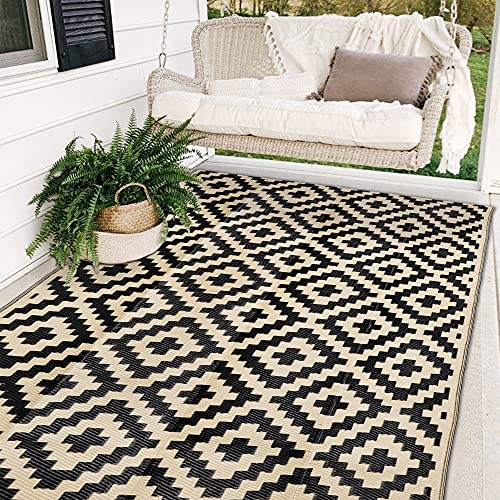

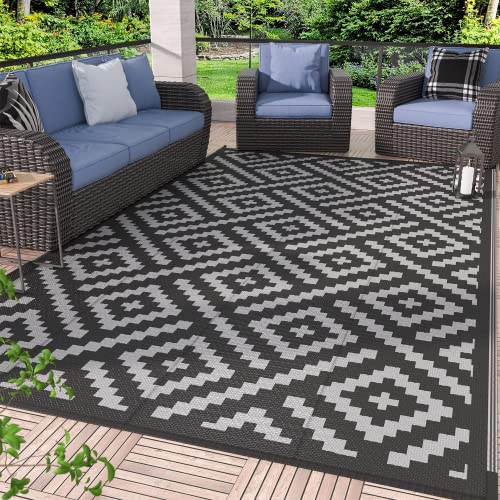

As an Amazon Associate we earn from qualifying purchases at no extra cost to you. Ratings are shown as listed on Amazon.
| Space or setup | Useful starting size | What to prioritize | Likely trade-off |
|---|---|---|---|
| Compact balcony with two chairs | 4 × 6 ft (1.2 × 1.8 m) | Low weight, thin profile, foldable or rollable construction | May not fit a table and chairs fully |
| Small bistro table and two chairs | 5 × 7 ft (1.5 × 2.1 m) | Enough clearance for chair legs to remain on the rug | Check that it does not obstruct a balcony door |
| Four-seat conversation area | 8 × 10 ft (2.4 × 3 m) | Front legs of sofas and chairs can sit on the rug | Heavier and slower to dry than a small rug |
| Dining set for six | 9 × 12 ft (2.7 × 3.7 m) | Chair-pull clearance on every side | Needs a large, relatively level area |
These are planning sizes, not guarantees: furniture dimensions and rug proportions vary. For dining, pull each chair back as if someone were sitting down and measure the full footprint. Add roughly 24–30 inches (61–76 cm) beyond the tabletop on each side when space allows, so chairs are less likely to catch the rug edge.
Materials, drainage, and weather resistance
Most outdoor rugs use synthetic fibers because they tolerate moisture better than natural-fiber rugs. Material alone does not determine performance: weave density, UV treatment, backing, and how quickly the rug can dry are equally important.
| Construction | Typical strengths | Best fit | Ownership consideration |
|---|---|---|---|
| Polypropylene, flatwoven | Water-resistant, widely available, generally easy to rinse | Covered or exposed patios and everyday dining areas | Color can fade over time; dry it after prolonged saturation |
| Polypropylene, open-weave | Water passes through; airflow can speed drying | Rain-exposed decks and areas that need drainage | Small objects and crumbs may pass through or collect underneath |
| Polyester outdoor weave | Often soft to the touch and available in varied colors | Covered seating areas with moderate exposure | Check the specific product’s UV and water-resistance claims |
| Natural-fiber lookalikes in synthetic yarn | Texture without the moisture sensitivity of many natural fibers | Spaces where appearance matters but rain is possible | Textured surfaces may hold dirt more than smooth flatweaves |
UV resistance is a treatment or performance property, not an automatic result of choosing a particular fiber. If the rug will sit in direct sun all day, look for explicit outdoor and UV-resistance information, and expect gradual fading eventually. For mildew resistance, favor synthetic materials and a rug that dries promptly; no rug is mildew-proof if moisture, dirt, and organic debris remain trapped beneath it.
Backing deserves a close look. A non-slip backing can help on a smooth surface, but some solid or foam-style backings can slow drainage and trap moisture against wood or composite decking. On a wet deck, a breathable, open construction is often the safer choice. On a smooth balcony floor, use a separate outdoor-rated rug pad only if it is compatible with that flooring and does not block drainage.
Which rug suits your situation?
- Small balcony or renter-friendly setup: Pick a light, thin rug in a measured size, with no permanent adhesive. A rug that can be lifted and shaken out makes seasonal cleaning easier.
- Uncovered deck with frequent rain: Choose a drainage-friendly flatweave or open weave, and avoid a dense rug with a moisture-trapping backing. Lift it periodically so the deck underneath can dry.
- Dining area used every day: Prioritize a low-pile surface that chairs can slide over, plus enough width for pulled-out chairs. A busy pattern can disguise routine crumbs, but it does not replace cleaning.
- Sunny patio with little shade: Look for stated UV resistance and a color you can live with as it gradually changes. Rotating the rug occasionally can reduce uneven fading.
- Occasional-use, covered patio: A softer, more decorative synthetic rug may be reasonable because it faces less rain and sun. Check the care label before choosing a textured pile.
Measure before you buy
Use painter’s tape or a few markers to outline the proposed rug size. Place the furniture in its intended position and test doors, chair movement, and access to drains. For example, if a seating group occupies an 8 × 9 ft area and you want the front legs of the chairs on the rug, an 8 × 10 ft rug may work better than a 5 × 7 ft one. But if the patio is only 8 ft wide, verify that the rug edge will not press against a wall or interfere with a sliding door.
Check the rug’s actual dimensions rather than assuming every “8 × 10” is exact. Also note the shipping fold or roll: a rug delivered folded may have creases that need time to relax, while a rolled rug can have curled edges. Follow the manufacturer’s instructions instead of applying high heat, which can damage synthetic fibers or backing.
Cleaning and durability: what wears first
Routine care is simple but matters. Shake or sweep off grit, rinse spills promptly, and let both the top and underside dry before putting the rug back in place. For a deeper clean, use mild soap and water if the care label permits, rinse thoroughly, and dry flat or draped where air can circulate. Avoid storing a damp rug folded or rolled: trapped moisture and dirt are common causes of odor and mildew.
On a deck, the first trouble may appear underneath rather than on top: grit abrades the surface, leaves collect in the weave, and moisture stays between rug and flooring. Check beneath the rug after rain and during humid periods. On a sunny patio, fading and brittle fibers may become noticeable before the weave fails. At dining tables, repeated chair movement can fray edges or loosen binding, so a flat, well-finished border is worth considering.
Wind is another practical issue. A lightweight rug on an exposed balcony can lift or shift, creating a trip hazard. Choose a size and weight appropriate to the location, secure it only with a compatible outdoor solution, and do not block drains or exits. If strong winds are forecast, bring a portable rug indoors or roll it up.
Bottom line
For most patios, a low-pile, UV-stabilized polypropylene rug offers a useful balance of weather tolerance, cleaning ease, and price. Choose open weave and breathable construction for rain-exposed decks, a compact lightweight size for balconies, and a larger low-pile rug for dining so chairs stay supported when pulled out. Measure the whole furniture footprint, check drainage and backing, and plan to lift and dry the rug regularly—the space beneath it is part of the buying decision.