Key takeaways
- Best overall: AMD Ryzen 7 9800X3D — the fastest gaming CPU on the market, typically $470–$500.
- Best value / 1440p sweet spot: AMD Ryzen 5 9600X or Ryzen 7 7700X — $200–$300.
- Best budget / 1080p build: AMD Ryzen 5 7600 or Intel Core i5-12400F — $130–$200.
- Best hybrid (gaming + streaming/editing): AMD Ryzen 9 9950X3D or Intel Core Ultra 9 285K — $650+.
- Best drop-in AM4 upgrade: Ryzen 7 5700X3D — under $250 and still very strong at 1440p.
The best CPU for gaming right now is the AMD Ryzen 7 9800X3D for most builders, the Ryzen 5 7600 or Core Ultra 5 245K for budget rigs, and the Ryzen 9 9950X3D if you stream or do heavy productivity alongside gaming. The right pick depends on your resolution, GPU tier, and whether your workload is pure FPS or mixed use — below we break down the actual performance math so you can match a chip to your situation.
Our top picks

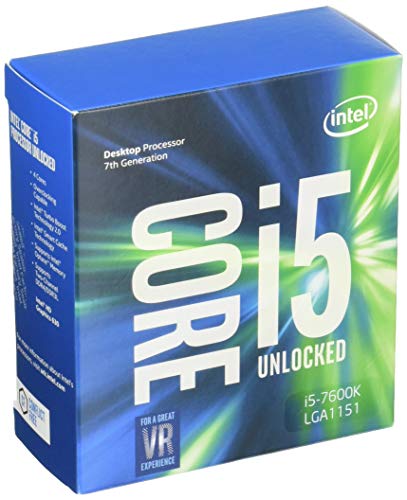
As an Amazon Associate we earn from qualifying purchases at no extra cost to you. Ratings are shown as listed on Amazon.
Quick Picks by Situation
- Best overall: AMD Ryzen 7 9800X3D — the fastest gaming CPU on the market, typically $470–$500.
- Best value / 1440p sweet spot: AMD Ryzen 5 9600X or Ryzen 7 7700X — $200–$300.
- Best budget / 1080p build: AMD Ryzen 5 7600 or Intel Core i5-12400F — $130–$200.
- Best hybrid (gaming + streaming/editing): AMD Ryzen 9 9950X3D or Intel Core Ultra 9 285K — $650+.
- Best drop-in AM4 upgrade: Ryzen 7 5700X3D — under $250 and still very strong at 1440p.
Why the 9800X3D Still Wins in 2026
AMD’s 3D V-Cache design stacks extra L3 cache directly on the die — 96MB total on the 9800X3D — which slashes memory latency in games. In CPU-bound scenarios (1080p with a high-end GPU, esports titles, simulation games like Factorio or Microsoft Flight Simulator), it outpaces even the much more expensive Core Ultra 9 chips by roughly 10–15% on average. Because the cache is now below the cores, it also overclocks properly and runs cooler than the 7800X3D it replaces.
The catch: its advantage shrinks as resolution rises. At 4K, the GPU becomes the bottleneck and the 9800X3D’s lead over a $200 chip can drop to low single digits. If you’re on a 4K monitor, spending $500 on the CPU is mostly wasted money — put it toward the GPU instead.
Spec and Price-to-Performance Comparison
| CPU | Cores/Threads | Boost Clock | L3 Cache | TDP | Socket | Street Price (2026) |
|---|---|---|---|---|---|---|
| Ryzen 7 9800X3D | 8 / 16 | 5.2 GHz | 96 MB | 120 W | AM5 | $470–500 |
| Ryzen 7 7800X3D | 8 / 16 | 5.0 GHz | 96 MB | 120 W | AM5 | $340–380 |
| Ryzen 9 9950X3D | 16 / 32 | 5.7 GHz | 128 MB | 170 W | AM5 | $680–720 |
| Ryzen 5 9600X | 6 / 12 | 5.4 GHz | 32 MB | 65–105 W | AM5 | $210–250 |
| Ryzen 5 7600 | 6 / 12 | 5.1 GHz | 32 MB | 65 W | AM5 | $180–200 |
| Ryzen 7 5700X3D | 8 / 16 | 4.1 GHz | 96 MB | 105 W | AM4 | $220–250 |
| Core Ultra 5 245K | 14 (6P+8E) | 5.2 GHz | 24 MB | 125 W | LGA1851 | $270–300 |
| Core Ultra 7 265K | 20 (8P+12E) | 5.5 GHz | 30 MB | 125 W | LGA1851 | $370–400 |
| Core i5-12400F | 6 / 12 | 4.4 GHz | 18 MB | 65 W | LGA1700 | $110–130 |
Cost Per Frame: The Math That Actually Matters
Take a 1440p build with an RTX 5070-class GPU. Realistic average framerates across a mixed game library:
- 9800X3D: ~150 fps average → $485 ÷ 150 = ~$3.23 per frame
- 9600X: ~135 fps average → $230 ÷ 135 = ~$1.70 per frame
- Core i5-12400F: ~118 fps average → $120 ÷ 118 = ~$1.02 per frame
The 9800X3D is a luxury item in pure value terms — you’re paying a ~90% price premium over the 9600X for ~11% more frames at 1440p. That premium only makes sense if you game at 1080p on a 240Hz+ monitor, play cache-sensitive titles, or want the best regardless of cost. At 4K those gaps compress further, often below 5%.
One hidden cost: platform. AM4 chips like the 5700X3D reuse cheap DDR4 and existing motherboards. Moving to AM5 adds roughly $250–350 for a B650 board and 32GB of DDR5 — factor that into any “budget” comparison.
Matching the CPU to Your Resolution and GPU
1080p high-refresh esports
Here the CPU is the bottleneck with any GPU above midrange. The 9800X3D is genuinely worth it — it delivers the 1% lows that keep a 360Hz monitor fed in Valorant, CS2, and Fortnite. Value alternative: 7800X3D.
1440p mainstream
The sweet spot where CPU and GPU share the load. A 9600X, 7700X, or Core Ultra 5 245K pairs cleanly with GPUs in the $400–700 range. Stepping up to the 9800X3D buys single-digit gains — only worth it if your GPU is flagship-class.
4K
Almost entirely GPU-bound. Even a 7600 or 12400F loses under 8% to the 9800X3D in most titles. Spend the difference on a faster GPU or a better monitor.
Decision Matrix
| Your situation | Pick |
|---|---|
| Competitive 1080p, 240Hz+, flagship GPU | Ryzen 7 9800X3D |
| 1440p, mid-to-high GPU, budget-conscious | Ryzen 5 9600X or Core Ultra 5 245K |
| 4K or GPU budget under $500 | Ryzen 5 7600 — save the rest for the GPU |
| Gaming plus streaming, video editing, rendering | Ryzen 9 9950X3D or Core Ultra 7 265K |
| Already on AM4, just want more FPS cheaply | Ryzen 7 5700X3D |
Ownership Realities
X3D chips run warmer under sustained loads than their TDP suggests — a decent $40–60 tower cooler or 240mm AIO is worth it, and the 9950X3D really wants a 280mm+ liquid cooler. Intel’s Core Ultra chips benefit heavily from fast DDR5 (8000MT/s kits show measurable gains); if you pair a 265K with slow 5600MT/s memory you leave real performance on the table. AM5 has a promised upgrade path through at least 2027, so the socket itself is an investment; LGA1851’s future is less certain. Common mistake: pairing a $500 CPU with a $300 GPU — the CPU sits idle waiting on frames. Match CPU spend to roughly half your GPU spend for balanced builds.
FAQ
Is the 7800X3D still worth buying in 2026?
Yes — it’s within ~7% of the 9800X3D in games and now costs $100+ less. It’s the smart buy if you find it discounted.
Do I need DDR5 for gaming?
For AM5 and LGA1851 you have no choice. If you’re staying on AM4 or LGA1700, DDR4 is fine — the 5700X3D exists precisely for that path.
Intel or AMD for pure gaming?
AMD’s X3D chips lead outright. Intel’s Core Ultra K-series is competitive on price and stronger in multi-threaded work, so it’s the better hybrid pick at equal cost.