Key takeaways
- Compare fluid transfer pumps for gasoline, diesel, oil and DEF: battery gas-can pumps, 12V kits, siphons and drill pumps, with fuel-safety and seal checks.
Disclosure: As an Amazon Associate, I earn from qualifying purchases.
A fluid transfer pump moves liquid from one container or tank into another: gas can to mower, drum to tractor, jug to DEF tank. That is a different job from an oil extractor, which pulls used oil out of an engine through the dipstick tube, and the tools are not interchangeable. Transfer pumps are rated pump by pump for specific fluids, and that rating is the whole purchase. A pump that moves diesel can be an ignition hazard with gasoline, a pump that survives fuel can contaminate DEF, and a water pump must never touch fuel at all. This roundup covers five types — a heavy-duty 12V fuel kit, two battery gas-can pumps, a self-priming hand siphon, and a drill-driven water pump — with the safety limits of each stated plainly.
How to Choose
The fuel rating comes first, and it is not negotiable. Gasoline vapor ignites easily, and an electric motor that is not designed and rated for fuel service can provide the spark. Use only pumps the manufacturer explicitly rates for gasoline, follow the bonding and grounding instructions in the manual, connect ground wires before opening containers, and transfer fuel outdoors, away from pilot lights, heaters, and running engines. A pump labeled diesel-only must never be used for gasoline, even once, even briefly. When a listing is vague about fuel approval, treat that as a no.
Flow rates are best-case numbers. Manufacturers quote flow with a thin, water-like fluid, full power, and little or no lift. Diesel moves slower than gasoline, cold oil far slower than either, and every foot of lift and hose cuts the rate further. A pump rated at 2.5 gallons per minute may deliver half that into a raised tank on a cold morning. Buy for your real fluid and lift, not the headline number.
Seals and hoses decide compatibility. The pump body rarely fails first; the seals and hose do. Nitrile suits diesel and oil, other elastomers suit other chemicals, and a seal that swells in gasoline will weep, then leak. DEF is its own special case: it crystallizes, it corrodes many metals, and contamination ruins it — a pump, hose, or nozzle that has ever carried fuel or oil must never be used for DEF, because contaminated DEF can damage the vehicle’s emissions system. Dedicate DEF equipment to DEF only, and store it sealed.
Match the pump type to the volume. Battery stick pumps suit gas cans and jugs. A 12V rotary vane kit suits drums and transfer tanks and real gallons. A hand siphon suits occasional small moves with gravity helping. A drill pump suits water and light fluids where a drill is already in hand. Using a toy pump for a 55-gallon drum is slow misery; using a 15 GPM kit for a quart of oil is a spill waiting to happen.
Plan the whole transfer before starting. Set both containers stable, route the hose without kinks, confirm suction and discharge ends, and know how you will stop the flow. Never leave a running transfer unattended — not for a minute, not with an auto-stop nozzle. Sensors fail and hoses slip out of filler necks. Stay there, hand near the switch, until the job is done.
The 5 Best Fluid Transfer Pumps
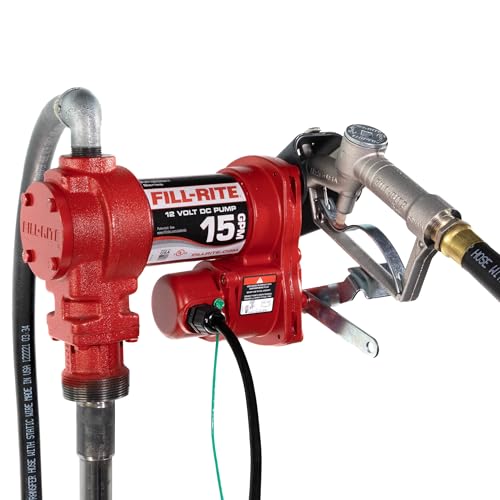
1. Fill-Rite FR1210H 12V Fuel Transfer Pump — The Heavy-Duty Kit Pick
Specs:
– Power: 12V DC, battery cable with clamps
– Flow rate: up to 15 GPM
– Construction: cast iron pump housing, rotary vane design
– Kit contents: discharge hose and manual nozzle, telescoping suction pipe
– Fluids: gasoline, diesel, kerosene, ethanol and methanol blends, biodiesel
– Duty cycle: 30 minutes on, then cool-down
The FR1210H is the benchmark truck-bed and farm-tank pump: a cast-iron 12V rotary vane unit rated for gasoline as well as diesel, which is exactly the rating discipline this category demands. Fifteen gallons per minute fills equipment at working speed, the telescoping suction pipe adapts to tanks and drums, and the ground wire is not optional decoration — clamp it on before fuel moves. Respect the duty cycle, keep the strainer clean, and expect real flow below the rating with cold diesel and lift.
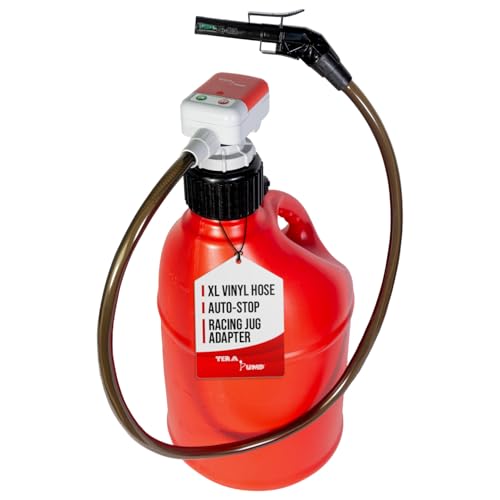
2. TERA PUMP TRFA01-XL 2nd Gen Battery Fuel Transfer Pump — The Gas Can Pick
Specs:
– Power: battery powered, AA cells (not included)
– Flow rate: up to 2.5 GPM
– Hose: 4.27 ft vinyl discharge hose
– Features: auto-stop overfill protection sensor, universal gas can and utility jug adapter
– Fluids: gasoline, diesel, kerosene, E15 and E85 fuels
The TRFA01-XL solves the most common home transfer: getting fuel out of a can without lifting and tipping it. The pump sits on the can with the adapter, the flexible hose reaches the tank, and the auto-stop sensor shuts flow off as the receiving tank fills — a helper, not a substitute for standing there watching. Flow around 2.5 GPM with fresh batteries is honest can-scale speed, slower with cold diesel. Keep spare batteries with it, rinse discipline matters if it moves between fuels, and remember its seals are rated for the fuels listed — not for solvents or chemicals beyond them.
3. TERA PUMP TREP01 2nd Gen Multipurpose Transfer Pump — The DEF-Friendly Pick

Specs:
– Power: battery powered
– Flow rate: up to 2.8 GPM
– Nozzle: quick-stop flow control nozzle
– Hose: vinyl discharge hose, about 3.3 ft
– Fluids: gasoline, diesel, DEF, kerosene and light oils
– Fit: suction tube suits common cans, pails and small drums
The TREP01 is the multipurpose sibling, and its DEF compatibility is the headline — with one strict condition: a pump that has moved gasoline or oil must never then move DEF. Buy it for DEF and dedicate it to DEF, or buy it for fuel and never let it near the DEF tank. Used with that discipline, the quick-stop nozzle gives tidy control for small tanks, and 2.8 GPM is plenty at jug scale. Flow fades as batteries tire, and the vinyl hose should be inspected before each fuel job.
4. The Original Safety Siphon — The No-Power Pick

Specs:
– Power: none — self-priming jiggle siphon, gravity does the work
– Flow rate: up to 3.5 GPM with adequate height difference
– Hose: 6 ft, FDA food-grade material
– Valve: 1/2 inch, pure copper pump head with glass ball and stainless steel spring
– Fluids: fuel, water and other compatible liquids per maker guidance
– Origin: made in the USA
The Safety Siphon starts flow with a few shakes of the copper valve instead of a mouthful of fuel, then gravity takes over — which is also its limit: the source must sit higher than the destination, and flow dies as levels equalize. With a good height difference it moves fuel at a useful rate, it cannot spark, and it stores in a drawer. It is the wrong tool for lifting fuel upward or for drums at ground level — and a siphon keeps flowing until you lift the valve out, so stay with it.
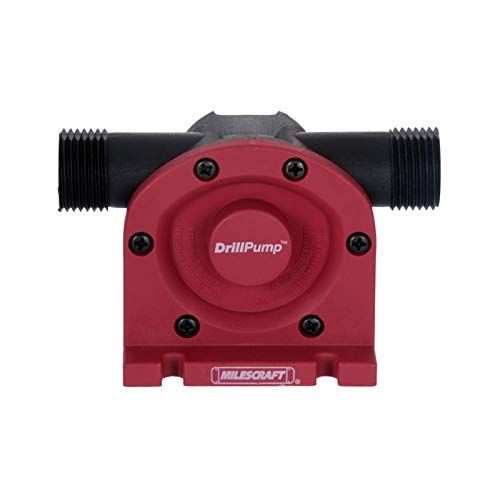
5. Milescraft 1314 DrillPump750 — The Water-Only Drill Pick
Specs:
– Power: drill driven, fits standard chucks via 3/8 inch shank
– Flow rate: up to 750 gallons per hour
– Connections: 3/4 inch garden hose fittings
– Priming: self-priming up to 12 ft
– Construction: glass-filled nylon housing
– Fluids: water only — not rated for fuel or flammable liquids
The DrillPump750 earns its place with a warning as its most important spec: it is a water pump. For draining a water heater flush, moving rain barrel water, or emptying a flooded corner, it turns a drill you already own into a 750-gallon-per-hour pump that self-primes and packs away small. It must never be used for gasoline, diesel, or solvents: it is not fuel rated, its seals are not fuel seals, and a drill motor is an ignition source around fuel vapor. Drill pumps are constantly mis-sold for fuel jobs — this one is excellent at its real job and dangerous at the job it is not for.
Use and Safety Notes
Bond and ground before transferring fuel: clamp the ground wire to the receiving container, keep containers on the ground rather than on a truck bed liner, and work outdoors with no ignition sources nearby. Check seals and hoses at the start of the season — a stiff, cracked, or weeping hose gets replaced, not nursed. Flush and drain a multipurpose pump before storage, label dedicated DEF equipment so nobody borrows it for diesel, and dispose of spilled or contaminated fluid through local hazardous waste channels. Keep a suitable extinguisher within reach during fuel work.
FAQ
Can I use a diesel-only pump for gasoline just once?
No. Diesel-only pumps lack the motor protection and ratings gasoline vapor demands. One transfer is all an ignition needs. Use a gasoline-rated pump, or a hand siphon with no motor at all.
Why is my pump so much slower than its rating?
The rating assumes a thin fluid, no lift, and full power. Cold diesel, a raised tank, a long hose, and tired batteries each take a share. If flow drops suddenly, check the intake strainer and hose for kinks or debris.
Can one pump handle both fuel and DEF?
Some are rated for both; practically, no. Fuel or oil residue contaminates DEF, and contaminated DEF can damage emissions equipment. Dedicate one pump to DEF.
Is an auto-stop nozzle enough to let me walk away?
No. Sensors foul and hoses slip. Auto-stop is spill insurance for the last second of a fill you are watching, not permission to leave.
What is the safest option for occasional small fuel moves?
A self-priming hand siphon: no motor, no spark, no batteries, and flow you stop by lifting the valve. It needs gravity on your side, so plan container positions before you start.
Conclusion
Choose by fluid first and flow second: the Fill-Rite FR1210H for rated, high-volume fuel work; the TRFA01-XL for gas-can duty; the TREP01 dedicated to DEF or light multipurpose jobs; the Safety Siphon for spark-free gravity transfers; and the DrillPump750 for water only, never fuel. Respect the ratings, ground before you pour, and stay until the last drop lands — that discipline, more than any pump, makes fluid transfer safe.
More from Amazon
Programs that pair well with the guide above. Offers and eligibility are set by Amazon and may change.
Free shipping on eligible items, Prime Video and more. Eligible new members can start with a free trial.
Start a Prime free trialAudiobooks and podcasts to listen to on the go. Eligible new members can start with a free trial.
Try Audible freeAd-free music streaming. Eligible new subscribers can start with a free trial.
Try Music Unlimited freeA free business account with business pricing and bulk-buying tools for work, shop or home office.
Create a business accountAs an Amazon Associate we earn from qualifying purchases.