Key takeaways
- Best Online Drum Courses for Every Skill Level The best online drum courses in 2026 are Drumeo for all-round progression, Mike’s Lessons for structured beginner fundamentals, Stephen Taylor’s courses for intermediate technique, and Drum Channel for advanced and jazz-focused players.…
Best Online Drum Courses for Every Skill Level
The best online drum courses in 2026 are Drumeo for all-round progression, Mike’s Lessons for structured beginner fundamentals, Stephen Taylor’s courses for intermediate technique, and Drum Channel for advanced and jazz-focused players. Expect roughly $15–$40 per month for subscription platforms and $50–$250 for one-time courses. Below is how they compare on structure, feedback, materials, cost, and skill coverage.
Quick Comparison
| Course / Platform | Best for | Lesson structure | Instructor feedback | Price range (2026 est.) |
|---|---|---|---|---|
| Drumeo | All levels, biggest library | Guided “paths” + 3,000+ individual lessons | Student review submissions, community forum | $20–$30/month or ~$180–$250/year |
| Mike’s Lessons | Absolute beginners | Linear numbered curriculum, ~150 lessons | Email Q&A, monthly live hangouts | $15–$20/month |
| Stephen Taylor (StephensDrumShed) | Intermediate technique & independence | Weekly lesson drops + themed “shed” series | Live streams, comment replies, student spotlights | $15–$25/month |
| Drum Channel | Advanced, jazz, and pro interviews | Artist masterclasses, mostly single-topic | Limited; occasional live clinics | $10–$20/month |
| One-time video courses (Udemy-style) | Budget, single goal | Fixed module sequence, lifetime access | Q&A board, no guaranteed reply | $50–$250 once |
Best Overall: Drumeo
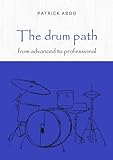
Drumeo is the widest single stop for a drummer who moves between rock, funk, gospel, and rudimental study. According to Drumeo’s own catalog listings, the platform carries on the order of 3,000 lessons, and its “guided path” feature sequences them by goal rather than dumping a searchable pile. Play-along tracks, printable PDF notation, and a slow-down/metronome player are bundled into the subscription, which matters because practice materials are where most cheap courses fall short.
As an Amazon Associate we earn from qualifying purchases at no extra cost to you.
Who it suits: the self-directed player from late-beginner upward who wants variety and won’t run out of content in a year.
Main trade-off: breadth can be paralyzing. Without a chosen path, students hop between topics and never finish a curriculum. Feedback is peer-and-community based, not one-to-one, so you must be honest about self-assessment.
Best Budget: One-Time Video Courses
A single $50–$250 purchase on a course marketplace buys lifetime access with no recurring charge, which suits a player with one specific gap—reading notation, foot technique, or a first year of fundamentals. The trade-off is real though: no new content, no instructor updates, and a Q&A board where replies are inconsistent. If you practice twice a week for a year, a $90 course works out to under $1 per session; the same $90 as a monthly subscription buys only three to five months.
Best for Beginners: Mike’s Lessons
Mike’s Lessons is deliberately un-flashy. Its curriculum is numbered and linear, and per the site’s own course outline it starts at grip, posture, and counting before any groove work. That ordering is the point—beginners who start with beats before they can count subdivisions tend to plateau. The platform includes sheet-music PDFs for its play-alongs, a practice-log tool, and periodic live sessions where students can ask questions.
Main trade-off: a smaller library and production values below Drumeo’s, so a student who surges past the beginner stage within a year will likely migrate.
Best for Intermediate Technique: Stephen Taylor / StephensDrumShed
Taylor’s material targets the choppy middle years—the phase where a drummer can play songs but not cleanly, and where independence between hands and feet breaks down. His weekly lesson drops focus on specific mechanics (Moeller strokes, heel-toe doubles, linear fills) with slow demonstration and breakdown notation. Feedback comes through regular live streams and comment replies, which gives an intermediate student some eyes on their playing without paying in-person rates.
Main trade-off: structure is looser than a numbered path, so discipline is required to sequence lessons into a plan.
Best for Advanced and Jazz Players: Drum Channel
Drum Channel leans on artist masterclasses and long-form interviews, and per its published catalog it features working professionals across jazz, fusion, and studio work. For an advanced player, the value is in hearing a professional explain phrasing, dynamics, and session-craft decisions—content that beginner platforms rarely cover because it doesn’t sell to a mass audience.
Main trade-off: sparse instruction on fundamentals and almost no structured feedback. It supplements an advanced player’s practice; it doesn’t replace a curriculum.
How to Choose: Match Platform to Situation
Use the matrix below rather than picking the biggest name. The numbers reflect typical published ranges, not promotional pricing.
| Your situation | Recommended pick | Why | Budget guide |
|---|---|---|---|
| Total beginner, 0–6 months | Mike’s Lessons | Sequenced fundamentals, avoids bad habits | ~$15–$20/month |
| Returning after years away | Drumeo guided path | Skip ahead to your level, fill gaps fast | ~$20–$30/month |
| Intermediate, technique gaps | Stephen Taylor | Mechanics-focused weekly lessons | ~$15–$25/month |
| Advanced, jazz/studio | Drum Channel | Artist depth, phrasing, session craft | ~$10–$20/month |
| Tight budget, one goal | One-time course | Lifetime access, no subscription creep | $50–$250 once |
| Prefers one-to-one correction | Online course + occasional private lesson | Courses can’t see your hands | Course + $40–$80/hour |
The Cost-Per-Practice-Session Math
Subscriptions are easy to over-buy. Work it out per session before subscribing: a $240 annual plan used twice a week is about $2.30 per practice session; used once a month it’s $20 per session, which is worse value than a single private lesson. Before committing to a year, subscribe month-to-month for 60 days and log how many times you actually sit down. If the answer is fewer than eight, buy a one-time course instead. Also cancel overlapping subscriptions—two courses at $20/month is $480 a year, roughly the cost of six to eight private lessons that give direct correction.
Ownership Realities: What Actually Limits Progress
Online courses have no moving parts, but the set around them does, and kit condition quietly caps how fast lessons translate. Sticks are the consumable—a gigging or heavy-practice drummer replaces a pair every 20–40 hours, and worn tips change rebound in ways that make a technique lesson feel wrong. Drumheads wear next: a coated batter head on a snare typically dulls or pits within 20–60 hours of solid playing and should be replaced, not retuned forever. Pedal springs and beater felts degrade over roughly a year of regular use, and a slack spring will sabotage heel-toe practice. Common mistakes: practicing on a badly tuned snare and blaming the lesson, running an unlatched hi-hat clutch that slips mid-groove, and never replacing worn nylon washers, which lets cymbals keyhole.
Frequently Asked Questions
What is the best online drum course for a complete beginner?
Mike’s Lessons suits most true beginners because its curriculum is numbered, starting at grip and counting before any beats. A linear order prevents the common beginner mistake of playing grooves before understanding subdivision. If you want a bigger library and don’t mind choosing your own path, Drumeo’s beginner path is a reasonable alternative.
Do online drum courses give real instructor feedback?
Rarely in a personal sense. Most platforms offer community forums, comment replies, or periodic live streams rather than one-to-one review. If correction matters to you, pair a subscription with a monthly private lesson so a teacher can see and fix your technique directly.
How much should I expect to pay for drum lessons online in 2026?
Typical subscription platforms run about $10–$30 per month, with annual plans often at $180–$250. One-time video courses generally fall between $50 and $250 for lifetime access. Private online lessons are separate, commonly $40–$80 per hour.
Can I learn drums online without an acoustic kit?
Yes, but choose courses that include practice-pad routines and play-alongs you can follow on a pad or electronic kit. Kick-pedal and hi-hat technique still require a pedal or a full electronic kit, so budget for that if your lessons depend on them.
How do I avoid wasting money on subscriptions?
Track your actual practice sessions for 60 days before buying an annual plan. At two sessions a week a $240 year costs about $2.30 per session; at one session a month it’s $20, which is poor value. Cancel overlapping platforms rather than stacking them.
Which platform is best for jazz and advanced players?
Drum Channel is the strongest fit for jazz, fusion, and session-focused study because of its artist masterclasses. It assumes prior fundamentals and offers little structured feedback, so it works best alongside a course that covers technique.