Key takeaways
- Category: Non-GMO heirloom vegetable seed kit
- Format: Compact packet set in a single protective pouch or box
- Variety scope: Core kitchen-garden vegetables rather than exotic varieties
- Storage life: Typical of properly dried heirloom seed in sealed packaging — plan on a few years under cool, dark, dry conditions, with germination declining gradually after that
- Instructions: Planting guidance included with the kit
- Best for: One or two growing seasons of a modest kitchen garden
The Best Non-GMO Heirloom Survival Seed Vaults: A Practical Buyer’s Guide
The best non-GMO heirloom survival seed vaults are not the ones with the biggest number on the box — they are the ones whose variety mix actually matches your climate, your soil, and how much land you can realistically plant. For most households building a first serious food reserve, the B&KM Farms 50,000+ Non-GMO Heirloom Seeds, 50 Fruit & Vegetable Varieties hits the best balance of variety breadth, seed volume, and a storage format that survives a garage shelf. If you are on a tight budget or just want a starter vault to learn with, the Gardeners Basics Survival Seed Vault Kit costs a fraction and still gives you a working kitchen garden. If you want the deepest variety catalogue and are willing to pay for it, the Survival Essentials Grow Healthy Non GMO Food Seed Vault, 135 Types and the Gardeners Basics Ultimate Survival Seed Kit, 140 Varieties with Ammo Can sit at the top of the category, and the ammo-can format is a genuine upgrade if you are storing seeds for a decade rather than a season.
Top 3 Picks
Best Overall: B&KM Farms 50,000+ Non-GMO Heirloom Seeds, 50 Fruit & Vegetable Varieties
Fifty distinct varieties across 50,000+ seeds is enough to plant a diversified garden for more than one season without redundancy. The variety list leans toward calorie-dense and storage-friendly crops — beans, squash, root vegetables — rather than novelty flowers, which is exactly what a survival vault should prioritize. It is the pick that works whether you are a first-time prepper or a gardener expanding into seed storage.
Best Budget: Gardeners Basics Survival Seed Vault Kit, Vegetable Seeds for Planting
A low-cost, single-season entry point that covers the essential salad-and-soup crops most households actually cook with. The packet count is modest, so treat it as a learning vault rather than a decade-long reserve. For the price of a couple of restaurant meals, it lets you find out whether you’ll actually garden before you commit serious money.
Best Premium: Survival Essentials Grow Healthy Non GMO Food Seed Vault, 135 Types
At 135 types, this is the broadest catalogue in this roundup and the closest thing to a self-contained seed library. The variety depth means you can rotate crops, match specific varieties to microclimates on your property, and still have fallback options if one crop fails. It suits people who intend to grow substantially more than a hobby plot.
Best for Storage Durability: Gardeners Basics Ultimate Survival Seed Kit, 140 Varieties with Ammo Can
The ammo-can format is the standout feature — a rigid, gasketed, moisture-resistant container is a materially better long-term storage vessel than a mylar pouch or cardboard box. Pair that with 140 varieties and you get the most defensible long-term reserve here. Choose it if your vault will sit untouched for years rather than being opened every spring.
Quick Comparison
| Product | Best For | Key Specs | Price Tier |
|---|---|---|---|
| Gardeners Basics Survival Seed Vault Kit | Absolute beginners, single-season trial | Non-GMO heirloom vegetable packets; compact pouch format; modest variety count | Budget |
| B&KM Farms 50,000+ Non-GMO Heirloom Seeds, 50 Varieties | Best all-round first serious vault | 50 fruit & vegetable varieties; 50,000+ seeds; resealable storage bag format | Mid-range |
| GermiGrow Seed Vault Kit, 17,600+ Seeds, 36 Pack | Small-space and container growers | 36 individual packets; 17,600+ seeds; heirloom, non-GMO labeling; individually labeled packets | Mid-range |
| B&KM Farms 100,000+ Non-GMO Heirloom Seeds, 50 Varieties | Large plots and multi-season reserves | 50 varieties; 100,000+ seeds; roughly double the seed volume of the 50,000+ version | Premium |
| B&KM Farms 30,000+ Non-GMO Heirloom Seeds, 30 Varieties | Compact gardens, smaller households | 30 varieties; 30,000+ seeds; trimmed variety list at lower cost | Mid-range |
| Survival Essentials Heirloom Seed Vault, 17,500 Seeds, 100 Variety | Variety depth on a moderate seed budget | 100 varieties; 17,500 seeds; roughly 175 seeds per variety on average | Premium |
| Survival Essentials Grow Healthy Non GMO Food Seed Vault, 135 Types | Broadest catalogue, serious growers | 135 types; non-GMO food-focused mix; deepest variety list in this roundup | Premium |
| Back to the Roots 100% Heirloom Rescued Seeds, 30ct | Small gardens, herbs and flowers included | 30 packets of organic veggies, herbs and flowers; heirloom; preservation-oriented sourcing | Budget |
| HOME GROWN 70 Variety Vegetable & Herb Survival Garden Kit | Herb-heavy cooking gardens | 70 varieties; 30,600+ seeds; vegetables plus culinary herbs | Mid-range |
| Gardeners Basics Ultimate Survival Seed Kit, 140 Varieties with Ammo Can | Long-term storage and largest variety count | 140 varieties; rigid gasketed ammo-can container; moisture-resistant storage | Premium |
| HOME GROWN 15 Variety Survival Seed Vault, 8,800+ Seeds | Lowest-commitment starter vault | 15 varieties; 8,800+ vegetable seeds; roughly 585 seeds per variety on average | Budget |
| HOME GROWN 25 Variety Survival Seed Vault, 12,000+ Seeds | Step up from a 15-variety starter | 25 varieties; 12,000+ heirloom non-GMO seeds; high-germination labeling; roughly 480 seeds per variety | Budget |
How We Chose
This roundup was built from published product information and category knowledge about how heirloom seed vaults actually perform, not from hands-on growing trials. The primary filter was variety composition: a survival vault should be weighted toward crops that produce calories and store well — beans, squash, corn, root vegetables, brassicas — rather than being padded with ornamental flowers or duplicate packet types. Second, we looked at seed volume relative to variety count. A vault advertising 100 varieties and 17,500 seeds gives you roughly 175 seeds per variety, which is a reasonable single planting with some margin; a vault advertising 15 varieties and 8,800 seeds gives you roughly 585 per variety, which is a genuinely self-sufficient quantity for one crop. Third, storage format mattered: sealed mylar-style pouches, resealable heavy bags, and rigid gasketed containers each protect against humidity differently, and the container is often what determines whether a vault is still viable in year seven. Fourth, we weighed growing instructions and labeling — individually labeled packets with sowing depth, spacing, and days-to-maturity are far more useful in a real planting than a single folded sheet. Finally, we considered upgrade paths: whether a vault makes sense as an entry point, a step-up, or a terminal purchase for a household that already gardens.
1. Gardeners Basics Survival Seed Vault Kit – Best for First-Time Vault Buyers
As an Amazon Associate we earn from qualifying purchases at no extra cost to you.

This is the vault you buy when you are not yet sure you are a seed-vault person. Gardeners Basics built its catalogue around simple, reliable heirloom vegetables, and this kit distills that into a compact, low-cost package aimed at households that want a baseline of food security without a large upfront commitment. It fits renters, apartment dwellers with a balcony, and anyone who wants to test their germination skills before spending on a bigger reserve.
Key Specs
- Category: Non-GMO heirloom vegetable seed kit
- Format: Compact packet set in a single protective pouch or box
- Variety scope: Core kitchen-garden vegetables rather than exotic varieties
- Storage life: Typical of properly dried heirloom seed in sealed packaging — plan on a few years under cool, dark, dry conditions, with germination declining gradually after that
- Instructions: Planting guidance included with the kit
- Best for: One or two growing seasons of a modest kitchen garden
Strengths
The strongest argument for this kit is its price-to-learning ratio. You get real heirloom, non-GMO seed from a brand that specializes in vegetables, and you get it cheap enough that failure is not expensive. The variety selection avoids the trap of ornamental filler — these are crops people actually eat. It is also small enough to store in a kitchen drawer, which matters more than people admit: seeds you can find are seeds you will plant.
Pros
- Very low entry cost relative to the rest of this category
- Heirloom, non-GMO vegetable focus with no ornamental padding
- Compact enough to store in a drawer or cupboard
- Good way to test germination before buying a large reserve
Cons
- Limited variety count — not a diversified long-term reserve
- Seed volume is modest, so you cannot plant heavily and still save back stock
- Storage vessel is a pouch, not a rigid moisture-resistant container
- You will likely outgrow it within one or two seasons
How It Compares
Against the HOME GROWN 15 Variety Survival Seed Vault, this kit is the more brand-specialized option — Gardeners Basics focuses on vegetable seed quality, while the HOME GROWN 15 offers a similarly small footprint but with higher per-variety seed counts. Both are budget-tier starters. If your goal is simply to learn, either works; if you want more seeds of fewer crops, the HOME GROWN 15 delivers more per variety. If you want a broader vegetable spread in a small package, this kit is the better fit.
2. B&KM Farms 50,000+ Non-GMO Heirloom Seeds – Best Overall Value

This is the vault that makes sense for the largest number of people. Fifty fruit and vegetable varieties at 50,000+ seeds is a genuine multi-season reserve rather than a sampler, and the crop mix leans toward the staples that matter when a garden has to actually feed a household. It suits suburban homeowners with a real plot, gardeners who already know what they’re doing, and preppers who want one purchase that covers the basics without going to the top of the price ladder.
Key Specs
- Variety count: 50 fruit and vegetable varieties
- Seed volume: 50,000+ seeds
- Average per variety: Roughly 1,000 seeds per variety
- Labeling: Non-GMO heirloom, food-crop focus
- Storage format: Resealable protective bag or pouch
- Instructions: Planting directions included
- Best for: A diversified garden across two to three seasons
That average of roughly 1,000 seeds per variety is the number worth pausing on. It is far more than you need for a single row of tomatoes, and it means you can plant, lose a crop to weather, replant, and still have seed left. Compare that with a 100-variety vault at 17,500 seeds, which gives you about 175 seeds per variety — enough for one attempt with some margin, but not enough to plant successively or to replant after a failure.
Strengths
The variety list is weighted toward food rather than decoration, and 50 is the sweet spot where you get real diversity — multiple bean types, several squash, greens, roots, and nightshades — without drowning in varieties you’ll never sow. The seed volume per variety is generous enough for succession planting. And at a mid-range price, it costs meaningfully less than the premium vaults while delivering close to the same practical capability for a typical household plot.
Pros
- Roughly 1,000 seeds per variety — enough to replant after a crop failure
- 50 varieties gives genuine diversity without useless overlap
- Food-crop-weighted selection rather than ornamental filler
- Mid-range price for near-premium practical capacity
- Good middle ground between starter kits and 100+ variety libraries
Cons
- Storage bag is less protective than a rigid gasketed container
- 50 varieties may feel thin if you want regional or specialty crops
- Not the cheapest way to start if you’re unsure you’ll garden
How It Compares
Against the B&KM Farms 30,000+ Seeds, 30 Varieties, this is the same brand at a larger scale — 20 more varieties and roughly 20,000 more seeds. If you have the space, the 50-variety version is the better buy per seed; if you have a small garden and want to keep the vault lean, the 30-variety version trims the overlap. Against the GermiGrow 36-Pack, this vault wins on variety count and total volume, while GermiGrow wins on individual packet organization, which some growers prefer for keeping track of what they’ve sown.
3. GermiGrow Vegetable & Fruit Survival Seeds Vault Kit – Best for Organized Small-Space Growing
GermiGrow’s kit takes a different packaging philosophy: 36 individually sealed packets holding 17,600+ seeds, so you can pull one variety at a time without exposing the rest of your reserve to air and humidity. That matters in a survival context — every time you open a bulk bag, you degrade the whole vault slightly. This kit is aimed at container gardeners, balcony growers, and anyone who wants a tidy, labeled, use-one-at-a-time system.
Key Specs
- Packet count: 36 individual packets
- Seed volume: 17,600+ seeds
- Average per packet: Roughly 490 seeds per packet
- Labeling: Heirloom, non-GMO
- Format: Individually sealed packets, boxed
- Crop mix: Vegetables and fruits
- Best for: Container gardens, raised beds, incremental planting
Strengths
The individual packing is the real feature. Roughly 490 seeds per packet is a sensible quantity — enough for a serious planting of that one crop, small enough that you’ll actually use it up. Because each packet is sealed separately, opening your tomato packet doesn’t cost you anything on your squash. For anyone growing in containers or a small raised-bed setup, this compartmentalized approach is more practical than a single 50,000-seed bag you have to dip into repeatedly.
Pros
- Individually sealed packets protect the unopened portion of your reserve
- Clear labeling makes succession planning easier
- Roughly 490 seeds per packet is a practical, usable quantity
- Well suited to small-space and container growing
- Fruit and vegetable mix adds variety to a kitchen garden
Cons
- 17,600 seeds total is less than half the volume of the 50,000+ vaults
- Packet count (36) is lower than the variety count of several competitors
- Less suited to field-scale planting
- Boxed packet sets are bulkier to store than a single vacuum bag
How It Compares
Against the Survival Essentials Heirloom Seed Vault, 100 Variety, this is the smaller, tidier option: fewer varieties and fewer total seeds, but far better organized and better suited to incremental use. The Survival Essentials vault is the better choice if your priority is variety breadth; the GermiGrow is better if your priority is keeping the reserve intact while you use it. Against the B&KM Farms 50,000+, GermiGrow trades raw volume for organization and small-space suitability.
4. B&KM Farms 100,000+ Non-GMO Heirloom Seeds – Best for Large Plots and Deep Reserves

This is the same 50-variety mix as the mid-range B&KM vault, doubled in seed volume to 100,000+. That means roughly 2,000 seeds per variety — a quantity that supports not just a large garden but multi-year planting, seed saving, and sharing. It suits homesteaders, rural households with an acre or more under cultivation, and preppers who want a reserve that keeps producing even after a poor year.
Key Specs
- Variety count: 50 fruit and vegetable varieties
- Seed volume: 100,000+ seeds
- Average per variety: Roughly 2,000 seeds per variety
- Labeling: Non-GMO heirloom
- Storage format: Resealable protective bag
- Best for: Large gardens, homesteads, multi-year reserves
The arithmetic is the selling point. At roughly 2,000 seeds per variety, a single packet of beans can plant a substantial block, and the leftover seed can be held back for the following year or saved from your own crop. For a household planting a quarter-acre or more, the smaller 50,000-seed vault can run short in a heavy season; this one won’t.
Strengths
Volume is the whole story here. Doubling the seed count without changing the variety mix means you get the same diversity with four times the planting headroom of a 100-variety/17,500-seed vault. That headroom is what converts a seed vault from a novelty into an actual food plan. It also makes seed saving realistic — you can plant heavily and still keep enough back to replant, and you can share seed with neighbors, which is how community food resilience actually works.
Pros
- Roughly 2,000 seeds per variety — genuine multi-year capacity
- Supports seed saving and sharing with neighbors
- Same proven 50-variety food-crop mix as the mid-range version
- Suitable for quarter-acre and larger plantings
- Best per-seed value in the B&KM Farms line
Cons
- Premium price is hard to justify for a small garden
- Bulk bag format means repeated opening exposes the whole reserve
- More seed than a two-person household can plant in one season
- Does not add varieties over the cheaper 50,000-seed version
How It Compares
Against the B&KM Farms 50,000+, this is a straightforward volume doubling at a higher price — buy the smaller one unless you are planting at scale. Against the Gardeners Basics Ultimate Survival Seed Kit with Ammo Can, the tradeoff is volume versus storage quality: B&KM gives you far more seed, Gardeners Basics gives you a rigid moisture-resistant container and 140 varieties. If long-term storage durability matters more than seed count, the ammo-can kit wins; if you want maximum seed for the money and will store it carefully yourself, this one does.
5. B&KM Farms 30,000+ Non-GMO Heirloom Seeds – Best for Compact Gardens

The smallest of the B&KM Farms line, this vault trims to 30 varieties and 30,000+ seeds. That works out to roughly 1,000 seeds per variety — the same generous per-variety ratio as the 50,000-seed version, just with a shorter crop list. It targets townhouse gardens, small suburban plots, and households that want the brand’s variety quality without paying for volume they won’t use.
Key Specs
- Variety count: 30 fruit and vegetable varieties
- Seed volume: 30,000+ seeds
- Average per variety: Roughly 1,000 seeds per variety
- Labeling: Non-GMO heirloom
- Storage format: Resealable protective bag
- Best for: Small to mid-size gardens, beginners with real space
Strengths
Keeping the per-variety seed count at roughly 1,000 is the smart move — you don’t lose planting headroom just because you bought a smaller vault. Thirty varieties is still a solid kitchen garden: several beans, a few greens, squash, roots, and tomatoes. If your growing space is a few raised beds rather than a field, this vault’s ceiling matches your reality, and you avoid paying for seed that will sit long enough to lose viability.
Pros
- Roughly 1,000 seeds per variety, same as the larger B&KM vaults
- Lower cost than the 50-variety version
- Variety list sized to a small-to-mid garden rather than a homestead
- Food-crop focused, non-GMO heirloom labeling
Cons
- 30 varieties offers less crop diversity than 50 or 100-variety vaults
- Fewer total seeds means less room for succession planting
- Bag storage, not a rigid container
- Not enough volume to support seed saving at scale
How It Compares
Against the HOME GROWN 25 Variety Survival Seed Vault, this vault gives you five more varieties and roughly 2.5x the total seed volume, and it keeps a higher per-variety count. It costs more, but if you have more than a few beds, the volume difference is real. Against the B&KM Farms 50,000+, the choice is simply space and budget: buy the 50 if you can plant it, the 30 if you can’t.
6. Survival Essentials Heirloom Seed Vault, 100 Variety – Best for Variety Depth on a Moderate Seed Budget

Survival Essentials has been in the heirloom seed vault category long enough to be a known name, and this 100-variety vault is its middle offering: a broad catalogue of 17,500 seeds. That averages roughly 175 seeds per variety, so the pitch here is exploration rather than volume. It fits gardeners who want to trial many crops and varieties to find what thrives on their land before committing to bulk quantities.
Key Specs
- Variety count: 100 varieties
- Seed volume: 17,500 seeds
- Average per variety: Roughly 175 seeds per variety
- Labeling: Heirloom, non-GMO
- Storage format: Sealed pouch or boxed packet set
- Best for: Variety exploration, region-matching trials
That 175-seed average is the honest constraint. It is enough to plant a row or a couple of containers of each variety and see how it performs, but it is not enough to plant heavily, lose a crop, and replant from the same vault. Treat this as a discovery tool, not a bulk reserve.
Strengths
One hundred varieties in one purchase is genuinely useful if your land is unfamiliar. You can sow a little of everything in year one, learn which tomatoes resist your local blight, which squash vines survive your pests, and which greens bolt last — then buy bulk seed of those winners next season. That trial-and-select workflow is arguably the smartest way to build a long-term food garden, and this vault is built for it.
Pros
- 100 varieties lets you identify what actually grows well on your land
- Strong brand recognition in the survival seed category
- Broad crop coverage including fruits and vegetables
- Lower seed volume than bulk vaults makes the price more accessible for the variety count
Cons
- Roughly 175 seeds per variety is thin for replanting after failure
- 100 varieties means significant seed spent on crops you may not want
- Not a bulk reserve — you’ll need to buy again for a real food plan
- Less suitable for someone who already knows exactly what they grow
How It Compares
Against the GermiGrow 36-Pack, this vault offers nearly triple the variety count but less than half the per-variety seed and a comparable total volume. Choose this one to explore; choose GermiGrow to plant with some margin. Against the Survival Essentials 135 Types vault, this is the accessible entry into the brand — fewer types, but a much lower price for a similar trial-and-select purpose.
7. Survival Essentials Grow Healthy Non GMO Food Seed Vault, 135 Types – Best for Maximum Variety
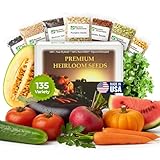
At 135 types, this is the broadest seed catalogue in this roundup. Survival Essentials frames it around food production, and the coverage is deep enough that you can rotate crops aggressively, match varieties to different microclimates on a large property, and still have alternatives if a season goes wrong. It suits committed growers, homesteaders, and anyone building a garden that has to be genuinely resilient rather than merely stocked.
Key Specs
- Type count: 135 types
- Labeling: Non-GMO, food-focused mix
- Format: Sealed vault container with labeled packets
- Crop scope: Vegetables, fruits, and culinary categories
- Best for: Large gardens, crop rotation, microclimate matching
- Price tier: Premium
Strengths
Variety depth is a resilience strategy, not just a shopping preference. With 135 types you can plant cool-season and warm-season crops, stagger harvests, and shift to different varieties when one fails — the same principle as diversifying an investment portfolio, applied to food. It also gives you real options for different soil conditions: a wet corner, a sandy slope, a shady edge. Fewer than 50 varieties and you start running out of answers for problem spots.
Pros
- Highest variety count in this roundup at 135 types
- Enables genuine crop rotation and succession planning
- Lets you match varieties to different soil and light conditions
- Food-focused selection rather than ornamental filler
- Strong fit for homestead-scale growing
Cons
- Premium price is a real commitment
- 135 types is overwhelming for a beginner with a small plot
- Spread across many types means moderate seed per type
- You will inevitably ignore a portion of the catalogue
How It Compares
Against the Gardeners Basics Ultimate Survival Seed Kit, 140 Varieties with Ammo Can, these two go head to head on nearly identical variety counts. The difference is the container: Gardeners Basics ships in a rigid gasketed ammo can, which is a materially better long-term storage vessel, while Survival Essentials focuses on the seed catalogue itself. If you plan to store for a decade, the ammo can tips it; if you want the widest seed selection and will invest in your own storage container, this vault is excellent.
8. Back to the Roots 100% Heirloom Rescued Seeds Variety Pack – Best Budget Mix with Herbs and Flowers
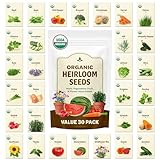
Back to the Roots is known for organic gardening products and its rescued-seed sourcing, and this 30-pack leans broader than pure vegetables — organic veggies, herbs, and flowers. The flower and herb inclusion is a deliberate difference: herbs season food and have culinary value, while flowers support pollinators, which directly improves vegetable yields. It suits small-space growers, beginners, and anyone who wants a garden that feeds both the kitchen and the bees.
Key Specs
- Pack count: 30 packets
- Contents: Organic vegetables, herbs, and flowers
- Labeling: 100% heirloom
- Sourcing: Rescued-seed model aimed at preventing seed waste
- Best for: Pollinator-friendly kitchen gardens, small spaces
- Price tier: Budget
Strengths
Including herbs and flowers is a smarter design than it first appears. Pollinator plants increase fruit set on squash, cucumbers, and tomatoes, and culinary herbs are among the highest-value-per-square-foot crops you can grow. The rescued-seed angle also means the pack often includes varieties that would otherwise go unsold — a practical, low-cost way to get genetic diversity into your garden.
Pros
- Herbs and flowers included, not just vegetables
- Pollinator-friendly mix can improve vegetable yields
- Budget price makes it an easy add-on or starter
- Heirloom, organic-focused sourcing
- Well suited to small gardens and containers
Cons
- Only 30 packets, and some are flowers rather than food
- Not a calorie-focused survival reserve
- Lower total seed volume than mid-range vaults
- Rescued-seed variety selection can vary between packs
How It Compares
Against the Gardeners Basics Survival Seed Vault Kit, this pack trades some vegetable focus for herbs, flowers, and a small-space orientation. If you want strictly food calories, Gardeners Basics is the more direct choice; if you want a garden ecosystem with pollinators and culinary herbs, Back to the Roots is the better fit at a similar budget tier. Against the HOME GROWN 15 Variety Vault, this pack spreads thinner but wider in crop type.
9. HOME GROWN 70 Variety Vegetable & Herb Survival Garden Kit – Best for Herb-Heavy Cooking Gardens

HOME GROWN’s 70-variety kit carries 30,600+ seeds, which works out to roughly 437 seeds per variety — a healthy middle ground between exploration packs and bulk reserves. The mix explicitly includes culinary herbs alongside vegetables, so it suits households that cook from the garden rather than just stock it. It is a mid-range vault aimed at people who want a full kitchen garden with real depth.
Key Specs
- Variety count: 70 varieties
- Seed volume: 30,600+ seeds
- Average per variety: Roughly 437 seeds per variety
- Contents: Vegetables and culinary herbs
- Labeling: Survival garden kit, non-GMO heirloom category
- Best for: Full kitchen gardens with herb production
The roughly 437 seeds per variety is a genuinely comfortable number. It is enough to plant a solid row, keep some back, and still have a second attempt if germination is poor or a late frost takes your seedlings. This is the “no compromises” middle of the market — more variety than the 50-variety vaults, more seed per variety than the 100-variety vaults.
Strengths
The herb inclusion is what separates this from pure vegetable vaults. Fresh herbs are expensive to buy and easy to grow, and in a survival context they make stored staples far more palatable — beans and rice get old fast without seasoning. Pairing 70 varieties with a reasonable per-variety seed count makes this one of the most practically balanced vaults in the mid-range tier.
Pros
- 70 varieties with roughly 437 seeds each — good balance of breadth and depth
- Culinary herbs included, which most vegetable-only vaults omit
- 30,600+ seeds supports multiple seasons
- Mid-range price for upper-mid-range capability
Cons
- Not as herb-heavy as a dedicated herb kit, not as vegetable-deep as a 100-variety vault
- Fewer total seeds than the 50,000+ B&KM vault
- Herb seeds have shorter storage life than many vegetable seeds
- 70 varieties can still overwhelm a beginner
How It Compares
Against the Survival Essentials 100 Variety vault, this kit gives you 30 fewer varieties but roughly 2.5x more seed per variety — a better planting proposition, less of an exploration tool. Against the B&KM Farms 50,000+, HOME GROWN wins on variety count and herb inclusion, while B&KM wins on total seed volume and per-variety count. If you cook with herbs, this one is the more useful vault.
10. Gardeners Basics Ultimate Survival Seed Kit with Ammo Can – Best for Long-Term Storage

The distinguishing feature here is the ammo can. A rigid, gasketed metal container resists humidity, temperature swings, and pests far better than a pouch or bag — and humidity is the single biggest killer of stored seed. With 140 varieties inside, this is both the largest catalogue in the roundup and the best-protected. It suits preppers storing for a decade, homesteaders with serious acreage, and anyone who wants to buy once and not think about it again.
Key Specs
- Variety count: 140 varieties
- Container: Rigid ammo can with sealing gasket
- Protection: Moisture-resistant, pest-resistant, crush-resistant
- Labeling: Non-GMO heirloom, individually labeled packets
- Format: Ammo-can vault (approx. .50-caliber can dimensions, roughly 11 x 7 x 5.5 in class)
- Best for: Long-term storage, large gardens, buy-once reserves
Strengths
The container is the product. Seed viability falls fastest when moisture and temperature fluctuate, and a gasketed ammo can dramatically slows that decline compared with a resealable bag. It also stacks, survives being dropped, and keeps rodents and insects out — three failure modes that quietly destroy bagged seed reserves. Combined with 140 varieties, you get a vault that is genuinely built for the long haul rather than for next spring.
Pros
- Gasketed ammo can is the best storage vessel in this roundup
- 140 varieties — the largest catalogue alongside the Survival Essentials 135
- Resists moisture, pests, and physical damage
- Can be stored in a garage, shed, or closet without much worry
- Strong buy-once, store-long option
Cons
- Highest price tier — the container is a real part of the cost
- Heavier and bulkier to store than a pouch
- 140 varieties is more than most small gardens can use
- You still need to manage humidity inside the can with desiccant over long periods
How It Compares
Against the Survival Essentials 135 Types vault, this is a near-tie on variety and a clear win on storage hardware — the ammo can is the deciding factor if your horizon is five to ten years rather than one. Against the B&KM Farms 100,000+, you trade raw seed volume (100,000+ seeds versus 140 varieties’ worth) for container quality. For pure long-term durability, the ammo can wins; for maximum seed quantity at a similar price, B&KM’s premium vault wins.
11. HOME GROWN 15 Variety Survival Seed Vault – Best Lowest-Cost Starter

HOME GROWN’s smallest vault packs 15 varieties and 8,800+ seeds, which is roughly 585 seeds per variety — the highest per-variety ratio in this entire roundup. That is an unusual and genuinely useful design choice: instead of spreading thin across dozens of crops, it gives you a real quantity of a focused set. It suits first-time vault buyers, small households, and anyone who wants to plant a handful of crops properly rather than dabble in fifty.
Key Specs
- Variety count: 15 varieties
- Seed volume: 8,800+ seeds
- Average per variety: Roughly 585 seeds per variety
- Labeling: Survival seed vault category
- Format: Compact pouch or boxed set
- Best for: First vault, small gardens, focused planting
Strengths
At roughly 585 seeds per variety, this vault lets you plant a real block of each crop, replant after a failure, and still have seed left. That is more useful than a 100-variety vault where each variety gives you 175 seeds. Fifteen varieties is also a manageable number for a beginner to actually learn — you can research each crop, plant it properly, and build skill instead of scattering seed across crops you don’t understand.
Pros
- Highest seeds-per-variety ratio in this roundup at roughly 585
- Lowest-commitment price point
- Manageable 15-crop learning curve for beginners
- Enough seed per crop to replant after a failure
Cons
- Only 15 varieties — limited crop diversity
- Not enough variety to hedge against multiple crop failures
- Small total volume limits how much land you can plant
- Compact packaging offers less long-term protection
How It Compares
Against the HOME GROWN 25 Variety Survival Seed Vault, this is the smaller sibling: 15 varieties and 8,800 seeds versus 25 varieties and 12,000 seeds. Per variety, the 15-variety vault actually gives more seed (roughly 585 versus 480), so if you want depth over breadth, it wins. Against the Gardeners Basics Survival Seed Vault Kit, the two are in the same budget class, but HOME GROWN gives a clearer per-variety seed count.
12. HOME GROWN 25 Variety Survival Seed Vault – Best Budget Step-Up

The 25-variety vault adds ten crops and roughly 3,200 seeds over HOME GROWN’s smallest kit, landing at 12,000+ heirloom non-GMO seeds with high-germination labeling. That works out to roughly 480 seeds per variety. It suits growers who found a 15-variety vault too narrow but aren’t ready to spend mid-range money, and households that want a slightly broader kitchen garden without a big outlay.
Key Specs
- Variety count: 25 varieties
- Seed volume: 12,000+ seeds
- Average per variety: Roughly 480 seeds per variety
- Labeling: Heirloom, non-GMO, high-germination claim
- Format: Compact survival vault packaging
- Best for: Budget growers wanting more crop choice
Strengths
The germination labeling matters in a survival context — seed that doesn’t sprout is worthless no matter how many varieties the box claims. Roughly 480 seeds per variety is still comfortably above the “one attempt” threshold, so you retain the ability to replant. Twenty-five crops is a reasonable hedge: if two or three fail, you still have twenty-two others producing.
Pros
- 25 varieties at a budget price
- Roughly 480 seeds per variety — enough for replanting
- High-germination labeling signals quality control
- Good middle step between starter and mid-range vaults
Cons
- Still fewer varieties than mid-range 50-variety vaults
- 12,000+ seeds limits planting scale
- Budget packaging is less protective than a rigid container
- Less herb and specialty-crop coverage
How It Compares
Against the HOME GROWN 15 Variety Vault, you gain ten varieties and 3,200 seeds but lose per-variety depth (roughly 480 versus 585 seeds each). Buy the 25 if you want more crop choices; buy the 15 if you want to plant each crop more heavily. Against the B&KM Farms 30,000+, this vault costs less but delivers less than half the total seed and five fewer varieties — the B&KM is the meaningful step up if your budget stretches.
How to Choose a Non-GMO Heirloom Survival Seed Vault
The single most common mistake buyers make is chasing the variety count. A vault advertising 200 varieties sounds impressive, but if it holds 20,000 seeds, that’s 100 seeds per variety — barely enough to plant one row and no margin for failure. Run the division before you buy. Seeds per variety is the number that tells you whether a vault can actually feed you.
Start With Seeds Per Variety, Not Variety Count
Here is the arithmetic that matters. A 50-variety vault with 50,000 seeds gives you roughly 1,000 seeds per variety. A 100-variety vault with 17,500 seeds gives roughly 175. A 15-variety vault with 8,800 seeds gives roughly 585. For a household planting a serious garden, anything under about 300 seeds per variety means you get one attempt per crop with no room to replant after a frost, a pest outbreak, or simply bad germination. If you want to plant heavily and save seed, aim for 500+ per variety. This one calculation eliminates most of the confusion in this category.
| Vault Type | Variety Count | Total Seeds | Seeds Per Variety | Realistic Use |
|---|---|---|---|---|
| Focused budget vault | 15 | 8,800+ | ~585 | Plant heavily, replant after failure |
| Broad budget vault | 25 | 12,000+ | ~480 | More crop choice, still replant-capable |
| Balanced mid-range vault | 50 | 50,000+ | ~1,000 | Multi-season diversification |
| Herb-rich mid-range vault | 70 | 30,600+ | ~437 | Kitchen garden with seasoning crops |
| Exploration vault | 100 | 17,500 | ~175 | Trial varieties, then buy bulk of winners |
| Bulk reserve vault | 50 | 100,000+ | ~2,000 | Large plots, seed saving, sharing |
| Deep-catalogue premium vault | 135–140 | Varies by brand | Moderate | Rotation, microclimate matching, homesteads |
Match the Vault to Your Climate
Heirloom seed vaults are usually assembled with a broad temperate-climate bias, which means they skew toward tomatoes, peppers, squash, beans, and brassicas. If you garden in a short-season northern climate, you want the vault’s crop list to include fast-maturing varieties and cold-hardy greens — and you should expect to start many crops indoors to make the season work. If you garden in a hot, humid southern climate, you’ll want heat-tolerant varieties, bolt-resistant greens, and crops that set fruit in high night temperatures; some standard vault varieties will simply fail there. If you garden in an arid climate, prioritize drought-tolerant crops: beans, sorghum-type grains, amaranth, and deep-rooted root vegetables. The practical takeaway is that no single vault is climate-optimized for everyone, so read the variety list against your USDA hardiness zone and your realistic frost dates rather than trusting the packaging.
Understand What “Heirloom” and “Non-GMO” Actually Guarantee
Heirloom means the variety is open-pollinated and has a documented history, typically pre-dating modern commercial breeding. Open-pollinated is the operational detail that matters: it means you can save seed from your crop and get plants like the parent, season after season. Hybrid seed will not breed true, which is why a survival vault should be heirloom. Non-GMO means the seed is not genetically engineered — a meaningful distinction for some buyers, though it’s worth noting that almost no home-garden vegetable seed is genetically modified in the first place; the label is more relevant on commodity crops. Neither term tells you anything about germination rate, which is why high-germination claims on the packaging are worth seeking out.
Storage Format Determines How Long Your Vault Lasts
Seed viability follows a simple rule: every 1% drop in seed moisture and every 10°F drop in storage temperature roughly doubles storage life. In practice, that means the container matters as much as the seed. There are three tiers in this category:
- Pouch or resealable bag: Adequate for a few years in a cool, dark, dry cupboard. Every time you open it, the whole reserve breathes in humidity.
- Individually sealed packets in a box: Better, because opening one packet doesn’t disturb the rest. Best for vaults you’ll actually use incrementally.
- Rigid gasketed container (ammo can class): The strongest option. Resists moisture swings, pests, and crushing, and holds a stable internal environment for years. Add a desiccant packet and you’ve got the best practical long-term setup short of refrigeration.
If you buy a bagged vault and want to store it seriously, spend a little more on an airtight container and a few desiccant packets. It’s the cheapest upgrade in this entire category.
Sizing by Budget, Space, and Experience
| Your Situation | Recommended Vault Type | Why |
|---|---|---|
| Total beginner, balcony or a few pots | Budget 15–30 packet vault | Low cost, learn germination, prove you’ll garden |
| Small raised-bed garden, 2–4 beds | Budget or mid-range 25–50 variety vault | Enough choice without paying for unusable volume |
| Cook who uses herbs daily | 70-variety vegetable and herb kit | Herbs included; avoids buying them separately |
| Suburban plot, wants food security | Mid-range 50-variety, 50,000+ seeds | ~1,000 seeds per variety supports multi-season planting |
| Unfamiliar land, wants to trial crops | 100-variety exploration vault | Test many varieties cheaply, then buy bulk of winners |
| Homestead, quarter-acre or more | Premium bulk or 135–140 variety vault | Rotation, seed saving, sharing with neighbors |
| Storing for 5–10 years, garage or shed | Premium vault in a rigid gasketed container | Container protection outweighs variety count |
| Prepper on a fixed budget | Budget 15–25 variety vault plus a separate airtight container | Best combination of cost and long-term protection |
The Consumable Reality: What Wears Out First
Seed is a living thing with a shelf life, and the vault is only as good as the conditions around it. Here’s what degrades first, in order:
- Germination rate: Declines gradually from the moment the seed is harvested. Most well-stored vegetable seed holds strong germination for three to five years, and declines noticeably after that. Losing 10% germination a year is normal for seed stored at room temperature.
- Moisture: The number one killer. Seed in a humid garage or a damp basement can lose viability in a single season. This is why gasketed containers and desiccant exist.
- Heat: Every 10°F above room temperature roughly halves storage life. A shed that hits 100°F in summer is a hostile environment for a seed vault.
- The container seal: Rubber gaskets harden and crack over years. On an ammo-can style vault, inspect the gasket every couple of years and replace it if it’s stiff or cracked.
- Herb and onion-family seed: Among the shortest-lived kitchen seeds — often good for only one to two years, well under the vegetable average. If your vault’s selling point is herbs, plan to use or replace those first.
- Labels and instructions: Paper and adhesive fail faster than seed. Photograph your variety list and planting instructions, or copy them into a document, so you’re not decoding faded labels in year four.
Common Mistakes to Avoid
- Buying a vault and never testing it. Germinate ten seeds from one packet on a damp paper towel every year or two. If fewer than seven sprout, that variety’s viability is slipping and you should use it now rather than save it.
- Storing in the garage by default. Garages swing in temperature and humidity more than any room in the house. A closet or the back of a cool pantry is usually better.
- Opening the bulk bag every spring. Each opening exchanges the dry internal air for humid room air. If you have a single bulk bag, decant what you need into a small jar and reseal the main bag promptly.
- Ignoring days-to-maturity. A variety that needs 110 days won’t ripen if your season is 90 days. Check this number against your frost-free window before you plant, not after.
- Planting everything at once. Succession planting — sowing small quantities every two to three weeks through the season — produces far more food from the same seed than one big planting day.
- Assuming non-GMO means high germination. They are unrelated. Look for a germination claim or test the seed yourself.
- Forgetting that seed saving closes the loop. With heirloom open-pollinated varieties, you can save seed from your best plants and never buy again. That is the actual point of a survival vault.
The Upgrade Path
Most people should not buy their forever vault first. The sensible progression starts with a budget 15–30 variety vault to test germination and confirm you’ll actually garden, moves to a mid-range 50-variety vault once you know your space and climate, and only then goes premium — either for seed volume (100,000+ seeds), variety depth (135–140 types), or storage durability (an ammo-can container). Buying the premium vault first is common and usually wasteful, because you don’t yet know which crops your particular patch of ground grows well. Trial first, then commit.
Frequently Asked Questions
How long do heirloom seeds in a survival vault actually last?
Stored cool (around 60–70°F), dark, and dry in a sealed container, most heirloom vegetable seed maintains good germination for three to five years, with gradual decline after that. Under better conditions — a stable 50–60°F and sealed with desiccant — you can stretch that considerably, and some seeds like beans and corn will still germinate after a decade. The variables that matter most are moisture and temperature swings, not the seed itself.
Is a vault with more varieties automatically better?
No — and this is the most important point in the whole category. Divide the total seed count by the variety count and look at the result. A 200-variety vault with 20,000 seeds gives you 100 seeds per variety, which is barely one planting. A 50-variety vault with 50,000 seeds gives about 1,000 each, which supports planting, replanting, and seed saving. Variety breadth is a nice-to-have; seeds per variety determines whether the vault can actually feed you.
Do I need a non-GMO vault specifically?
If you want to save seed and replant year after year, you need open-pollinated heirloom seed — that’s the property that lets offspring resemble the parent. The non-GMO label is a separate claim about genetic engineering, and very little home-garden vegetable seed is genetically modified to begin with. So the non-GMO label is reassuring but not the feature that makes a vault work; open-pollination is.
How should I store my seed vault to maximize its life?
Keep it cool, dark, and dry, and keep the temperature as stable as possible. A pantry or interior closet beats a garage or shed, which swing in humidity and heat. Leave seed in its original sealed packets, and if your vault came in a bag or box, consider transferring it to a rigid airtight container with a desiccant packet. Every 10°F reduction in storage temperature roughly doubles seed life, so a slightly cooler spot is a real gain.
Can I really grow enough food from a seed vault to survive on?
It depends almost entirely on your land, water, and skill, not the vault. A 50,000-seed vault is theoretically capable of producing a substantial amount of food, but actual yields depend on soil quality, irrigation, pest pressure, and how much you’ve practiced. Treat a vault as the genetic starting point for a food plan that also includes soil preparation, water access, and hands-on gardening experience — the seed is the easy part.
What’s the difference between the 50,000-seed and 100,000-seed versions of the same vault?
Usually just volume — the variety list stays the same. That means per-variety seed counts roughly double, from about 1,000 to about 2,000. The larger version makes sense if you’re planting a quarter-acre or more, want to save seed, or plan to share with neighbors. For a typical suburban garden, the smaller version is the better value because you won’t use the extra seed before it ages.
Do seed vaults include growing instructions?
Most include at least basic planting guidance, and some provide per-variety packets with sowing depth, spacing, and days to maturity. That per-variety labeling is far more useful than a single folded sheet, especially once you’ve opened the vault and separated the packets. If your vault only ships with a general guide, photograph it and note the days-to-maturity for each variety you plant.
Which crops should I plant first from a survival vault?
Start with the calorie and storage crops — beans, squash, potatoes, corn, and root vegetables — because they produce the most food value per square foot and keep well without refrigeration. Add fast-maturing greens and radishes for quick early harvests so you get feedback early in the season. Save the slower, fussier crops for once you’ve established a working garden rhythm.
Final Recommendations by Situation
If you’re a total beginner: start with the Gardeners Basics Survival Seed Vault Kit or the HOME GROWN 15 Variety Survival Seed Vault. Both are cheap, and HOME GROWN’s 15-variety vault gives you the highest seeds-per-variety ratio here, which means a failed crop doesn’t end your season.
If you have a real garden and want the best all-round value: the B&KM Farms 50,000+ Non-GMO Heirloom Seeds, 50 Varieties is the pick — roughly 1,000 seeds per variety, food-crop focused, mid-range price.
If you cook with herbs: the HOME GROWN 70 Variety Vegetable & Herb Kit covers the kitchen garden plus seasoning crops in one purchase.
If you’re still learning your land: the Survival Essentials 100 Variety Vault or the Back to the Roots pack lets you trial varieties cheaply, so you can buy bulk seed of the winners next year.
If you’re planting at homestead scale: the B&KM Farms 100,000+ Seeds vault gives roughly 2,000 seeds per variety, enough for multi-year planting and seed saving.
If you’re storing for five to ten years: the Gardeners Basics Ultimate Survival Seed Kit with Ammo Can is the strongest choice, because the gasketed rigid container protects seed far better than any bag. Pair it with a desiccant packet and keep it in a cool interior closet, and you’ve built a vault that will still germinate when you need it.