Key takeaways
- Shop vac vs car vacuum compared on suction, wet pickup, reach and storage, with five real picks from a 16-gallon Craftsman to a compact 12V handheld.
Disclosure: As an Amazon Associate, I earn from qualifying purchases.
A wet/dry shop vac and a dedicated car vacuum both promise a clean interior, but they are built for different messes. The shop vac is a corded garage machine that swallows sawdust, gravel and spilled coolant without complaint. The car vacuum is a small handheld that lives in the trunk and handles crumbs and pet hair in two minutes flat. Choosing between them comes down to the work you actually do: deep detailing sessions and garage cleanup, or quick touch-ups between drives. This comparison breaks down where each type wins, then lists five real products — three from the shop vac side, including one compact bridge model, and two from the car vacuum side — so you can match the tool to your routine.
The Core Difference
A shop vac moves a lot of air through a wide hose into a big tank, and it can pick up liquids as well as dry debris. That combination makes it the better detailing tool: strong, steady suction pulls grit out of carpet pile, the hose reaches under seats, and wet mode handles shampoo water, melted snow and spilled drinks. The trade-offs are size, noise and setup time. It needs garage storage space, a power outlet and a minute of unrolling before you clean anything.
A car vacuum gives up nearly all of that power for convenience. Cordless and 12V handhelds are light, start instantly and store in the car itself, but the dust bowl is tiny, suction drops as it fills, and almost all of them are dry-only. They are maintenance tools, not deep-cleaning tools. One honest warning applies to the shop vac side: peak horsepower numbers are a marketing figure measured under lab stall conditions, not real working power, and they are not comparable across brands. Judge a shop vac by its tank size, hose diameter and filter system instead.
How to Choose
- Start with the mess. Regular wet jobs — slush, spills, carpet shampooing — require a wet/dry shop vac. Dry crumbs and dust only? A handheld is enough.
- Suction, honestly measured. Ignore peak HP comparisons between brands. Airflow, hose diameter and a clean filter determine real pickup; a clogged filter makes any vac feel weak.
- Capacity vs storage. Shop vac tanks run from about 2.5 to 20 gallons. Bigger tanks empty less often but eat garage floor space. Car vac bowls hold a few cups and need emptying every session or two.
- Filtration matters. Fine dust such as drywall or concrete dust needs a cartridge filter plus a filter bag in a shop vac, or it passes through and coats the motor. For wet pickup, remove the paper filter and bag and fit the foam sleeve. Handheld car vacs rely on small washable filters that need regular rinsing.
- Reach and attachments. A shop vac with a 2-1/2 inch hose and a car nozzle kit covers floors, trunks and interiors. A handheld’s built-in crevice tool is faster for a single footwell.
- Noise and power source. Shop vacs are loud enough that hearing protection is sensible. A 12V car vacuum should be run with the engine on so it does not drain the battery.
The Five Picks
CRAFTSMAN CMXEVBE17595 16 Gallon Wet/Dry Vac — The Shop Vac Benchmark

This is the classic big-tank garage machine and the strongest argument for the shop vac side. Sixteen gallons means a full garage sweep plus both cars without stopping to empty, and the wide hose and car nozzle make it a genuinely good detailing vac. The rear blower port clears leaves and dust, and the oversized drain makes wet jobs far less messy to empty.
Specs:
– 16-gallon tank on casters with a push handle
– 6.5 peak HP motor (maker’s peak figure, not comparable across brands)
– 2-1/2 in × 7 ft Dual-Flex hose
– Rear blower port and built-in oversized drain
– Qwik-Lock fine-dust cartridge filter; filter dust bag included
– Accessory kit with utility nozzle, car nozzle, crevice tool and wands
Stanley SL-18116P 6 Gallon Wet/Dry Vacuum — Mid-Size Shop Vac

If the Craftsman is more vac than your garage can store, this 6-gallon Stanley keeps the wet/dry ability and blower port in a footprint closer to a bucket. It is a sensible single-vac compromise for apartment garages and smaller workshops, with enough tank for one car and a floor sweep per session.
Specs:
– 6-gallon polypropylene tank
– 4 peak HP motor, corded 120V
– Swiveling casters and top carry handle
– Blower port for clearing dust and leaves
– Foam sleeve included for wet pickup
– Accessory set with crevice and utility nozzles
Armor All AA255W 2.5 Gallon Utility Vac — The Bridge Pick
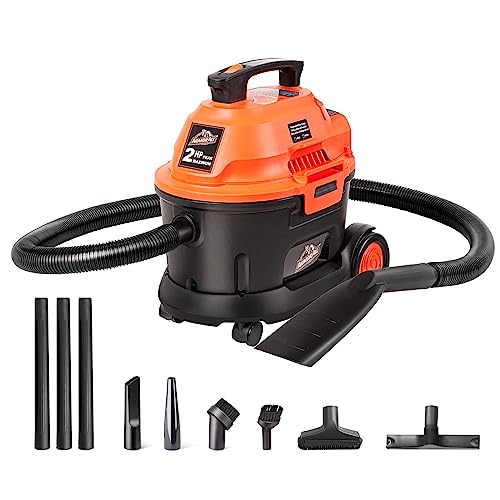
The AA255W blurs the line between the two categories: it is a true wet/dry shop vac shrunk to handheld-adjacent size and kitted out specifically for cars. It will not replace a big vac for garage work, but for a driver with no storage space it delivers real wet pickup and a proper hose, which no pure car vacuum here can match.
Specs:
– 2.5-gallon polypropylene tank with wheel base and top handle
– 2 peak HP motor, corded
– 6 ft × 1-1/4 in hose and 12 ft power cord
– Reusable cloth filter for dry work, foam sleeve for wet pickup
– Converts to a blower for drying grilles and wheels
– Car-focused kit: deluxe car nozzle, crevice tool, detail brush, 2-in-1 utility nozzle
BLACK+DECKER dustbuster AdvancedClean CHV1410L — Cordless Car Vacuum

The CHV1410L shows what the car vacuum side does best: grab it off its charging base, clean a footwell, empty the bowl, done. The rotating slim nozzle genuinely helps between seats, and cyclonic action keeps suction steadier than basic handhelds as the bowl fills. It is dry-only and no substitute for a detailing session, but for weekly upkeep it is the tool you will actually use.
Specs:
– 16V MAX lithium-ion cordless handheld
– Cyclonic action for steadier suction
– Rotating slim nozzle for seat gaps
– Translucent bagless dirt bowl with washable filter
– Includes crevice tool and flip-up brush
– Wall-mountable charging base; dry pickup only
ThisWorx Car Vacuum Cleaner TWC-01 — 12V Corded Car Vacuum
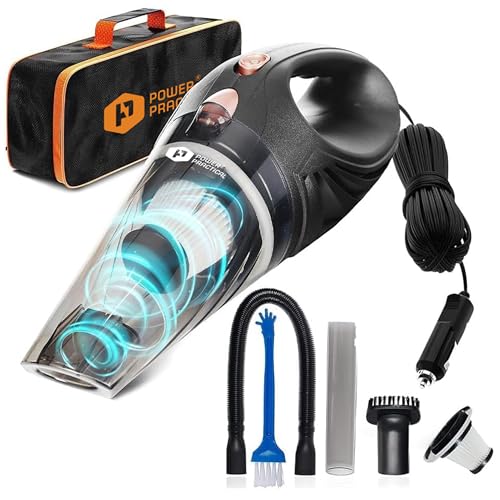
The ThisWorx takes the opposite approach to batteries: it plugs into the car’s 12V socket, so suction never fades mid-job and there is nothing to recharge. The 16 ft cord reaches the trunk of most cars from the front socket, and the kit bag keeps the attachments together in the trunk. Run the engine while you use it, and accept that the small bowl needs frequent emptying.
Specs:
– 12V DC, plugs into the vehicle accessory socket
– 16 ft power cord
– 106W motor
– Washable HEPA filter
– Three attachments (flat nozzle, extendable nozzle, brush head) plus carry bag
– Built-in LED light; dry pickup only
Usage and Safety Notes
Whichever side you choose, a few rules keep the machine and the car safe. Never vacuum flammable liquids such as gasoline or solvents, and never pick up hot ash — a shop vac’s airflow can fan embers and its tank is not rated for fuel. Before any wet pickup in a shop vac, remove the paper filter and dust bag and fit the foam sleeve, then empty the tank and leave it open to dry afterward; a sealed damp tank grows mildew quickly and the smell transfers to the next job. Fine dust work calls for a filter bag plus cartridge filter to protect the motor. Use a GFCI-protected outlet for wet work, wear hearing protection with full-size shop vacs, and run 12V car vacuums with the engine running to protect the battery.
FAQ
Can a shop vac damage a car interior?
Not when used with the right nozzle. Use the car nozzle or a brush tool on carpets and upholstery, keep hard utility nozzles off leather, screens and piano-black trim, and the strong suction becomes an advantage rather than a risk.
Can a car vacuum clean a garage instead?
No. The bowl fills in minutes, there is no wet pickup on most models, and battery or 12V power cannot match corded airflow. It is a spot-cleaning tool.
Is a higher peak HP shop vac always stronger?
No. Peak HP is a laboratory stall figure that brands measure differently, so it cannot be compared across makers. Tank size, hose diameter and a clean, correct filter tell you far more about real cleaning power.
Should I own both?
If you detail regularly and have the storage, yes: the shop vac does monthly deep cleans and all garage work, while the handheld handles the weekly two-minute tidy that keeps the deep cleans rare. If you must pick one, pick based on whether wet pickup matters to you.
Conclusion
The shop vac wins on power, capacity and wet pickup; the car vacuum wins on speed, size and the likelihood you will bother using it. For most car owners with a garage, a mid-size or large wet/dry vac is the primary tool and a handheld is the optional convenience. For drivers without storage, the compact Armor All or a 12V handheld covers the realistic messes. Match the machine to the mess, keep the filters clean, and either choice will serve you well.
More from Amazon
Programs that pair well with the guide above. Offers and eligibility are set by Amazon and may change.
Free shipping on eligible items, Prime Video and more. Eligible new members can start with a free trial.
Start a Prime free trialAudiobooks and podcasts to listen to on the go. Eligible new members can start with a free trial.
Try Audible freeAd-free music streaming. Eligible new subscribers can start with a free trial.
Try Music Unlimited freeA free business account with business pricing and bulk-buying tools for work, shop or home office.
Create a business accountAs an Amazon Associate we earn from qualifying purchases.