Our Top Picks


Disclosure: As an Amazon Associate, I earn from qualifying purchases.
A valve cover gasket leak usually announces itself as a burning-oil smell at stoplights, a wet seam along the top of the engine, or oil creeping down toward the exhaust manifold. Treat it as more than a driveway stain: oil that reaches a hot exhaust can smoke heavily and, in the worst case, ignite. The good news is that this is one of the cheapest oil leaks on the engine to fix — provided you diagnose it correctly, because the most common mistake in this area is confusing a valve cover leak with a head gasket failure, a job that costs many times more. This guide covers how to tell the two apart and five complete gasket sets for popular Honda, GM, Toyota, Jeep, and Ford engines.
How to Choose
Confirm where the oil starts. Valve cover leaks begin high on the engine, at the seam between the cover and the cylinder head, and oil runs downward from there. A head gasket leak starts lower, at the head-to-block joint, and often brings coolant symptoms with it: milky residue under the oil cap, coolant loss with no puddle, white exhaust smoke, or overheating. If the highest wet point is the valve cover seam and the coolant is clean and full, you are almost certainly looking at a gasket set, not a head gasket.
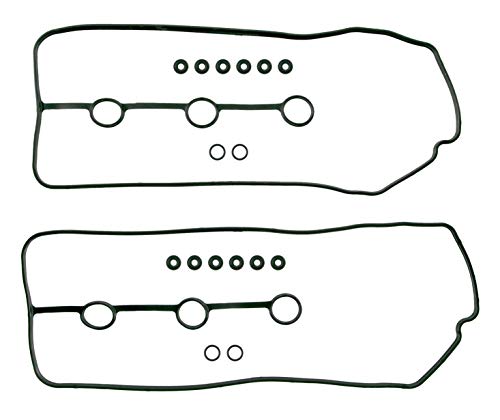
Buy the complete set, not the perimeter gasket alone. On most modern engines the set must include spark plug tube seals and bolt grommets. Oil pooling in the plug wells from failed tube seals soaks the coil boots and causes misfires that get misdiagnosed as bad coils. Grommets harden and lose clamping force, so reusing them under a new gasket is a false economy.
Material matters. Molded silicone rubber gaskets are the standard for modern engines: they stay flexible through heat cycles and seal without sealant across the whole rail. Cork and cork-rubber composites belong to older engines and generally do not last as long on late-model covers. Note that all five picks below are Fel-Pro sets — for these applications, Fel-Pro was the brand with verifiable listings across the board, and the article says so openly rather than padding the list with unverifiable alternatives.
Check the PCV valve before you blame the gasket. A stuck PCV valve lets crankcase pressure build, and that pressure pushes oil past the newest gasket you install. If the leak returns within months, or several seals weep at once, test or replace the PCV valve and check its hose before doing the job twice.
Respect the torque spec. Valve cover bolts are torqued in inch-pounds, in a sequence, usually working from the center outward. Over-torquing splits the gasket, cracks or warps plastic covers, and snaps small bolts in the head. RTV sealant is only a small dab at sharp corners and timing-cover joints where the service manual calls for it — it is not a substitute for the gasket itself.
The 5 Best Valve Cover Gaskets
1. FEL-PRO VS 50614 R — Honda and Acura K-Series Fours

Specs:
– Fitment: Honda Accord 2003–2012, Civic, CR-V 2002–2014, Element; Acura TSX, RSX, RDX, ILX (2.0L/2.3L/2.4L K-series)
– Material: Molded silicone rubber (PermaDryPlus)
– Includes: Perimeter gasket, spark plug tube seals, bolt grommets
– OE cross reference: Honda 12341-R40-A00
The K-series four is one of the most common valve cover jobs on the road, and this set covers it properly: the tube seals are the real prize, because K-series plug wells fill with oil long before the perimeter seam lets go. The molded silicone rubber construction tolerates the imperfect sealing surfaces Fel-Pro designs for, which matters on covers that have been off several times. Verify your exact engine code before ordering, since coverage spans several K variants.
2. FEL-PRO VS 50504 R-1 — GM LS V8 Trucks and SUVs
Specs:
– Fitment: Chevrolet Silverado 1500 and other GM LS-powered trucks and SUVs
– Material: Molded rubber
– Includes: Gaskets for both valve covers with grommets
– Part number: VS50504R1
LS valve covers are a straightforward job, and this set supplies both banks with the grommets that actually set the clamping load. On LS engines the grommets matter as much as the gasket: hardened originals let the cover float and weep at the corners even with a fresh gasket in place. Clean the cover rails thoroughly and check the covers themselves for warping if a leak persists after replacement.
3. FEL-PRO VS 50634 R — Toyota Tacoma
Specs:
– Fitment: Toyota Tacoma (V6 and four-cylinder applications by year)
– Material: Molded rubber
– Includes: Valve cover gasket set
– Part number: VS50634R
Tacoma valve covers weep slowly for years before owners notice the oil film on the side of the head, usually when it starts reaching the exhaust and smelling after a drive. This set is the standard replacement for the job. Tacoma covers sit close to the exhaust on the V6, so treat any burning smell as a prompt to fix it soon rather than at the next oil change, and confirm whether your truck needs one gasket or a pair for both banks.
4. FEL-PRO VS 50805 R — Chrysler 3.6L Pentastar V6
Specs:
– Fitment: Ram 1500 2013–2019, Jeep Grand Cherokee, Chrysler 300, Town & Country and other 3.6L Pentastar applications
– Material: Rubber
– Includes: Valve cover gasket set
– Part number: VS50805R
The Pentastar’s plastic valve covers make torque discipline the whole job: the bolts are small, the spec is low inch-pounds, and an over-eager ratchet warps the cover rail and guarantees the leak comes back. This set replaces the gaskets on an engine family that also hides its PCV valve at the back of one cover — check it while the covers are off, because a restricted PCV is a known repeat-leak cause on this engine.
5. FEL-PRO VS 50814 R — Ford Edge

Specs:
– Fitment: Ford Edge (3.5L V6 applications)
– Material: Molded rubber
– Includes: Valve cover gasket set
– Part number: VS50814R
The Edge’s transverse V6 puts the rear bank under the intake, so the gasket job overlaps with intake removal — all the more reason to fit a quality set and new grommets the first time rather than repeat the labor. Because access is the expensive part on this application, inspect the plug wells for oil while everything is apart and replace tube seals if your set configuration includes them separately.
Usage and Buying Notes
Clean both mating surfaces until they are dry and free of old sealant; a new molded gasket seals against the surfaces as they are, not as you wish they were. Apply RTV only where the manual specifies — typically the joints where the timing cover meets the head — and give it the stated skin-over time before final torque. Torque in sequence, in inch-pounds, in at least two passes. After the first heat cycles, re-check for seepage at the corners and half-moon plugs, and degrease the engine so a returning leak is easy to spot. Finally, if the old gasket failed early or multiple seals weep together, replace the PCV valve and confirm the breather hoses are clear; pressure, not the gasket, is often the real fault.
FAQ
How do I tell a valve cover leak from a head gasket leak?
Height and coolant. A valve cover leak starts at the top seam of the engine and only leaks oil. A head gasket problem starts lower and usually adds coolant symptoms: milky oil, disappearing coolant, white smoke, or overheating. Clean the engine, drive, and find the highest wet point.
Why is there oil in my spark plug wells?
The spark plug tube seals have hardened and shrunk. Oil in the wells fouls coil boots and causes misfires. This is why you buy the full set with tube seals instead of the perimeter gasket alone.
Do I need sealant with a molded rubber gasket?
Almost never across the rail. Use only a small dab of RTV at the corners and timing-cover joints if the service manual calls for it. Excess RTV squeezed inside the engine can break loose and clog the oil pickup.
How tight should valve cover bolts be?
To the manual’s specification, which is in inch-pounds, not foot-pounds, tightened in the specified sequence. Guessing with a ratchet is how plastic covers warp and gaskets split.
The new gasket leaked again within months. What went wrong?
The usual suspects are a clogged PCV valve pressurizing the crankcase, reused hardened grommets, an over-torqued or warped cover, or a dirty sealing surface. Check the PCV first — it is the cheapest item on the list and the most commonly skipped.
Conclusion
A valve cover gasket set is one of the best-value repairs on an aging engine: it stops the burning smell, protects the exhaust side of the engine bay, and keeps oil out of the plug wells. Diagnose the height of the leak before fearing a head gasket, buy the complete set with tube seals and grommets, check the PCV valve, and torque in inch-pounds. Any of the five sets above covers its application properly.
More from Amazon
Programs that pair well with the guide above. Offers and eligibility are set by Amazon and may change.
Free shipping on eligible items, Prime Video and more. Eligible new members can start with a free trial.
Start a Prime free trialAudiobooks and podcasts to listen to on the go. Eligible new members can start with a free trial.
Try Audible freeAd-free music streaming. Eligible new subscribers can start with a free trial.
Try Music Unlimited freeA free business account with business pricing and bulk-buying tools for work, shop or home office.
Create a business accountAs an Amazon Associate we earn from qualifying purchases.