Key takeaways
- Best Storage Cabinets for Garages and Homes The best storage cabinets are powder-coated steel cabinets with adjustable shelves, a lockable door, and enough depth for the items you actually store—not simply the largest cabinet that fits the wall. For most…
Best Storage Cabinets for Garages and Homes
The best storage cabinets are powder-coated steel cabinets with adjustable shelves, a lockable door, and enough depth for the items you actually store—not simply the largest cabinet that fits the wall.
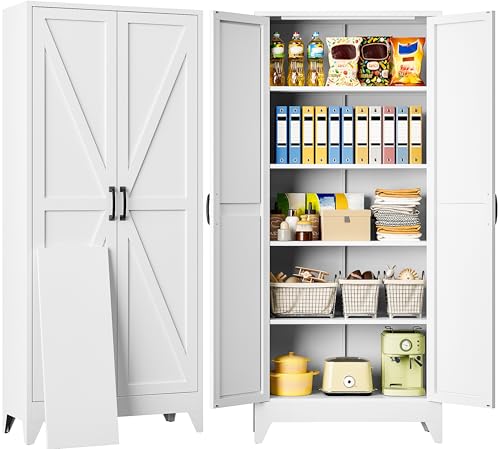
For most garages and workshops, a 72-inch-tall steel cabinet measuring about 36 inches wide and 18 inches deep offers the best balance of capacity, stability, and floor space. Choose a deeper 24-inch model for bulky tools and equipment, a shallow 12-inch cabinet for hallways or utility rooms, and a resin cabinet where moisture or occasional splashes make steel impractical.
Our top picks


As an Amazon Associate we earn from qualifying purchases at no extra cost to you. Ratings are shown as listed on Amazon.
Best Storage Cabinet Types by Situation
| Situation | Best cabinet type | Useful size | Typical weight capacity | Typical market range |
|---|---|---|---|---|
| General garage organization | Lockable steel utility cabinet | 36 W × 18 D × 72 H in | 600–900 lb total | $180–$450 |
| Heavy tools and power equipment | Reinforced steel cabinet or tall tool cabinet | 36–48 W × 24 D × 72 H in | 800–1,500 lb total | $350–$900 |
| Small workshop or apartment | Shallow steel cabinet | 24–30 W × 12–15 D × 60–72 H in | 300–600 lb total | $120–$350 |
| Damp garage, shed, or laundry area | Resin or high-density plastic cabinet | 30–36 W × 18 D × 65–72 H in | 250–600 lb total | $150–$400 |
| Living room, office, or entryway | Finished wood, laminate, or metal storage cabinet | 30–36 W × 12–16 D × 30–72 H in | 150–500 lb total | $150–$700 |
Capacity figures are usually maximum evenly distributed loads. A shelf rated for 150 pounds may bend if 120 pounds is concentrated in the center, so look for shelves with a folded front edge, underside stiffener, or reinforced support rails.
What to Check Before Buying
1. Dimensions and usable capacity
Measure the available space in three directions, then reserve clearance for doors, handles, and installation. A cabinet that is 36 inches wide may require 39–42 inches of unobstructed space if its doors open wide or its hinges project beyond the frame. Allow at least 2 inches above a cabinet for assembly and at least 3 inches behind it if the manufacturer requires ventilation or wall clearance.
External dimensions can be misleading. A cabinet listed as 18 inches deep may provide only 15–16 inches of internal depth after accounting for doors and the back panel. Measure the largest item you plan to store and add roughly 2 inches for hand clearance. For example, a 17-inch-deep toolbox generally fits more comfortably in a cabinet with at least 19 inches of usable depth.
Also check the route into the room. A tall assembled cabinet may not pass through a 30-inch doorway, around a stair landing, or under a low garage header. Flat-pack construction solves access problems but adds assembly time.
2. Weight capacity and stability
Compare both total cabinet capacity and individual shelf capacity. Paint cans, automotive fluids, fasteners, and power tools become heavy quickly. Four shelves rated at 150 pounds each may suggest 600 pounds of storage, but the cabinet frame, base, and casters may have lower limits.
For a practical estimate, add the weight of your planned contents and keep a 25 percent reserve. If your stored items total 480 pounds, target at least 600 pounds of rated capacity. This reserve reduces shelf deflection and leaves room for future purchases.
Anchoring is especially important for tall cabinets. Secure the cabinet to a wall stud or suitable masonry anchor where the instructions permit it. Do not rely on a lock or a heavy bottom shelf to prevent tipping. Cabinets with drawers or multiple doors can become front-heavy when opened.
3. Lockability and door design
A keyed cam lock is adequate for keeping children, visitors, or casual users away from tools and household chemicals. It is not a substitute for a security safe. If several people use the cabinet, consider a padlock hasp or a model with a replaceable cylinder, but check whether the lock controls both doors.
Double doors commonly use a fixed door and a secondary door secured by vertical rods. This design is more resistant to misalignment than a lightweight single latch, but it can be inconvenient when you need one-handed access. Sliding doors save aisle space and work well in narrow workshops, although their tracks collect dust and usually limit access to only part of the cabinet at a time.
For a home office or living area, soft-close hinges and concealed hardware matter more than a high security rating. For a garage, full-length hinges, a three-point latch, and doors that remain rigid when opened are more useful.
4. Material durability
Powder-coated steel is the strongest general-purpose choice. Look for steel panels around 0.7–1.0 mm thick, reinforced corners, and a finish with no exposed raw edges. Steel resists dents and supports heavy loads, but water trapped under boxes can still cause corrosion. Wipe spills promptly and avoid placing wet equipment directly on the bottom shelf.
Resin cabinets do not rust and are easier to clean, making them useful in humid garages, laundry rooms, and sheds. They are usually less rigid than steel, and their shelves may bow under concentrated loads. Check the temperature range before using one in an unheated space; some plastics become brittle in cold conditions and soften in high heat.
Wood and laminate cabinets are the most natural fit for living spaces. They hide clutter and offer better visual warmth, but particleboard edges can swell after water exposure. Choose sealed edges, adjustable leveling feet, and shelves designed for the intended load rather than assuming household cabinetry can hold workshop equipment.
5. Shelf adjustability
Adjustable shelves are valuable only when the adjustment range is practical. A cabinet with holes every 1 inch or less lets you create efficient zones for short containers, while 2-inch spacing may leave wasted vertical space. Check the number of shelf positions and the shelf supports: thin plastic clips are less dependable than steel pins or full-width rails.
For mixed storage, plan one tall compartment for bottles or a shop vacuum, two medium shelves for hand tools and boxes, and one low shelf for heavy items. Avoid storing a heavy toolbox on a high shelf even when the shelf rating allows it; the raised center of gravity makes the cabinet less stable.
Decision Matrix: Which Cabinet Fits Your Needs?
| Your priority | Recommended specification | Why it fits |
|---|---|---|
| Lowest reasonable cost | 18-gauge or lighter steel, 300–600 lb capacity, 2–4 shelves | Provides basic enclosed storage without paying for heavy reinforcement |
| Frequent workshop use | Reinforced steel, 600–1,000 lb capacity, 1-inch shelf adjustment, wall anchoring | Handles repeated access, heavier tools, and changing storage needs |
| Very limited floor space | 12–15-inch depth, sliding doors, wall-mount or anti-tip hardware | Preserves walking space and reduces door-swing conflicts |
| Damp or dirty location | Resin or galvanized steel, raised base, washable shelves | Reduces rust risk and makes cleanup easier |
| Living-space appearance | 12–16-inch depth, finished panels, quiet hinges, adjustable feet | Looks more like furniture and avoids an industrial footprint |
| Child or visitor access control | Lockable doors, concealed chemicals, anchored frame | Limits casual access and improves tip resistance |
Setup That Prevents Common Problems
- Sort before assembly. Group items by frequency and weight. Frequently used items belong between waist and shoulder height; heavy items belong low.
- Level the cabinet. An uneven floor twists the frame, causes doors to rub, and puts uneven stress on the lock. Adjust the feet or use appropriate shims.
- Anchor tall cabinets. Attach the upper frame to a stud or suitable masonry point, following the supplied hardware instructions.
- Load shelves gradually. Put the heaviest items on the bottom, then check for shelf sag and door alignment before filling the cabinet completely.
- Label zones rather than every item. Labels such as “fasteners,” “electrical,” and “car care” remain useful even when the contents change.
Durability and Ownership Realities
The parts most likely to wear first are door alignment hardware, shelf clips, drawer slides, and locks—not the main cabinet panels. Repeatedly opening an overloaded door can loosen hinge screws, while dragging metal tools across shelves can damage the finish. Replace bent shelf supports instead of improvising with loose wood blocks that can shift under load.
Clean powder-coated steel with a damp cloth and mild detergent, then dry it fully. Avoid abrasive pads that expose bare metal. Vacuum resin door tracks and wipe plastic shelves before grime becomes embedded. In a humid garage, leave a small air gap behind the cabinet and do not store damp rags or wet garden tools inside an enclosed steel unit.
One useful ownership calculation is floor-space efficiency. A 36-by-18-inch cabinet occupies 4.5 square feet of floor area. If it provides four shelves, each 36 by 18 inches, it creates 18 square feet of horizontal storage surface—four times the footprint, before accounting for the top and door pockets. That benefit disappears if the shelves are too shallow or poorly spaced for your containers.
Final Buying Recommendation
Choose a lockable powder-coated steel cabinet around 36 by 18 by 72 inches for a typical garage or workshop, provided it offers at least 600 pounds of total capacity, shelves adjustable in roughly 1-inch increments, and a clear anchoring method. Select resin for persistent moisture, shallow steel or sliding-door storage for tight rooms, and finished wood or laminate for visible living areas. The best storage cabinets are the ones whose usable dimensions, shelf ratings, and access pattern match your belongings; extra height and capacity are not valuable when the cabinet cannot fit, open, or stay stable where you need it.