Our Top Picks
 Mothers California Gold 3 Clay Bar Complete Kit16 Fl Oz (Pack of 1)3 x 4 x 10 inches1.6 poundsCheck on Amazon
Disclosure: As an Amazon Associate, I earn from qualifying purchases.

Run a clean hand over washed, dry paint and it often still feels gritty. That roughness is bonded contamination — rail dust, brake dust, industrial fallout, overspray and sap residue that washing cannot remove. Claying shears it off before polishing or waxing, and today you have two ways to do it: a traditional kneadable clay bar, or a synthetic clay sponge or pad with a rubber-polymer face bonded to foam. Both remove the same contaminants, but they differ in speed, lifespan, what happens when you drop them, and how forgiving they are on soft paint. Below are the differences, plus three bar kits and two synthetic pads.
The Core Difference
A traditional clay bar is a lump of resin-based clay you flatten into a wafer and glide over lubricated paint. Contaminants stick to the clay and are pulled from the surface. As the face loads up, you fold and knead the bar to expose clean clay. The clay is a consumable: it gradually fills with grit, hardens, and gets replaced. Its great weakness is the ground — a dropped bar picks up sand and grit that no amount of picking will fully remove, and it goes straight in the trash, never back on paint.
A clay sponge or pad replaces the lump with a thin layer of polymerized rubber bonded to a foam block, sponge or machine pad. Instead of trapping contaminants inside clay, it shears them off at the surface, and you rinse the face clean under water as you work. If you drop it, you rinse it off and keep going. The trade-off is feedback: a bar conforms to curves and lets you sense contamination through your fingertips, while a rigid pad covers flat panels faster but bridges over tight contours.
Neither format removes scratches, swirls or etching. Claying only strips what sits on top of and bonded to the clear coat. If lubricant runs dry mid-stroke, either format can drag trapped grit and mar soft paint — the tool matters less than keeping the panel wet.
How to Choose
Match the grade to the contamination. Bars come in fine, medium and heavy grades; synthetic pads come in fine and medium. Start fine on well-kept or dark, soft paint. Save medium grades for neglected cars, and expect medium-grade work to possibly need a light polish afterward.
Decide how many cars you will clay. A bar kit typically handles a handful of vehicles before the clay is spent. A synthetic pad is rated for many more cars, so the cost per car drops fast if you maintain two or three vehicles.
Think about lubricant. Bar kits usually bundle a detail spray, making them the simplest first purchase. Most synthetic pads include none, and plain water is not adequate for them — you need a clay lubricant, detail spray or soapy wash solution.
Be honest about your technique. Beginners often find a foam-backed pad easier to grip, and a drop is recoverable. Detailers who clay tight areas — mirrors, badges, wheel spokes — usually prefer how a kneaded bar folds into those shapes.
Plan the next step. Claying strips old wax and sealant too, leaving paint bare. Budget time to polish if needed and always finish with fresh protection.
The Products
Meguiar’s Smooth Surface Clay Kit (G1016) — Traditional Bar Kit
Specs
- Format: traditional clay bar kit
- Clay included: three 60 g clay bars
- Lubricant: 16 fl oz Quik Detailer Mist & Wipe included
- Extras: Supreme Shine microfiber towel and storage case included
- Grade: fine, non-abrasive consumer clay
- Model: G1016
This is the reference point for the traditional side. Three separate bars mean a dropped or exhausted bar never ends the session — you open the next one — and the included detailer and towel make it a complete first kit. The clay is mild, suiting maintenance claying on daily drivers. And like every real clay bar, one fall onto a driveway retires a bar for good.
Mothers California Gold Clay Bar System (07240) — Traditional Bar Kit
Specs
- Format: traditional clay bar kit
- Clay included: three 80 g clay bars
- Lubricant: 16 oz California Gold Instant Detailer included
- Extras: 16 x 16 in microfiber towel included
- Surfaces: paint, chrome, glass and smooth plastics
- Model: 07240
Mothers gives you more clay per bar than most kits, which matters on larger vehicles where a small bar wears down quickly. The fine-grade clay targets overspray, fallout, brake dust, tree sap and acid rain residue. There is no storage case in the box, so keep the bars in a sealed bag between uses to stop them drying out. It behaves exactly like a traditional bar should: excellent feedback, full conformity to panel shapes, and zero tolerance for being dropped.
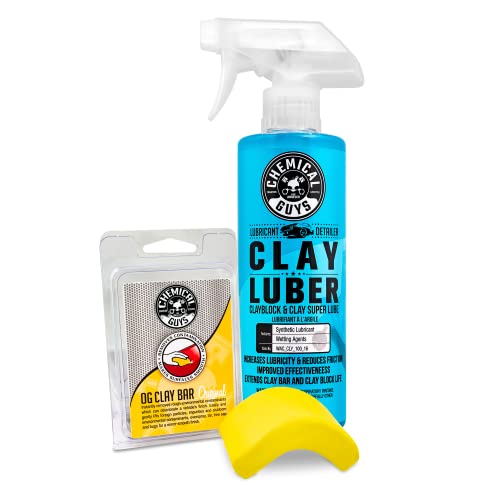
Chemical Guys OG Clay Bar & Luber Kit (CLY_113) — Traditional Bar Kit
Specs
- Format: traditional clay bar kit
- Clay included: one 100 g OG clay bar
- Grade: light/medium duty
- Lubricant: 16 oz Clay Luber synthetic lubricant included
- Kit contents: 2 items — no towel or case
- Model: CLY_113
Chemical Guys sells graded clay more explicitly than most, and this light/medium bar is the step up when a fine bar is not pulling contamination fast enough on a neglected car. The single 100 g bar tears into smaller working pieces, so one fall costs you a chunk, not the whole supply. The dedicated synthetic lubricant is slicker than a basic detail spray, offsetting the extra grab of a stronger grade. Keep the panel flooded and inspect your work — medium clay on soft paint can leave light marring that needs a finishing polish.
Meguiar’s Hybrid Ceramic Quik Clay Kit (G200200) — Synthetic Clay Pad Kit
Specs
- Format: synthetic clay pad kit
- Clay media: reusable synthetic clay pad
- Lubricant: Hybrid Ceramic Detailer with SiO2 included
- Extras: Supreme Shine microfiber towel included
- Model: G200200
This kit is the easiest entry into the synthetic side because it bundles the pad with its lubricant. The foam-backed pad rinses clean as you work and survives drops that would kill a bar, and the SiO2 detailer leaves a light layer of ceramic-style protection as you clay — handy for maintenance, though not a substitute for a proper wax or sealant afterward. The flat pad is quick across hoods, roofs and doors, but it will not fold into mirror housings or badge edges like a kneaded bar.
Nanoskin AUTOSCRUB 6 Inch Surface Prep Pad, Medium Grade — Synthetic Clay Pad

Specs
- Format: synthetic clay machine/hand pad
- Size: 6 in round pad
- Construction: polymerized rubber face on polyurethane foam
- Backing: hook and loop, fits a dual action polisher or hand holder
- Grade: medium
- Lubricant: not included; maker states plain water is not adequate
- Care: rinse clean and reuse; not solvent resistant
Nanoskin’s AutoScrub line is the professional end of synthetic clay. The 6 inch pad mounts to a dual action polisher for fast work on large panels, or to a hand holder for smaller areas, and the rubber face rinses clean in seconds — drop it, rinse it, continue. The medium grade targets heavier contamination, so treat it like medium bar clay: generous lubricant, light pressure, and a test spot first on soft or dark paint. You must supply your own lubricant; water alone is not enough.
Usage Notes
Whichever format you pick, wash and dry the car first — claying a dirty car drags loose grit across the paint. Work one small panel at a time, keep it flooded with lubricant, and use straight, light strokes rather than pressure. With a bar, fold and knead to a clean face every panel or two. With a synthetic pad, rinse the face frequently, because contaminants sit on the rubber’s surface instead of being absorbed.
Check progress with the baggie test: slip a thin plastic bag over your hand and glide it across the paint. Your amplified fingertips will feel contamination your bare hand misses.
Two rules never change. First, a dropped clay bar goes in the trash — no exceptions, because its grit will scratch every panel it touches afterward. Second, clay before polishing and waxing, never instead of them: claying adds no protection and removes none of the swirls or scratches already in the clear coat.
FAQ
Is a clay sponge as effective as a clay bar?
For bonded contamination on flat and gently curved panels, yes — a synthetic pad removes the same rail dust, fallout and overspray. A bar still wins in tight contours and gives better fingertip feedback, while a pad is faster over large areas.
What happens if I drop a clay bar or a clay sponge?
A dropped clay bar is finished: it embeds grit that cannot be fully removed, so it goes in the trash. A dropped synthetic sponge or pad can simply be rinsed clean and used again — the single biggest practical difference between the formats.
Can claying damage my paint?
It can if you let the lubricant run dry, press hard, or keep using a loaded bar face, because trapped grit then drags across the clear coat and leaves fine marring — especially with medium grades on soft paint. Keep the surface wet and refresh the clay face or rinse the pad often.
How often should I clay my car?
For most daily drivers, once or twice a year is enough — typically before a full polish and wax. Use the baggie test to decide rather than the calendar. Cars parked outdoors near industry or rail lines may need it more often; garaged cars less.
Do I need to wax after claying?
Yes. Claying strips existing wax and sealant too, leaving paint unprotected. Polish first if the paint needs correction, then apply fresh wax, sealant or coating.
Conclusion
Choose a traditional clay bar if you clay occasionally, work curved or detailed panels, and want the tactile feedback and graded options bars offer — the Meguiar’s and Mothers kits make starting easy, and the Chemical Guys kit adds a stronger grade. Choose a clay sponge or pad if you maintain several cars or refuse to throw away a dropped tool ever again — the Meguiar’s Quik Clay Kit is the low-friction way in, and the Nanoskin pad suits machine users with heavier contamination. Either way, keep it wet, keep it light, and always protect the paint afterward.
More from Amazon
Programs that pair well with the guide above. Offers and eligibility are set by Amazon and may change.
Free shipping on eligible items, Prime Video and more. Eligible new members can start with a free trial.
Start a Prime free trialAudiobooks and podcasts to listen to on the go. Eligible new members can start with a free trial.
Try Audible freeAd-free music streaming. Eligible new subscribers can start with a free trial.
Try Music Unlimited freeA free business account with business pricing and bulk-buying tools for work, shop or home office.
Create a business accountAs an Amazon Associate we earn from qualifying purchases.