Key takeaways
- Compare the best glass coatings for cars, from ceramic kits to bonded treatments, with stated durability, prep steps, and honest wiper notes.
Disclosure: As an Amazon Associate, I earn from qualifying purchases.
A spray-on rain repellent can transform a windshield for a few weeks, then quietly fade. A glass coating is the longer commitment: a ceramic or fluoropolymer layer that bonds to the glass itself and keeps beading water for months instead of weeks. In exchange, coatings demand real preparation — polished, surgically clean glass — and punish shortcuts. This guide compares five glass coatings sold on Amazon, explains how their durability claims are measured, and is upfront about the trade-offs, including wiper judder and the fact that no coating does much in slow city rain.
How to Choose
Understand the durability units. Makers quote glass coating life in months, miles, or “seasons,” and the numbers are not interchangeable. Wiper passes are what actually wear a coating off a windshield, so a mileage figure can be more honest than a calendar one for a high-mileage driver, while a garage-kept weekend car may outlast both. Treat every figure below as a maker claim that assumes thorough glass prep.
Prep decides everything. A coating bonds to glass, not to the oily film, water spots, and old repellent sitting on it. On older windshields, machine or hand polishing with a dedicated glass polish before coating is the difference between a coating that lasts a year and one that streaks within a month. Kits that bundle a primer polish save you buying one separately.
Match the format to your patience. Bottle-and-applicator ceramic kits give the longest-lived layer but need cross-hatch application, flash time, and a dry cure window. Single-use applicator treatments are faster and more forgiving, but each application lasts a shorter time.
Set speed expectations honestly. Coatings shed water when air pressure pushes beads across the glass, which starts somewhere around 30 mph on the products below and gets dramatic at highway speed. In stop-and-go traffic at 15 mph, beads mostly sit there and your wipers do the work, exactly as they did before.
Plan for wiper behavior. A freshly coated windshield can make some blades chatter or judder, especially older, stiff blades. Fresh, flexible blades reduce the risk, but if your car is prone to judder, prefer a coating whose maker acknowledges the issue over one that promises silence.
The 5 Best Glass Coatings
1. Gtechniq G1 ClearVision Smart Glass

Specs
- 15 ml bottle, model G1 0.015; a larger 100 ml size also exists
- Maker-rated durability: up to 20,000 miles of driving
- Application: 3 layers on the windshield, 1 layer on side and rear glass
- Chemically bonds to glass; for glass only, not plastic headlight lenses or Perspex
G1 is the benchmark bonded glass coating. Instead of sitting on the surface like a wax-style repellent, it chemically attaches to the glass, which is why Gtechniq quotes its life in miles — up to 20,000 of them — rather than months. Water clears decisively at highway speed, and the coating also makes ice, bugs, and sap easier to wash off. Application is the involved kind: polish the glass first (Gtechniq sells its G4 polish for this), and give the windshield three layers. Gtechniq also deserves credit for honesty in its own listing — it warns that some wiper judder may occur, says it disappears within about two weeks in most cases, and even suggests coating the blade rubber itself. If you want the longest-lived treatment here and accept the prep work, this is the default pick.
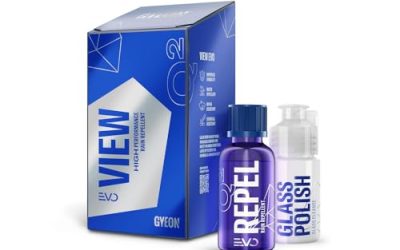
2. GYEON Q² View EVO

Specs
- Two-part kit: 20 ml Q² Repel EVO coating plus 20 ml Q²M Glass Polish primer
- Includes applicator blocks and suede applicator cloths
- Maker-rated durability: up to 12 months or 12,000 miles
- SiO2 ceramic chemistry; water beads begin moving off at about 30 mph
View EVO solves the prep problem by putting the primer in the box. You polish the glass with the included Q²M Glass Polish first, stripping old repellent and road film so the SiO2 coating can bond, then apply the Repel layer with the supplied block and suedes. GYEON rates the result at up to 12 months or 12,000 miles, and unlike many brands it claims the slick surface reduces wiper drag and judder rather than causing it — a meaningful difference if your car already has fussy blades. The 20 ml bottle covers a windshield and side glass with margin, and both steps come from the same maker, so there is no compatibility guesswork. Choose this kit for a complete, matched system with a durability claim stated in both time and distance.
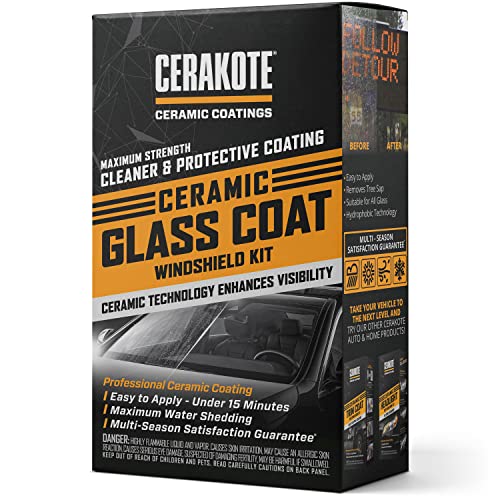
3. CERAKOTE Ceramic Glass Coat Windshield Kit
Specs
- Kit contents: 2 glass cleaning wipes, 30 ml ceramic coating bottle, microfiber applicator sponge, finishing towel, 4 gloves
- Application: cross-hatch pattern, 5–10 minute flash time before buffing
- Cure: keep dry for at least 1 hour; wait 24 hours before washing
- Maker backs it with a multi-season satisfaction guarantee
Cerakote built its name on high-temperature ceramic coatings, and this kit packages that chemistry into the most beginner-friendly format here. Everything is included: the Step 1 cleaning wipes do the surface prep, and the 30 ml bottle is generous for one windshield. The process is quick — clean, rinse, dry completely, apply in a cross-hatch, let it flash until a rainbow sheen appears, then buff. The non-negotiable is dryness: any water left on the glass works against the coating, and it needs an hour before it can get wet. Cerakote avoids a specific month or mileage figure and instead guarantees results for more than one season — vaguer than the Gtechniq and GYEON numbers, but backed by a replacement-or-refund promise. Pick this one for a first coating attempt on a daily driver.
4. Adam’s Polishes Graphene Glass Coating

Specs
- 30 ml (1 fl oz) bottle of graphene-oxide modified ceramic coating
- Application: drops on applicator, cross-hatch spread, buff by hand
- No cure time required after buffing, per the maker
- Also marketed for mirrors, shower doors, and other household glass
Adam’s takes the graphene-ceramic formula it uses on paint and tunes it for glass, emphasizing chemical and abrasion resistance — the two things that kill windshield coatings, since wiper blades are essentially a slow abrasion machine. The standout convenience claim is that there is no cure time: once you have buffed the residue off, the job is done, with no rain-avoidance window to plan around. The 30 ml bottle covers multiple vehicles or repeat applications, and the same bottle can treat bathroom glass. Adam’s is less specific than Gtechniq about expected lifespan, so treat this as the convenience pick rather than the maximum-durability pick.
5. Aquapel Glass Treatment

Specs
- Pack of 3 single-use applicators; each applicator treats one windshield
- Fluoropolymer chemistry that bonds to glass rather than sitting on it
- Application: squeeze wings to break the inner seal, wipe on, buff off with a paper towel
- Maker-rated at up to 6 months per application
Aquapel is the original bonded glass treatment, developed for aviation and sold for decades through glass shops. It is not a ceramic, but its fluoropolymer layer chemically bonds to the windshield, which is why one applicator outlasts spray repellents several times over while taking minutes to apply. There is no measuring, layering, or cure window: snap the applicator, wipe it across half the windshield at a time, and buff. The honest trade-off is longevity — months per application rather than the year-plus claims of the ceramic kits — and each applicator is spent once opened. With three in the pack, you can treat a windshield now and keep spares for a second car. Choose Aquapel for bonded-treatment performance with the lowest possible effort.
Usage Notes
Polish before you coat. On any windshield more than a year or two old, bonded contamination and water spots block bonding; a glass polish step is what separates a year of beading from a month of streaks. Work in shade on cool glass, and keep the car dry for whatever cure window your product specifies. Coat the windshield and front side windows first — that is where visibility matters — and use leftover product on the rear glass. If wipers judder on a fresh coating, give it two weeks and consider new blades before blaming the coating; stiff, aged rubber is the usual culprit. Finally, coated glass still needs washing: road film builds up on top and mutes beading until it is cleaned off.
FAQ
Do glass coatings replace wipers?
No. Coatings clear water with airflow, which works from about 30 mph upward and is excellent on highways. In slow traffic, drizzle, and mist, beads do not move and wipers remain essential — and legally required equipment regardless of any coating.
How long do glass coatings really last?
Maker claims in this guide range from up to 6 months for a single-use treatment to 20,000 miles for a layered ceramic. Real life depends on wiper use, mileage, climate, and prep quality. Expect the windshield — the only wiped pane — to wear fastest, while side and rear glass often keep beading far longer.
Can I apply a glass coating over an old rain repellent?
Not directly. Old repellent and road film prevent bonding and cause streaky, patchy results. Clean thoroughly and, for the ceramic kits, polish the glass first. The GYEON kit includes its primer polish for exactly this reason.
Why do my wipers chatter after coating the windshield?
The coating changes the friction between blade and glass, and stiff or worn blades can skip instead of gliding. It usually settles within a couple of weeks as the coating and blades bed in. New flexible blades, clean blade edges, and in Gtechniq’s case coating the blade rubber itself all help.
Are glass coatings safe on tinted windows and mirrors?
These products are for the outside of automotive glass; window tint film is applied on the inside, so exterior coating does not contact it. Do not use glass-only coatings on plastic headlight lenses or Perspex — Gtechniq explicitly excludes them. Test mirrors on a small corner first, since some mirror backings are delicate.
Conclusion
For maximum windshield life, Gtechniq G1 remains the coating to beat, with GYEON Q² View EVO close behind and friendlier to judder-prone wipers thanks to its bundled primer polish. Cerakote’s kit is the easiest first coating, Adam’s removes the cure-time chore entirely, and Aquapel delivers bonded performance in minutes for drivers happy to reapply twice a year. Whichever you choose, spend your effort on preparation — polished, spotless glass turns a maker’s durability claim into your actual result.
More from Amazon
Programs that pair well with the guide above. Offers and eligibility are set by Amazon and may change.
Free shipping on eligible items, Prime Video and more. Eligible new members can start with a free trial.
Start a Prime free trialAudiobooks and podcasts to listen to on the go. Eligible new members can start with a free trial.
Try Audible freeAd-free music streaming. Eligible new subscribers can start with a free trial.
Try Music Unlimited freeA free business account with business pricing and bulk-buying tools for work, shop or home office.
Create a business accountAs an Amazon Associate we earn from qualifying purchases.