Key takeaways
- Key system: closed-hole (plateau) keys, 16 keys, no open rings
- G key: offset, shortening the reach for the left-hand ring finger
- Footjoint: C foot, so the lowest note is low C
- Headjoint, body and footjoint: silver-plated nickel silver
- Headjoint: standard student cut with a soldered lip plate and riser
- Mechanism: stainless steel springs, adjustable key screws, ribbed key posts
- Tuning: the A=442 Hz class used by most modern student flutes
- Supplied with: a moulded or hard-shell case, cleaning rod and cloth in most packages
The best student flute for most beginning players is the Yamaha YFL-222. It is a closed-hole, offset-G, C-foot flute in silver-plated nickel silver whose keywork holds adjustment through years of daily school-band use, and whose parts and pads any repair technician can source without a search. If the budget is tighter, the POGOLAB Closed Hole C 16 Keys Flute is a complete, playable starter package for roughly the cost of a few months of rental. If you want the longest service life and the strongest resale value, the Di Zhao DZ-301 and the Gemeinhardt 1SP are the premium choices worth stretching for. Every pick below assumes the same reader: a beginner of band-starting age or an adult returning to the instrument, playing 20 to 60 minutes a day, who needs a flute that seals reliably, fits smaller hands, and can be repaired rather than thrown away.
Top 3 Picks
Best overall: Yamaha YFL-222. The safest long-term purchase for a student who will play for three or more years. Closed-hole keys, offset G, C foot, silver-plated nickel silver throughout, and a repair network that treats it as a known quantity. It is the flute a beginner is least likely to outgrow and most likely to sell on when they upgrade.
Best budget: POGOLAB Closed Hole C 16 Keys Flute. The lowest-cost way to get a complete, correctly pitched 16-key C flute with a cleaning kit, carry bag and strap in one box. It suits a first-year student, a trial run before committing to a premium instrument, or a household that needs a spare flute for a second child.
Best premium: Di Zhao DZ-301. A student-priced flute with a hand-cut headjoint and a sterling silver lip plate and riser — the two features that most affect how a beginner’s tone develops. It gives an advancing player room to grow without moving to a fully open-hole instrument too early.
Quick Comparison
| Product | Best for | Key specs | Price tier |
|---|---|---|---|
| Yamaha YFL-222 | Students who will play for years | Closed hole, 16 keys, offset G, C foot, silver-plated nickel silver, A=442 class | Premium |
| Rhythm C Flute with Engraved Flower | Players who want a decorative finish and a display stand | Closed hole, 16 keys, C flute, engraved flower, stand and carrying case included | Mid-range |
| POGOLAB Closed Hole C 16 Keys Flute | Lowest-cost complete starter kit | Closed hole, 16 keys, C flute, cleaning kit, carry bag, strap | Budget |
| Gemeinhardt 1SP Student Flute | Band programs and long-term durability | Closed hole, offset G, C foot, silver-plated body and keys, established repair support | Premium |
| Kmise Closed Hole C Flute | Lightweight backup or second instrument | Closed hole, C flute, responsive key action, durable set | Mid-range |
| EastRock Closed Hole Flute | One-box kit with stand and cleaning tools | Closed hole, 16 keys, C flute, silver-nickel finish, case, stand and cleaning kit | Mid-range |
| SONICAKE Nickel-plated C Flute | First trial instrument on a tight budget | Closed hole, 16 keys, nickel-plated finish | Budget |
| SONICAKE Silver-plated C Flute | Budget buyers who prefer a silver finish | Closed hole, 16 keys, silver-plated finish | Budget |
| Armstrong AFL201 Student Flute | Students following a school method programme | Closed hole, offset G, C foot, silver-plated, long-running student model | Premium |
| Deloitte C Flute 16 Key Closed Hole | Low-cost backup or travel flute | Closed hole, 16 keys, nickel/silver-plated, sold as beginner-to-concert instrument | Budget |
| Di Zhao DZ-301 Student Flute | Advancing students who want a hand-cut headjoint | Closed hole, offset G, C foot, sterling silver lip plate and riser, hand-cut headjoint | Premium |
| YANASON C Flute (Jinqu) | Mid-price kit with case and cleaning tools | Closed hole, 16 keys, nickel-plated, carrying case and cleaning accessories | Mid-range |
How We Chose
These picks were assembled from published specifications, category conventions and ownership economics rather than from playing each instrument. The first filter was configuration: every flute here is a closed-hole (plateau) 16-key C flute with an offset G, because that is the combination that lets a beginner with average hand size cover every key without straining, and it is the configuration band method books assume. The second filter was serviceability. A flute is a machine with roughly 600 parts and a pad set that needs adjustment once or twice a year; an instrument is only worth buying if a technician can obtain pads, springs and corks for it, so established brands with continuing parts support were weighted more heavily than unbranded imports with identical outward specifications.
The third filter was the upgrade path. A student who stays with the flute will eventually want an open-hole instrument, a B foot, or a solid silver headjoint, and the money spent on the first flute is only partly recovered at resale. Models with a recognised brand name and a stable used market therefore rank above cheaper instruments that cost less up front but hold almost nothing at trade-in. Within each tier we ranked by the features that actually change how a beginner sounds and how often the instrument needs service: headjoint cut, lip plate material, key mechanism, case quality and the completeness of the supplied kit.
1. Yamaha YFL-222 – Best for the Student Who Will Play for Years
As an Amazon Associate we earn from qualifying purchases at no extra cost to you.
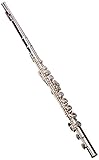
The YFL-222 is Yamaha’s entry-level student flute, and it is the model band directors and repair technicians name most often when a family asks what to buy instead of renting. It suits a beginner from roughly age ten upward who realistically expects to play for at least three or four years — the student who will carry the instrument to school five days a week, leave it in a locker, and still expect the keys to seal on Saturday morning. It is also the safest choice for an adult returning to the flute after decades away, because the key action is light under the fingers and the intonation is predictable enough that a rusty embouchure is not fighting the instrument at the same time.
- Key system: closed-hole (plateau) keys, 16 keys, no open rings
- G key: offset, shortening the reach for the left-hand ring finger
- Footjoint: C foot, so the lowest note is low C
- Headjoint, body and footjoint: silver-plated nickel silver
- Headjoint: standard student cut with a soldered lip plate and riser
- Mechanism: stainless steel springs, adjustable key screws, ribbed key posts
- Tuning: the A=442 Hz class used by most modern student flutes
- Supplied with: a moulded or hard-shell case, cleaning rod and cloth in most packages
The strengths here are consistency and repairability rather than any single headline feature. Yamaha’s student flutes come off a production line with tight tolerances, so the key heights and the pad seating are predictable from one instrument to the next — which matters enormously for a beginner, because a flute that leaks makes every note feel like the player’s fault. The offset G removes the single most common source of hand strain in the first year, and the closed-hole keys mean there are no open rings for small fingers to slide off mid-phrase. When the instrument does need work, any technician can do it from stock parts, and a clean, well-maintained example retains a meaningful share of its purchase price when the student upgrades.
Pros
- Very consistent key adjustment, so notes respond evenly across the range
- Offset G and closed holes suit smaller hands without limiting progress
- Parts, pads and servicing are available almost anywhere
- Strong used market, so much of the cost is recoverable at upgrade time
- Holds tuning well in a school band environment
Cons
- Premium tier: the highest up-front cost in this roundup
- Standard student headjoint, not a hand-cut one, so tone colour is plainer than the Di Zhao
- Silver plating over nickel silver still tarnishes and needs periodic cleaning
- Over-specified for a student who may quit after one term
Against the nearest alternative in this list, the Di Zhao DZ-301, the Yamaha wins on ubiquity and resale while the Di Zhao wins on the headjoint. If the student is committed and the budget stretches, the DZ-301’s hand-cut headjoint and sterling silver lip plate give a slightly richer, more flexible tone; if the priority is an instrument any local technician has seen a hundred times, the YFL-222 remains the default recommendation. Against the Gemeinhardt 1SP it is a near-tie, with the Yamaha slightly ahead on consistency and the Gemeinhardt ahead on nothing in particular for a beginner.
2. Rhythm C Flute with Engraved Flower – Best for a Beginner Who Wants a Display Stand and a Decorative Finish
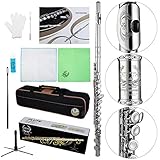
This Rhythm flute is aimed at a very specific buyer: a beginner, often a younger one, who wants an instrument that looks like a gift rather than a piece of band equipment. The engraved flower motif on the body and the included stand set it apart from the plain silver tubes in the same price band, and the stand is genuinely useful — it gives a student somewhere to rest the flute between practice sessions instead of laying it on a bed or a chair, which is where a large share of beginner damage happens. It suits a first-year player in a school programme, a home learner working from a method book, or a student who wants an instrument that feels personal enough to pick up every day.
- Key system: closed-hole keys, 16 keys
- Type: C flute (concert pitch), standard student proportions
- G key: offset configuration, as is standard on beginner flutes in this class
- Footjoint: C foot
- Finish: engraved decorative pattern, plated body and keys
- Included: display stand and carrying case
- Intended level: student and beginner
The practical case for this flute rests on the kit and the stand rather than on exotic materials. A student who has a stand is far more likely to leave the flute assembled and accessible, and a flute that is accessible gets played; a flute that lives in a closed case in a wardrobe gets played twice a week and then not at all. The closed-hole, offset-G layout is the right configuration for a beginner, and the C foot keeps the instrument lighter and better balanced than a B-foot model, which matters for a smaller player holding the flute up for a 40-minute lesson.
Pros
- Distinctive engraved finish that appeals to younger players
- Display stand included, which encourages more frequent practice
- Correct beginner configuration: closed holes, offset G, C foot
- Mid-range pricing with a complete package
- Lighter, better-balanced feel than a B-foot flute
Cons
- Decorative engraving does nothing for tone and adds surface to keep clean
- Less brand recognition than Yamaha, Gemeinhardt or Armstrong, so resale is weaker
- Long-term parts availability is less certain than with established makers
- Pad and adjustment quality varies more between individual examples
Compared with the EastRock kit, which also ships with a stand and cleaning accessories, the Rhythm flute trades some of the accessory completeness for a more distinctive appearance — EastRock gives you the cleaning tools, Rhythm gives you the look. Compared with the POGOLAB at the budget tier, the Rhythm costs more but includes the stand and a more finished appearance, which for a younger player is often the difference between an instrument that gets used and one that does not. If resale value and service history matter more than appearance, step up to the Yamaha or the Gemeinhardt instead.
3. POGOLAB Closed Hole C 16 Keys Flute – Best for the Lowest-Cost Complete Starter Kit

The POGOLAB flute is the budget answer to the question every parent asks in the first week of band: what is the least I can spend and still hand my child a working instrument? It suits a first-year student testing whether they actually enjoy the flute, a household that needs a second instrument for a sibling, or a player who wants something to leave at a grandparent’s house. It arrives with a cleaning kit, carry bag and strap, so nothing else needs buying before the first lesson.
- Key system: closed-hole keys, 16 keys
- Type: C flute, concert pitch
- G key: offset, standard for the beginner class
- Footjoint: C foot
- Finish: plated body and mechanism
- Included: cleaning kit, carry bag, strap
- Intended level: student, beginner
The value proposition is simple: for roughly what two or three months of rental costs, you own an instrument outright. The closed-hole, 16-key, offset-G layout is the right one for a beginner, and the carry bag is a reasonable choice for a student who walks to school — a soft bag is lighter than a hard case, though it protects less if the instrument is dropped or crushed in a crowded corridor. The cleaning kit matters more than it sounds: a flute that is swabbed after every session keeps its pads dry, and dry pads are the single biggest factor in how long a budget instrument stays playable.
Pros
- Lowest up-front cost of any complete kit in this roundup
- Everything needed to start is in the box
- Correct beginner configuration with offset G and closed holes
- Lightweight, and the carry bag is easy for a child to manage
- A sensible way to test commitment before spending premium money
Cons
- Adjustment and pad seating are less consistent than premium instruments
- Soft carry bag offers limited protection against impact
- Weak resale value — expect little back if the student quits
- Likely to need professional adjustment sooner than a premium flute
Compared with the SONICAKE budget flutes, the POGOLAB package is the more complete one — it includes the cleaning kit, bag and strap in a single purchase, where the SONICAKE models are more narrowly specified. Compared with the Kmise at the mid-range tier, the POGOLAB saves money up front but gives up some of the key action refinement and finish quality that make a mid-range flute easier to play in the second and third year. Treat it as a one-to-two-year instrument that answers the commitment question cheaply, and plan to move up if the student stays with it.
4. Gemeinhardt 1SP Student Flute – Best for Band Programmes and Long-Term Durability

The Gemeinhardt 1SP is a long-established student model from a maker that has supplied school flutes for generations, and it suits a student in a formal band programme where the instrument will be used hard and serviced regularly. It is the choice for a family who wants a flute that a technician can work on for a decade, and who values a familiar name over an exotic specification. It also suits a school or music service buying instruments in small batches, because the models behave the same way from one unit to the next.
- Key system: closed-hole keys
- G key: offset
- Footjoint: C foot
- Finish: silver-plated body, keys and mechanism
- Headjoint: student cut with a soldered lip plate and riser
- Mechanism: adjustable key screws, stainless steel springs
- Intended level: student, beginner, band programme
What the 1SP offers over cheaper imports is a design that has been refined around the specific failure points of student instruments: the key tubing, the post mounting and the pad retention are all built to survive being carried around in a case five days a week. The offset G reduces left-hand strain, and the closed-hole keys mean there is nothing for a beginner’s fingers to fall into during a fast passage. Because the model is so widely used in schools, replacement pads, springs and corks are ordinary stock items, and a technician can complete a routine clean, oil and adjust without waiting for parts.
Pros
- Durable construction aimed squarely at school use
- Excellent parts and service availability
- Consistent, well-understood beginner configuration
- Recognised name that holds value at resale
- Straightforward to have serviced locally
Cons
- Premium tier pricing
- Standard student headjoint rather than a hand-cut one
- Silver plating requires periodic cleaning to stay presentable
- Offers little advantage over the Yamaha for a casual beginner
Against the Yamaha YFL-222, the 1SP is a genuine alternative rather than a compromise: both are closed-hole, offset-G, C-foot, silver-plated student flutes with strong service support. The Yamaha is marginally more consistent out of the box; the Gemeinhardt is equally at home in a school inventory. Against the Armstrong AFL201, the 1SP is a little more common in general music retail, while the Armstrong is the more familiar sight in some school method programmes. Any of the three is a defensible premium purchase — the deciding factor should be which one your local technician sees most often.
5. Kmise Closed Hole C Flute – Best for a Lightweight Backup or Second Instrument
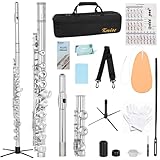
The Kmise closed-hole C flute sits in the middle of the market, and its natural role is as a second instrument rather than a first one. It suits a student who already has a main flute and wants something lighter to leave at school, a teacher who needs a spare on the stand, or a returning adult who wants a low-commitment instrument to rebuild technique on before buying something serious. It is also a reasonable choice for a beginner whose budget will not stretch to premium tier but who wants better key feel than the cheapest imports provide.
- Key system: closed-hole keys, 16 keys
- Type: C flute, concert pitch
- G key: offset configuration in the beginner class
- Footjoint: C foot
- Mechanism: responsive key action with adjustable screws
- Build: described by the maker as a durable set
- Intended level: student, beginner, spare instrument
The selling point is responsiveness relative to price. Mid-range imports in this band generally use lighter spring tension and slightly better pad seating than the cheapest tier, which makes a noticeable difference to a beginner’s first attempts at the upper register — a flute that responds cleanly makes the second octave feel achievable rather than mysterious. The closed-hole design keeps the fingering simple, and the C foot keeps the balance point closer to the player’s hands, which reduces fatigue in long practice sessions.
Pros
- Mid-range price with noticeably better key feel than budget tier
- Light and comfortable to hold for extended practice
- Closed holes and offset G suit beginners
- Good candidate as a school-locker spare or travel instrument
- Lower risk than a budget flute if the student is already committed
Cons
- Limited brand history, so long-term parts support is less certain
- Resale value well below the established premium brands
- Accessory kit is minimal compared with the EastRock or POGOLAB packages
- Individual examples vary more than in premium lines
Compared with the EastRock closed-hole flute, the Kmise is the simpler package — EastRock bundles a stand and cleaning tools, Kmise concentrates on the instrument itself. If you need the extras, EastRock is the better one-box buy; if you already own a cleaning kit and a stand, the Kmise gets you comparable playability for less clutter. Compared with the premium Yamaha, the gap shows up in consistency and service rather than in features, which is exactly what you are paying for at the top tier.
6. EastRock Closed Hole Flute – Best for a Complete One-Box Kit with Stand and Cleaning Tools

The EastRock closed-hole flute is aimed at the buyer who wants to place one order and be finished. It ships with a case, a stand and cleaning accessories, in a silver-nickel finish, and it suits a beginner, a child or a student who has no instrument shop nearby and no interest in assembling a kit piece by piece. It is a sensible first flute for a home learner working through a method book, and a reasonable choice for a family buying for a younger player who needs the instrument to look and feel like a proper instrument.
- Key system: closed-hole keys, 16 keys
- Type: C flute, concert pitch
- Finish: silver-nickel plated
- Included: case, stand, cleaning accessories
- G key: offset configuration for beginner ergonomics
- Footjoint: C foot
- Intended level: beginner, kids, student
The kit is the differentiator. A stand means the flute can live out of its case and be picked up in seconds, which is the single most reliable predictor of how much a beginner practises. Cleaning accessories mean there is no excuse for leaving moisture in the bore after a session — and since pad rot from trapped moisture is the most common reason a cheap flute dies young, that matters more than the finish. The silver-nickel plating is harder than pure silver plating and resists tarnish well, which keeps the instrument looking presentable through a school year without much attention.
Pros
- Complete package: case, stand and cleaning tools in one purchase
- Tarnish-resistant silver-nickel finish
- Correct beginner configuration with closed holes and offset G
- Mid-range price for a full kit
- Stand encourages regular practice and safer storage
Cons
- No established repair network compared with premium brands
- Resale value is limited
- Accessory quality is basic — the stand and tools are functional, not premium
- Key adjustment may need attention within the first year
Against the Rhythm flute with the engraved flower, the EastRock is the more practical package: same category of stand-and-case kit, but with cleaning tools instead of decorative engraving. Against the YANASON kit, the two are close in price and contents, with EastRock’s silver-nickel finish offering slightly better tarnish resistance and the YANASON offering a carrying case and cleaning accessories of similar scope. For a buyer who wants everything at once and does not need brand prestige, EastRock is the straightforward answer.
7. SONICAKE Nickel-plated C Flute – Best for a First Trial Instrument on a Tight Budget

The SONICAKE nickel-plated C flute is the cheapest way into a playable closed-hole 16-key instrument, and it suits a family that wants to answer one question before spending more: does this child actually want to play the flute? It is also a reasonable choice for a very casual adult learner who plays a few times a week, or as a knockabout instrument for a holiday or a second home. It is not the flute to buy if the student is already enrolled in a serious band programme.
- Key system: closed-hole keys, 16 keys
- Type: C flute, concert pitch
- Finish: nickel plating
- G key: offset, beginner-standard configuration
- Footjoint: C foot
- Intended level: beginner, casual learner
Nickel plating is harder and more wear-resistant than silver plating, and it holds its shine with minimal attention, which is exactly what you want in a budget instrument that will not be polished weekly. The trade-off is feel: some players find nickel plating less comfortable against the lower lip than silver, and players with known metal sensitivities should take advice from a medical professional before choosing a nickel-plated instrument rather than a silver-plated one. Mechanically, the flute offers the standard beginner layout — closed holes, offset G, C foot — so a student who learns on it can transfer the same fingering to any other student flute.
Pros
- Very low entry price for a full 16-key C flute
- Hard, tarnish-resistant nickel finish that stays presentable
- Standard beginner configuration, so skills transfer
- Light and easy for a younger player to hold
- Low financial risk if the student stops after a term
Cons
- Some players find nickel plating less comfortable on the lip than silver
- Pad seating and adjustment are the weakest part of any flute at this price
- Minimal accessories compared with the EastRock or POGOLAB kits
- Resale value is close to nil
Compared with its silver-plated sibling from the same maker, this nickel model is the harder-wearing but less conventionally comfortable option; the silver-plated version costs a little more and suits a player who spends long sessions with the lip plate against the chin. Compared with the POGOLAB, the SONICAKE is the leaner purchase — fewer accessories, similar playability — so choose POGOLAB if you want the cleaning kit and bag in the same box, and SONICAKE if you already have those items.
8. SONICAKE Silver-plated C Flute – Best for Budget Buyers Who Want a Silver-Plated Finish
This is the silver-plated version of the same SONICAKE student flute, and it exists to solve one specific objection to the nickel model: the feel of the lip plate. It suits a budget-conscious beginner who will practise for longer stretches, a player who has found nickel-plated instruments uncomfortable, or a family that simply prefers the traditional bright silver look for a young student’s first instrument. Like its sibling, it is a trial-and-commitment instrument rather than a long-term purchase.
- Key system: closed-hole keys, 16 keys
- Type: C flute, concert pitch
- Finish: silver plating over the body and mechanism
- G key: offset, beginner-standard configuration
- Footjoint: C foot
- Intended level: beginner, student
Silver plating is softer than nickel and generally regarded as the more comfortable surface for the lip plate, which is why almost every student flute above the cheapest tier uses it. It also takes a warmer, slightly less bright tone than nickel in the same design class, though the difference at this price level is small compared with the difference a headjoint cut makes. The practical cost is maintenance: silver plating tarnishes, and a flute that is never wiped down will discolour within a year, particularly around the keywork where fingers rest.
Pros
- Silver-plated finish, the conventional choice for student flutes
- Generally more comfortable lip-plate feel than nickel plating
- Same standard closed-hole, 16-key, offset-G layout
- Budget pricing with a familiar appearance
- Easy transition to a premium flute later, since the fingering is identical
Cons
- Tarnishes and needs regular wiping to stay presentable
- Silver plating on a budget flute is thin and can wear through at contact points
- Adjustment and pad quality remain entry-level
- Accessories are minimal and resale is negligible
Between the two SONICAKE flutes, the decision is straightforward: choose nickel if you want the hardest-wearing finish and the lowest price, choose silver if comfort against the lip and a traditional appearance matter more. Compared with the POGOLAB kit, the SONICAKE silver flute is the better instrument choice if you already own a cleaning kit and case, and the worse choice if you do not, because the POGOLAB bundle covers those items in one order.
9. Armstrong AFL201 Student Flute – Best for Students Following a School Method Programme

The Armstrong AFL201 is one of the long-running student flutes in the American school market, and it suits a student whose band programme specifies a particular model, or whose teacher has taught on Armstrong flutes for years. It is a closed-hole, offset-G, C-foot, silver-plated instrument built for the same purpose as the Yamaha and the Gemeinhardt: surviving a school year. It is a good choice for a family who wants a name the local music shop already stocks parts for.
- Key system: closed-hole keys
- G key: offset
- Footjoint: C foot
- Finish: silver-plated body, keys and mechanism
- Headjoint: student cut with soldered lip plate and riser
- Mechanism: adjustable key screws and stainless steel springs
- Intended level: student, beginner, school band
Armstrong’s student flutes have been a fixture in school instrument inventories for decades, and the practical benefit of that history is a well-understood service routine. Technicians know which pads wear first on this design, which adjustments drift, and how much margin there is in the key heights, so a routine service is quick and predictable. The instrument is also designed around the ergonomics of a young player: the offset G shortens the left-hand reach, the closed keys remove the risk of fingers slipping off open rings, and the C foot keeps the balance point close to the body.
Pros
- Long-established student model with predictable servicing
- Correct beginner configuration throughout
- Silver-plated finish that takes a polish and stays presentable
- Recognised brand with a functioning used market
- Suits students whose teacher or programme already knows the model
Cons
- Premium tier pricing
- Standard headjoint rather than a hand-cut one
- No practical advantage over the Yamaha for a student with no brand preference
- Silver plating requires routine cleaning
Against the Gemeinhardt 1SP, the Armstrong is a direct competitor with almost identical specifications, and the choice usually comes down to what the local shop stocks and services. Against the Di Zhao DZ-301, the Armstrong gives up the hand-cut headjoint and the sterling silver lip plate, which are the two features most likely to shape a developing tone. If your band teacher names Armstrong, buy Armstrong; if nobody has a preference, the Yamaha is the marginally safer default.
10. Deloitte C Flute 16 Key Closed Hole – Best for a Low-Cost Backup or Travel Flute

This Deloitte C flute is a generic import sold as a beginner-to-concert instrument, and its realistic role is as a backup, a travel flute or a second instrument that can be left somewhere without much anxiety. It suits a student who already has a main flute and wants something to keep at a relative’s house, an adult learner who travels and does not want to risk a premium instrument in hand luggage, or a beginner whose absolute ceiling on spending is the budget tier. The brand name is not an established instrument-making house, so there is no long service history to draw on.
- Key system: closed-hole keys, 16 keys
- Type: C flute, concert pitch
- Finish: nickel/silver plated
- G key: offset, standard beginner configuration
- Footjoint: C foot
- Intended level: marketed for beginner through concert use
The case for this flute is price and disposability rather than refinement. It offers the same fundamental layout as every other student flute here — closed holes, 16 keys, offset G, C foot — so the fingering transfers cleanly to a better instrument later. It is light, easy to handle, and cheap enough that losing or denting it is an inconvenience rather than a disaster. What it does not offer is the adjustment stability of a premium flute, and the marketing description that runs from beginner to concert level should be read as aspiration rather than specification: no instrument at this price is built for the demands of a serious concert player.
Pros
- Very low price for a complete 16-key C flute
- Standard beginner layout, so technique transfers
- Light and convenient as a travel or backup instrument
- Low financial risk if it is damaged or lost
- Nickel/silver plating holds up reasonably to casual use
Cons
- No established service history or parts pipeline
- Marketing spans beginner to concert, which overstates its capability
- Adjustment and pad sealing are the weakest aspects
- Minimal resale value
Compared with the POGOLAB kit, the Deloitte is the leaner purchase with fewer included accessories, so a beginner who owns nothing else gets more from the POGOLAB box. Compared with the Kmise at the mid-range tier, the Deloitte saves money but gives up the better key action that makes the second octave less frustrating in the first year. Buy it as a spare, not as the instrument a committed student will play for four years.
11. Di Zhao DZ-301 Student Flute – Best for the Advancing Student Who Wants a Hand-Cut Headjoint

The Di Zhao DZ-301 is a student flute with a professional-minded headjoint, and it suits a player who has already decided the flute is going to be a long-term instrument. It is the right choice for a student in their second or third year who is starting to care about tone colour, for a talented beginner whose teacher wants them on better equipment early, and for a returning adult who wants an instrument capable of more than the minimum. It keeps the beginner-friendly closed-hole, offset-G configuration while upgrading the part of the flute that matters most for sound.
- Key system: closed-hole keys
- G key: offset
- Footjoint: C foot
- Headjoint: hand-cut, with a sterling silver lip plate and riser
- Body and mechanism: plated, student-grade construction
- Intended level: student, advancing player
- Maker: Di Zhao Flutes, a specialist flute house
The headjoint is where the money goes, and it is the right place for it. The headjoint determines how the air stream behaves at the embouchure hole, and a hand-cut headjoint with a sterling silver lip plate and riser generally gives a beginner a more forgiving response and a wider range of tone colours than a machine-made student headjoint. A player who cannot yet control their air will still hear the difference: notes speak more easily, the low register is less stuffy, and the top of the second octave is less likely to crack under pressure. Meanwhile the closed-hole keys and offset G mean the student is not fighting unfamiliar fingerings while their embouchure develops.
Pros
- Hand-cut headjoint, the single biggest tonal upgrade available in this class
- Sterling silver lip plate and riser for a comfortable, responsive embouchure
- Keeps the beginner-friendly closed-hole and offset-G layout
- Specialist flute maker rather than a general import brand
- Enough instrument to carry a student into intermediate repertoire
Cons
- Premium tier pricing, close to the top of the student market
- Still closed-hole, so an advancing student will eventually want open holes
- Less common than Yamaha or Gemeinhardt, so servicing depends on your technician
- Over-specified for a first-year player who may not continue
Against the Yamaha YFL-222, the DZ-301 is the more musical instrument and the less ubiquitous one. If tone development matters more than having the most commonly serviced flute in the room, the Di Zhao is the better buy; if the priority is that any shop in the region can fix it from stock, the Yamaha wins. Against the Armstrong AFL201 and the Gemeinhardt 1SP, the DZ-301 is the only flute in this group with a hand-cut headjoint and a sterling silver lip plate, which is a meaningful specification advantage rather than a cosmetic one.
12. YANASON C Flute (Jinqu) – Best for a Mid-Price Kit with Case and Cleaning Tools

The YANASON C flute, sold under the Jinqu name, is a mid-priced nickel-plated student instrument that arrives with a carrying case and cleaning accessories. It suits a beginner, a child or a student who wants a complete package at a price below the premium brands, and who is willing to accept a shorter service life in exchange for the saving. It is a reasonable middle option for a family that finds the budget tier too flimsy but cannot justify the premium tier in the first year.
- Key system: closed-hole keys, 16 keys
- Type: C flute, concert pitch
- Finish: nickel-plated
- G key: offset, standard beginner configuration
- Footjoint: C foot
- Included: carrying case, cleaning accessories
- Intended level: beginner, kids, student
The kit contents are the main draw: a hard-wearing carrying case protects the instrument better than a soft bag in a school bag or on a bus, and the cleaning accessories cover the essentials from day one. Nickel plating keeps the instrument bright with minimal maintenance, though as with any nickel-plated flute, players with known metal sensitivities should take medical advice before choosing it over a silver-plated model. The closed-hole, 16-key, offset-G layout is the standard beginner configuration, so nothing about learning on this flute will need to be unlearned later.
Pros
- Mid-range price with a full kit including case and cleaning tools
- Hard-wearing nickel-plated finish
- Standard closed-hole, 16-key, offset-G layout
- Carrying case offers better protection than a soft bag
- Sensible compromise between budget and premium tiers
Cons
- Nickel plating may be less comfortable for players with metal sensitivities
- Limited brand recognition and uncertain long-term parts support
- Key adjustment is unlikely to match premium brands out of the box
- Modest resale value
Compared with the EastRock kit, the two occupy almost the same position: both mid-range, both bundled, both nickel or silver-nickel finished. EastRock’s package adds a stand; the YANASON package concentrates on the case and cleaning tools. Compared with the SONICAKE silver-plated flute at the budget tier, the YANASON costs more but includes the case and accessories that a beginner would otherwise have to buy separately, which often makes it the better value overall once the extras are counted.
How to Choose
Almost every student flute on the market looks the same in a photograph, which is why buyers end up choosing on colour and price. The differences that actually matter are in six places: the key design, the G key position, the footjoint, the headjoint, the case, and the repair support behind the brand. Work through them in that order and the choice becomes much narrower.
Closed-hole versus open-hole keys
Closed-hole, or plateau, keys have solid surfaces that cover the tone holes. Open-hole, or French, keys have a hole in the middle of five keys that the player must seal with the fingertips. For a beginner, closed holes are the correct choice: they remove five extra sealing points from the equation, they let the fingers sit naturally rather than forcing a specific hand position, and they eliminate the buzzing that happens when a fingertip does not quite cover an open ring. Open-hole flutes are the standard for intermediate and advanced players because they encourage a more precise hand position and allow some pitch shading, but that benefit only appears once the basics are secure. There is no need to buy an open-hole flute for a first-year student, and a beginner on an open-hole instrument will often develop a worse hand position because they are gripping to seal the rings.