Key takeaways
- Coil: mid-size search coil class (roughly 8–10 inches), the standard sweet spot between separation and depth
- Shaft: adjustable, telescoping design for adult stance and transport
- Controls: discrimination and notch-style target rejection, sensitivity adjustment, target ID categories
- Audio: multi-tone target feedback that changes with conductivity
- Power: standard replaceable battery format — check the listing for the exact cell type
- Water resistance: search coil rated for wet ground and shallow water; control housing should be treated as splash-resistant at most unless the listing says otherwise
Top 3 Picks
If you want one name to start with, the SAKOBS Professional Foldable Waterproof Metal Detector is our best overall flagship pick: an 11-inch IP68 DD coil, a folding shaft that travels well, and a backlit control layout that covers beach, park, and field work without a second machine. For the strongest value at the entry flagship tier, the Gbnryg Professional Metal Detector for Adults is the pick to shortlist. If you want maximum coil footprint for deep, open-ground hunting, the Hazlewolke 14-inch DD Metal Detector is the premium specialist to compare against everything else here.
Quick Comparison
Every unit below is judged on the same flagship criteria: how well it separates targets in trash, how deep it goes on a coin-sized target, how it behaves with multi-frequency or selectable-frequency operation, whether it survives saltwater, what coils you can fit, how much it weighs on a full day, battery runtime, and how deep the control menu goes before it becomes a liability.
| Product | Best for | Key specs (as listed) | Price tier |
|---|---|---|---|
| Gbnryg Professional Metal Detector for Adults | All-around flagship value on land | Professional-grade control set, adjustable shaft, discrimination and notch-style target ID, mid-size search coil class | Mid-range |
| SAKOBS Metal Detector for Adults, Professional Foldable Waterproof | Beach and travel flagship | 11″ IP68 double-D coil, foldable shaft, backlit display, waterproof coil for wet sand and shallow surf | Premium |
| SUNPOW Metal Detector Pinpointer | Recovery speed, hole-side pinpointing | Handheld wand, waterproof design, high-sensitivity detection at close range, one-hand operation | Budget |
| Bounty Hunter TK4 Tracker IV | First flagship-adjacent all-terrain machine | 8″ waterproof search coil, three operating modes, all-terrain gold/silver/coin/relic targeting, analog-style controls | Budget |
| GoGonova Metal Detector PD70 | Family use and light trashy parks | Adjustable shaft for adults and kids, discriminating detection modes, lightweight build class | Budget |
| Hazlewolke 14″ Double-D Metal Detector | Deep open-ground coverage | 14″ double-D coil, higher-sensitivity design, waterproof search coil, wide sweep coverage per pass | Premium |
| BOXTREN Professional 12″ IP68 DD Coil | Submersible flagship versatility | 12″ IP68 double-D coil, high-accuracy target reporting, professional control layout, LCD | Premium |
| ikiu 2026 Latest Higher Accuracy Professional LCD Detector | Budget LCD flagship experience | LCD target readout, higher-accuracy detection claims, adult-length adjustable shaft | Budget |
| Garrett Pro-Pointer AT | Serious digging support | Fully submersible to 20 ft, orange high-visibility body, high-sensitivity tip, made in the USA | Mid-range |
How We Chose
This roundup is built from listing specifications, published manufacturer details, and long-established behavior of the detector categories involved — not from bench testing, field testing, or ownership. No unit here was run in the ground by us, and no claim below depends on that kind of experience.
The first filter was category fit. A pinpointer is not a metal detector in the flagship sense, so the SUNPOW and Garrett units were evaluated against the job they actually do — reducing recovery time after the main machine has flagged a target — and placed accordingly rather than being penalized for lacking discrimination menus or frequency options. A detector with an 8-inch coil is not competing with a 14-inch coil on coverage, and saying so plainly matters more than pretending every entry is interchangeable.
The second filter was upgrade path. A flagship machine should still be useful two seasons later. That means a coil that can be swapped, a shaft that adjusts to a real adult stance, a control interface with enough settings to grow into (ground balance, notch discrimination, sensitivity trim), and a waterproof rating that does not force you to abandon the surf line. Units that only offer a single fixed coil and a two-knob interface were placed in the budget tier regardless of how confident their marketing copy sounds.
The third filter was ownership reality. Battery format, available consumables, coil connector type, and how hard the control housing is to clean all affect the true cost of a detector more than a single headline number like maximum claimed depth. Those factors are weighted throughout the sections below.
1. Gbnryg Professional Metal Detector for Adults — Best All-Around Flagship Value
The Gbnryg is the machine to buy if you want the flagship control set — discrimination, target identification, adjustable sensitivity, a real ground-balance workflow — without jumping to premium pricing. It suits the detectorist who hunts parks, schoolyards, field edges, and old house lots, wants one machine that does all of it competently, and would rather spend the difference on a good pinpointer and a decent digging tool.
Key specs
- Coil: mid-size search coil class (roughly 8–10 inches), the standard sweet spot between separation and depth
- Shaft: adjustable, telescoping design for adult stance and transport
- Controls: discrimination and notch-style target rejection, sensitivity adjustment, target ID categories
- Audio: multi-tone target feedback that changes with conductivity
- Power: standard replaceable battery format — check the listing for the exact cell type
- Water resistance: search coil rated for wet ground and shallow water; control housing should be treated as splash-resistant at most unless the listing says otherwise
Strengths
The reason this unit earns the best-value slot is the middle of the performance curve. A mid-size coil is genuine iron in trashy ground: it separates a coin from a nail at a few inches in a way that a 14-inch coil simply cannot. The control set is deep enough that you can learn discrimination, notch behavior, and sensitivity trade-offs on this machine and carry those skills to any detector you buy later. The adjustable shaft handles a range of adult heights, and the whole package travels without special cases.
It is also the least punishing flagship to learn on. A beginner who buys a 14-inch deep-seeker first usually spends the first month digging iron and wondering what went wrong. Starting mid-size and mid-priced keeps the learning curve attached to skill rather than to frustration, and the money saved covers a pinpointer — which will improve your recovery rate more than any upgrade within this tier.
How it compares
Against the SAKOBS, the Gbnryg gives up the 11-inch IP68 coil and the folding travel shaft. If your hunting is mostly dry land, that trade is close to free. Against the BOXTREN 12″, the Gbnryg gives up both coil diameter and full IP68 submersibility, but it also gives up the price gap and a chunk of the menu complexity you may never use. Its nearest true rival in this list is the ikiu budget LCD unit: the ikiu wins on screen-based target readout for the money, while the Gbnryg wins on control depth and the long-term upgrade path. If you already own a pinpointer and want to spend once, the Gbnryg is the safer single purchase.
Pros
- Flagship-grade discrimination and target ID at mid-range pricing
- Mid-size coil separates targets well in trashy parks and yards
- Adjustable shaft suits a wide range of adult heights
- Control set has room to grow — you can learn on it and keep using it
- Leaves budget for a pinpointer, which matters more than a bigger coil at this stage
Cons
- Less coverage per sweep than 12-inch and 14-inch units in open ground
- Coil is not rated for full submersion, so surf-line hunting is out
- Housing durability and connector quality are unknown until you handle one
- No folding shaft for tight packing
2. SAKOBS Professional Foldable Waterproof Detector — Best Beach and Travel Flagship
As an Amazon Associate we earn from qualifying purchases at no extra cost to you.

The SAKOBS is the pick for the detectorist whose hunting calendar includes wet sand, shallow water, and travel. The 11-inch IP68 double-D coil is the headline: the coil itself is sealed against full immersion, and the double-D winding gives you good ground coverage and stable behavior over mineralized salt ground compared with a concentric coil of the same size. The foldable shaft is what separates it from the rest of the premium tier — it packs down to a fraction of its working length, which changes what a detecting trip looks like.
Key specs
- Coil: 11-inch IP68-rated double-D search coil — fully submersible
- Shaft: foldable, telescoping, designed for transport and travel
- Display: backlit screen, which matters for dawn starts and dusk finishes
- Target reporting: target ID categories with conductivity-based audio
- Ground handling: double-D winding for better stability over salt and mineralized soil
- Water resistance: coil submersible; treat the control housing as protected from splash and rain only
Strengths
The IP68 coil rating is the functional difference between this machine and every mid-size dry-land detector in the list. Wet sand and the first few inches of surf are the hardest ground conditions most hobbyists will ever face — salt is conductive, it swamps weaker machines, and it forces constant re-ground-balancing. A sealed double-D coil paired with a backlit control panel lets you work the tide line for hours instead of fighting falsing.
The folding shaft is the second real advantage and it is underrated. Detectors are awkward objects: long, light, and impossible to pack sensibly. A shaft that folds into a compact bundle means the detector lives in the car permanently instead of being a project to assemble. Detectors that live in the car get used. Detectors that live in a closet get sold.
The backlit display also reframes the hunt window. Early mornings before the beach crowd and evenings after it are when wet sand pays, and both are low-light. Screen legibility in dim conditions is not a luxury feature in a flagship selling for premium money.
How it compares
Against the BOXTREN 12″ IP68, the SAKOBS gives up one inch of coil diameter and a small amount of coverage per sweep. In exchange you get the foldable shaft, which the BOXTREN listing does not advertise. For a travel-heavy or car-based detectorist, the fold beats the inch. Against the Hazlewolke 14″, the SAKOBS can go where the Hazlewolke’s wide coil becomes a liability — rocky surf, dense trash, tight yards. The Hazlewolke beats it on open-field depth and coverage; the SAKOBS beats it on ground conditions and portability. Against the Gbnryg, the SAKOBS is the clear upgrade if saltwater is on your map, and the unnecessary spend if it is not.
Pros
- 11-inch IP68 coil allows genuine wet sand and shallow surf work
- Double-D winding handles salt and mineralized ground better than concentric designs
- Folding shaft makes it a permanent car resident and a travel machine
- Backlit display extends usable hunting hours into low light
- Premium build tier with a genuinely defensible premium feature set
Cons
- Control housing is not rated for submersion — never take it under
- 11-inch coil covers less ground per sweep than 12-inch and 14-inch rivals
- Premium price without a second coil included
- Wider coil is harder to swing in tight, trashy spots than a mid-size unit
3. SUNPOW Metal Detector Pinpointer — Best Budget Recovery Tool

The SUNPOW pinpointer is not a metal detector in the flagship sense and should never be bought as one — it is the tool that finds the target once your main machine has flagged a spot. It suits every detectorist at every level, adults and kids alike, and it belongs in the bag before any coil upgrade. A waterproof handheld wand with high close-range sensitivity turns a frustrating ten-minute excavation into a thirty-second recovery.
Key specs
- Type: handheld pinpointer wand, one-hand operation
- Detection range: short — inches, not feet; designed for close-range target location
- Sensitivity: high-sensitivity tip tuned to small targets like coins and rings
- Water resistance: waterproof design for use in damp soil and shallow water holes
- Use case: narrowing a located target to a specific point before digging
- Power: standard small-cell battery format — confirm exact cell in the listing
Strengths
The value here is arithmetic. Without a pinpointer, the typical recovery cycle is dig a plug, sweep the hole, sweep the plug, dig deeper, sweep again, and eventually find a coin that has migrated three inches sideways. With a pinpointer, you dig once. Across a session of twenty recoveries, that is the difference between a pleasant two hours and an exhausting four, and it applies equally to a budget machine and a premium one.
The waterproof design matters more than people expect. In wet grass, damp forest litter, beach sand, and any hole that fills with groundwater, a non-waterproof wand is a risk every time you push it into the soil. A sealed unit removes that anxiety and lets you probe confidently.
It is also the most family-friendly item in this list. Kids take to pinpointers instantly because the feedback is immediate and the tool is intuitive. On a beach or in a park, handing a child the pinpointer while you handle the detector turns a solo hobby into a shared one, and the tool survives being dropped in sand.
How it compares
Against the Garrett Pro-Pointer AT, the SUNPOW is the budget option and the Garrett is the professional one. The Garrett takes the same job to an extreme: fully submersible to 20 feet, orange high-visibility body, USA manufacture. If your detecting involves genuine submersion — wading deep, hunting in water past the knee — the Garrett’s depth rating is the deciding factor. For dry ground, damp soil, and beach work where you never submerge the tool completely, the SUNPOW delivers the same functional benefit for a fraction of the price. Neither replaces a metal detector, and neither should be judged on depth, discrimination, or frequency options.
Pros
- Dramatically cuts recovery time on every single target
- Waterproof for damp soil, wet grass, and sand
- Budget pricing makes it the highest value-per-dollar item in this roundup
- Simple enough for kids to use unsupervised
- Useful with any detector, including every machine listed here
Cons
- Cannot locate targets at range — it is a recovery tool only
- No discrimination, no target ID, no depth indication
- Battery format and runtime depend on the cell type in the listing
- Not submersible to the depth a dedicated waterproof pro pointer reaches
4. Bounty Hunter TK4 Tracker IV — Best Budget All-Terrain Starter
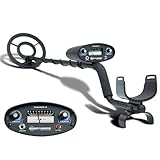
The Tracker IV is the classic first serious machine. It suits the complete beginner who wants to know whether metal detecting is a hobby before spending flagship money, and it suits the parent buying a machine that a teenager can actually operate. Its 8-inch waterproof search coil, three operating modes, and all-terrain targeting philosophy make it the most forgiving entry point in this list.
Key specs
- Coil: 8-inch waterproof search coil — sealed for wet grass, damp ground, and shallow water
- Modes: three operating modes covering all-metal, discrimination, and tone-based target sorting
- Targeting: marketed for gold, silver, coin, and relic detection across terrain types
- Controls: analog-style knobs — simple, immediate, no menus
- Shaft: adjustable for adult and older-child use
- Power: common replaceable battery format
Strengths
The 8-inch coil is the right size for learning. It separates targets acceptably in trashy ground, it swings easily, and it teaches you that coverage and depth are not the only measures of a detector. Every skill you develop on a small coil — listening for tone breaks, judging target size from signal width, working a plug properly — transfers directly to a premium machine later.
The analog-style control layout is genuinely instructive. With knobs rather than a digital menu, the relationship between sensitivity, discrimination, and what you hear becomes physical and fast to internalize. There is no submenu to hide behind, which forces you to understand what the machine is doing rather than accepting a preset.
Durability across a decade is the Tracker IV’s real reputation. Bounty Hunter has sold this platform for a very long time, parts and coils are widely available, and the design is simple enough that there is very little to break. For a first machine that may end up in the hands of a kid, or in a trunk for years, that simplicity is an asset rather than a limitation.
How it compares
Against the GoGonova PD70, the Tracker IV is the more traditional and more analog machine, while the PD70 leans toward digital presentation and family adjustability. Choosing between them comes down to whether you want to learn on knobs or on a screen. Against the ikiu 2026 LCD, the Tracker IV gives up the digital readout but gains decades of parts availability and a well-understood design. Against the Gbnryg, this is the entry rung and the Gbnryg is the next one up — a beginner who knows they will stick with the hobby should skip straight to the Gbnryg; a beginner who is not sure should not.
Pros
- 8-inch waterproof coil handles wet grass and shallow water
- Three operating modes cover the practical beginner range
- Analog knobs teach detector fundamentals quickly
- Long-established platform with widely available parts and coils
- Budget pricing with very low risk if the hobby does not stick
Cons
- 8-inch coil limits coverage on large open fields
- No backlit display or digital target ID
- Depth on coin-sized targets is modest by flagship standards
- Not a wet-sand saltwater machine
5. GoGonova PD70 — Best Budget Family Detector

The GoGonova PD70 is designed around the household rather than the solo hunter. The adjustable shaft accommodates adults and kids, which means one machine serves the whole family, and the detection modes are pitched at light recreational hunting in parks, yards, and beaches rather than serious field work. It suits the family that wants a shared outdoor activity without buying three detectors.
Key specs
- Audience: explicitly for adults and kids
- Shaft: adjustable length to fit a range of user heights
- Modes: discriminating detection modes for sorting common targets
- Build class: lightweight, which matters for younger users over a long session
- Intended terrain: parks, yards, playgrounds, and dry beach sand
- Power: standard replaceable battery format
Strengths
Length adjustability is the whole point. A detector that only fits an adult stance becomes unusable for a ten-year-old, who ends up dragging the coil or holding it at an angle that ruins ground balance. A shaft that shortens properly means the child swings the coil flat and level, which is the single most important technique in detecting and the one beginners get wrong most often.
The lightweight build matters for the same reason. Children tire quickly with a heavy machine held away from the body, and a tired swinger swings badly. A lighter detector keeps technique clean for the full session.
Discriminating modes at this price also mean the family is not digging every bottle cap in the park on the first outing. That first-hour experience decides whether a kid ever wants to go again, and a machine that separates trash from treasure even loosely makes the first hour far better. It is also the natural companion to the SUNPOW pinpointer — a child with a pinpointer and a lightweight detector is genuinely self-sufficient on a beach.
How it compares
Against the Bounty Hunter TK4, the PD70 is the more modern, more family-shaped machine, while the Tracker IV is the more traditional, more repairable one. Against the ikiu, both are budget units, but the PD70 emphasizes physical fit and the ikiu emphasizes a display — pick based on whether the priority is a small user or an informative screen. Against the Gbnryg, this is a clear step down in control depth and long-term ceiling; the Gbnryg is what you buy when the hobby has already stuck and the whole family is not sharing one shaft.
Pros
- Adjustable shaft genuinely fits both adults and children
- Lightweight enough for long sessions with younger users
- Discriminating modes reduce trash digging for beginners
- One machine serves a whole household
- Budget price keeps the entry cost low for a family trial
Cons
- Not a deep-seeking or saltwater-capable machine
- Control depth is limited compared with mid-range and premium units
- No premium coil options to grow into
- Light build can feel less substantial than full-size detectors
6. Hazlewolke 14″ Double-D Detector — Best Deep Open-Ground Coverage

The Hazlewolke is the coverage specialist. A 14-inch double-D coil is the largest footprint in this roundup, and it exists for one job: sweeping large, relatively clean open ground as efficiently as possible. It suits the detectorist who hunts pasture, plowed fields, wide beaches, and large parks where targets are spread out and the priority is ground covered per hour, not surgical separation in trash.
Key specs
- Coil: 14-inch double-D — the widest in this comparison
- Sensitivity: marketed as a higher-sensitivity design to match the large coil
- Water resistance: waterproof search coil
- Coverage: substantially more ground per sweep than 8-inch, 11-inch, or 12-inch coils
- Targeting: built for adult use; large coil demands a controlled swing
- Power: standard replaceable battery format
Strengths
Coverage compounds. A 14-inch double-D coil sweeps a footprint roughly 75 percent wider than an 8-inch coil and about 27 percent wider than an 11-inch coil. Over a three-hour session in open field, that difference shows up as acres rather than yards. For relic and coin hunting on plowed farmland, or for beach work on a wide flat strand, coverage per hour is the metric that decides whether you find anything, because most of the ground is empty.
A large double-D coil also tends to go deeper on coin-sized objects than a smaller coil of the same design, for the simple reason that it generates a broader detection field and can be run at higher sensitivity without becoming unstable on mild ground. That is the trade the premium tier is charging for.
The waterproof coil keeps the machine usable after rain and on wet sand, which extends the calendar rather than the day.
How it compares
Against the BOXTREN 12″ IP68, the Hazlewolke wins on raw coverage and loses on submersibility and coil-versatility. The BOXTREN’s IP68 rating lets you work water the Hazlewolke cannot touch, and a 12-inch coil is meaningfully easier to swing in moderate trash. Against the SAKOBS 11″, the Hazlewolke is the open-field machine and the SAKOBS is the wet-sand, travel machine — these two genuinely do different jobs and a serious hobbyist could justify owning both before owning two units from the same size class. Against the Gbnryg, the Hazlewolke is a specialist upgrade that will frustrate you in a trashy park and delight you in a plowed field.
Pros
- Largest coil footprint in this comparison — maximum coverage per sweep
- Deeper effective detection on coin-sized targets in mild ground
- Waterproof coil extends usable conditions after rain
- Ideal for pasture, farmland, and wide open beaches
- Genuine premium-tier capability rather than premium-tier branding
Cons
- 14-inch coil separates poorly in trashy ground — nails and coins blend together
- Heavier swing and more fatigue over a long session
- Requires more careful ground balancing than smaller coils
- Impractical in tight yards, rocky surf, and dense modern parks
7. BOXTREN Professional 12″ IP68 DD Coil — Best Submersible Versatility

The BOXTREN sits at the balance point of the premium tier: a 12-inch IP68 double-D coil, a professional control layout, and an LCD that reports targets with claimed high accuracy. It suits the detectorist who refuses to choose between land and water — the person who hunts a park on Saturday and wades a river or works the surf line on Sunday with the same machine, without compromise in either setting.
Key specs
- Coil: 12-inch IP68-rated double-D search coil — fully submersible
- Accuracy: marketed for high-accuracy target identification
- Display: LCD for target readout and settings
- Controls: professional-level control set
- Ground handling: double-D winding for stability over mineralized and salt ground
- Audience: adult users
Strengths
The IP68 coil is the defining feature. Full submersion means the coil, not just the stem, can go under — which opens up shallow rivers, creek beds, swimming areas, and the surf line in a way a splash-rated coil cannot. Water hunting is where lost jewelry concentrates, and a submersible 12-inch double-D is the right tool for it.
Twelve inches is the smart compromise in the coil-size argument. It covers noticeably more ground than an 11-inch coil while remaining swingable in moderate trash, where a 14-inch coil becomes a handicap. If you want one coil that handles both an open field and a moderately littered park, 12 inches is close to the optimum.
The LCD adds a second layer of information on top of audio. Experienced detectorists run largely by sound, but a visual target readout helps confirm marginal signals, teaches what different conductors sound like, and speeds up the decision to dig or walk. On a premium machine, that is a legitimate convenience rather than a gimmick.
How it compares
Against the SAKOBS 11″, the BOXTREN wins on coil diameter and on the same IP68 submersibility rating, while the SAKOBS wins on the folding shaft and therefore on travel and storage. If your detector lives in a car and comes out at the beach, the fold matters. If your detecting involves packing into a river or wading a swimming hole, the extra inch and the comparable sealing favor the BOXTREN. Against the Hazlewolke 14″, the BOXTREN is the more versatile machine and the Hazlewolke is the more specialized one. Against the Gbnryg, this is a straightforward upgrade in coil size, sealing, and display — and a straightforward increase in cost.
Pros
- 12-inch IP68 coil is fully submersible — river, surf, and swimming-area capable
- Coil size balances coverage against maneuverability better than 11-inch or 14-inch extremes
- LCD target readout complements audio for marginal signals
- Professional control set with room for experienced use
- Double-D winding handles salt and mineralized ground
Cons
- Premium pricing at the top of the range
- Control housing should still be treated as non-submersible unless stated otherwise
- Heavier than budget units over a long session
- No folding shaft advertised for compact transport
8. ikiu 2026 Professional LCD Detector — Best Budget Screen Experience

The ikiu is the budget machine that gives you a display. It suits the detectorist who wants visual target feedback and the reassurance of a screen without paying mid-range or premium prices, and it suits beginners who learn faster when they can see a number or a category change alongside the tone. It is marketed as a 2026 model with higher accuracy claims and an LCD, aimed at adult users.
Key specs
- Display: LCD for target and settings readout
- Accuracy: marketed as higher-accuracy professional detection
- Audience: adults; adjustable shaft length class
- Controls: professional-style layout at budget pricing
- Model year: marketed as a 2026 release
- Power: standard replaceable battery format
Strengths
Screens teach. When you can see a target category shift as you sweep across a nail next to a coin, you learn what discrimination actually does far faster than you would from audio alone. That learning speed is worth real money to a new detectorist, and the ikiu delivers it at budget pricing where most LCD machines sit in the mid-range tier.
The adjustable shaft keeps it usable across adult heights, and the budget tier keeps the entry cost low. If you are not certain the hobby will stick but you want a machine that looks and feels like a modern detector rather than an analog relic, this is the compromise point in the list. It also pairs naturally with a budget pinpointer, giving you a complete two-tool kit for less than the cost of a single premium coil.
How it compares
Against the Gbnryg, the ikiu wins on screen-based feedback for the price and the Gbnryg wins on control depth and on the machine’s useful life as your skills grow. Against the GoGonova PD70, both are budget units, but the PD70 is built around fitting a child and the ikiu is built around showing you information. Against the Bounty Hunter TK4, the ikiu offers a modern display where the Tracker IV offers decades of proven simplicity and parts availability. For a first machine where visual feedback matters most, the ikiu is the value pick; if you already know you will hunt seriously, put the money toward the Gbnryg instead.
Pros
- LCD target readout at budget pricing
- Faster learning curve for beginners who respond to visual feedback
- Adjustable shaft suits adult users
- Modern presentation at an entry price
- Combines well with a budget pinpointer for a low-cost full kit
Cons
- No waterproof or submersible rating advertised
- Coil size and depth capability behind mid-range and premium units
- Limited upgrade path — few coil options to grow into
- Budget-tier control depth compared with the Gbnryg or BOXTREN
9. Garrett Pro-Pointer AT — Best Serious Recovery Tool

The Pro-Pointer AT is the professional recovery standard. It is fully submersible to 20 feet, built in the USA, and finished in orange specifically so it remains visible when you set it down in sand or leaf litter. It suits the detectorist whose hunting regularly includes water — wading rivers, working swimming beaches, hunting in the surf — and who needs a pinpointer that can go wherever the main machine goes.
Key specs
- Submersion rating: waterproof to 20 feet
- Origin: made in the USA
- Visibility: high-visibility orange body
- Sensitivity: high-sensitivity tip tuned to small targets
- Type: handheld pinpointer for close-range target location
- Audience: adults; professional and serious hobbyist use
Strengths
Twenty feet is not a marketing number — it is the difference between a tool you can use in a swimming hole and one you cannot. If your detecting involves working in water deeper than your knees, or if the hole you dig at the waterline fills immediately, a 20-foot rating removes an entire category of anxiety. It is the depth rating that makes this the professional pick rather than merely a premium one.
The orange body solves a mundane but constant problem. Pinpointers get set down in sand, in grass, in leaf litter, and on wet gravel. An orange tool is findable; a black one is lost. Anyone who has spent ten minutes crawling a beach looking for a black wand understands why this is a genuine design decision rather than a cosmetic one.
USA manufacture and Garrett’s established position in the detecting community mean parts, warranty support, and long-term serviceability are understood rather than speculative. For a small tool that gets dropped, submerged, and shoved into gravel, that matters more than the spec sheet on day one.
How it compares
Against the SUNPOW pinpointer, this is the professional version of the same job. The SUNPOW is waterproof for damp soil and shallow holes at budget pricing; the Garrett is waterproof to 20 feet at mid-range pricing. Neither is a metal detector and neither should be bought instead of one. If your hunting never fully submerges a pinpointer, the SUNPOW delivers the core benefit for far less. If your hunting involves wading deep, working a swimming area, or hunting a creek, the Garrett’s depth rating is the feature that justifies the price and the SUNPOW cannot substitute for it. The two together are also a legitimate kit: the SUNPOW as a backup and loaner, the Garrett as the primary.
Pros
- Waterproof to 20 feet — genuinely submersible, not just splash-resistant
- High-visibility orange body reduces the classic lost-pinpointer problem
- Made in the USA with established service and parts support
- High-sensitivity tip locates small targets quickly
- Durable enough for gravel, saltwater, and repeated drops
Cons
- Mid-range pricing for a tool that does not locate targets at range
- No discrimination, target ID, or depth indication
- Battery format and runtime depend on the cell type used
- Overkill if you never submerge your pinpointer
How to Choose
Choosing a flagship metal detector is a filtering problem, and the filters should be applied in a specific order, because some of them eliminate machines outright and others are just tie-breakers. Work through them in this sequence and the list narrows quickly.
Filter 1: Where will you actually hunt?
This is the first filter because it is the most decisive. There are three broad environments and they demand different machines.
- Dry land only — parks, yards, fields, forest. You need discrimination and target separation more than you need sealing. A mid-size coil in the 8–11 inch range is ideal. Coil waterproofing matters only for wet grass and damp soil.
- Wet sand and shallow surf — you need a coil rated for full immersion and a double-D winding to cope with conductive salt. A concentric coil will false constantly on wet sand. An 11-inch or 12-inch IP68 double-D is the target spec.
- Genuine submersion — rivers, creeks, swimming areas, working in water above the knee. The coil must be IP68-rated and the rest of the machine must be judged honestly: most detectors with waterproof coils still have control housings that must stay dry. Assume the housing is not submersible unless the listing explicitly says it is.
A detector that is excellent in one of these environments can be poor in another. That is not a defect — it is physics. Be honest about which environment you will actually visit, not which one you imagine visiting.
Filter 2: Coil size — the real decision
Coil diameter is the single most consequential specification, and the trade-off is almost perfectly linear: bigger coils cover more ground and reach deeper, but separate targets worse in trash and fatigue your arm faster. Concrete comparison across this list:
| Coil size | Coverage per sweep vs. 8″ | Typical depth class | Trash separation | Best environment |
|---|---|---|---|---|
| 8″ (Bounty Hunter TK4) | Baseline | Modest — beginner class | Good — best in this list | Yards, playgrounds, trashy parks, learning |
| 11″ (SAKOBS) | ~89% wider than 8″ | Good — flagship class | Fair to good | Wet sand, moderate trash, travel |
| 12″ (BOXTREN) | ~125% wider than 8″ | Good to very good | Fair to good | Rivers, surf, mixed land and water |
| 14″ (Hazlewolke) | ~206% wider than 8″ | Very good — deepest class here | Poor in dense trash | Plowed fields, pasture, wide flat beaches |
The practical rule: if you can only afford one coil, buy the one that matches your most common ground. If your most common ground is a modern park full of pull-tabs and foil, a 14-inch coil is the wrong purchase no matter how deep it goes. If your most common ground is a 40-acre plowed field, an 8-inch coil is equally wrong.
Filter 3: Frequency and multi-frequency behavior
Operating frequency governs what a detector is best at. Lower frequencies penetrate deeper and respond more strongly to high-conductivity targets like large silver and copper. Higher frequencies respond better to low-conductivity targets like small gold, thin hammered coins, and tiny jewelry. Multi-frequency machines — whether true simultaneous multi-frequency or selectable single frequency — let you shift that balance without buying a second detector.
For a flagship buyer in 2026, the practical guidance is this:
- If you hunt one target class in one environment — a single-frequency machine at the right frequency for your targets is fine and often cheaper.
- If you hunt beaches, saltwater, or mineralized soil — multi-frequency or selectable-frequency operation is close to mandatory. Salt and iron mineralization cause massive ground noise, and multi-frequency machines cancel it far more effectively than any amount of manual ground balancing.
- If you want one machine to cover gold jewelry, coins, and relics — multi-frequency or a selectable-frequency design is the honest answer. In this list, the premium units are the ones most likely to offer frequency flexibility; check the current listing before buying, because specifications change between production runs.
Be skeptical of any detector at any price that claims equal excellence on small gold and deep silver without frequency flexibility. The physics does not permit it.
Filter 4: Water rating — read it precisely
Water resistance claims are where buyers get burned, because they describe three very different things:
- Waterproof coil — the search coil can be submerged. The control housing, usually mounted on the shaft or the arm cuff, cannot. This is the most common configuration and it is fine for wet grass, rain, wet sand, and shallow water hunting up to roughly knee depth, as long as you keep the housing dry.
- IP68 coil — a specific ingress protection standard applied to the coil, meaning dust-tight and protected against continuous immersion under defined conditions. In practice this is the rating that lets you work the surf line and shallow water confidently.
- Fully submersible detector — the whole machine, housing included, can go under. This is rare and expensive. Only buy on this basis if the listing states it in plain terms.
The distinction matters because most water-hunting disappointment comes from a buyer assuming “waterproof” meant the whole machine. Read the specification for the coil and the specification for the housing separately.
Filter 5: Weight and swing fatigue
Detector weight is quoted inconsistently — sometimes with the coil, sometimes without, sometimes with batteries. The number that matters to your arm is the total ready-to-hunt weight, meaning shaft, housing, coil, and batteries. As a working guide, a detector that weighs under about 2.5 pounds ready to hunt can be swung comfortably for a long session; between 2.5 and 3.5 pounds most adults manage with a proper swing technique that uses the shoulder rather than the forearm; past 3.5 pounds with a large coil you will feel it within an hour, and the fatigue changes your technique, which reduces your finds.
A large coil adds meaningful weight to the end of a long lever, which amplifies the burden far beyond the coil’s own mass. A 14-inch coil on a mid-weight shaft can feel heavier than a 9-inch coil on a heavier machine. If you plan long sessions, either choose a smaller coil or budget for a harness or a shaft-mounted counterweight.
Filter 6: Battery life and format
Battery decisions split into two philosophies. Replaceable alkaline cells are the field-friendly option — when the machine dies, you swap cells and keep hunting, and you can carry spares in a pocket. Proprietary rechargeable packs are the workshop-friendly option — cheaper to run over the long term, but a flat pack means the session is over unless you carry a spare. For a flagship machine used on full-day outings, the practical answer is: buy whichever the machine uses, and carry the appropriate spare. A long session on good ground is exactly the wrong time to discover you are out of power with no replacement.
Runtime claims should be read as best-case figures. Cold weather reduces alkaline cell capacity substantially, and detectors with large backlit displays draw more power than the spec implies. If you hunt in autumn and winter, plan on roughly two-thirds of the quoted runtime as your realistic figure.
Filter 7: Control depth — how much menu you actually want
Advanced controls are a genuine benefit and a genuine trap. Ground balance, notch discrimination, sensitivity trim, and target-ID acceptance windows let an experienced detectorist tune a machine to difficult ground and squeeze out finds that a preset machine would miss. But every setting is another way to have the machine configured wrong and not realize it.
As a rough guide by experience level:
- Complete beginner: you want three to five controls, clearly labeled, with a sensible default. Learn on those. A deep menu at this stage leads to a detector that is accidentally set to reject the very targets you are hunting.
- Intermediate: you want ground balance, sensitivity, discrimination or notch, and target ID. That set lets you adapt to changing ground. The Gbnryg sits comfortably here.
- Experienced: you want full control over frequency selection, recovery speed if offered, iron audio or equivalent, and acceptance windows. Premium machines in this list, particularly the IP68 models, are the ones most likely to offer that depth.
A useful rule: if you cannot explain what a setting does and how it changes your finds, leave it at the default until you can. Every control you do not understand is a liability, not a feature.
Filter 8: Upgrade path and ownership realities
The total cost of ownership is not the purchase price. It is the purchase price plus consumables plus replacements plus the value of your time. When evaluating any machine in this list, check four things before buying:
- Coil availability. Can you buy a second coil in a different size in two years? If not, the machine has a ceiling and you will replace it rather than extend it.
- Consumables. Battery format, coil cable, and shaft hardware are the parts that wear or get lost. Confirm they are standardized and replaceable.
- Control housing sealing. This is the first thing to fail on a detector used near water. Wipe it down after every session and never open the battery compartment with wet hands.
- Storage discipline. Detectors stored in hot cars, damp sheds, or with batteries left installed for months suffer predictable failures. Store dry, store with batteries removed if storing long-term, and store the coil flat rather than resting on its edge.
The most common ownership mistakes are consistent across all brands: over-tightening the coil bolt until the coil can’t be angled, hunting with a loose coil connector causing intermittent signals, leaving a machine in a hot trunk where the coil and cable are degraded by heat, and using a waterproof rating as a licence to submerge a housing that was never designed for it. Every one of those failures is preventable and none of them are covered by a headline specification.
A decision matrix by reader situation
| Your situation | Priority specs | Machine to shortlist | Also budget for |
|---|---|---|---|
| Total beginner, not sure the hobby will stick | Simple controls, small waterproof coil, low cost | Bounty Hunter TK4 or GoGonova PD70 | A budget pinpointer |
| Beginner who wants a screen | LCD target readout, adjustable shaft | ikiu 2026 LCD | A budget pinpointer |
| Serious hobbyist, dry land only | Discrimination depth, target ID, mid-size coil | Gbnryg Professional | A Garrett Pro-Pointer AT |
| Beach hunter, wet sand and surf line | IP68 double-D coil, backlit display, travel-friendly | SAKOBS 11″ Foldable | A fully submersible pinpointer |
| River, creek, or swimming-area hunter | 12″ IP68 DD coil, ground handling over salt and iron | BOXTREN 12″ IP68 | A 20-ft submersible pinpointer |
| Relic hunter on plowed fields and pasture | Maximum coil coverage, deep detection class | Hazlewolke 14″ DD | A mid-size backup coil if available |
| Family with children sharing one machine | Adjustable shaft, lightweight, discriminating modes | GoGonova PD70 | Two pinpointers, one per child |
| Deep-water specialist | 20-ft submersion, high-visibility body, USA build | Garrett Pro-Pointer AT (with a submersible detector) | A waterproof main detector first |
Frequently Asked Questions
What is the single most important spec when choosing a flagship metal detector?
Coil size and type, because it determines coverage, depth, and target separation, and it cannot be compensated for by any other setting. An 8-inch coil and a 14-inch coil are effectively different tools for different ground conditions. Everything else — display, frequency options, weight — is a refinement once the coil is right for your terrain.
Do I need multi-frequency, or is single frequency enough?
Single frequency is entirely adequate for dry land hunting of a specific target class in mild ground. Multi-frequency or selectable-frequency operation becomes close to mandatory on wet salt sand, in highly mineralized soil, and when you want one machine to handle small gold, coins, and relics without compromise. Saltwater and multi-frequency are the pairing that matters most.
Can I take any of these detectors into the water?
Read the specification carefully, because “waterproof” usually describes the search coil only. An IP68 coil can be submerged, but the control housing on most machines must stay dry. Full submersion of the whole detector is rare and expensive. Only submerge a housing if the listing states plainly that the machine is submersible.
How deep will a flagship detector actually find a coin?
Real-world depth depends on coil size, ground mineralization, target size and orientation, and how the machine is balanced. As a broad guide, a small coil finds coin-sized targets in the several-inch range, while a large coil on mild ground can go meaningfully deeper. Treat any advertised maximum depth as a best-case figure on favorable ground, not a guarantee.
Is a pinpointer really necessary, or can I just use the detector?
A pinpointer is the highest-value accessory you can buy, because it cuts recovery time on every single target. Without one, the typical recovery cycle involves repeated digging and re-sweeping. With one, you dig once. It is not a replacement for a detector and it should never be bought as one, but it changes the experience more than any upgrade within the same tier.
How much should weight factor into my decision?
More than most buyers expect. A detector that is too heavy changes your swing technique within an hour, and bad technique reduces both comfort and finds. Under roughly 2.5 pounds ready-to-hunt is comfortable for long sessions; past 3.5 pounds with a large coil, expect fatigue. A large coil adds weight at the end of a long lever, which amplifies the effect considerably.
Will a budget detector find anything, or is premium required?
A budget detector will find real targets, and the fundamental skills — coil control, ground balance, listening for tone breaks, digging a clean plug — are learned just as well on a cheap machine as an expensive one. What premium money buys is coverage, depth on difficult ground, sealing for water, control depth, and durability. If your terrain is mild and your targets are shallow, a budget machine is not holding you back.
How do I maintain a detector so it lasts?
Four habits cover most of it: wipe the control housing and coil cable dry after every session, never open the battery compartment with wet hands or in the rain, store the machine dry with the coil flat rather than resting on its edge, and remove batteries for long-term storage. The parts that fail first on water-exposed machines are the housing seals and the coil connector, and both failures are usually caused by moisture and neglect rather than by manufacturing defects.
The Bottom Line by Situation
If you want one machine and mostly hunt dry land, buy the Gbnryg Professional and put the savings into a pinpointer. If your hunting involves wet sand, the surf line, or travel, the SAKOBS 11″ Foldable is the machine whose features you will actually use. If you wade rivers or work swimming areas, the BOXTREN 12″ IP68 is the submersible compromise that covers both land and water well. If your ground is open, clean, and large, the Hazlewolke 14″ will cover more of it per hour than anything else here. If the hobby is still unproven, start with the Bounty Hunter TK4, the GoGonova PD70 for a family, or the ikiu if you want a screen. And whatever detector you choose, buy a pinpointer on the same order — the SUNPOW at budget or the Garrett Pro-Pointer AT if you submerge it. It is the accessory that will change your results fastest.