Key takeaways
- Biometric: Quick access by fingerprint. Performance can drop with wet, dirty or injured fingers, so most biometric units also have a backup key or code.
- Keypad or pushbutton: Works without a battery in mechanical designs like the Fort Knox PB1; electronic keypads need power.
- Key lock: Simple and reliable, but keys can be lost or copied.
- RFID or Bluetooth: Adds convenience, as with the VT20i and Hornady RAPiD options, but relies on a charged battery or app.
If your exact vehicle is supported, a vehicle-specific console safe such as a Console Vault is the most secure and least visible option; if you want flexibility to move a safe between cars, the home or a hotel room, a portable cable-secured vault such as the Vaultek LifePod 2.0 or the Hornady RAPiD Safe is the more practical pick. The right car safe depends on what you need to protect, how quickly you need access, and whether the safe will stay in one vehicle or travel with you.
Our top picks



As an Amazon Associate we earn from qualifying purchases at no extra cost to you.
Car Safes at a Glance
| Safe | Type | What makers and reviewers state | Limits |
|---|---|---|---|
| Console Vault | Vehicle-specific console insert | Reviewers describe twelve-gauge steel, a foam interior, drill-resistant lock options and installation in roughly 10 to 15 minutes without permanent modification; it is also described as one of few systems that does not need a security cable | Not universal; you must find a configuration for your vehicle and console |
| Vaultek LifePod 2.0 | Portable, waterproof-style case | Guides cite side clamps, a top tray for a phone, wallet and keys, and TSA-friendly portability; recommended with a security cable | Portable design is easier to steal if not cabled |
| Vaultek VT20i | Biometric, Bluetooth pistol vault | One site names it a top center-console pick and reports 16-gauge steel | Size suits handgun-scale storage only |
| Vaultek LifePod 20 Biometric | Portable premium vault | Positioned by one truck-focused guide as a premium portable vehicle option | Needs charged battery management |
| Hornady RAPiD Safe 2700KP XL | Portable multi-entry safe | Ranked as best overall portable vehicle safe by one roundup, with RFID, keypad and key entry | Needs anchoring for best security |
| Fort Knox PB1 | Mechanical pushbutton | Suggested for people who prefer no electronics | Slower to open for some users |
| Tuffy Security console drop-in | Console organizer safe | Cited as a lower-cost console insert | Only fits specific vehicles |
Who Needs a Car Safe
People use a vehicle safe for a laptop, passport, spare keys, medication, cash, a camera or, where legal, a firearm. A safe is a deterrent and a delay, not an absolute guarantee. A determined thief with time and tools can defeat many portable units, so the aim is to make a smash-and-grab unattractive and to protect valuables in situations where you cannot take them with you.
If you carry a firearm, laws on vehicle storage vary by state, province and country, and some places have specific rules on locking mechanisms, ammunition and visibility. Check your local regulations before choosing and using a vehicle gun safe, and never store a firearm in a way that is accessible to children.
Fixed or Portable?
Vehicle-specific fixed safes
Console Vault and similar systems drop into the center console or sit in a cargo or floor location designed for a specific vehicle. Reviewers like them because they are hidden, sturdy and need no cable. Ford also sells a Console Vault as a factory accessory for the F-150. The downside is fit: if your vehicle or trim is not on the compatibility list, you cannot use one.
Portable cable-secured safes
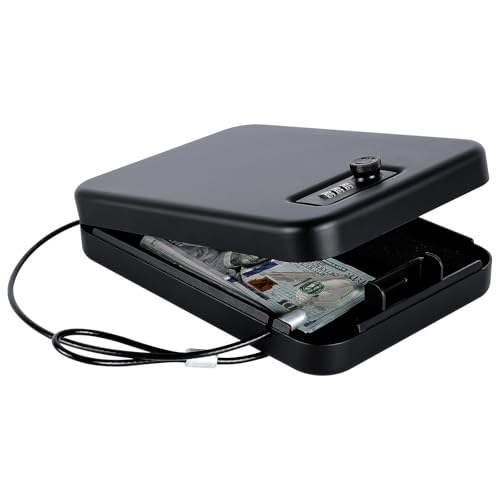
The LifePod 2.0, the Hornady RAPiD Safe and similar models can be tethered to a seat frame or other solid anchor with a security cable, and can come out of the vehicle when you need them. They suit people who rent cars, switch vehicles or travel often, but they are more visible and rely on a cable and anchor point for security.
Lock Types
- Biometric: Quick access by fingerprint. Performance can drop with wet, dirty or injured fingers, so most biometric units also have a backup key or code.
- Keypad or pushbutton: Works without a battery in mechanical designs like the Fort Knox PB1; electronic keypads need power.
- Key lock: Simple and reliable, but keys can be lost or copied.
- RFID or Bluetooth: Adds convenience, as with the VT20i and Hornady RAPiD options, but relies on a charged battery or app.
Size, Fit and Placement
Measure the space and what you want to store before buying. A compact pistol vault will not hold a laptop, and a laptop-sized safe will not fit in most consoles. Do not place a safe where it interferes with airbags, seat belts, pedals or the driver’s ability to control the vehicle. Look for locations that hide the safe from outside view, such as under a seat, in a rear storage area or inside a console. Check the vehicle maker’s manual for restrictions.
Security Features to Compare
- Steel thickness: reviewers mention 12-gauge and 16-gauge steel in different models. Lower gauge numbers mean thicker steel.
- Drill-resistant lock hardware and hidden hinge design.
- A tamper-resistant mounting method or a thick steel cable.
- Interior padding to protect electronics.
- Battery backup and a mechanical key override for electronic locks.
- Water and temperature resistance, because a parked car can get very hot or cold. Check the maker’s stated operating range, especially for electronics.
Budget Tiers
- Budget: Basic key or mechanical pushbutton boxes such as the Fort Knox PB1 and console drop-ins like the Tuffy.
- Mid-range: Portable electronic safes like the Hornady RAPiD Safe and Vaultek LifePod 2.0.
- Premium: Vehicle-specific safes such as Console Vault and biometric models such as the LifePod 20 Biometric.
Pick X If… Decision Table
| Pick this | If you… |
|---|---|
| Console Vault | own a supported vehicle and want a concealed, built-for-fit safe |
| Vaultek LifePod 2.0 | want a portable case for valuables that you move between car, hotel and home |
| Vaultek VT20i | want a biometric handgun-scale vault in the console area |
| Hornady RAPiD Safe | want multiple entry options, including RFID, keypad and key |
| Fort Knox PB1 | prefer no electronics |
| Tuffy Security console drop-in | want a more affordable fixed console option for a supported vehicle |
Alternatives
- Take valuables with you: The cheapest security is not leaving items in the vehicle.
- Locked trunk or hidden compartments: Some vehicles have lockable storage areas that reduce visibility.
- A steel security cable alone: Useful as a secondary measure to keep a portable box from being lifted out.
Installation and Everyday Use
A safe only protects you if you use it consistently. Practice opening it while seated and belted, so you can do it without looking. Keep the key or backup code somewhere other than the vehicle, and check the battery on electronic models on a schedule. Many owners set a calendar reminder every few months to test the lock and replace or recharge the battery according to the maker’s instructions.
For cabled portable safes, thread the cable through a seat frame, a seat bracket or another solid point that is not easily removed, and keep the cable short so the safe cannot be moved far. Avoid anchoring to plastic trim or components that are part of the vehicle’s safety systems. If you are unsure, ask a qualified installer. For fixed console safes, follow the maker’s fit guide and instructions, and do not cut or modify wiring or airbag components.
Lifestyle and Travel Considerations
If you travel by air, note that a portable safe may be allowed in checked luggage under specific rules, and some are marketed as TSA-friendly. Always check airline and security rules for your route, since rules on firearms, batteries and locks differ. Many portable vaults use lithium batteries, and airlines can have rules on how they are carried.
Think about heat as well. A closed car in summer can exceed the comfortable operating range of electronics, batteries, medication and adhesives. Some owners keep sensitive items out of the car in extreme weather, and store only items that tolerate temperature swings. Look at the maker’s stated operating temperature if it is given.
Insurance and Practicalities
Leaving valuables in a vehicle can affect an insurance claim, since policies differ in how they treat theft from cars and what limits apply. Read your policy or ask your insurer. A safe is not a substitute for locking the vehicle, parking in a lit area and keeping valuables out of sight.
Frequently Asked Questions
Are car safes really secure?
They raise the effort and time needed to steal an item, but no portable safe is theft-proof. Fixed, concealed safes and cable-secured units are generally harder to remove than loose boxes. Treat them as one layer of protection.
Do I need to bolt a car safe down?
Portable safes usually need a security cable attached to a solid anchor. Vehicle-specific models like Console Vault are described by reviewers as not needing a cable. Follow the maker’s installation instructions and avoid drilling into structural or safety components.
Is a biometric lock reliable?
Biometric locks are fast, but they can struggle with wet or dirty fingers and rely on battery power. Pick a model with a backup key or code and test it regularly.
Will extreme heat damage a car safe or its contents?
A parked car can get very hot or very cold. Electronics, batteries and some items such as medications may have limits, so check the maker’s operating range and the storage guidance on any contents.
Can I carry a firearm safe in a vehicle legally?
Rules vary widely by location, and some require locked storage or specific separation of ammunition. Check local and state regulations or consult a qualified source before storing a firearm in any vehicle.
Which is better, fixed or portable?
Fixed safes win on concealment and strength but only fit supported vehicles. Portable safes win on flexibility but rely on a cable and a good anchor point. Pick based on whether the safe will stay in one vehicle.