Key takeaways
- Plastic polymer: Light and affordable. Quality varies by blend, and some reviewers note cold temperatures can make older or lower-grade ramps brittle.
- Foam with a traction coating: Race Ramps use high-density expanded foam. They are very light and will not scratch floors or tires, but the design is aimed at lighter vehicles and sits at the premium tier.
- Steel: Heavy and strong, favored for trucks, but less common in the retail roundups and more likely to slip on smooth concrete without rubber feet.
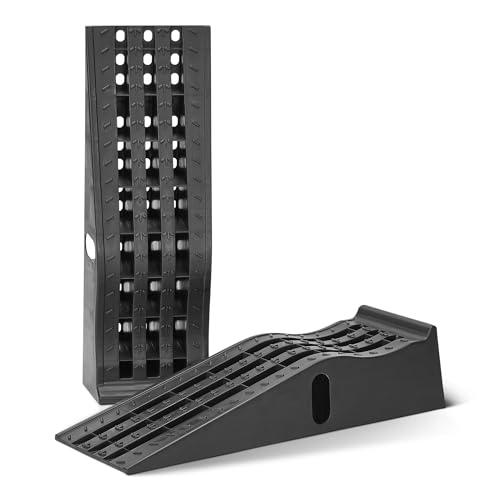
For most home mechanics with a typical car or small SUV, RhinoGear’s RhinoRamps family is the usual value pick; owners of lowered or sports cars are better served by the long, shallow-angle Race Ramps or Discount Ramps low-profile models; and drivers of heavier vehicles should choose a ramp whose rated capacity comfortably exceeds the vehicle’s gross weight. Whatever you pick, ramps support a car on its wheels, so you must still chock the wheels and add jack stands when you work underneath, as reviewers repeatedly advise.
Our top picks


As an Amazon Associate we earn from qualifying purchases at no extra cost to you.
Car Ramps at a Glance
| Ramp | Best for | Stated or reported specs | Limits |
|---|---|---|---|
| RhinoGear RhinoRamps (e.g. 11909 and RhinoRamps MAX) | Everyday cars, best value | Reviewers cite a roughly 17-degree angle and about 19 pounds per ramp for the standard model; the MAX is listed at 16,000 lb GVW for the pair | Plastic polymer can become brittle in extreme cold, and one owner questions the highest capacity claim |
| Race Ramps RR-40 | Premium, lightweight, many cars | High-density expanded foam with traction coating | Lower weight capacity than some plastic ramps; premium tier |
| Race Ramps RR-56 | Low and sports cars | Reported 3,000 lb per pair rating | Not for heavy vehicles |
| Discount Ramps 66-inch low-profile | Lowered cars on a budget | Reported 11.5-degree incline | Long footprint, store with care |
| Discount Ramps 6009-V2 | Standard cars | Reported 4,400 lb gross vehicle weight rating | Reviewers say it is not for heavy vehicles |
Ramps vs Jack Stands
Ramps lift the vehicle on its own tires and give a wide, stable base, which many owners find quicker and more reassuring than a jack and stands for jobs like oil changes. They do not suit every job: tire, brake and wheel work requires the wheels to come off, and many suspension jobs need the chassis supported at specific points. Even with ramps, reviewers advise that jack stands add a second layer of protection, and no one should ever get under a vehicle held only by a jack.
Check the Weight Rating
Ramp ratings are usually given as a gross vehicle weight (GVW) for the pair, meaning the combined weight of the whole vehicle. Because a ramp supports only the axle that is up on it, the actual load is a fraction of the total, yet the rating is the figure to match. Find your vehicle’s gross vehicle weight rating on the driver’s door jamb label, then choose a ramp with a stated rating above it. Where a rating seems unusually high for a plastic ramp, treat it with caution, as some owner comments question headline capacity claims.
Ground Clearance and Approach Angle
This is the main cause of ramp trouble. If your front bumper or air dam sits low, a steep ramp will push against it before the tire reaches the incline. Low-profile ramps such as the Discount Ramps 66-inch models, with a reported 11.5-degree incline, and the long Race Ramps designs are made for that situation. Standard ramps around the 17-degree range suit most stock cars and SUVs. If a car is lowered, a simple workaround is placing a board or a short ramp piece at the base to reduce the angle, but check that the extension is rated for the load.
Tire Width and Lift Height
Compare the ramp’s tire channel width to your tire’s tread width, including wider aftermarket tires. A tire hanging over the edge is unsafe. Lift height matters too: a 6.5-inch lift, as reviewers attribute to the standard RhinoRamps, is enough for many oil changes, while some tasks want more room underneath. Taller ramps are steeper or longer, so be realistic about the room in your garage.
Material Choices
- Plastic polymer: Light and affordable. Quality varies by blend, and some reviewers note cold temperatures can make older or lower-grade ramps brittle.
- Foam with a traction coating: Race Ramps use high-density expanded foam. They are very light and will not scratch floors or tires, but the design is aimed at lighter vehicles and sits at the premium tier.
- Steel: Heavy and strong, favored for trucks, but less common in the retail roundups and more likely to slip on smooth concrete without rubber feet.
Safe Use Checklist
- Use ramps on a flat, hard, level surface only. Avoid sloping drives and soft ground.
- Align the ramps squarely with the tires before driving up.
- Drive up slowly with a spotter, stop when the tire settles into the cradle, and do not overshoot.
- Set the parking brake, put an automatic in Park or a manual in gear, and chock the wheels that stay on the ground.
- Add jack stands as a backup when working underneath.
- Inspect ramps for cracks and warping before every use, and retire any damaged ramp.
- Check your owner’s manual for safe lift points and the maker’s stated warnings.
Budget Tiers
- Budget: Discount Ramps’ standard models and RhinoGear’s basic RhinoRamps are the usual choices.
- Mid-range: Heavier-rated plastic models such as the RhinoRamps MAX and low-profile Discount Ramps sit here.
- Premium: Race Ramps foam models cost the most and focus on light weight and very gentle angles for low cars.
Pick X If… Decision Table
| Pick this | If you… |
|---|---|
| RhinoGear RhinoRamps | drive a typical car or crossover and want the best balance of price and features |
| RhinoGear RhinoRamps MAX | need a higher stated rating for a heavier SUV or truck, while still using jack stands |
| Race Ramps RR-40 | want a lightweight premium ramp that is easy to move and store |
| Race Ramps RR-56 | own a low sports car and want the shallowest angle |
| Discount Ramps 66-inch | have a lowered car and a smaller budget |
Alternatives
- Jack and stands: Better for wheel-off work, as long as you use correctly rated stands on a solid surface.
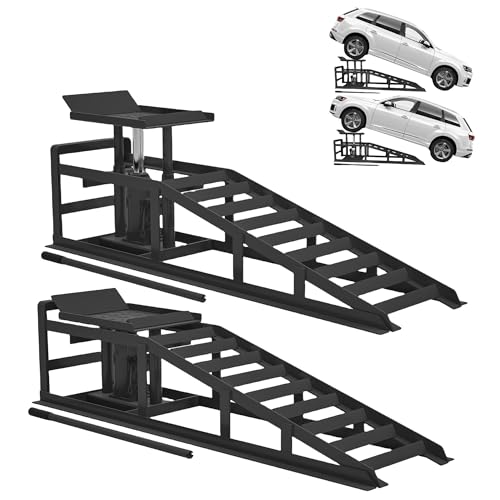
- Drive-on service ramps with steel construction: Suit heavy trucks, though heavier to handle.
- Low-profile ramp extensions: Reduce the approach angle for cars that scrape standard ramps.
Common Jobs and Which Ramp Suits Them
Oil and filter changes are the most common use. For these a standard-height ramp is enough, because you only need room to slide a drain pan beneath the engine. The extra width of a polymer ramp gives a stable platform, and the lift height of a standard model lets most people reach the drain plug on a car or small SUV without much strain.
Exhaust and transmission fluid jobs may need more room, and some people prefer to raise the car with a jack and add stands in addition to the ramps. Brake and wheel work requires the wheels off the ground, so ramps are a poor fit unless used with careful extra supports as described in the vehicle manual. For detailing, undercarriage washing or inspection, ramps are ideal, and lightweight foam ramps are easy to move around the garage.
Storage and Handling
Weight is an everyday consideration. A standard polymer ramp that weighs about 19 pounds is easy to carry, whereas steel ramps are far heavier. Foam ramps are the lightest, and their makers present that as a major advantage. Think about where you will store them: long low-profile ramps take up floor or wall space, while stackable or nesting designs save room. Keep them dry and out of extreme heat, away from solvents and oils that can attack plastics.
Warning Signs to Retire a Ramp
- Visible cracks, especially near the base or the cradle at the top.
- Permanent bending, sagging or warping.
- Deep gouges, chunks missing, or crushed foam.
- A ramp that slides on the floor when loaded. Rubber feet or anti-slip pads can help, but a ramp that moves should be replaced or used on a different surface.
- Any fluid contamination that has softened the material.
Matching Ramps to Vehicle Types
Compact cars and sedans fit almost any standard ramp, provided the front air dam clears. Crossovers and SUVs are heavier and often have wider tires, so check both the rating and the channel width. Full-size trucks can exceed the rating of many consumer ramps, and drivers should consult the vehicle’s weight label and the ramp maker’s stated capacity before use. Very low sports cars benefit from long designs, and electric vehicles can be heavier than similar gasoline models, so weight ratings deserve extra attention.
Frequently Asked Questions
Are car ramps safer than a jack?
Ramps provide a wide, stable base, which many owners find safer than relying on a jack alone. They are not a license to skip other precautions. Chock the wheels, use the parking brake and add jack stands when working underneath.
How do I know what weight rating I need?
Look up the vehicle’s gross vehicle weight rating on the driver’s door jamb label, then choose a ramp rated above it. If you drive a heavy truck or loaded SUV, look at heavy-duty models.
Will ramps fit a lowered car?
Standard ramps may scrape the bumper. Long, low-profile designs, such as the Discount Ramps 66-inch and Race Ramps models, are made to reduce the approach angle. Measure your front clearance before buying.
Can plastic ramps crack?
Some reviewers note that polymer ramps can become brittle with age or in extreme cold. Inspect them before each use and stop using any ramp with cracks, warping or deep gouges.
Can I use ramps on a sloped driveway?
No. Use a flat, level, hard surface, since a slope can cause the ramp or vehicle to move. If your driveway is not level, choose another location.
How should I store car ramps?
Keep them out of direct sun and away from heat sources, lay them flat or hang them as the maker suggests, and do not stack heavy items on top. Clean off oil and grease before use, since slippery ramps are a hazard.