Key takeaways
- High 91 dB sensitivity means it gets loud on a head unit’s built-in 15 to 22 W per channel.
- Handles up to 80 W nominal, so it grows with a future amp.
- Widely sold, easy to find with vehicle-specific adapters.
The best 6.5 car speakers for most drivers are a coaxial set from Kicker, Pioneer or JBL if you are running a factory stereo, and a component set from Focal, JL Audio or Alpine if you are adding an amplifier and want clean midrange. The one number that decides it is sensitivity: 90 dB or higher plays loudly on 15 to 20 watts per channel, while 85 to 88 dB speakers need an amp to sound full. Based on published specs and reviews, the eight sets below cover entry, mid and premium budgets.
Quick naming note before the picks. “6.5 inch” is a size class, not a precise measurement. Many 6.5 speakers measure about 6.75 inches across the outer frame, which is why shoppers also search for “6.75 speakers”. They are the same door opening in almost every vehicle; what changes is the mounting depth and the screw pattern. Always confirm fit for your exact make, model and year with a fitment tool before buying.
Our top picks


As an Amazon Associate we earn from qualifying purchases at no extra cost to you.
Quick comparison of the eight picks
| Pick | Type | Power (RMS / max) | Sensitivity | Price tier | Best for |
|---|---|---|---|---|---|
| Pioneer TS-A1681F | 4-way coaxial | 80 W / 350 W | 91 dB | Entry to mid | Louder factory radio |
| Pioneer TS-F1634R | 3-way coaxial | about 30 W / 200 W | about 88 dB | Entry | Cheapest upgrade |
| Kicker KS-Series 6.5 coaxial | 2-way coaxial | about 75 W / 150 W | about 90 dB | Mid | Punchy bass, shallow mount |
| JBL Club 6.5 coaxial | 2-way coaxial | about 60 W / 195 W | about 92 dB | Mid | Efficient, bright sound |
| Alpine R2-S65 | component set | 100 W / 300 W | about 88 dB | Mid to premium | Amplified builds |
| Alpine S-Series 6.5 component | component set | about 100 W / 330 W | about 90 dB | Entry to mid | Budget component |
| JL Audio C2 / C3 6.5 | coaxial or component | about 75 W / 150 W | about 90 dB | Mid to premium | Smooth, detailed sound |
| Focal Performance (flax cone) 6.5 | component set | about 80 to 100 W | about 92 dB | Premium | Best clarity |
Power and sensitivity figures come from manufacturer spec sheets and rounded published reviews; lines marked “about” vary by revision and region, so read the sheet for the exact SKU you are buying.
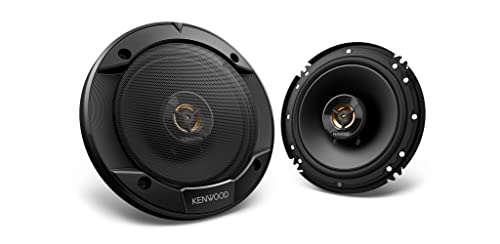
Pioneer TS-A1681F: best 6.5 speaker for a factory radio
Spec line: 6.5-inch 4-way coaxial, 4 ohm, 80 W nominal, 350 W max, 91 dB sensitivity, 35 Hz to 29 kHz response per Pioneer.
Best for: anyone who wants a clear step up from paper factory cones without buying an amplifier.
Skip if: you want a detailed, natural midrange; four drivers on one axis can sound busy.
- High 91 dB sensitivity means it gets loud on a head unit’s built-in 15 to 22 W per channel.
- Handles up to 80 W nominal, so it grows with a future amp.
- Widely sold, easy to find with vehicle-specific adapters.
Cons: tweeter output can sound bright at high volume, and the stacked mid and super tweeters add mounting depth you must check on shallow doors. Bass is decent but not tight below 60 Hz.
Pioneer TS-F1634R: best budget 6.5 coaxial
Spec line: 6.5-inch 3-way coaxial, roughly 30 W nominal and 200 W max, sensitivity around 88 dB; entry price tier.
Best for: replacing blown or crackling factory speakers in an older daily driver.
Skip if: you plan to add an amp, because the power rating is the limit.
- Lowest cost of the group, which makes it a sensible fix for a worn driver.
- Shallow enough for many older door panels.
- Pioneer’s F-Series line has been a stable seller for years, so replacements are easy to source.
Cons: lower power handling than the A-Series, and bass is modest. It is a replacement, not a transformation.
Kicker KS-Series 6.5 coaxial: best for punchy bass in shallow doors
Spec line: 6.5-inch 2-way coaxial, about 75 W RMS, 150 W peak, roughly 90 dB, low-profile frame, mid price tier.
Best for: shallow doors where thicker 4-way coaxials will not clear the window track.
Skip if: you want a soft, warm tone; Kicker voicing leans toward energy and bass.
- Low-profile mounting depth fits many compact cars and trucks.
- Strong midbass response for a coaxial; reviewers often single out bass from a stock radio.
- Kicker also sells direct-fit kits for popular trucks and sedans.
Cons: highs can sound hot without tone-control adjustments, and the sound benefits from sound deadening around the door skin. Check whether Kicker lists your vehicle in its fitment guide.
JBL Club 6.5 coaxial: best efficient set with bright detail
Spec line: 6.5-inch 2-way coaxial, about 60 W RMS, high sensitivity near 92 dB, mid price tier.
Best for: lower-powered stereos where every decibel of sensitivity counts.
Skip if: you are sensitive to treble.
- One of the most sensitive 6.5 sets, so volume arrives early on the dial.
- Clear vocals and guitar-based music.
- Sturdy basket and good grille options.
Cons: little deep bass without a subwoofer, and the tweeter can be forward. If you want smooth highs, a component set is a better path.
Alpine R2-S65: best component set for an amplified system
Spec line: 6.5-inch 2-way component, 100 W RMS, 300 W peak, 4 ohm, roughly 88 dB, mid to premium tier.
Best for: builders running 50 to 75 W per channel who want accuracy and headroom.
Skip if: you only use a factory radio; 88 dB sensitivity is not generous.
- Separate tweeters can be aimed up toward the windshield for a taller soundstage.
- The 100 W RMS rating handles a quality amp without strain.
- Crossover is simple and well matched to the drivers.
Cons: install takes longer because of the tweeter pods and crossovers, and the set sounds modest without amp power.
Alpine S-Series 6.5 component: best budget component set
Spec line: 6.5-inch 2-way component, about 100 W RMS, about 90 dB, entry to mid price tier.
Best for: a first component upgrade on a tight budget.
Skip if: you want the top-end smoothness of a premium set.
- Component imaging at a price near a good coaxial.
- Reasonable sensitivity, so it works on a factory radio and scales up with an amp.
- Surface-mount tweeters included for doors that cannot hold flush ones.
Cons: the plastic tweeter housings feel basic, and the midrange is less refined than the R-Series. Still a strong value among component sets.
JL Audio C2 and C3 6.5: best for smooth, detailed sound
Spec line: 6.5-inch coaxial (C2) or component (C3), about 75 W RMS, about 90 dB, mid to premium tier.
Best for: listeners who want an even, relaxed tonal balance with clean vocals.
Skip if: you mainly want maximum loudness for the lowest money.
- Consistent voicing across the line, so a C2 front and C3 rear blend well.
- Good build quality and neat grille design.
- Works on both factory power and modest amps.
Cons: higher price per decibel than Pioneer, and C3 component installs require a decent amount of door space for the tweeters.
Focal Performance flax-cone 6.5: best clarity if budget allows
Spec line: 6.5-inch 2-way component, flax-fiber cones, about 80 to 100 W RMS, high sensitivity around 92 dB, premium tier.
Best for: serious listeners who care about vocal realism and quick transients.
Skip if: you want big bass from the doors alone.
- Flax cones keep the midrange natural at moderate volume.
- Sensitive enough to sound good even on modest power.
- Strong brand reputation for tweeter quality.
Cons: the most expensive tier, and you still need sound deadening to hear the benefit. Which model number fits which vehicle varies by market, so use Focal’s fitment finder.
How to choose: the numbers that matter
1. Match sensitivity to your power source
A factory head unit typically delivers about 15 to 22 W RMS per channel in the real world. A 91 dB speaker such as the Pioneer A1681F will play roughly 3 dB louder than an 88 dB set for the same power, which equals the effect of doubling amplifier power. If you are not adding an amp, shop for 90 dB or above.
2. Match RMS to your amp
The best match is an amp delivering 75 to 100 percent of the speaker’s RMS rating at its impedance. For a 100 W RMS component set, a 75 W x 4 amp is a strong pairing. Peak power ratings are marketing; ignore them.
3. Check mounting depth
Measure from the mounting surface to the window or door-brace. Shallow doors may allow only 1.75 to 2 inches. Coaxials with a mid-driver plus super tweeter often need 2.5 inches or more.
4. Coaxial or component
| Situation | Choose | Reason |
|---|---|---|
| Factory radio, no amp, 1 hour install | Coaxial | Drops straight into the factory hole |
| Amp planned, 3 to 4 hours of install time | Component | Tweeters can be aimed; cleaner midrange |
| Shallow door | Low-profile coaxial | Fits under window tracks |
| Want bass from the doors | Coaxial with a stiff cone plus sound deadening | Door panel rigidity matters more than driver brand |
5. Plan for the install extras
Speaker adapters, wiring harnesses and sound-deadening sheets are small additions that change the result. Treating the door skin with 1 or 2 square feet of damping material per door reduces rattles and improves midbass. Vehicle-specific mounting rings also keep the speaker aligned to the factory screw pattern.
Best 6.5 speakers for bass: what actually helps
No 6.5 speaker produces deep bass by itself. Look for a stiff cone, a long excursion (Xmax of 4 mm or more), a high RMS rating and a sealed mounting. Brands such as Kicker and JBL voice their coaxials for bass energy, while Alpine and JL Audio components deliver cleaner but less boomy low end. For real impact below 60 Hz, add a small powered subwoofer under a seat. This approach usually beats buying more expensive door speakers.
Door speakers: coaxial or component
Door speakers sit low and fire at your knees, which hurts imaging. A component set solves this because the tweeter can sit on the A-pillar, dash or sail panel. For a daily driver on a factory radio, the extra install time is rarely worth it; for a system with an amp, it is the single biggest upgrade in clarity.
Worked example: how loud will a set get?
Every 3 dB of sensitivity is the equivalent of doubling amplifier power, and every 10 dB sounds roughly twice as loud to the ear. Take a factory head unit giving 18 W per channel. A 91 dB speaker (Pioneer A1681F class) produces about 91 + 10 x log10(18) = 103.6 dB at one meter. An 88 dB speaker on the same power reaches about 100.6 dB. That 3 dB gap is the same as giving the 88 dB speaker a 36 W amplifier. Now add a 75 W per channel amp: the 88 dB component set reaches 106.8 dB and the 91 dB set 109.8 dB, with the extra power also buying cleaner peaks because the amp is not clipping.
Practical takeaway: if the budget is fixed, a sensitive speaker on a factory radio can beat a less sensitive premium speaker, but once an amp is in the picture the extra refinement of a component set becomes audible.
Ownership realities: what wears first
- Surrounds: foam surrounds crack first in hot climates. Rubber or butyl surrounds, common on mid and premium lines, last longer.
- Tweeter protection: running a tweeter without its crossover capacitor sends bass to it and can burn the voice coil in minutes. Always wire the supplied crossover.
- Water in doors: factory door weather barriers get torn during speaker swaps. Reseal the plastic sheet with butyl tape so water does not reach the magnet.
- Loose mounting: a speaker that vibrates in the door sounds thin. Use mounting rings or foam gaskets so the basket seals against the panel.
- Polarity: reversing one speaker’s wires cancels bass at the listening position. Match the positive and negative terminals on each side.
Frequently Asked Questions
Are 6.5 and 6.75 speakers the same?
Mostly yes. “6.75” often describes the outer frame diameter of a 6.5-inch speaker. They use the same door opening in most vehicles, but screw patterns and depth differ, so check fitment for your car.
Do I need an amplifier for new 6.5 speakers?
No. A sensitive speaker (90 dB or higher) sounds clearly better than factory paper cones even on head-unit power. An amp adds volume headroom, tighter bass and less distortion, but it is optional.
What is the best 6.5 speaker for bass?
Choose a coaxial with a stiff cone, 75 W RMS or more and low-profile mounting, such as the Kicker KS-Series, and pair it with sound deadening. If you want deep bass, a subwoofer is the real answer.
Are component speakers worth it for 6.5-inch doors?
If you use an amp and can place the tweeters in the A-pillar or sail panel, yes. If you want a quick drop-in on a factory radio, a good coaxial gives most of the benefit with half the work.
Will 6.5 speakers fit my car?
Often, but not always. Confirm the size, mounting depth and screw pattern for your make, model, year and door position. Many cars use 6.5 in front and 6×9 in the rear or the other way around.
How long do car speakers last?
Quality speakers commonly last 8 to 15 years. Foam surrounds degrade faster in hot, humid climates, so rubber surrounds are the safer choice for long-term ownership.
More from Amazon
Programs that pair well with the guide above. Offers and eligibility are set by Amazon and may change.
Free shipping on eligible items, Prime Video and more. Eligible new members can start with a free trial.
Start a Prime free trialAudiobooks and podcasts to listen to on the go. Eligible new members can start with a free trial.
Try Audible freeAd-free music streaming. Eligible new subscribers can start with a free trial.
Try Music Unlimited freeA free business account with business pricing and bulk-buying tools for work, shop or home office.
Create a business accountAs an Amazon Associate we earn from qualifying purchases.