Key takeaways
- 52 inches: choose for gates, narrow side yards, and dense landscaping.
- 60 or 61 inches: the most versatile commercial size for mixed route work.
- 72 inches: choose for open acreage, sports fields, estates, and wide access routes.
The best commercial zero-turn mowers for large properties are the Exmark Lazer Z X-Series for a balanced crew machine, the Scag Turf Tiger II for heavy-duty durability, the Ferris ISX 3300 for operator comfort, and the John Deere Z997R when diesel fuel efficiency and long service life matter most.
Our top picks
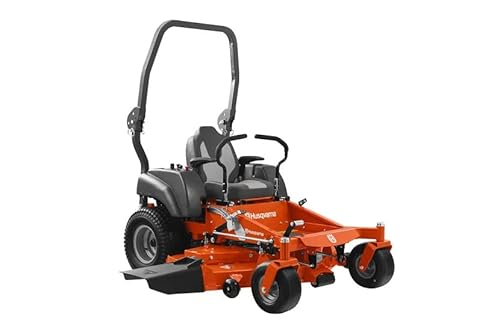
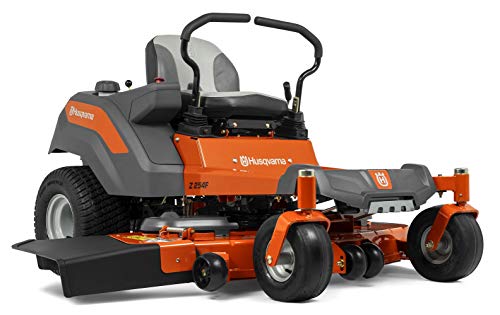


As an Amazon Associate we earn from qualifying purchases at no extra cost to you. Ratings are shown as listed on Amazon.
Quick comparison: the leading commercial choices
These mowers are not interchangeable simply because they share a zero-turn layout. Deck construction, engine torque, suspension, service access, and dealer support can affect productivity more than a small difference in top speed.
| Mower | Typical deck widths | Engine choices or type | Fuel capacity | Best fit |
|---|---|---|---|---|
| Exmark Lazer Z X-Series | 60 or 72 inches | Commercial Kawasaki FX, Kohler, or Vanguard configurations | Approximately 11–13 gallons | Landscape crews wanting a refined all-rounder |
| Scag Turf Tiger II | 52, 61, or 72 inches | Commercial Kawasaki, Vanguard, or diesel configurations depending on model | Approximately 10–14 gallons | High-hour commercial mowing and rougher conditions |
| Ferris ISX 3300 | 61 or 72 inches | Commercial Kawasaki FX or Vanguard options | Approximately 11 gallons | Long mowing days and uneven terrain |
| Hustler Super Z | 60 or 72 inches | Commercial Kawasaki FX or Vanguard engines | Approximately 11–13 gallons | Fast, open properties and experienced operators |
| John Deere Z997R | 60 or 72 inches | Liquid-cooled three-cylinder diesel | Approximately 13 gallons | Owners prioritizing diesel longevity and service support |
Exact equipment varies by production year, dealer configuration, and deck option. Confirm the build sheet before ordering, especially when comparing engine brands, discharge systems, suspension seats, and collection equipment.
Best overall for commercial crews: Exmark Lazer Z X-Series
The Exmark Lazer Z X-Series is a strong choice when a crew needs one mower to handle weekly residential routes, larger estates, and extended summer schedules. Its 60-inch deck is easier to maneuver around trees and gates than a 72-inch deck, while the wider version can reduce passes on broad, open lawns.
Exmark’s commercial decks are built around welded construction and are available with several professional engine packages. The important buying decision is not only horsepower; match the engine to the workload. A roughly 27–31 horsepower gasoline engine is generally appropriate for a 60- or 72-inch deck, but tall wet grass, frequent bagging, and hills increase the value of additional torque.
The Lazer Z also makes sense for crews that need familiar controls and a broad dealer network. Before purchase, inspect how the seat flips forward, how easily the deck belt is reached, and whether grease points can be serviced without removing guards.
Best for severe commercial duty: Scag Turf Tiger II
The Scag Turf Tiger II is the better fit for contractors who expect high annual hours, rougher ground, and repeated work in thick growth. Its broad deck range makes it easier to choose between maneuverability and maximum output, and its heavy-duty frame and fabricated deck suit demanding route work.
A 52-inch deck is useful where properties have narrow access points, landscaped beds, or many obstacles. The 61-inch version is a productive middle ground for most crews. A 72-inch deck is attractive for large uninterrupted fields, but it needs wider gates, trailers, and storage areas.
Scag offers gasoline and, in some configurations, diesel-powered Turf Tiger II models. Diesel can be worthwhile for an owner running several hundred hours annually, but it adds purchase cost, fuel-system complexity, and the need for proper diesel maintenance. For ordinary residential-route work, a commercial gasoline engine may provide the better total-cost balance.
Best for operator comfort: Ferris ISX 3300
The Ferris ISX 3300 stands out when operator fatigue is a major concern. Its suspension-seat system and suspension components are designed to reduce the jolts transmitted from uneven ground, which can be valuable when a crew spends six or more hours per day on the mower.
Comfort should not be treated as a luxury. A fatigued operator is more likely to make rough turns, strike obstacles, skip cleaning, or rush daily inspections. The ISX 3300’s 61-inch deck is the safer default for mixed properties. Choose 72 inches only when the machine can move freely without repeatedly clipping trees, fences, or garden edges.
Suspension parts add components that eventually need inspection. Check bushings, pivot points, shock absorbers, and seat hardware during routine servicing. A comfortable mower that is neglected underneath can become expensive despite its premium ergonomics.
Best for speed on open ground: Hustler Super Z
The Hustler Super Z is aimed at experienced operators mowing large, relatively open areas. Its high ground speed can shorten travel time between sections, but speed alone does not determine productivity. Frequent turns, obstacles, wet turf, and trimming work can erase the theoretical advantage.
For a property with large lawns and few obstacles, pair the Super Z with a 72-inch deck if the gates, trailer, and storage building can accommodate it. For mixed residential work, a 60-inch deck is easier to place accurately and typically wastes less time on corrective passes.
High-speed zero-turns demand disciplined operation. Fast turns can scalp turf, stress the grass, and increase tire wear. Operators should slow down on slopes, wet ground, and rough surfaces even if the mower’s maximum speed is considerably higher.
Best diesel option: John Deere Z997R
The John Deere Z997R is the specialized choice for owners who value a liquid-cooled diesel engine, long service intervals, and a familiar commercial service network. Diesel power is particularly appealing for municipal properties, large estates, and contractors who run the machine frequently over many seasons.
The trade-off is cost. Diesel zero-turns typically carry a higher purchase price and can require more expensive filters and fuel-system repairs. They also tend to be heavier, which may increase turf damage on soft ground. A Z997R is easiest to justify when annual use is high and the owner plans to keep the mower well beyond the typical replacement cycle.
How deck width changes real productivity
A wider deck does not cut its full width continuously because operators overlap passes and slow down around obstacles. A practical productivity estimate is:
Acres per hour = speed in miles per hour × deck width in feet × field efficiency ÷ 8.25.
Suppose a 60-inch mower travels at 8 mph with a realistic 75% field efficiency:
8 × 5 × 0.75 ÷ 8.25 = about 3.6 acres per hour.
A 72-inch mower at the same speed and efficiency would produce approximately 4.4 acres per hour. On a 10-acre open field, that difference could approach 35 minutes. On a residential property broken up by trees and beds, the wider deck may provide little benefit because field efficiency falls.
- 52 inches: choose for gates, narrow side yards, and dense landscaping.
- 60 or 61 inches: the most versatile commercial size for mixed route work.
- 72 inches: choose for open acreage, sports fields, estates, and wide access routes.
Decision matrix for large-property buyers
| Situation | Recommended direction | Why |
|---|---|---|
| Under 150 annual hours and a limited budget | 60-inch commercial gasoline mower | Lower purchase and maintenance costs without sacrificing professional durability |
| 150–500 annual hours for a mowing crew | 61-inch mower with a commercial V-twin | Good balance of output, maneuverability, fuel use, and serviceability |
| Large open acreage with few obstacles | 72-inch deck and high-output engine | Fewer passes and better capacity for broad lawns |
| Uneven ground or long operator shifts | Ferris ISX 3300 or another suspension-equipped commercial mower | Improved ride control can reduce fatigue and operator weariness |
| Very high annual hours and long ownership | Heavy-duty gasoline mower or John Deere Z997R diesel | Prioritizes frame life, cooling capacity, and long-term service support |
Maintenance access matters more than brochure horsepower
Before buying, raise the seat and inspect the machine with a mechanic’s eye. The oil filter, air filter, fuel filter, battery, deck belt, spindle housings, and grease fittings should be reachable without dismantling half the mower. Convenient access encourages the short inspections that prevent expensive failures.
- Clear grass from the deck, engine screen, and cooling openings after each mowing day.
- Check engine oil, tire pressure, belt condition, and blade sharpness before route work.
- Grease specified pivot points at the interval in the service manual.
- Replace air and fuel filters according to the operating environment, not only the calendar.
- Inspect spindle bearings and deck hangers when vibration, uneven cutting, or belt noise appears.
Blades are among the first consumables to wear. Dull or bent blades increase mowing time, leave ragged cuts, and can overload the deck drive. Keep a spare sharpened set available for commercial work rather than continuing with damaged blades.
What to choose
For most professional crews, a 60- or 61-inch Exmark Lazer Z X-Series, Scag Turf Tiger II, Ferris ISX 3300, or Hustler Super Z offers the best compromise between access and output. Choose Ferris when ride comfort is central, Scag when severe-duty construction is the priority, Hustler when fast open-ground mowing dominates, and Exmark when balanced route performance and dealer support matter most. Select the John Deere Z997R when high annual hours and diesel ownership economics justify its added complexity and cost.
Expect commercial gasoline zero-turns to occupy a broad market range of roughly $12,000–$25,000, with premium diesel or heavily equipped configurations potentially higher. The lowest purchase price is rarely the lowest ownership cost; deck access, local parts availability, engine service, and the correct width for the property will determine whether the mower earns back its cost.