Key takeaways
- Plug-in with 9V/AA backup: Runs 20-30 hours on fresh batteries during outage. You must replace user-replaceable batteries every 6-12 months. Missed replacement is the most common failure point.
- Sealed lithium backup/plug-in with sealed cell: Maintenance-free for the life of the unit. No battery swaps, but the entire unit is disposable at EOL.
- Hardwired with sealed backup: Best for continuous coverage; interconnected models share power but each still needs its own backup cell to alarm during outage.
The best carbon monoxide detectors for most homes are Kidde and First Alert models with electrochemical sensors, with plug-in units with battery backup offering the best balance of easy installation and continuous protection, while hardwired interconnected systems are best for new construction or whole-home coverage and sealed-battery units are best for renters or homes without accessible outlets.
Our top picks
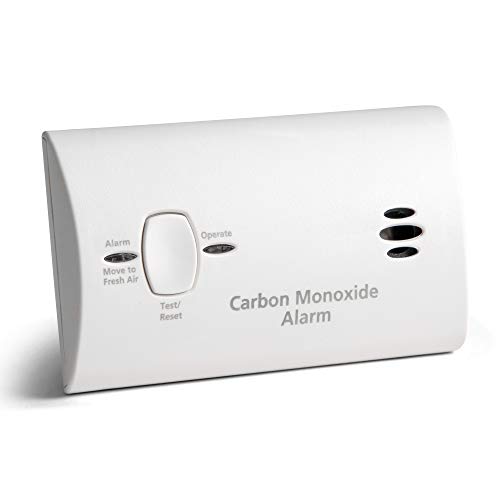
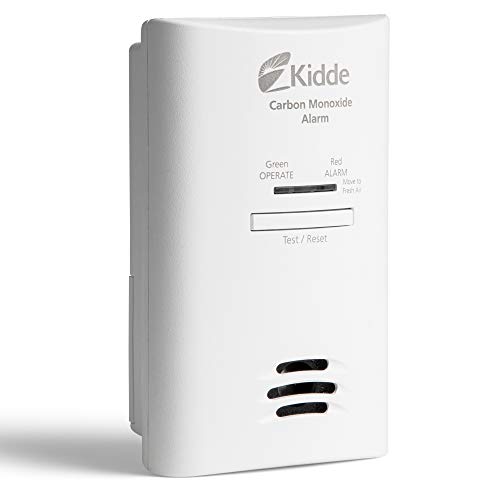


As an Amazon Associate we earn from qualifying purchases at no extra cost to you. Ratings are shown as listed on Amazon.
How the 3 Power Types Compare at a Glance
Your choice comes down to power source first, sensor technology second. All current residential detectors sold in the US should be UL 2034 certified, but how they are powered determines installation, reliability during outages, and where you can place them.
| Feature | Plug-In with Battery Backup | Sealed Battery (10-Year) | Hardwired Interconnected |
|---|---|---|---|
| Example Models | Kidde KN-COPP-3, First Alert CO615 | Kidde Worry-Free, X-Sense CO03D, First Alert CO400 | Kidde SM120X, First Alert BRK 9120B, Google Nest Protect (Wired) |
| Sensor Type | Electrochemical | Electrochemical | Electrochemical (often combined with photoelectric smoke sensor) |
| Sensor Lifespan | 7-10 years | 10 years (sealed unit, end-of-life warning) | 7-10 years (replaceable or sealed, per model) |
| Primary Power | AC outlet (120V) | Sealed lithium battery | 120V hardwired to home electrical |
| Backup Power | 2x AA or 9V backup, or sealed lithium | None needed – battery is primary | Sealed lithium or 9V backup |
| Display | Often includes digital PPM display | Basic models: no display; Upgraded: digital display | Often digital display; Nest Protect: illuminated color ring + app |
| Alert Volume | 85 dB at 10 feet | 85 dB at 10 feet | 85 dB + interconnect alarm on all units |
| Typical Size / Weight | 4.5 x 2.8 x 1.5 in / 6-8 oz | 3.5 x 3.5 x 1.4 in / 4-6 oz | 5.5 in diameter x 2 in / 8-12 oz |
| Installation | Plug into standard outlet, 15 seconds | 2 screws + wall anchors, no wiring | Requires junction box, professional electrician recommended |
| Ideal Placement Height | Knee to outlet height, per manufacturer; CO mixes with air | Wall or ceiling, any height per UL guidance | Ceiling, interconnected across floors |
| General Market Price Range | $25 – $50 | $25 – $60 | $35 – $120 per unit (Nest Protect higher) |
Decision Matrix: Which Type Fits Your Situation?
Use this to match the best carbon monoxide detectors to your home, not just the spec sheet:
| If You Have… | Choose This Type | Why |
|---|---|---|
| Accessible outlets near bedrooms and you want simple setup without tools | Plug-In with Battery Backup | No drilling, easy to relocate, continuous AC power with outage protection. Best for apartments, single-story homes. |
| No outlet in the hallway, older home, or rental where you can’t wire | Sealed Battery 10-Year | Mount anywhere with two screws, no outlet or battery changes for a decade. Ideal for garages, basements, RVs. |
| New construction, renovation, or want every alarm to sound together | Hardwired Interconnected | When one unit detects CO, all units alarm. Meets building code in most states for new homes. Battery backup covers outages. |
| Attached garage, gas appliances, or multi-fuel heating | Digital Display Plug-In or Combination CO/Explosive Gas Unit | Shows low-level PPM readings (e.g., 30-70 PPM) before full alarm at 70 PPM, plus separate gas detection if needed. |
| Smart home and want phone alerts while away | Hardwired Smart Detector (e.g., Google Nest Protect, First Alert Onelink) | Wi-Fi notifications, self-testing, and voice alerts telling you location and PPM level. Requires Wi-Fi and app setup. |
| Tight budget for whole-home coverage on 2 floors | 2-3 Sealed Battery Units | Lower total cost than hardwired install, no electrician fees, still covers every sleeping area per NFPA guidance. |
Sensor Type, Display, and Alert Features That Actually Matter
1. Electrochemical vs. Semiconductor vs. Metal Oxide
Almost all reliable home detectors in 2026 use electrochemical sensors. They measure CO in parts per million (PPM) with high accuracy and low false alarms. Kidde, First Alert, and X-Sense all use this type. Avoid cheap semiconductor sensors found in non-UL travel gadgets; they drift, react to humidity and alcohols, and need frequent calibration. Metal oxide sensors appear in some combination natural gas/CO units but typically have a shorter 5-year lifespan and higher power draw.
Sensor lifespan is directly tied to the detector’s end-of-life timer. A unit will chirp and flash EOL after 7 or 10 years even if it still powers on. This is not a battery issue; the sensing element has degraded and must be replaced entirely.
2. Backup Power: Why It Decides Reliability
Carbon monoxide incidents often coincide with power outages when people use generators, grills, or kerosene heaters indoors. A detector without backup is silent when you need it most.
- Plug-in with 9V/AA backup: Runs 20-30 hours on fresh batteries during outage. You must replace user-replaceable batteries every 6-12 months. Missed replacement is the most common failure point.
- Sealed lithium backup/plug-in with sealed cell: Maintenance-free for the life of the unit. No battery swaps, but the entire unit is disposable at EOL.
- Hardwired with sealed backup: Best for continuous coverage; interconnected models share power but each still needs its own backup cell to alarm during outage.
3. Display and Alert Differences
A basic CO detector sounds at 70 PPM after 60-240 minutes (per UL 2034 timing) and at 400 PPM within 4-15 minutes. Features beyond that determine how useful the warning is:
- Digital PPM Display: Found on Kidde KN-COPP-3 and First Alert CO615. Shows current levels from 30 PPM upward and peak level memory. Lets you see low-level accumulation before evacuation threshold. Without a display you only get alarm/no alarm.
- Peak Level Button: Recalls the highest concentration since last reset. Useful for noting intermittent furnace or garage leaks that cleared before you checked.
- Voice + Location: Google Nest Protect and First Alert Onelink announce “Carbon monoxide in the hallway” in addition to 85 dB tone. Critical at night when disorientation is common.
- Interconnect: Only hardwired (and some wireless interconnect battery models like X-Sense) trigger all alarms simultaneously. NFPA recommends this for multi-level homes because you may not hear a basement alarm from a second-floor bedroom.
Installation Needs by Type
Plug-In
Plug into an outlet at knee height or lower on a wall where air circulates, at least 15 feet from cooking or fuel-burning appliances to reduce false triggers. Avoid behind furniture or curtains. Most codes require one on each level and outside each sleeping area. Do not use extension cords or power strips; the backup battery may not charge properly.
Battery-Operated
Mount with two screws on wall or ceiling, using included anchors. Follow manufacturer height guidance, but modern electrochemical sensors read accurately at any height because CO diffuses evenly. Test weekly with the test/silence button, not with car exhaust. Keep one in the basement near but not directly above a gas furnace or water heater.
Hardwired
Requires a ceiling or wall junction box and 120V wiring. Interconnected models use a third red/orange wire to link all alarms. Professional installation is recommended and often required to meet local building code. After installation, all units should be tested together to confirm they sound in unison. Smart hardwired units also need 2.4 GHz Wi-Fi pairing and app configuration for remote notifications.
Coverage Calculation: How Many Do You Actually Need?
Rather than buying one detector for a whole house, calculate by sleeping zones and fuel sources.
Step 1: Count levels including basement. You need at least one per level.
Step 2: Count separate sleeping areas. Add one outside each area within 15-20 feet. A long hallway with bedrooms at both ends needs two.
Step 3: Add one within 15 feet of any fuel-burning appliance (gas furnace, water heater, stove, attached garage entry).
Worked example for a 2-story, 1,800 sq. ft. home with basement, 3 bedrooms clustered upstairs, and gas furnace in basement: 1 for basement near furnace + 1 for main floor (living area) + 1 outside upstairs sleeping area = 3 units minimum. If bedrooms are split across two hallways, add a fourth. Total cost at general market ranges: 3 sealed battery units ($75-$180) vs. 3 plug-in with display ($75-$150) vs. 3 hardwired smart units with electrician install ($200-$450 plus installation).
Coverage radius for a single 85 dB alarm is roughly 40-50 feet through standard drywall, butclosed doors cut that significantly. Interconnection eliminates that math.
Durability and Ownership Realities
What wears out first is not the battery but the sensor itself. Even with perfect care, the electrochemical cell loses sensitivity after 7-10 years and will trigger an end-of-life chirp that cannot be silenced by new batteries. Write the install date on the unit with a marker.
Consumables and mistakes to avoid:
- Battery neglect: On replaceable-battery plug-ins, low-battery chirps are often confused with CO alarms and ignored. Set a calendar reminder every 6 months if not sealed.
- Dust and humidity: Vacuum the grille monthly with a soft brush attachment. Steam from bathrooms, kitchen aerosols, and heavy dust can coat the sensor and delay response. Never spray cleaners directly on the unit.
- Painting or sealing: Paint clogs sensor vents and voids warranty. Use a painter’s dust cap only during work.
- Temperature extremes: Most units are rated for 40-100°F and 10-95% humidity. Garages that freeze or exceed 100°F will shorten lifespan and cause false low-battery warnings. Check spec sheet if placing in unconditioned space.
- Testing: Press-and-hold the test button until alarm sounds, do not use real CO. If the unit does not alarm during test, replace it even if within lifespan.
For general safety information only. Carbon monoxide exposure can cause serious health effects. If your detector alarms at 70 PPM or higher, evacuate immediately and call emergency services or your fire department from outside. For questions about symptoms or long-term low-level exposure, consult a qualified medical professional or poison control.
Bottom Line Picks by Situation
- Best overall for easy home safety: Plug-in electrochemical with digital display and sealed battery backup (e.g., Kidde KN-COPP-3, First Alert CO615). Gives PPM visibility and outage protection without wiring.
- Best for renters and no-outlet areas: Sealed 10-year battery unit (e.g., Kidde Worry-Free, X-Sense CO03D). Mount anywhere, no maintenance.
- Best for whole-home, code-compliant coverage: Hardwired interconnected system, or wireless interconnect battery models if you cannot wire. Add a smart model like Google Nest Protect if you want phone alerts and self-diagnostics.
Frequently Asked Questions
Where should I place a carbon monoxide detector relative to a smoke detector?
Place CO detectors lower than ceiling smoke alarms, ideally at outlet or knee height for plug-in types, and on every level and outside sleeping areas. Many combination smoke/CO units are mounted on the ceiling to satisfy smoke detection rules and are UL tested to detect CO there as well. If using separate units, keep smoke on the ceiling and CO per its manual, at least 15 feet from fuel-burning appliances.
Do I need a CO detector if I have all electric appliances?
Yes, if you have an attached garage, fireplace, or use portable generators, grills, or fuel-burning heaters during outages. CO can also migrate from neighboring units in multi-family buildings. NFPA still recommends CO protection on every level regardless of fuel type if combustion sources could be present.
Why does my detector show 0 PPM most of the time but still needs replacement after 10 years?
The display shows 0 below about 30 PPM, but the sensor cell degrades chemically over time regardless of exposure. After 7-10 years its electrochemical response becomes unreliable, so manufacturers program an end-of-life lockout. Replacement is required even if the unit appears to work.