Our Short List of 3
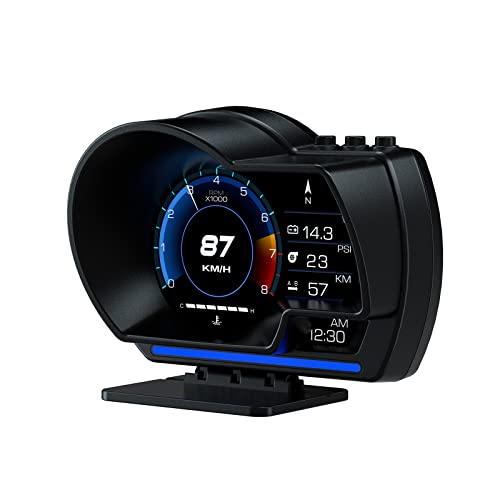
- Best for: Drivers who want engine data with a GPS fallback.
- OBD+GPS smart gauge with dual-mode operation
- Shows speed, RPM, water temperature and voltage
- Shows fuel consumption
- Overspeed alarm

- Best for: Drivers who want a simple GPS speed display in any USB-powered vehicle.
- Digital GPS HUD speedometer with USB plug and play
- GPS and Beidou dual-mode positioning with 10 Hz refresh rate
- Automatic brightness adjustment
- Large font display
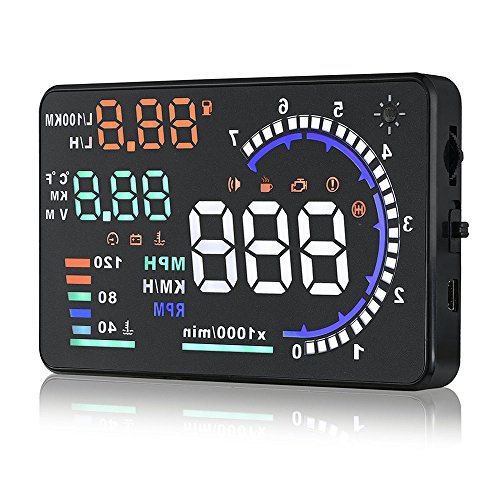
- Best for: Drivers who want the largest, easiest-to-read projected display.
- Screen size: 5.5 inches
- OBD2 windshield HUD with RPM, MPH and speeding warning
- Shows fuel consumption and temperature
- Package includes: A8 Head Up Display, reflective film, OBD cable, antiskid pad and English user manual
All 4 Picks at a Glance
| Product | Specs | Action |
|---|---|---|
| wiiyii OBD2 Gauge Display P6 |
| Check price on Amazon |
| KUOWEIHUD K1 GPS Heads Up Display |
| Check price on Amazon |
| Arestech 5.5 Inches A8 OBD2 Windshield HUD |
| Check price on Amazon |
 MAIMEIMI OBD2 and GPS Dual System HUD |
| Check price on Amazon |
Key takeaways
- Compare the 5 best heads up displays for cars in November 2026, with OBD2 and GPS options, projection size, alarms and compatibility checks.
A factory heads-up display used to belong only to expensive trim levels, and drivers who wanted speed in their line of sight had to look down at the cluster again and again. An add-on unit changes that calculation, because a small projector or screen on the dashboard can float speed, engine temperature and warning alerts where the eyes already point. The real decision is not which unit looks brightest in a photograph. It is which data source fits the car, since an OBD2 model that cannot talk to the vehicle is useless, while a GPS model works almost anywhere but shows far less.
This guide suits daily commuters who want fewer glances away from the road, older drivers who find small cluster digits hard to read, and owners of cars without a factory display. Fleet drivers and long-distance travellers who watch coolant temperature and voltage will also find something here. Every pick below was chosen from the name and specifications stated on its Amazon product page, with attention to display type, data source, compatibility range and alarm functions.
Quick Picks
As an Amazon Associate we earn from qualifying purchases
| Product | Best for | Key spec from title |
|---|---|---|
| wiiyii OBD2 Gauge Display P6 | Drivers who want engine data plus GPS backup | OBD+GPS Smart Gauge |
| KUOWEIHUD K1 GPS Heads Up Display | Any car with a USB port and no OBD2 worries | Digital GPS HUD Speedometer |
| Arestech 5.5 Inches A8 OBD2 Windshield HUD | Drivers who want the largest projected image | 5.5 inch windshield projector |
| MAIMEIMI OBD2 and GPS Dual System HUD | Sedan owners who want an inclinometer as well | OBD2 and GPS dual system |
| LORPHEIR OBD2 GPS Dual System Car HUD Display | Drivers who want a large dual-system screen | OBD2 GPS dual system |
How to Choose
Start with the data source, not the screen
OBD2 units plug into the diagnostic port under the dashboard and read live engine figures such as speed, RPM, coolant temperature, voltage and fuel consumption. GPS units take speed from satellites instead, so they work in almost any vehicle with a USB power source, including older cars and some hybrids that reject OBD2 adapters. A dual-system unit reads OBD2 when it can and falls back to GPS when it cannot, which removes much of the compatibility gamble. Before ordering, confirm the car uses OBDII or EOBD, check the model year against the listing, and remember that OBD-I and JOBD vehicles are excluded from most of these listings.
Decide between a projection and a built-in screen
True windshield projectors throw digits onto the glass or a reflective film, so the numbers appear to hover above the bonnet and the driver never focuses on a small box. Built-in LCD screens sit on the dashboard and show the same figures on their own panel, which stays readable in bright sun but demands a slightly longer glance. Projection suits drivers who want the classic floating effect and have a flat, dark stretch of dashboard. A screen suits drivers with steeply raked windscreens, tinted glass or a dashboard shape that makes projection awkward. Either way, automatic brightness adjustment matters, because a display that is dim at noon or blinding at night becomes a distraction.
Match the size to the dashboard and the eyes
A compact unit around two to three inches wide disappears on the dashboard and suits small cars, while a 5.5-inch projector fills more of the windscreen and suits drivers who struggle with small digits. Larger is not automatically better, because a wide projector can block part of the view through the lower windscreen or crowd the dashboard in a compact cabin. Measure the flat area on top of the dashboard, check where the windscreen meets the dash, and think about whether a passenger or a dashcam already occupies that space. A unit with adjustable angle and a non-slip pad is easier to aim at the driver, and a reflective film, where supplied, sharpens the projected image considerably.
Treat alarms and compatibility warnings as the deciding detail
Overspeed alarms, voltage warnings and coolant temperature alerts turn a display from a novelty into a useful co-driver, especially on long motorway runs or in summer traffic. Some units add a fatigue driving reminder, a fault-code reading function or an inclinometer for hills, while others keep the feature set deliberately narrow. Read the incompatibility notes on the listing before buying, because several models exclude diesel vehicles, certain hybrids, pickups, RVs and specific makes. A unit that lists the car as unsupported should not be ordered on hope, and a unit that needs a 2008 or newer gasoline sedan will not suddenly work in a 2003 diesel.
The 5 Best Options
wiiyii OBD2 Gauge Display P6
- Best for: Drivers who want engine data with a GPS fallback.
- OBD+GPS smart gauge with dual-mode operation
- Shows speed, RPM, water temperature and voltage
- Shows fuel consumption
- Overspeed alarm
Drivers who want engine data with a GPS fallback.
Confirm the car uses OBDII or EOBD and is not an OBD-I or JOBD vehicle before ordering.
The P6 suits drivers who want a full set of engine readings without giving up a fallback when the OBD2 port proves uncooperative. Because it runs in OBD and GPS modes, it can show speed from the vehicle computer on one car and from satellites on another, which makes it a sensible first add-on HUD for a household with more than one car. Its compact case sits low on the dashboard, and the twelve language settings help drivers who prefer menus in their own language.
Watch out for: Confirm the car uses OBDII or EOBD and is not an OBD-I or JOBD vehicle before ordering.
KUOWEIHUD K1 GPS Heads Up Display
- Best for: Drivers who want a simple GPS speed display in any USB-powered vehicle.
- Digital GPS HUD speedometer with USB plug and play
- GPS and Beidou dual-mode positioning with 10 Hz refresh rate
- Automatic brightness adjustment
- Large font display
Drivers who want a simple GPS speed display in any USB-powered vehicle.
GPS speed needs a clear view of the sky, so it can lag or drop out in tunnels, underground car parks and dense urban canyons.
The K1 suits drivers whose car has no usable OBD2 port, or who simply want speed and nothing else. It draws speed from GPS and Beidou satellites with a 10 Hz refresh rate, plugs into a USB port, and projects large digits onto the windscreen, so installation takes minutes and no diagnostic port is involved. Older cars, motorcycles with a USB supply, trucks and rental cars all fall within its remit, and the automatic brightness adjustment keeps the digits visible without manual fiddling at dusk.
Watch out for: GPS speed needs a clear view of the sky, so it can lag or drop out in tunnels, underground car parks and dense urban canyons.
Arestech 5.5 Inches A8 OBD2 Windshield HUD
- Best for: Drivers who want the largest, easiest-to-read projected display.
- Screen size: 5.5 inches
- OBD2 windshield HUD with RPM, MPH and speeding warning
- Shows fuel consumption and temperature
- Package includes: A8 Head Up Display, reflective film, OBD cable, antiskid pad and English user manual
Drivers who want the largest, easiest-to-read projected display.
Check that the dashboard has enough flat space for a 5.5-inch projector and that the projection does not sit over a head-up display cutout or sensor already in the windscreen.
The A8 suits drivers who find small dashboard digits tiring and want the biggest projected image in this roundup. Its 5.5-inch display throws speed, RPM, fuel consumption and temperature onto the windscreen in a size that is easy to read at a glance, and the supplied reflective film sharpens the projection on glass that would otherwise scatter it. The package includes the OBD cable and a non-slip pad, so the unit can be positioned and aimed without extra accessories.
Watch out for: Check that the dashboard has enough flat space for a 5.5-inch projector and that the projection does not sit over a head-up display cutout or sensor already in the windscreen.
MAIMEIMI OBD2 and GPS Dual System HUD
- Best for: Sedan drivers who want slope information alongside engine data.
- OBD2 and GPS dual system digital speedometer
- Shows RPM, water temperature, voltage and mileage
- Car inclinometer
- Overspeed alarm
Sedan drivers who want slope information alongside engine data.
Verify the car is a gasoline sedan from 2008 or newer, and check the listing for excluded makes and diesel or hybrid models.
The MAIMEIMI suits sedan owners who drive hilly routes or tow, because alongside the usual speed and temperature readings it adds an inclinometer that shows the slope of the road. Its dual OBD2 and GPS system covers most gasoline sedans from 2008 onward, and the display covers RPM, water temperature, voltage, mileage and overspeed warnings in one panel. The ABS housing and compact footprint make it a practical fit for a dashboard that already carries a phone mount or a dashcam.
Watch out for: Verify the car is a gasoline sedan from 2008 or newer, and check the listing for excluded makes and diesel or hybrid models.
LORPHEIR OBD2 GPS Dual System Car HUD Display
The LORPHEIR suits drivers who want a large, information-rich screen rather than a windscreen projection. Its dual-system design reads vehicle data through OBD2 and falls back to GPS, so speed, water temperature, voltage and RPM stay available even when one source is unavailable. The generous case size leaves room for a clear layout, which helps drivers who check several figures at once, such as coolant temperature on a climb or voltage on a cold start.
Specs
- OBD2 GPS dual system car HUD display
- Digital speedometer with water temperature, voltage and RPM
- Universal heads up display for most vehicles
- Item model number: W6369
- Product dimensions: 5.12 x 3.5 x 2.4 inches
Best for: Drivers who want a large dual-system display with several engine readings at once.
Watch out for: Measure the dashboard before ordering, because this is the largest case in the roundup and needs a wide, flat mounting spot.
Which One Fits Your Situation
You drive an older car or a vehicle with no OBD2 support
Pick the KUOWEIHUD K1. It needs only a USB power source and a view of the sky, so the age of the car, the diagnostic protocol and the fuel type do not matter. The large-font GPS speed display covers the one figure most drivers check constantly, and the plug-and-play setup avoids any port hunting under the dashboard.
You want engine warnings, not just speed
Pick the wiiyii P6. Its OBD2 connection surfaces coolant temperature, voltage, RPM and fuel consumption, and its alarms flag overspeed, high temperature and low voltage before a small problem becomes a breakdown. The GPS fallback keeps speed showing if the OBD2 link drops, which matters on cars with temperamental ports.
You struggle to read small digits
Pick the Arestech A8. The 5.5-inch projection is the largest in this roundup, and the reflective film keeps the digits sharp on the windscreen. Drivers who wear reading glasses or who drive at night will notice the difference immediately, provided the dashboard has room for the unit.
You drive hills, tow, or watch several gauges at once
Pick the MAIMEIMI for its inclinometer, or the LORPHEIR for its large multi-reading screen. The MAIMEIMI suits hilly routes where slope matters, while the LORPHEIR suits drivers who want water temperature, voltage and RPM visible together on a single panel.
Common Mistakes
- Ordering an OBD2-only unit without checking whether the car uses OBDII, EOBD, OBD-I or JOBD.
- Choosing a projector for a steeply raked or heavily tinted windscreen, where the image washes out.
- Mounting the unit where it blocks the lower windscreen, a sensor, or the view of the road ahead.
- Ignoring the incompatibility list for diesel, hybrid, pickup and RV models.
- Expecting GPS speed to work instantly in a tunnel, a multi-storey car park, or the first minute after startup.
Frequently Asked Questions
Will a heads up display work in any car?
Not every unit works in every car. GPS models work in almost any vehicle with a USB power source, because they take speed from satellites. OBD2 models need a compatible diagnostic port and protocol, so cars with OBD-I or JOBD, some diesels and some hybrids may not connect. Check the listing against the car year, fuel type and make before ordering.
Do I need the OBD2 port, or is GPS enough?
GPS is enough when speed is the only figure needed, and it avoids all compatibility questions. The OBD2 port is needed for engine data such as RPM, coolant temperature, voltage and fuel consumption, and for fault-code reading on units that offer it. Dual-system units give both, which is the safest choice when the port status is uncertain.
Will the projection be visible in daylight?
Most units adjust brightness automatically, and a reflective film improves the image considerably in bright conditions. Projection is clearest on dark dashboards and at night, and it can wash out on a sunlit, steeply raked windscreen. A built-in LCD screen is usually the better choice when the windscreen rarely gives a clean projection surface.
Can a heads up display drain the car battery?
A USB-powered GPS unit draws little power, and an OBD2 unit draws power through the diagnostic port. Some OBD2 units stay awake after the engine stops, so unplugging the unit when the car sits unused for days is sensible. Check the listing for an automatic sleep function, and do not leave any unit powered in a car that will stand for weeks.
More from Amazon
Programs that pair well with the guide above. Offers and eligibility are set by Amazon and may change.
Free shipping on eligible items, Prime Video and more. Eligible new members can start with a free trial.
Start a Prime free trialAudiobooks and podcasts to listen to on the go. Eligible new members can start with a free trial.
Try Audible freeAd-free music streaming. Eligible new subscribers can start with a free trial.
Try Music Unlimited freeA free business account with business pricing and bulk-buying tools for work, shop or home office.
Create a business accountAs an Amazon Associate we earn from qualifying purchases.