Key takeaways
- Find the best automotive body filler for car restoration, from classic Bondo and Evercoat Z-Grip to fast-dry and lightweight options for dents, rust and panel work.
Body filler is one of the quiet essentials of car restoration. Used well, it levels a dented door, feathers out a repaired quarter panel, and gives primer a smooth, stable surface to grip. Used badly, it can crack, shrink, or show through the paint as a faint outline of the repair underneath. The right choice depends on the job: a small can suits a single dent, a gallon suits a car that needs skim coats across several panels, and a non-sag formula suits a vertical door skin far better than a runny one.


The five fillers below are all two-part products listed on Amazon US: a filler paste mixed with a cream hardener, spread, shaped while it cures, and sanded to a feather edge before primer. None replaces proper metalwork. Filler belongs on clean, sound, prepared metal, not on loose rust, flaking paint, or a hole with nothing behind it. Where a panel is badly rusted or holed, weld in a patch first, then use filler only to level the surface.
Disclosure: As an Amazon Associate, we earn from qualifying purchases.
Quick Picks
Our Short List of 3

All 5 Picks at a Glance
| Product | Specs | Action |
|---|---|---|
| 1. Bondo Body Filler, Original Formula 00261 — Best Classic Small Repair Filler | Check price on Amazon | |
| 2. Bondo Fast Dry Filler FD-QT-ES — Best for Faster Turnaround | Check price on Amazon | |
| 3. Evercoat Z-Grip Lightweight Body Filler — Best Gallon for Panel Work | Check price on Amazon | |
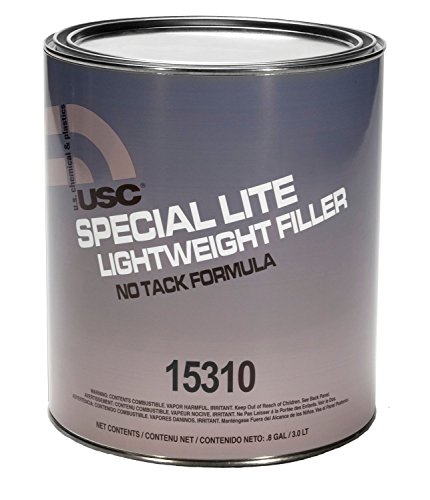 4. U.S. Chemical and Plastics Special Lite Lightweight Filler USC-15310 — Best for Vertical Surfaces | Check price on Amazon | |
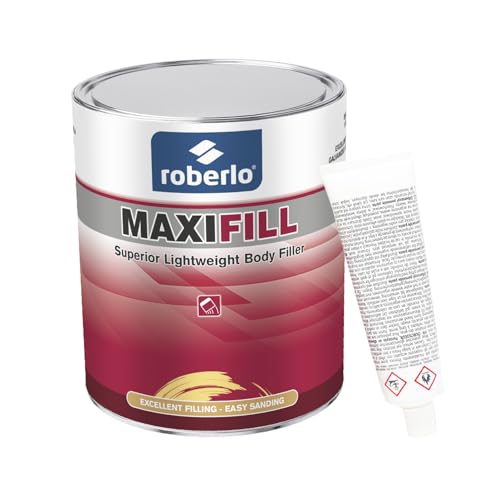 5. Roberlo Maxifill Superior Lightweight Body Filler — Best Lightweight Finishing Filler | Check price on Amazon |
In-Depth Reviews
1. Bondo Body Filler, Original Formula 00261 — Best Classic Small Repair Filler
Bondo Body Filler, Original Formula, model 00261, is the most familiar name here, and that familiarity has real value in a restoration. The listing describes a two-part putty compound used to repair dents, dings, holes, rusted areas and scratches in vehicle exteriors, presented as a lightweight filler that spreads smoothly and cures in about 20 minutes. That makes it a sensible starting point for a first repair, a single dent, or a small area that needs levelling before primer.
This listing is for 14 ounces of filler with a 0.5-ounce tube of cream hardener, with a listed item weight of 16 ounces. That is enough for a dented wing, a door ding, or a handful of small blemishes, without leaving a large open can to go stale. According to the listing, the filler is compatible with alloy steel, aluminium, fibreglass, wood and concrete, and it is water resistant once cured. The colour is listed as salmon, which makes it easy to see where filler ends and bare metal begins while sanding.
The 20-minute cure is a practical middle ground: enough working time to spread and shape the filler, yet fast enough that sanding can begin in the same session. That matters when a panel needs several thin coats, since filler should be built up in thin layers rather than one thick blob. A 14-ounce can will not go far on a car that needs full skim coats, and preparation still decides the result: the metal should be clean, dry, sanded, and free of loose rust and flaking paint.
Key specifications: Brand 3M, model 261, ASIN B0007ZG9TO, 14 oz filler with 0.5 oz hardener, item weight 16 oz, full cure time 20 minutes, colour salmon, water resistant, compatible materials alloy steel, aluminium, fibreglass, wood and concrete.
2. Bondo Fast Dry Filler FD-QT-ES — Best for Faster Turnaround
Bondo Fast Dry Filler, model FD-QT-ES, is the pick for a restorer who wants the familiarity of Bondo in a larger size with a quicker cure. The listing presents it as a professional fast-dry filler in a quart size, and the stated full cure time is 15 minutes, five minutes faster than the original formula above. On a multi-panel job, that difference adds up: each coat can be sanded sooner, the next coat can go on sooner, and a panel can move from filler to primer in fewer working sessions.
The quart size is the other reason to choose this filler. The listing gives the volume as one quart and the filler weight as 25 ounces, a useful step up from a 14-ounce can for a full door, a quarter panel, or several repairs in one session. A quart still stays manageable for a home restorer.
The listing describes the item form as a gel and the special feature as fast drying. The material is listed as metal and plastic, and the compatible materials are given as concrete, fibreglass, metal and wood. The specific use is listed for hot-rod vehicles, a useful signal for restoration work. A faster cure is also a discipline: mix only what can be spread in a few minutes, work in thin layers, and keep the spreader clean between coats. It suits the stage where the metalwork is done and several panels need levelling before primer.
Key specifications: Brand Bondo, manufacturer 3M, model FD-QT-ES, ASIN B09ZKQH99B, size 1 quart, filler weight 25 oz, item form gel, full cure time 15 minutes, material metal and plastic, compatible materials concrete, fibreglass, metal and wood.
3. Evercoat Z-Grip Lightweight Body Filler — Best Gallon for Panel Work
Evercoat Z-Grip Lightweight Body Filler is the gallon-size pick in this roundup, and it is the one to choose when a restoration involves large areas rather than isolated dents. The listing is for 128 fluid ounces, a full gallon, with an item weight of seven pounds and item dimensions of 6.5 by 6.5 by 7.5 inches. That quantity makes sense for skim-coating a bonnet, roof, doors and quarter panels, or for a car that has had extensive panel work and needs a consistent filler across several surfaces.
The listing describes Z-Grip as an advanced clog-free, lightweight body filler for modern high-tech metals, with superior adhesion to galvanised steel, bare steel, aluminium, fibreglass and SMC, which is sheet moulded compound. That range is directly relevant to restoration, where a single car can combine steel panels, galvanised sections, aluminium trim and fibreglass parts. The listing also says the filler spreads easily and has excellent sanding properties, and that a blue cream hardener is included.
Clog-free sanding matters more on a large job than on a small one: when filler clogs sandpaper, the paper stops cutting and the restorer spends time changing sheets instead of shaping the panel. A filler described as clog-free should sand more cleanly and feather to a thinner edge. The lightweight formulation also helps on a large skim coat, adding less weight and spreading more easily in a thin, even layer.
Key specifications: Brand Evercoat, ASIN B000P72GPK, size 128 fl oz, item weight 7 pounds, item dimensions 6.5 by 6.5 by 7.5 inches, material type steel, aluminium and fibreglass, water resistant, blue cream hardener included, adhesion stated for galvanised steel, bare steel, aluminium, fibreglass and SMC.
4. U.S. Chemical and Plastics Special Lite Lightweight Filler USC-15310 — Best for Vertical Surfaces
U.S. Chemical and Plastics Special Lite Lightweight Filler, model USC-15310, is the pick for vertical panels and for the final skim coat that needs to feather to almost nothing at its edge. The listing is for a 0.8-gallon can, with a unit count of 102.4 fluid ounces, and it describes a creamy body filler with a smooth texture that is easy to spread and sands to a fine featheredge. The non-sag formula is presented as ideal for repairing vertical surfaces, a specific and useful strength in restoration work.
A door, wing, quarter panel or sill is rarely flat and horizontal, and a filler that sags will leave a thick lower edge and a thin upper edge that has to be sanded back and reapplied. A non-sag formula should hold its shape where it is spread. The listing also describes the filler as tack free and clog free, and the colour as off-white as packaged. The item form is cream, viscosity is listed as medium-low, and the full cure time is listed as four hours, notably longer than the Bondo picks in this guide, so it should be factored into the working schedule.
The mixing guidance is clear: mix at 2 percent by weight, a 50 to 1 ratio, with the supplied hardener. Too much hardener can make filler cure too fast and become brittle, while too little can leave it soft and slow to sand. The suggested use is for minor body work up to a quarter of an inch in depth, such as dents, dings, rust, hail damage and small holes. That quarter-inch limit is an important rule: filler is a levelling material, not a structural replacement for metal. The substrate list is broad, naming steel, aluminium, fibreglass, wood, 2K primers, aged and sanded original topcoats, galvanised and other zinc-coated steel, and SMC. The water resistance level is listed as not water resistant, a reminder that filler should be sealed with primer and paint.
Key specifications: Brand U.S. Chemical and Plastics, model USC-15310, ASIN B0082LKGNA, size 0.8 gallon, unit count 102.4 fl oz, colour off-white, item form cream, full cure time 4 hours, mix ratio 2 percent by weight, 50 to 1 with supplied hardener, suggested use up to a quarter inch in depth, substrates steel, aluminium, fibreglass, wood, 2K primers, aged sanded topcoats, galvanised steel and SMC.
5. Roberlo Maxifill Superior Lightweight Body Filler — Best Lightweight Finishing Filler
Roberlo Maxifill Superior Lightweight Body Filler rounds out the set as a lightweight finishing filler for dents, holes and rust repairs that need an ultra-smooth finish. The listing describes it as a superior lightweight body filler with easy sanding and a paintable finish for car repairs, and the size is three litres with hardener included. The item weight is listed as eight pounds, the product dimensions are seven by seven by eight inches, and the item model number is 63254 31435. The manufacturer is listed as Roberlo, and the listing states that the product is not discontinued by the manufacturer.
A lightweight filler is useful for two reasons. First, it is easier to spread in a thin, even coat, which is what a finishing skim coat needs. Second, it adds less weight to the panel than a heavier filler, which matters when several panels have been skim-coated across a whole car. The emphasis on easy sanding and a smooth finish points to the final stage of filler work: the coat that is sanded flat, checked for pinholes and low spots, and then primed.
Three litres is a substantial size, between a quart and a gallon, and it suits a restorer who has moved beyond a single dent but does not yet need a full gallon of one product. It can serve as the finishing filler alongside a gallon of a workhorse filler used for the first coats. As with the other picks, the panel should be clean, sanded and dry, the hardener mixed in the ratio given on the product, and the filler applied in thin layers and sanded with progressively finer grits. The listing describes the filler as ideal for dents, holes and rust, but that assumes the rust has been dealt with first: loose rust removed, sound metal exposed, and any hole patched in metal before filler levels the surface.
Key specifications: Brand Roberlo, manufacturer Roberlo, model Body Filler, item model number 63254 31435, ASIN B01L2PX7D8, size 3 litres with hardener, item weight 8 pounds, product dimensions 7 by 7 by 8 inches, not discontinued by the manufacturer, described as superior lightweight, easy sanding and paintable.
How to Choose
Choosing a body filler starts with the job, not the brand. The first question is how much filler the project needs. A single dent calls for a small can, and the 14-ounce Bondo original formula fits that job well. A car with several dents, a full door to level, or a quarter panel to shape calls for a quart, such as the Bondo Fast Dry filler. A full restoration with skim coats across a bonnet, roof, doors and wings calls for a gallon, such as Evercoat Z-Grip, or a large can such as the 0.8-gallon Special Lite or the three-litre Roberlo Maxifill.
The second question is the substrate. Most older cars are mainly steel, but restoration projects often mix bare steel, galvanised steel, aluminium and fibreglass, and some cars use sheet moulded compound panels. Evercoat Z-Grip names galvanised steel, bare steel, aluminium, fibreglass and SMC. Special Lite names steel, aluminium, fibreglass, galvanised steel and SMC, as well as aged sanded topcoats and 2K primers. Bondo original names alloy steel, aluminium, fibreglass, wood and concrete.
The third question is cure time and working time. Fast-dry fillers, such as the Bondo Fast Dry with a stated 15-minute cure, suit a restorer who works quickly and wants to sand and recoat in the same session. The Bondo original formula, with a 20-minute cure, gives a little more room to spread and shape. The Special Lite filler, with a listed four-hour full cure time, gives a much longer working window but needs to be planned around. Match the cure time to the way you work and to the temperature of the workshop, since filler cures faster in warm conditions and slower in cold ones.
The fourth question is the type of repair. A shallow dent or a skim coat needs a lightweight, easy-sanding filler that feathers to a thin edge, such as Z-Grip, Special Lite or Maxifill. A deeper dent still needs to be built up in thin layers, not filled in one thick application, and the listing for Special Lite gives a suggested maximum of a quarter inch, a useful guide for all fillers. A hole or a rusted-through section needs metalwork first, not filler alone. A vertical surface needs a non-sag formula, and Special Lite is presented specifically for that situation.
Finally, think about sanding and safety. Start with a coarser grit to shape the filler, then move to finer grits to smooth it. A guide coat, a light dusting of a contrasting colour over the filler, can help show low spots before primer goes on. The filler should be sealed with primer and paint, not left exposed. Work in a ventilated area, wear gloves and eye protection, and store cans with the lid sealed in a cool, dry place.
FAQs
What is the best automotive body filler for car restoration?
There is no single best filler for every restoration, because the right choice depends on the size of the job, the panel material and the stage of the repair. For a small repair, Bondo Original Formula 00261 is a dependable starting point. For larger panel work, Evercoat Z-Grip in a gallon is a strong workhorse choice. For vertical surfaces, Special Lite is presented specifically for that use. For a faster turnaround, Bondo Fast Dry cures in a stated 15 minutes. For a smooth finishing coat, Roberlo Maxifill is a useful option.
How thick can body filler be applied?
Body filler should be applied in thin layers, not in one thick application. The listing for Special Lite suggests use for minor body work up to a quarter of an inch in depth, a useful guide in general. Deeper damage should be repaired in metal first, by straightening or welding in a patch, and filler should then be used only to level the surface. A thick application is more likely to crack, shrink or fail, and it is harder to sand to a flat, feathered finish.
Do I need to remove rust before applying body filler?
Yes. Filler should be applied to clean, sound, properly prepared metal, not to loose rust, flaking paint or grease. Rust should be cut back to sound metal, and any hole should be patched in metal before filler levels the surface. Filler spread over rust will not stop the rust underneath, and the repair is likely to bubble, crack or fall away. After the metalwork, sand the panel, clean and degrease it, and keep it dry before mixing and spreading.
Can body filler be used on aluminium and fibreglass?
The fillers in this guide list aluminium and fibreglass among their compatible materials, but preparation is especially important on those substrates. Evercoat Z-Grip lists aluminium, fibreglass and SMC, Special Lite lists aluminium, fibreglass and SMC, and Bondo original lists aluminium and fibreglass. Sand, clean and prepare the panel as the product guidance directs, apply in thin layers, and sand to a feather edge before primer. If a panel is an unusual material, or the listing does not name it, check the product guidance before use.
Verdict
For most car restoration work, Evercoat Z-Grip Lightweight Body Filler is the strongest all-round pick, because it comes in a gallon size suited to full panel work, it is presented for galvanised steel, bare steel, aluminium, fibreglass and SMC, and it is described as clog-free with excellent sanding properties. Bondo Original Formula 00261 is the best choice for a small repair or a first attempt, Bondo Fast Dry is best when a faster turnaround matters, Special Lite is best for vertical surfaces and a fine featheredge, and Roberlo Maxifill is best for a smooth, lightweight finishing coat. Whichever filler you choose, the result will depend on the work underneath it: sound metal, careful preparation, thin layers, and patient sanding.
More from Amazon
Programs that pair well with the guide above. Offers and eligibility are set by Amazon and may change.
Free shipping on eligible items, Prime Video and more. Eligible new members can start with a free trial.
Start a Prime free trialAudiobooks and podcasts to listen to on the go. Eligible new members can start with a free trial.
Try Audible freeAd-free music streaming. Eligible new subscribers can start with a free trial.
Try Music Unlimited freeA free business account with business pricing and bulk-buying tools for work, shop or home office.
Create a business accountAs an Amazon Associate we earn from qualifying purchases.