Our Short List of 3
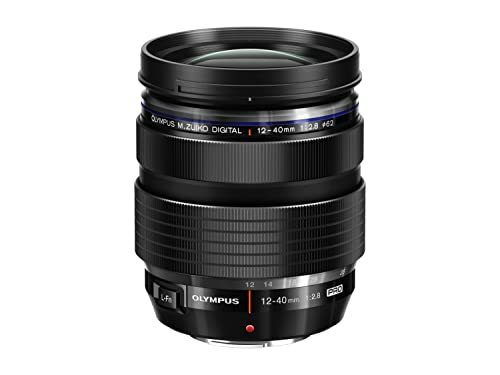
- Best for: One-lens travel, events and everyday professional work
- Focal length: 12-40mm (24-80mm equivalent)
- Maximum aperture: f/2.8 constant; minimum f/22
- Filter diameter: 62mm
- Minimum focus distance: 0.2m across the zoom range

- Best for: A first fast prime for everyday photos and video
- Focal length: 25mm (50mm equivalent)
- Maximum aperture: f/1.7; minimum f/22
- Filter diameter: 46mm
- Minimum focus distance: 0.25m

- Best for: Street, travel and indoor shooting with a wide, fast prime
- Focal length: 15mm (30mm equivalent)
- Maximum aperture: f/1.7; minimum f/16
- Filter diameter: 46mm
- Minimum focus distance: 0.2m
All 4 Picks at a Glance
| Product | Specs | Action |
|---|---|---|
| Olympus M.Zuiko Digital ED 12-40mm F2.8 PRO |
| Check price on Amazon |
| Panasonic Lumix G 25mm F1.7 ASPH |
| Check price on Amazon |
| Panasonic Leica DG Summilux 15mm F1.7 ASPH |
| Check price on Amazon |
 Panasonic Lumix G Vario 100-300mm F4.0-5.6 II Power O.I.S. |
| Check price on Amazon |
Key takeaways
- Compare the best Micro Four Thirds lenses for OM System, Olympus and Panasonic cameras, from a fast standard zoom to a 600mm-equivalent telephoto.
Choosing a Micro Four Thirds lens is rarely about whether it fits — every lens made for the mount works on every Olympus, OM System and Panasonic body. The real decision is which focal lengths and apertures match the way you shoot, because the system’s 2x crop factor changes what each lens actually frames, and because stabilization behaves differently depending on whether the correction happens in the lens, in the body, or in both at once.
This guide is for Micro Four Thirds owners who have outgrown a kit zoom or want to add a sharper, faster or longer option. Every pick below was selected from the name and specifications printed on its Amazon product listing, covering one clear job: an everyday zoom, two fast primes, a portrait lens and a long telephoto.
Quick Picks
As an Amazon Associate we earn from qualifying purchases
| Product | Best for | Key spec from title |
|---|---|---|
| Olympus M.Zuiko Digital ED 12-40mm F2.8 PRO | Everyday zoom for travel and events | 24-80mm equivalent, constant f/2.8 |
| Panasonic Lumix G 25mm F1.7 ASPH | First fast prime on a budget | 50mm equivalent, f/1.7, 125g |
| Panasonic Leica DG Summilux 15mm F1.7 ASPH | Wide prime for street and interiors | 30mm equivalent, f/1.7, aperture ring |
| Olympus M.Zuiko Digital 45mm F1.8 | Portraits with blurred backgrounds | 90mm equivalent, f/1.8, 116g |
| Panasonic Lumix G Vario 100-300mm F4.0-5.6 II | Wildlife and sports at a distance | 200-600mm equivalent, Power O.I.S. |
How to Choose
Think in full-frame focal lengths, not the number on the barrel
Micro Four Thirds sensors crop the image circle, so every focal length frames like double that number on a full-frame camera. A 25mm prime behaves like a classic 50mm, a 12-40mm zoom covers the 24-80mm working range most people use daily, and a 100-300mm telephoto reaches a 600mm-equivalent view. Before buying, translate each lens into its equivalent framing and compare that against the subjects you actually shoot. Buyers who skip this step often end up with a lens that feels far tighter or wider than the box suggested.
Decide how much aperture you genuinely need
Maximum aperture controls low-light reach and how strongly backgrounds separate from subjects. An f/1.7 or f/1.8 prime gathers far more light than a variable-aperture kit zoom and blurs backgrounds convincingly, which is why fast primes anchor so many Micro Four Thirds kits. Constant f/2.8 zooms hold their aperture through the whole range, suiting event and travel work. Slower telephotos such as f/4-5.6 designs trade light for reach and portability. Match the aperture to your light and subjects rather than paying for speed you will rarely open up.
Sort out stabilization before you buy
Most Micro Four Thirds bodies carry in-body stabilization, and many Panasonic lenses add optical stabilization of their own. Panasonic’s Dual IS system combines lens and body correction on compatible Lumix G bodies, while Olympus and OM System bodies rely mainly on their in-body units and pair best with lenses that communicate fully with the body. A stabilized telephoto matters most at long focal lengths, where shake is magnified. Check the listing for Power O.I.S. or Dual IS wording, and confirm your body’s stabilization menu supports the combination you plan to use.
Weigh size, sealing and the extras that set price tiers apart
Compactness is the system’s founding promise, yet lenses vary enormously: a pancake-style prime can weigh near 115g while a pro zoom approaches 400g. Weather sealing appears on PRO and Leica DG lines and matters for outdoor work in rain or dust. Smaller details separate tiers too — a manual focus clutch, an aperture ring, a programmable function button, close minimum focus distances. None of these show up in image files directly, but they decide how a lens handles daily. Read the listing’s construction and control notes, not just its optical numbers.
The 5 Best Options
Olympus M.Zuiko Digital ED 12-40mm F2.8 PRO
- Best for: One-lens travel, events and everyday professional work
- Focal length: 12-40mm (24-80mm equivalent)
- Maximum aperture: f/2.8 constant; minimum f/22
- Filter diameter: 62mm
- Minimum focus distance: 0.2m across the zoom range
One-lens travel, events and everyday professional work
It is the heaviest lens in this guide, and there is no optical stabilization in the lens itself
If one zoom has to cover a trip, a family event and a working shoot, this is the range to own. The 24-80mm equivalent span handles interiors, groups, street scenes and head-and-shoulders portraits without a lens change, and the constant f/2.8 aperture keeps exposure and depth of field predictable at every setting. Weather sealing suits outdoor use, the manual focus clutch snaps between autofocus and manual control, and close focusing down to 0.2m covers detail shots that ordinary standard zooms cannot reach.
Panasonic Lumix G 25mm F1.7 ASPH
- Best for: A first fast prime for everyday photos and video
- Focal length: 25mm (50mm equivalent)
- Maximum aperture: f/1.7; minimum f/22
- Filter diameter: 46mm
- Minimum focus distance: 0.25m
A first fast prime for everyday photos and video
No weather sealing and no optical stabilization, so it leans on the body’s in-body system
This is the lens most often recommended as a Micro Four Thirds owner’s first prime, and the listing shows why: a natural 50mm-equivalent view, a bright f/1.7 aperture and a body that weighs just 125g. It turns a kit-zoom camera into a low-light tool for indoor gatherings, evening street scenes and casual portraits, while its stepping motor keeps autofocus quiet for video. At 52mm long it keeps small bodies genuinely pocketable in a jacket, so the camera comes along more often.
Panasonic Leica DG Summilux 15mm F1.7 ASPH
- Best for: Street, travel and indoor shooting with a wide, fast prime
- Focal length: 15mm (30mm equivalent)
- Maximum aperture: f/1.7; minimum f/16
- Filter diameter: 46mm
- Minimum focus distance: 0.2m
Street, travel and indoor shooting with a wide, fast prime
The aperture ring only functions on Panasonic bodies; on Olympus and OM System bodies aperture is set from the camera
A 30mm-equivalent field of view sits between a phone’s wide camera and a classic 35mm reportage lens, which makes this prime a natural for street photography, interiors, environmental portraits and vlogging. The Leica DG design adds a metal barrel and a dedicated aperture ring, so exposure can be adjusted by touch without menus. At 115g it balances well on compact bodies, focuses as close as 0.2m for foreground detail, and its f/1.7 aperture keeps working after daylight fades.
Olympus M.Zuiko Digital 45mm F1.8
Portrait photographers get the most flattering perspective in the system from this small prime. The 90mm-equivalent focal length keeps a comfortable working distance from subjects, while the f/1.8 aperture separates faces from backgrounds far more strongly than any kit zoom can. Despite that reach it weighs only 116g and takes inexpensive 37mm filters, so it disappears into a small bag as an always-carry second lens. The MSC autofocus drive is quick and quiet enough for video work as well as stills.
Specs
- Focal length: 45mm (90mm equivalent)
- Maximum aperture: f/1.8; minimum f/22
- Filter diameter: 37mm
- Minimum focus distance: 0.5m
- Weight: 116g
- 9 elements in 8 groups
- MSC (Movie and Still Compatible) autofocus; black finish
Best for: Portraits, headshots and detail shots with soft backgrounds
Watch out for: The 0.5m minimum focus rules out close-up work, and there is no weather sealing
ASIN: B00CI3R53W
Panasonic Lumix G Vario 100-300mm F4.0-5.6 II Power O.I.S.
- Best for: Wildlife, birds, sports and travel reach
- Focal length: 100-300mm (200-600mm equivalent)
- Maximum aperture: f/4.0-5.6; minimum f/22
- Filter diameter: 67mm
- Minimum focus distance: 1.5m
Wildlife, birds, sports and travel reach
The f/5.6 long end needs good light or higher ISO settings, and Dual IS pairing applies to Panasonic bodies
Reach is where this system surprises people: this telephoto delivers a 600mm-equivalent view in a lens that still fits a small camera bag, opening up birds, wildlife, field sports and distant stage work that full-frame shooters cover with far heavier glass. The second-generation design adds splash and dust resistance plus Power O.I.S., and on compatible Panasonic bodies it works with Dual IS 2 for steadier handheld framing at full zoom. The 1.5m minimum focus also allows frame-filling shots of larger insects and flowers.
Which One Fits Your Situation
You want one lens that stays on the camera
Take the Olympus 12-40mm F2.8 PRO. Its 24-80mm equivalent range covers the focal lengths most people use every day, the constant f/2.8 aperture works indoors and out, and the sealed build shrugs off bad weather. It costs and weighs more than the primes here, but it replaces a bag of them for travel and events.
You shoot portraits and family photos
Start with the Olympus 45mm F1.8 for its flattering 90mm-equivalent perspective and strong background blur, then add the Panasonic 25mm F1.7 when you need a wider, natural view for group shots and indoor scenes. Together they form a light, affordable two-prime kit that outperforms any variable-aperture zoom for people photography.
You photograph wildlife, birds or sports
The Panasonic 100-300mm II is the pick, because nothing else in this guide comes close to its 600mm-equivalent reach at this size. Pair it with a body that has strong in-body stabilization, learn to shoot in short bursts, and expect to raise ISO in shade, since the long end opens only to f/5.6.
You shoot video as much as stills
Choose between the Panasonic 25mm F1.7 for a natural field of view with quiet stepping-motor autofocus, and the Leica DG 15mm F1.7 when you need a wider frame for vlogging or interiors. On Panasonic bodies the 15mm’s aperture ring and Dual IS support from stabilized zooms in the range make hybrid work smoother.
Common Mistakes
- Forgetting the 2x crop factor and buying a 25mm expecting a wide-angle, when it actually frames like a 50mm standard lens.
- Paying for a stabilized lens and a stabilized body without checking whether the two systems combine or simply duplicate each other on your camera model.
- Judging a lens only by its maximum aperture and ignoring minimum focus distance, which decides whether it can handle close-up detail work.
- Mixing up filter diameters across a kit, then discovering the filters and caps bought for one lens fit nothing else you own.
- Buying a long telephoto for wildlife without budgeting shutter speed and light into the plan; a 600mm-equivalent f/5.6 lens still needs both.
Frequently Asked Questions
Will a Panasonic lens work on my Olympus or OM System camera?
Yes. Micro Four Thirds is a shared mount, so Panasonic Lumix G lenses mount and autofocus on Olympus and OM System bodies, and the reverse also holds. A few brand-specific features differ: Panasonic’s aperture rings and Dual IS pairing work fully only on Panasonic bodies, while Olympus in-body stabilization handles the rest.
What does the 2x crop factor mean when I choose a focal length?
Multiply the printed focal length by two to get the full-frame equivalent framing. A 15mm lens frames like a 30mm, a 25mm like a 50mm, and a 300mm like a 600mm. The physical focal length and aperture stay as marked; only the angle of view narrows compared with a full-frame camera using the same numbers.
Do I need optical stabilization in the lens if my body has IBIS?
Not always. Modern Olympus, OM System and Panasonic bodies stabilize well on their own for wide and standard lenses. Lens stabilization earns its keep at telephoto lengths, where shake is magnified, and Panasonic’s Dual IS combination can add correction on compatible bodies. For a long lens such as the 100-300mm II, in-lens Power O.I.S. is worth having.
Are third-party Micro Four Thirds lenses worth considering?
They can be. Sigma, Tamron and others make native Micro Four Thirds lenses that mount and autofocus like first-party glass, sometimes at focal lengths the main brands skip. Check each listing for the exact mount variant, because several third-party lenses are sold in multiple mounts, and confirm the stabilization and weather-sealing details match what the first-party options state.
More from Amazon
Programs that pair well with the guide above. Offers and eligibility are set by Amazon and may change.
Free shipping on eligible items, Prime Video and more. Eligible new members can start with a free trial.
Start a Prime free trialAudiobooks and podcasts to listen to on the go. Eligible new members can start with a free trial.
Try Audible freeAd-free music streaming. Eligible new subscribers can start with a free trial.
Try Music Unlimited freeA free business account with business pricing and bulk-buying tools for work, shop or home office.
Create a business accountAs an Amazon Associate we earn from qualifying purchases.