Key takeaways
- Includes the brackets and plugs for the stated vehicles, which shortens the install to about 1 to 2 hours.
- Energetic midbass that suits truck cabins.
- Fit information published by year, cab and trim.
The best truck speakers are the ones that match your cab’s factory sizes and bring enough sensitivity to cut through road, tire and wind noise: for most half-ton trucks that means a 6×9 or 6.5 inch coaxial from Kicker, Rockford Fosgate, Pioneer or JBL, or a vehicle-specific kit that bolts into the factory openings. Trucks are loud and their door cavities are large, so efficiency and sound deadening matter more than a long peak-watt number. Below are eight real options, a fitment table for popular trucks, and the numbers to choose by.
Our top picks


As an Amazon Associate we earn from qualifying purchases at no extra cost to you.
What sizes do popular trucks use?
Factory layouts change by generation, cab style and audio package, so treat this as a starting point and confirm with a fitment tool for your exact year and trim. Based on published fitment guides:
| Truck | Front doors | Rear doors or cab | Notes |
|---|---|---|---|
| Ford F-150 (2015 and newer) | 6×9 inch | 6×9 or 6.5 inch, by cab | Older 1999 to 2014 trucks use 6×8 in front |
| Chevy Silverado / GMC Sierra 1500 | 6.5 inch | 6×9 inch rear | Crew cab kits often combine 6.5 and 6×9 |
| Ram 1500 | 6×9 inch | 6.5 inch in many cabs | Higher trims may use factory amplified systems |
| Toyota Tacoma | 6.5 inch (some generations 6×9) | 6.5 inch or 5.25 inch | Shallow doors; check depth |
Factory premium systems (such as those with external amplifiers and factory subwoofers) may require a line-output converter or a special harness. Do not assume a standard speaker swap works on those without checking.
Quick comparison
| Pick | Sizes | RMS power | Sensitivity | Price tier | Best for |
|---|---|---|---|---|---|
| Kicker vehicle-specific kits | 6×9 / 6.5 per truck | about 75 W or more per speaker | about 90 dB | Mid | Plug-and-play F-150, Silverado |
| Rockford Fosgate Punch P1694 | 6×9 | 75 W | about 92 dB | Mid | Bass and loudness |
| JBL Club 6×9 | 6×9 | about 100 W | about 93 dB | Mid | Efficient on factory radio |
| Pioneer A-Series 6×9 | 6×9 | up to 120 W nominal (A6990F class) | about 90 dB | Entry to mid | Value 6×9 |
| JL Audio C3 6.5 components | 6.5 | about 75 W | about 90 dB | Mid to premium | Tacoma, Silverado fronts |
| Hertz Mille Legend | 6.5 and 6×9 | about 100 W | about 90 dB | Premium | Ram 1500, audiophile |
| Focal Performance | 6.5 and 6×9 | about 80 to 100 W | about 92 dB | Premium | Clarity |
| Polk DB+ 6×9 | 6×9 | about 75 W | about 90 dB | Entry | Open, wet or dusty cabs |
Figures are approximate and come from manufacturer sheets and published reviews; confirm RMS and sensitivity for the exact SKU you are buying.
Kicker truck kits: best plug-and-play truck speakers
Spec line: vehicle-specific kits combining 6.5 and 6×9 coaxials with adapters and harnesses, about 75 W RMS per speaker, roughly 90 dB; mid tier.
Best for: first-time installers on an F-150 or Silverado.
Skip if: your truck has a factory amplified system and you have not checked the harness.
- Includes the brackets and plugs for the stated vehicles, which shortens the install to about 1 to 2 hours.
- Energetic midbass that suits truck cabins.
- Fit information published by year, cab and trim.
Cons: kits cover specific years, and the sound is lively rather than smooth. Doors still benefit from damping.
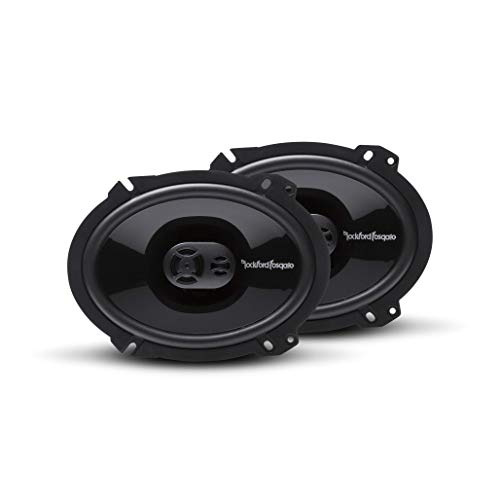
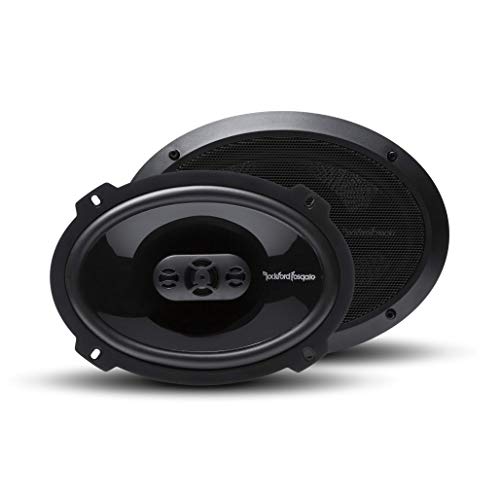
Rockford Fosgate Punch P1694: best 6×9 for bass in a truck
Spec line: 6×9 4-way coaxial, 75 W RMS, 150 W max per Rockford’s published spec, FlexFit basket, mid tier.
Best for: F-150 and Ram fronts where bass and volume matter.
Skip if: your truck uses 6.5 inch front doors.
- 6×9 cone area moves more air than a 6.5.
- FlexFit basket is designed to match many factory hole patterns.
- Solid sensitivity for a factory head unit.
Cons: boomy without damping, and the cabin may expose any rattle in door panels.
JBL Club 6×9: best truck speakers for a factory radio
Spec line: 6×9 3-way, about 100 W RMS, sensitivity near 93 dB, mid tier.
Best for: loud highway driving on factory power.
Skip if: you want a mellow tonal balance.
- Very efficient, so it reaches loud levels on 18 W.
- Good clarity for talk and music.
- Robust basket.
Cons: bright highs, and bass fades below 60 Hz. A subwoofer fills the bottom.
Pioneer A-Series 6×9: best value 6×9 for trucks
Spec line: 6×9 5-way A-Series coaxial (the TS-A6990F class lists about 120 W nominal and 700 W max; Pioneer has retired some versions in certain regions), about 90 dB; entry to mid tier.
Best for: budget upgrades.
Skip if: you want audiophile imaging.
- High RMS rating for the price class.
- Widely available with adapters.
- Good bass for a coaxial.
Cons: availability varies by region and revision, and the tweeter assembly adds depth.
JL Audio C3 6.5 components: best for Tacoma and Silverado fronts
Spec line: 6.5 component set, about 75 W RMS, around 90 dB, mid to premium tier.
Best for: front doors with an amp or a good aftermarket head unit.
Skip if: you want a rear-fill speaker.
- Smooth highs that remain pleasant at highway volume.
- Components allow tweeter placement on the A-pillar.
- Strong build quality.
Cons: pricey for a full set, and requires careful tweeter placement in crew cabs.
Hertz Mille Legend: best premium option for a Ram 1500
Spec line: 6.5 and 6×9 component and coaxial options, roughly 100 W RMS, about 90 dB, premium tier.
Best for: clean, controlled sound with an amplifier.
Skip if: your budget is tight.
- Detailed, fast midrange.
- Crossovers are neatly built.
- Stylish grille options.
Cons: availability is thinner than mainstream brands, and fitment must be verified for the exact trim.
Focal Performance: best clarity for premium truck systems
Spec line: 6.5 and 6×9 options with flax cones in selected models, about 80 to 100 W RMS, roughly 92 dB, premium tier.
Best for: highway cruisers who want detailed vocals.
Skip if: you prioritize raw bass from the doors.
- Sensitivity helps on factory power.
- Natural vocals.
- Good tweeter design.
Cons: the highest price tier, and model numbers vary by region.
Polk DB+ 6×9: best for open, wet or dusty cabs
Spec line: 6×9 marine-style coaxials, about 75 W RMS, about 90 dB, entry tier; described by Polk as water and UV resistant.
Best for: work trucks, off-road builds and doors that see weather.
Skip if: you want premium imaging.
- Moisture-resistant surrounds.
- Low cost.
- Reliable sensitivity.
Cons: average detail and bass compared with higher-tier 6x9s.
Best truck speakers for bass
For the doors, pick a 6×9 with 75 W RMS or more and seal the door skin with damping. That gives audible midbass but not deep bass. Truck cabs are rough on low frequencies: wind and tire noise at 70 mph measure roughly 70 to 75 dB in the cabin, and the energy lives below 200 Hz, so bass gets masked. To hear deep notes, use a powered under-seat subwoofer and set the door speakers’ high-pass at 60 to 80 Hz.
How to choose: the numbers
- Fitment first: size, mounting depth and screw pattern. Use a vehicle fitment tool for your year, cab and audio package.
- Sensitivity: choose 91 dB or higher on factory power. Every 3 dB equals double the amplifier power.
- RMS: match the amp. If you plan a 4-channel amp with 75 W per channel, pick a 75 to 100 W RMS speaker.
- Cab noise margin: with 70 to 75 dB of road noise, you need speakers that deliver 95 dB peaks without distortion, which is why a 3 to 6 dB headroom from an amp matters.
- Weather: pick marine-style or rubber surround if your truck sees rain, dust or open doors.
Worked example: F-150 upgrade plan
A 2018 crew cab F-150 with the base audio has 6×9 fronts and 6.5 or 6×9 rears depending on the cab. A balanced upgrade is a Kicker kit with matching adapters (about 1.5 hours), 6 square feet of damping across the front doors (about 1 hour), and an optional 4-channel amp wired from the head unit (3 to 4 hours). Expect to hear the biggest change from the speakers and damping together; the amp adds clean volume at highway speed.
Common mistakes in trucks
- Buying the wrong size because the truck had a different layout in a prior year.
- Ignoring the factory amplifier on premium trims.
- Skipping the door seal, which lets water in.
- Using a 6.5 speaker in a 6×9 opening with a poor adapter, which makes bass thin.
- Not using the supplied crossover.
All specifications are drawn from manufacturer sheets and published fitment guides. Confirm the exact fit for your truck before buying.
Factory premium systems: check before swapping
Many trucks offer branded factory audio packages, such as Bang and Olufsen on some F-150 trims, Bose on some Silverado and Sierra trims, and Harman Kardon or Alpine on some Ram trims. These systems often use an external amplifier, different impedance speakers and sometimes digital signal processing tuned to the factory speakers. Dropping in a standard 4 ohm aftermarket speaker can work, but it may sound thin because the factory amp’s equalization was designed for the original driver. In that case you have three paths:
- Keep the factory amp and choose a speaker that matches its impedance, as listed by the fitment tool.
- Bypass the factory amp with a line-output converter and add an aftermarket amp, which gives you control of tone and power.
- Replace only the tweeters or add a subwoofer, leaving the door speakers alone until you are ready for a full rework.
If your truck has a base audio system with no external amp, a straight swap is typically the easiest and most predictable path.
Cab type changes what you need
| Cab | Speaker positions | Upgrade priority | Common issue |
|---|---|---|---|
| Regular cab | 2 doors, sometimes a rear wall speaker | Front doors first | Small cabin means a subwoofer is easy to hear |
| Extended cab | 2 front doors, 2 rear cab speakers | Fronts, then rear fill | Rear speakers are often 5.25 or 6.5 and shallow |
| Crew cab | 4 doors | Front doors, then rear doors | Longer cabin; match rear and front sensitivity |
In a crew cab, balance front and rear speakers by sensitivity. If the rear speakers are 3 dB less sensitive than the front, turn the rear fader up a notch or two so the soundstage does not collapse toward the front.
Sound deadening: how much a truck door needs
Truck doors are large, thin steel with big access holes. A typical front door has an outer skin of about 6 to 8 square feet. You do not need to cover all of it. For speaker performance, focus on three zones: the outer skin directly behind the speaker (about 1 square foot), the inner panel around the speaker opening (a ring of damping), and the large access holes, which should be sealed with a rigid panel or thick damping layer. In practice this takes 4 to 6 square feet per door and about an hour. The audible result is tighter bass and fewer rattles, and the cabin also becomes quieter at highway speed because the door panel no longer vibrates.
Power and wiring for truck builds
| Setup | Amp power | Wire gauge | Typical install time |
|---|---|---|---|
| Speakers only on factory radio | None | Factory plugs | 1 to 2 hours |
| 4-channel amp for four doors | 50 to 75 W RMS x 4 | 8 gauge power wire | 3 to 5 hours |
| 4-channel amp plus subwoofer | Add 250 to 500 W RMS mono | 4 to 8 gauge by amp size | 5 to 8 hours |
Wire gauge guidance is generic; use the amplifier manual and total current draw to decide. Trucks have long runs from the battery to the cab, so use a fused power wire within about 18 inches of the battery.
What wears first in a truck
- Surrounds dry out in heat. Trucks parked in sun with closed windows can see cabin temperatures far above ambient, so foam surrounds age quickly.
- Door boots tear during installation and let water reach connectors. Replace them.
- Connectors corrode in humid regions. Use dielectric grease.
- Grilles get dented by cargo. Metal grilles are more durable than plastic ones.
Frequently Asked Questions
What are the best speakers for an F-150?
A vehicle-specific Kicker kit is the simplest drop-in, while a 6×9 such as the Rockford Punch or JBL Club suits those who want more bass or efficiency. Check cab type and year first.
What size speakers does a Silverado use?
Many Silverado and Sierra 1500 trucks use 6.5 inch front door speakers and 6×9 rears, but it varies by generation and audio package, so verify before buying.
What are the best speakers for a Tacoma?
The cab is small and doors are shallow, so a 6.5 component set such as the JL Audio C3 or a low-profile Kicker coaxial is a common choice. Check mounting depth first.
What are the best speakers for a Ram 1500?
Many Ram 1500 trims have 6×9 front doors. Rockford Punch and JBL Club 6×9 suit factory power, while Hertz or Focal fit amplified premium builds.
Do I need an amp for truck speakers?
Not necessarily. Efficient coaxials of 91 dB or more sound clearly better than stock on factory power. An amp adds headroom that helps against road noise at highway speed.
Why do my truck speakers sound weak at speed?
Road, wind and tire noise mask bass and detail. Door damping, a high-pass filter and a small subwoofer improve perceived clarity more than any single speaker swap.
More from Amazon
Programs that pair well with the guide above. Offers and eligibility are set by Amazon and may change.
Free shipping on eligible items, Prime Video and more. Eligible new members can start with a free trial.
Start a Prime free trialAudiobooks and podcasts to listen to on the go. Eligible new members can start with a free trial.
Try Audible freeAd-free music streaming. Eligible new subscribers can start with a free trial.
Try Music Unlimited freeA free business account with business pricing and bulk-buying tools for work, shop or home office.
Create a business accountAs an Amazon Associate we earn from qualifying purchases.