Key takeaways
- 91 dB sensitivity lets it play loudly on 15 to 20 W per channel.
- 80 W nominal is generous for a coaxial and gives room for an amp.
- Wide frequency response claims and good bass for its size.
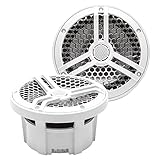
Pioneer’s best car speakers for most buyers are the A-Series: the TS-A1681F 6.5 inch coaxial for a factory radio and the TS-A6990F-class 6×9 where it is still sold, with the Z-Series TS-Z65C component set for amplified systems and the F-Series for the lowest-cost replacement. Pioneer’s strength is efficiency and power handling per dollar; its trade-off is a brighter, less refined midrange than premium component lines. This guide walks through the current lineup, who each series fits, honest drawbacks and three alternatives.
Our top picks


As an Amazon Associate we earn from qualifying purchases at no extra cost to you.
Pioneer speaker series in plain English
| Series | Tier | Typical design | Power handling idea | Best for |
|---|---|---|---|---|
| F-Series | Entry | Coaxial 2-way and 3-way | About 30 W nominal class | Replacing worn factory speakers |
| G-Series | Entry to mid | Coaxial, a step up from F | About 40 to 60 W nominal class | Better bass for little extra |
| A-Series | Mid | 3-way, 4-way and 5-way coaxials plus some components | About 70 to 120 W nominal class | Loud, efficient upgrades |
| Z-Series | Mid to upper | Component sets and some coaxials | About 100 W nominal class | Amplified, detail-focused builds |
Series positioning and numbers are summarized from Pioneer’s published spec sheets and retailer descriptions. Pioneer rebrands lines in different regions, so some model numbers differ by market.
Pioneer speakers at a glance
| Model | Size and type | Nominal / max | Sensitivity | Price tier | Best for |
|---|---|---|---|---|---|
| TS-F1634R | 6.5 inch 3-way coaxial | about 30 W / 200 W | about 88 dB | Entry | Cheapest fix |
| G-Series 6.5 coaxial | 6.5 inch 2-way or 3-way coaxial | about 40 to 60 W / 300 W | about 90 dB | Entry to mid | Budget bass |
| TS-A1681F | 6.5 inch 4-way coaxial | 80 W / 350 W | 91 dB | Mid | Factory radio upgrade |
| TS-A1600C | 6.5 inch component | about 80 W | about 85 dB | Mid | First component set |
| TS-Z65C | 6.5 inch component | 100 W / 300 W | 85 dB | Mid to upper | Amplified clarity |
| TS-A6990F class | 6×9 inch 5-way coaxial | 120 W / 700 W | 90 dB | Mid | Pioneer for bass |
Numbers for the TS-A1681F, TS-Z65C and TS-A6990F come from Pioneer’s published sheets; F and G series figures are approximate classes, and the TS-A1600C sensitivity figure should be double-checked against the sheet for your region.
Pioneer TS-A1681F: the best Pioneer 6.5 speaker for most people
Spec line: 6.5 inch 4-way coaxial, 4 ohm, 80 W nominal, 350 W max, 91 dB, 35 Hz to 29 kHz response.
Best for: drivers keeping the factory radio who want clearly louder, clearer sound.
Skip if: you listen at low volume and prefer a warm, smooth midrange.
- 91 dB sensitivity lets it play loudly on 15 to 20 W per channel.
- 80 W nominal is generous for a coaxial and gives room for an amp.
- Wide frequency response claims and good bass for its size.
Cons: the stacked tweeters can sound bright, and the multi-driver design needs more mounting depth than a basic 2-way. Check clearance against the window track.
Pioneer TS-F1634R: best budget Pioneer speaker
Spec line: 6.5 inch 3-way coaxial, about 30 W nominal, about 200 W max, around 88 dB, entry tier.
Best for: blown or crackling stock speakers in an older car.
Skip if: you plan to add an amplifier soon.
- Easy on the budget and easy to find.
- Shallow enough for many older doors.
- Straightforward plug-in swap.
Cons: limited power handling, and bass is only a modest improvement over a good stock speaker.
Pioneer G-Series coaxials: best step-up for bass on a budget
Spec line: 6.5 and 6×9 coaxials in the G-Series, about 40 to 60 W nominal, around 90 dB, entry to mid tier. Specific model numbers vary by region.
Best for: shoppers who want more bass than the F-Series without paying A-Series prices.
Skip if: you want component imaging.
- Higher power handling than F-Series.
- Larger magnets and stiffer cones in many models.
- Good fit for daily drivers.
Cons: fewer stocked sizes in some stores, and treble is plain compared with Z-Series.
Pioneer TS-A1600C: best Pioneer component set for a first upgrade
Spec line: 6.5 inch component set, about 80 W nominal, sensitivity roughly 85 dB, mid tier.
Best for: an amplified upgrade where tweeter placement matters.
Skip if: you have no amp; sensitivity is modest.
- Separate tweeters with crossovers allow better aiming.
- Reasonable price for a component set.
- Widely available.
Cons: low sensitivity means weak volume on factory power, and the install is longer than a coaxial.
Pioneer TS-Z65C: best Pioneer for sound quality with an amp
Spec line: 6.5 inch component set, 4 ohm, 100 W nominal, 300 W max, 85 dB, 32 Hz to 96 kHz response.
Best for: amplified builds where detail and clarity matter.
Skip if: you only have a factory head unit.
- High power handling and wide frequency response, with a tweeter that extends well above 20 kHz.
- Cleaner midrange than the A-Series coaxials.
- Good match for 50 to 75 W per channel amps.
Cons: 85 dB sensitivity requires an amp, and it costs more than the A-Series coaxials.
Pioneer TS-A6990F class: best Pioneer 6×9 for bass
Spec line: 6×9 5-way coaxial, 4 ohm, 120 W nominal, 700 W max, 90 dB per Pioneer’s sheet; Pioneer’s European site lists this specific model as discontinued, so look for the current equivalent in your market.
Best for: trucks, older sedans and rear decks with 6×9 openings.
Skip if: your vehicle uses 6.5 inch openings.
- Large cone area for audible bass.
- High RMS handling for a coaxial.
- Strong sensitivity.
Cons: bass without a sealed deck or sound deadening can be boomy, and availability varies by region and revision.
Best Pioneer speakers for bass
Pioneer’s best bass comes from 6×9 A-Series coaxials, but even these produce midbass rather than deep bass. If you want Pioneer for the bass, pair a 6×9 with a high-pass filter at 60 to 80 Hz and add a powered subwoofer such as one from Pioneer’s TS-WX powered line for the low notes. Sealing the rear deck or door panels often improves bass more than moving to a more expensive speaker.
Honest trade-offs
- Tone: Pioneer voicing is lively, with forward highs. Fans of warm, smooth sound often prefer JL Audio or Focal.
- Complexity: 4-way and 5-way coaxials add more drivers than a 2-way, which can add a little phase complexity without improving real-world sound much.
- Naming: series names and model numbers differ across regions, so confirm the exact SKU, not just the series.
- Availability: some earlier A-Series models are discontinued.
Three alternatives to consider
| Alternative | Why choose it | Trade-off |
|---|---|---|
| Kicker KS-Series | Punchy bass, low-profile fit, truck kits | Energetic highs |
| JL Audio C2 / C3 | Smooth, natural midrange | Higher price per dB |
| Alpine S and R-Series | Good component sets, strong build | Lower sensitivity on some sets |
How to choose a Pioneer speaker: numbers
- Match sensitivity to your power source. Factory radios deliver about 15 to 22 W RMS per channel, so choose 90 dB or higher, such as the A1681F. Below 88 dB, plan on an amp.
- Match nominal power to the amp. An amp that delivers 75 W per channel suits speakers rated 80 to 100 W nominal.
- Check depth. A 4-way coaxial may need about 2.5 inches. Verify with a fitment tool.
- Pick the size. 6.5 inch for most doors; 6×9 where the opening allows, since the cone area is about 50 percent larger.
- Pick coaxial or component. Coaxial for quick installs; component when you have an amp and can place the tweeters.
Worked example: factory radio vs amp
With 18 W per channel, a 91 dB A1681F produces about 103.5 dB at one meter, while an 85 dB TS-Z65C produces about 97.5 dB. That 6 dB gap equals four times the amplifier power. Add a 75 W per channel amp: the Z65C reaches about 103.7 dB, matching the A1681F on factory power but with far more headroom and cleaner peaks. This is why component sets only shine when amplified.
Decision matrix: which Pioneer series for your situation
| Your situation | Series and example | Why | Add-ons to consider |
|---|---|---|---|
| Old car, speakers blown, tight budget | F-Series, TS-F1634R | Lowest cost, drop-in replacement | Mounting rings |
| Daily driver, wants louder, no amp | A-Series, TS-A1681F | 91 dB sensitivity, 80 W nominal | Door damping |
| Truck or car with 6×9 openings | A-Series 6×9 | Larger cone, 120 W nominal class | Subwoofer, high-pass filter |
| Amp planned, wants clarity | Z-Series, TS-Z65C | 100 W nominal, wide response | 4-channel amp at 50 to 75 W per channel |
| Wants imaging but budget is tight | A-Series component, TS-A1600C | Separate tweeters at a mid price | Small amp |
| Shallow doors | 2-way coaxial from F or G series | Less depth than 4-way coaxials | Spacer rings only if required |
Pairing Pioneer speakers with an amplifier
Pioneer lists nominal power (continuous) and maximum power (short bursts). Use nominal for matching. A 4-channel amplifier that delivers 75 W per channel at 4 ohms is a strong partner for speakers rated 80 to 100 W nominal such as the TS-A1681F or TS-Z65C. If the amp is bridged or runs at 2 ohms, check that the speaker impedance and power rating allow it. Do not feed a 30 W nominal F-Series speaker with a 100 W amp unless you keep the gain low and use a high-pass filter, because the cone and voice coil can be pushed beyond their limits when bass is loud.
Set the high-pass filter at 60 to 80 Hz for door speakers. For component sets, use the supplied passive crossover, which usually divides the signal near 3 to 5 kHz depending on the set. Check the manual for the exact point. Do not remove the crossover capacitor from the tweeter feed.
Installing Pioneer speakers: a short checklist
- Confirm size and depth. Use a fitment tool, then measure from the mounting flange to the window or brace. A-Series 4-way coaxials can need about 2.5 inches.
- Buy adapters. Vehicle-specific speaker harness plugs avoid cutting factory wires; mounting brackets fix odd hole patterns.
- Remove the door panel and unplug the old speaker. Photograph connector positions for reassembly.
- Add damping. Apply butyl sheets to the outer door skin behind the speaker.
- Mount and seal. Use a foam gasket or ring so the basket seals against the panel.
- Wire polarity correctly. Match positive and negative terminals as marked in the manual.
- Reassemble and check the balance. Confirm all channels play, then adjust fader and balance.
A coaxial swap typically takes about 1 hour per pair for an experienced installer, and a first-timer may need 2 hours. A component set takes longer because of tweeter placement and crossover mounting, often 3 to 4 hours for the front pair.
Pioneer vs alternatives in detail
Pioneer vs Kicker: Pioneer usually offers higher nominal power at a similar price tier, and its A-Series sensitivity is excellent. Kicker’s KS-Series uses a low-profile design that fits shallow doors and delivers punchy bass, with truck kits that simplify installs. If your doors are shallow, Kicker is often the safer fit; if power handling is the priority, Pioneer may offer more watts for the money.
Pioneer vs JL Audio: JL Audio C2 and C3 sets are voiced for smoothness. They typically cost more per decibel of sensitivity but sound more relaxed. If you listen to acoustic music and vocals, the extra cost is audible. If you want volume and bass, Pioneer is the better value.
Pioneer vs Alpine: Alpine S-Series component sets are a strong budget pairing for amps, and the R-Series is a step up. Pioneer’s Z-Series competes directly, with similar power handling but a different tonal balance, so read a published review that describes the voicing.
Ownership: what wears first
- Surrounds: foam surrounds age faster than rubber in hot climates; check which your series uses.
- Tweeters: multi-tweeter coaxials can lose a super tweeter first when the amp clips. Keep gain set conservatively.
- Grilles: plastic grilles warp in sun. Choose metal grilles on trucks.
- Connections: corroded spade terminals cause crackles. Replace them if green.
Common mistakes with Pioneer speakers
- Buying by max power. The 700 W figure on a 6×9 is a peak rating; the 120 W nominal figure is what you should use.
- Pairing 85 dB component sets with a factory radio and then judging them weak.
- Installing 4-way coaxials in shallow doors without checking depth.
- Assuming the model number is the same worldwide. Series and SKUs vary by region.
Specifications here are based on Pioneer’s published sheets and retailer listings; check the exact SKU and region before buying.
Frequently Asked Questions
What is the best Pioneer 6.5 speaker?
For most people the TS-A1681F: 91 dB sensitivity, 80 W nominal and a 4-way coaxial design. For amplified builds, the TS-Z65C component set offers cleaner midrange.
What is the best Pioneer 6×9 speaker?
The A-Series 6×9 coaxials, such as the TS-A6990F class, offer high power handling and strong sensitivity. Check which version is sold in your region.
Are Pioneer speakers good for bass?
The 6×9 A-Series models give solid midbass, but deep bass needs a subwoofer. Door damping and a high-pass filter make the biggest difference.
Do Pioneer speakers need an amp?
Coaxials rated at 90 dB or higher do not. Component sets with 85 dB sensitivity benefit from an amp.
Are Pioneer speakers better than Kicker?
Not universally. Pioneer tends to offer more power handling for the money, while Kicker voicing leans toward bass punch and offers vehicle-specific kits.
Will Pioneer speakers fit my car?
Often, but check size, depth and screw pattern for your model year. Adapter brackets are available for many vehicles.
More from Amazon
Programs that pair well with the guide above. Offers and eligibility are set by Amazon and may change.
Free shipping on eligible items, Prime Video and more. Eligible new members can start with a free trial.
Start a Prime free trialAudiobooks and podcasts to listen to on the go. Eligible new members can start with a free trial.
Try Audible freeAd-free music streaming. Eligible new subscribers can start with a free trial.
Try Music Unlimited freeA free business account with business pricing and bulk-buying tools for work, shop or home office.
Create a business accountAs an Amazon Associate we earn from qualifying purchases.