Key takeaways
- High sensitivity means usable volume on 15 to 20 watts per channel.
- Silk dome tweeter avoids the harsh edge common in cheaper metal domes.
- Well-built basket and a mounting depth that clears most rear decks.
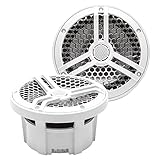
For most drivers, the best 6×9 car speaker is an efficient three-way coaxial pair with a silk or soft-dome tweeter, a polypropylene cone and a sensitivity of 90 dB or higher. In the 2026 lineups, the JL Audio C2 three-way, the Alpine S-Series and the Kicker KS-Series are the strongest all-round choices, while the Pioneer TS-A series and Rockford Fosgate Prime are the sensible picks when the radio is still the factory head unit. If you want maximum clarity and are willing to run an amplifier, a 6×9 component set is the better upgrade.
The rest of this guide sorts seven current 6×9 families by what they do best, then walks through the numbers that decide whether a pair will sound good in your car: RMS power, sensitivity, mounting depth, and whether an amplifier is really needed. Specs below are rounded from manufacturer spec sheets and roundup coverage; always confirm the exact model number on the maker’s current page before buying.
Our top picks


As an Amazon Associate we earn from qualifying purchases at no extra cost to you.
Quick comparison of the seven picks
| Pick | Design | Approx. RMS power | Approx. sensitivity | Best for | Price tier |
|---|---|---|---|---|---|
| JL Audio C2 6×9 three-way | 3-way coaxial | 70 W | 93 dB | Clarity on low power | Premium |
| Alpine S-Series 6×9 (coax and component) | 2-way / 3-way, component option | 85 W | 90 dB | Detail and upgrade path | Mid |
| Kicker KS-Series 6×9 | 3-way coaxial | 70-100 W class | 90-92 dB | Punchy bass without a sub | Mid |
| Pioneer TS-A6967S | 4-way coaxial | 90 W | 89 dB | Value and loudness | Entry |
| JBL Club 6×9 series | 3-way coaxial | 90-110 W class | 91-93 dB | Bright, energetic sound | Mid |
| Focal Access 690AC | 2-way coaxial | 90 W class | 91 dB | Natural vocals | Mid |
| Rockford Fosgate Prime R169X3 | 3-way coaxial | 45 W | 90 dB | Budget factory-radio swaps | Entry |
What a 6×9 can and cannot do
A 6×9 speaker has roughly twice the cone area of a 6.5-inch round driver, which is why rear-deck and rear-door 6x9s move more air and play lower. A good pair reaches down into the 50 to 60 Hz region, which is the upper bass range. It will not replace a subwoofer below about 50 Hz, no matter what the box says. If a listing promises “earth-shaking bass” from a pair of 6x9s, read it as marketing for peak power numbers, not for output.
Two facts matter more than the peak-power figure printed on the box. First, the RMS rating, which is the continuous power the speaker is rated to handle. Second, sensitivity, measured in decibels at one watt and one meter. A speaker with 93 dB sensitivity produces the same volume as a 90 dB speaker while using half the power. That is the entire reason some pairs sound loud on a factory radio and others sound thin.
Best 6×9 speakers for clarity
JL Audio C2 three-way 6×9: best efficiency and detail
Spec line: 3-way coaxial, about 70 W RMS, about 93 dB sensitivity, silk dome tweeter plus a super-tweeter. Roundups in 2026 consistently list the C2-690TX-class model as the most efficient three-way in this group.
Best for: Drivers on a factory or low-power aftermarket head unit who want clean mids and smooth highs without adding an amplifier.
Skip if: You need the lowest possible price, or you want bass-heavy tuning out of the box.
- High sensitivity means usable volume on 15 to 20 watts per channel.
- Silk dome tweeter avoids the harsh edge common in cheaper metal domes.
- Well-built basket and a mounting depth that clears most rear decks.
Cons: Premium price tier for a coaxial. Bass is tidy rather than thumping.
Alpine S-Series 6×9 and S2-S69C component: best for an upgrade path
Spec line: The coaxial S2-S69 is listed around 85 W RMS and 260 W peak with about 90 dB sensitivity. The S2-S69C component set splits the tweeter out and extends high-frequency response toward 40 kHz, which is why it carries the Hi-Res Audio badge. Cones use a polypropylene, glass fiber and mica blend.
Best for: Someone who plans to add an amplifier later and wants speakers that scale. The same family also offers a step-up R-Series for fully amplified systems.
Skip if: You only want a plug-and-play swap. The component version needs a place to mount separate tweeters and crossovers, which is not possible in every vehicle.
- Stiff mica-filled cones keep midrange detail clear at higher volumes.
- Component option lets the tweeter sit higher and closer to ear level.
- Sensible RMS rating for a 50 to 75 W per channel amplifier.
Cons: Mid price tier. Components add installation time and wiring.
Focal Access 690AC: best for natural vocals
Spec line: 2-way 6×9 coaxial, roughly 90 W RMS class, about 91 dB sensitivity, with a TNF inverted-dome style tweeter on the Access range. Specs are rounded; check the current Focal sheet.
Best for: Listeners who care about voices, acoustic music and podcasts more than bass slam.
Skip if: You mostly play bass-forward hip hop or EDM and have no subwoofer.
- Neutral tonal balance that does not sound over-tuned.
- Efficient enough for a factory radio.
- Appears at or near the top of several 2026 buyer guides.
Cons: Mid price tier. Less low-end weight than a three-way with a larger magnet.
Best 6×9 speakers for bass
Kicker KS-Series 6×9: best for punch without a sub
Spec line: 3-way coaxial, KS-Series polypropylene cone with a rubber surround, published RMS in the 70 to 100 W class and sensitivity near 90 to 92 dB. One roundup lists the cheaper CS-Series 6×9 at 150 W RMS, so treat figures as approximate and compare spec sheets of the exact model.
Best for: Rear-deck installs where the 6x9s are expected to supply midbass and some low-end punch. Kicker tends to voice its speakers with a warm, present lower midrange.
Skip if: You are sensitive to forward upper mids. Reviewers describe the CS family as slightly aggressive at high volume with a mildly recessed midrange.
- Strong midbass for a coaxial at this price position.
- Shallow mounting depth fits many factory locations.
- Works well with or without an amplifier.
Cons: Highs can get edgy when pushed. Needs good door or deck sealing to really deliver.
JBL Club 6×9 series: best for energetic sound
Spec line: 3-way coaxial, about 90 to 110 W RMS class, sensitivity in the low 90s. JBL Club models use a woven glass or polymer cone with a tweeter set on a swivel on some versions.
Best for: Searching for “best JBL 6×9 speakers”: the Club line is the one to look at. It gives a bright, lively balance that suits pop, rock and electronic music.
Skip if: You prefer a warm, relaxed signature. Long highway drives on bright speakers can feel tiring.
- High sensitivity is friendly to low-power head units.
- Strong output for the price tier.
- Widely sold, so replacement is easy.
Cons: Some models are deeper than the cheapest alternatives. Tonal balance leans bright.
Best value 6×9 speakers (and the best 6x9s without an amp)
Pioneer TS-A6967S: best budget loudness
Spec line: 4-way coaxial, about 90 W RMS nominal, about 89 dB sensitivity, frequency response listed from roughly 35 Hz to 24 kHz. Several 2026 guides still recommend it, though some of those pages are old and simply refreshed with a new year.
Best for: A cheap, large improvement over worn factory paper cones. The four-way layout adds a super-tweeter for air.
Skip if: You want accuracy. The tuning is lively and a little forward, and 89 dB means it benefits from an amplifier.
- Entry price tier with legitimate bass for the money.
- Four-way design adds sparkle on top.
- Fits most 6×9 cutouts.
Cons: Lower sensitivity than the JL, JBL or Focal. Highs can sound busy.
Rockford Fosgate Prime R169X3: best for a factory radio on a budget
Spec line: 3-way coaxial, about 45 W RMS, sensitivity around 90 dB. The low RMS rating is a plus on factory head units, which typically deliver 10 to 18 W per channel.
Best for: Drivers keeping the stock radio who want a clean, low-cost step up. If you want a speaker that is rated for the power your radio actually has, this is the sensible choice.
Skip if: You plan to add a 75 W per channel amplifier. Choose a higher-RMS model instead.
- RMS rating matched to low-power sources.
- Entry price tier from a respected brand.
- Easy installation with included grilles.
Cons: Bass depth is modest. Not built for loud, amplified listening.
Do 6×9 speakers need an amp?
No, but the answer depends on sensitivity and expectations. A speaker above 90 dB, such as the JL Audio C2, JBL Club or Focal Access, plays loudly enough for normal listening on 15 to 20 W per channel. Speakers at 89 dB or below, and any model with an RMS rating above 75 W, start to sound thin or strained without extra power because the cone is not being driven hard enough.
A practical rule is to match the amplifier to between 75 and 150 percent of the speaker’s RMS rating. For a 70 W RMS pair, a 4-channel amp that delivers 50 to 75 W per channel at 4 ohms is a clean fit. Running a 100 W RMS speaker on a 15 W factory radio will work, but you leave most of its capability unused and the bass will lack control.
6×9 coaxial vs component: what changes
| Factor | Coaxial 6×9 | Component 6×9 |
|---|---|---|
| Installation | Drop-in, two wires per speaker | Separate tweeter, crossover, extra wiring |
| Imaging | Tweeter sits in the cone centre | Tweeter can be moved to the pillar or dash |
| Typical cost tier | Entry to mid | Mid to premium |
| Amp need | Optional | Strongly recommended |
| Best placement | Rear deck, rear doors | Front doors where a tweeter can be aimed |
Most vehicles that use 6×9 openings put them in the rear deck, where a coaxial is the realistic choice because there is nowhere to aim a separate tweeter. Component 6x9s mainly make sense in trucks, vans and older cars with 6×9 front door locations.
How to choose: the numbers that matter
- Check the mounting depth. Most 6x9s need 2.5 to 3.5 inches of clearance behind the cutout. Tall magnets and rear-mounted tweeters can hit a window track or door brace. Fit-checking tools from the manufacturer and major car audio retailers list the exact depth allowed for your vehicle.
- Read RMS, not peak. A listing of 400 or 650 W peak is a marketing number. The RMS rating (typically 45 to 100 W) is the one that tells you which radio or amp to match.
- Use sensitivity to pick the power source. At or above 91 dB, a factory radio is enough. At or below 89 dB, plan for a small amplifier.
- Match the cone material to your climate. Polypropylene and rubber surrounds hold up better to heat and humidity than paper and foam. In cars parked outdoors in hot regions, avoid foam surrounds.
- Decide where you want the bass. If you run no subwoofer, choose a 3-way with a strong magnet and plan to seal the rear deck. If you run a sub, a lower-RMS, high-sensitivity speaker such as the JL Audio C2 is a better partner.
A worked example: matching speakers to a system
Take a mid-size sedan with a factory head unit rated at about 15 W RMS per channel and 6×9 rear-deck speakers that are paper-cone and 12 years old. A pair of 91 to 93 dB speakers (JL Audio C2 or JBL Club class) gains roughly 3 dB over a 89 dB speaker on the same power. That is the same effect as doubling radio power without installing anything extra. Adding a compact 4-channel amplifier at 50 W per channel would add roughly another 5 dB of headroom, which is the difference between “loud enough” and “clean when loud”.
Now take a pickup truck with 6×9 front doors and a budget of mid-tier components. A 6×9 component set such as the Alpine S2-S69C, on a 75 W per channel amplifier, will give far better imaging than a coaxial because the tweeters can sit higher in the door or sail panel. Add 1 to 2 square feet of sound deadening in the inner door skin and the midbass tightens noticeably.
Installation and ownership realities
- What wears first: foam surrounds and paper cones fail first, especially in cars exposed to heat and humidity. Rubber surrounds in the better lines last far longer.
- Common mistakes: reversing polarity (speakers fight each other and bass vanishes), reusing frayed factory wire, and skipping a rubber gasket so the speaker rattles against the deck.
- Speaker adapters: several vehicles use odd 6×9 cutouts or plastic mounting plates. A vehicle-specific bracket costs little and saves cutting.
- Break-in: the suspension loosens over the first 20 to 40 hours of play. Bass depth improves slightly; do not judge the final sound on day one.
- Vehicle fit: confirm the size and depth for your exact vehicle on a fit guide before ordering. Factory 6×9 locations vary between trims of the same model.
Frequently Asked Questions
What is the best 6×9 speaker for bass?
A three-way coaxial with a large magnet and a rubber surround, such as the Kicker KS-Series 6×9 or the Pioneer TS-A6967S, gives the most midbass for the money. None of them replace a subwoofer below 50 Hz. Sealing the rear deck and adding sound deadening has as much effect on bass as the speaker model.
Can I run 6×9 speakers without an amp?
Yes. Speakers with sensitivity of 91 dB or higher, such as the JL Audio C2, JBL Club or Focal Access, play at reasonable volumes on a factory head unit. Expect cleaner sound and better bass with an amplifier, especially for speakers rated above 75 W RMS.
Are component 6x9s worth it over coaxials?
Only when you can mount the tweeter separately, usually in front doors or the dash. For rear-deck positions, a quality coaxial gives nearly the same result with far less work. Components also need an amplifier to reach their potential.
Which JBL 6×9 speakers are the best?
The JBL Club series is the usual recommendation for sound quality and sensitivity. They give a bright, energetic sound that suits modern music. Check the depth of the specific Club model against your vehicle before ordering.
Do 6×9 speakers fit any car?
No. Many vehicles use 6×9 locations, but depth, bolt patterns and grille clearance differ by model and trim. Use a vehicle fit guide and measure the mounting depth before buying, and plan for a bracket adapter if the factory cutout is unusual.
How much RMS power do 6×9 speakers need?
Match the amplifier to roughly 75 to 150 percent of the speaker’s RMS rating. For a factory radio putting out 10 to 18 W per channel, choose a speaker rated 45 to 75 W RMS with high sensitivity so it is not underpowered.
More from Amazon
Programs that pair well with the guide above. Offers and eligibility are set by Amazon and may change.
Free shipping on eligible items, Prime Video and more. Eligible new members can start with a free trial.
Start a Prime free trialAudiobooks and podcasts to listen to on the go. Eligible new members can start with a free trial.
Try Audible freeAd-free music streaming. Eligible new subscribers can start with a free trial.
Try Music Unlimited freeA free business account with business pricing and bulk-buying tools for work, shop or home office.
Create a business accountAs an Amazon Associate we earn from qualifying purchases.