Key takeaways
- Pro: Silk dome tweeter is less fatiguing than metal alternatives.
- Pro: Rubber surround helps durability in hot vehicles.
- Pro: Component version allows tweeter aiming for better imaging.
- Con: Needs amplifier power to reach its potential.
- Con: Midbass is controlled rather than punchy.
Alpine, Rockford Fosgate and Kenwood each fit a different buyer. Alpine suits listeners who want smooth, detailed sound and will add an amplifier. Rockford Fosgate suits buyers who want loud, efficient speakers that work on a factory radio (Prime) or scale up with real power (Punch). Kenwood suits buyers who want a practical, broad range of sizes at friendly prices, with an Excelon line for those who want more refinement. If you are choosing on a first upgrade, match the speaker’s sensitivity and power rating to your head unit before you worry about brand.
This comparison relies on published manufacturer specs and professional reviews, not testing of our own. Lineups change often, so confirm the exact series, size and vehicle fit before buying. We also cover Infinity, Sony and Focal at the end, because they are common alternatives when these three do not fit.
Our top picks
As an Amazon Associate we earn from qualifying purchases at no extra cost to you.
Three brands, three personalities
| Brand | Main lines | Sound character | Typical 6.5-inch power (RMS) | Best for |
|---|---|---|---|---|
| Alpine | S-Series, R-Series, X-Series (premium) | Smooth, detailed, controlled | S-Series about 80 W; R and X higher | Sound quality with an amp |
| Rockford Fosgate | Prime, Punch, Power | Warm, punchy, energetic | Prime about 40-50 W; Punch and Power higher | Stock radio (Prime) or loud builds (Punch) |
| Kenwood | KFC series, Excelon | Neutral to bright, clean | Roughly 50-100 W by model | Practical, broad fit choice |
Power figures are class ranges from published spec sheets; confirm the sheet for the exact model.
Alpine: refined sound for amplified systems
Alpine’s lineup is built in tiers. The S-Series is the mainstream line. The S2-S65 coaxial and S2-S65C component 6.5-inch sets list 80 W RMS (240 W peak), a 1-inch silk dome tweeter, 88 dB sensitivity, a response of roughly 55 Hz to 40 kHz, and a rubber surround. The R-Series steps up in materials and refinement, and the X-Series sits at the top with premium components for dedicated sound-quality builds.
Best Alpine pick: S-Series S2-S65C component
Spec line: 6.5-inch component set, 80 W RMS, 88 dB sensitivity, silk dome tweeter, rubber surround.
Best for / Skip if: Best for buyers adding a small amplifier who want smooth, natural vocals. Skip if you are staying on factory power; 88 dB is the lowest sensitivity of the three brands’ mainstream lines.
- Pro: Silk dome tweeter is less fatiguing than metal alternatives.
- Pro: Rubber surround helps durability in hot vehicles.
- Pro: Component version allows tweeter aiming for better imaging.
- Con: Needs amplifier power to reach its potential.
- Con: Midbass is controlled rather than punchy.
Who should look at R-Series or X-Series
If the budget allows a mid-to-premium tier and you already have or plan a quality amplifier, the R-Series and X-Series offer finer tweeters and better crossovers. The improvement is subtle at moderate volume, and best heard with a high-quality source and sound-treated doors. If your goal is a first upgrade on a stock radio, spend on a lower-priced set and a sound-deadening kit instead.
Rockford Fosgate: efficient and loud
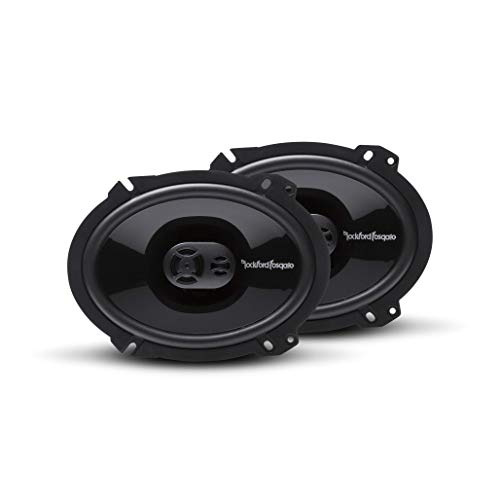
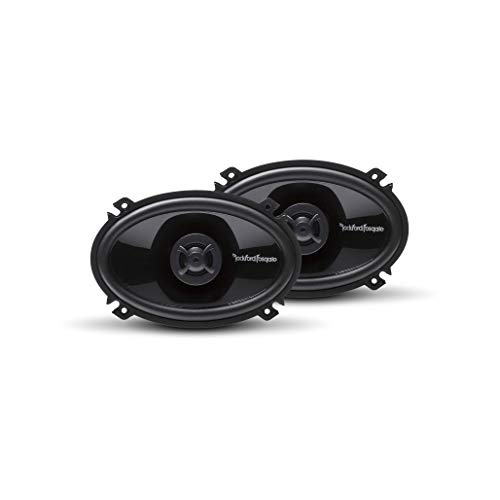
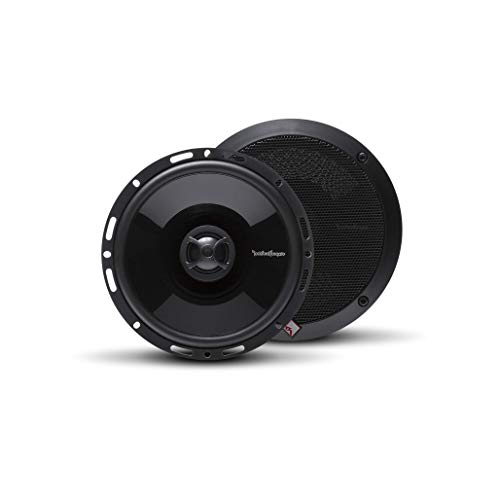
Rockford Fosgate has three common car-speaker lines. Prime is the entry line, Punch is the step up with higher power handling and heavier construction, and Power is the top-level road series with the highest power handling. Prime and Punch cover most buyers.
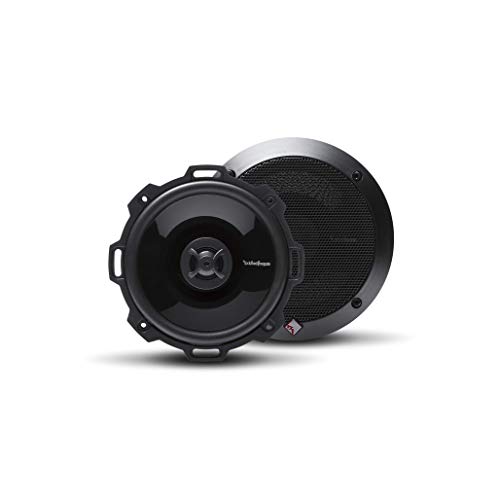
Best Rockford pick for a stock radio: Prime R165-S
Spec line: 6.5-inch component set, roughly 40 W RMS (80 W peak), 1/2-inch Mylar tweeter, about 92 dB sensitivity, response from about 60 Hz, mounting depth near 2 inches. Prime coaxials such as the R165X3 offer about 91 dB sensitivity in a simpler package.
Best for / Skip if: Best for factory head units and low-power amplifiers. Skip if you plan to run an amplifier at 75 W per channel or more.
- Pro: High sensitivity gives good volume from small power.
- Pro: Shallow woofer fits many doors.
- Pro: Entry price tier for coaxials.
- Con: Lower RMS ceiling than Alpine S or Kenwood Excelon.
- Con: Tweeter can be bright on harsh recordings.
Best Rockford pick for high power: Punch
Spec line: Punch series coaxials and components in 6.5-inch, 6×9 and other sizes, designed for higher power than Prime with larger magnets and sturdier surrounds.
Best for / Skip if: Best for loud builds with a 4-channel amplifier and for owners who want warm, strong midbass. Skip if door depth is tight, because the magnets are larger.
- Pro: Handles much more power than Prime.
- Pro: Fuller midbass body.
- Pro: Pairs well with Rockford Fosgate amplifiers.
- Con: Costs more than Prime.
- Con: May not fit shallow doors without spacers.
Kenwood: practical fit and clean sound
Kenwood offers a broad range of coaxial and component speakers, including 4-inch, 5.25-inch, 6.5-inch, 6×8 and 6×9 sizes, with multi-way coaxials in the mainstream KFC line. The Excelon line is Kenwood’s higher-tier option, aimed at buyers who want more refined materials and better crossover design. Kenwood speakers are often found in packages with Kenwood head units, which makes them a practical choice for an all-Kenwood build.
Best Kenwood pick: Excelon series for sound quality
Spec line: Excelon 6.5-inch coaxial and component sets in the roughly 60-100 W RMS class with sensitivity around 88-90 dB, per published listings.
Best for / Skip if: Best for buyers who want a clean, accurate presentation and good fit coverage. Skip if you want the loudest option on factory power.
- Pro: Broad size coverage helps with older vehicles.
- Pro: Clean, balanced sound at moderate volume.
- Pro: Pairs well with Kenwood head units and amps.
- Con: Less distinctive than Alpine or Rockford at the same tier.
- Con: Sensitivity is not as high as Prime.
Best Kenwood value: KFC series
The mainstream KFC line is the budget route into Kenwood. Multi-way coaxials give decent output on factory power and drop into most factory openings. They are a sensible choice for rear speakers or for owners who want a quick upgrade without a new amplifier. Expect basic cone materials and less refined tweeters compared with the Excelon line.
Best Infinity, Sony and Focal car speakers: the alternatives
Infinity Reference
The Reference series is a common entry-to-mid option with high sensitivity (about 92 dB class) and a lively sound. It is a good match for factory radios and rear-deck 6×9 positions. The trade-off is a bright, energetic tonal balance.
Sony
Sony’s mainstream car speaker lines (for example the GS-series) cover coaxial and component 6.5-inch and 6×9 sizes at entry prices. They are a practical, easy-fit alternative, with less brand heritage in car audio sound quality than Alpine or JL Audio.
Focal
Focal Auditor and Integration sets, and higher lines such as K2 Power, target buyers who want premium clarity and are willing to pay for it. They typically have efficient designs (around 90-92 dB class) and flax or similar cones that deliver a detailed, open sound.
Which brand should you choose? A decision table
| Your situation | Best brand and line | Reason |
|---|---|---|
| Factory radio, no amp, entry budget | Rockford Fosgate Prime | 92 dB sensitivity |
| Small amp, wants smooth vocals | Alpine S-Series component | Silk dome tweeter and 80 W RMS |
| High-power build, loud music | Rockford Fosgate Punch | Higher power handling, strong midbass |
| Older vehicle with unusual sizes | Kenwood KFC or Excelon | Wide size range |
| Premium budget and sound-treated doors | Alpine R/X or Focal | Refined tweeters and crossovers |
| Bright, loud on a stock radio | Infinity Reference | High sensitivity |
The numbers that matter more than the badge
Sensitivity versus loudness
Every 3 dB of sensitivity doubles the volume you get from a given amplifier. A Rockford Prime at 92 dB on a 15 W head unit plays about as loudly as an Alpine S-Series at 88 dB on roughly 38 W. That is why Prime tends to impress on stock radios while the Alpine pulls ahead once an amplifier is in the picture.
RMS and amplifier matching
Match the amplifier’s RMS output to 75 to 150 percent of the speaker’s RMS rating. For the 80 W Alpine S2-S65C, that means about 60 to 120 W per channel. For a 40 W Prime, an amplifier under 60 W per channel is safer.
Mounting depth
Prime’s component woofer needs roughly 2 inches of depth, and many premium woofers need 2.25 inches or more. Always measure the clearance behind the factory speaker with the window down.
Worked example: a compact SUV with a 20 W-per-channel head unit
A buyer has a head unit that delivers about 20 W per channel and wants better sound for a modest budget. Prime coaxials or components at 91-92 dB make the best use of that power. If the buyer later adds a 4-channel amplifier at 50 W per channel, the Alpine S-Series component set becomes a good swap, because 50 W is about 62 percent of its 80 W RMS rating. The cost of the early Prime purchase is modest, and the pair can then move to the rear doors, so little money is wasted.
Where each series sits on the price ladder
| Price tier | Alpine | Rockford Fosgate | Kenwood |
|---|---|---|---|
| Entry | Entry coaxial lines (check current series) | Prime | KFC series |
| Mid | S-Series | Punch | Excelon |
| Upper | R-Series | Power | Higher Excelon models |
| Premium | X-Series | Power series component sets | Step up to Focal or Alpine X for audiophile tuning |
Series names and boundaries shift from year to year, so treat this as a rough map rather than a fixed chart, and confirm current names on each manufacturer’s site. Another practical point is that rear speakers matter less than fronts in most listening, so a lower tier in the back is a sensible saving. The main takeaway is that a mid-tier set from any of the three usually gives most of the improvement over factory speakers, and the premium tiers add refinement rather than a dramatic change.
Pairing speakers with a head unit and amplifier
Brand matching is a convenience, not a requirement. Rockford Fosgate speakers work well with any amplifier, and the same is true of Alpine and Kenwood. What matters is power per channel and gain setting. A few rules of thumb help.
- For a head unit with built-in amplification of about 15 to 22 W RMS per channel, prefer speakers of 90 dB sensitivity or more.
- For a 4-channel amplifier at 50 W RMS per channel, speakers rated at 60 to 100 W RMS give clean headroom.
- Set the amplifier’s high-pass filter near 80 Hz for door speakers to protect the woofer and sharpen midbass.
- Set amplifier gain by ear with the head unit near three-quarters volume; stop when you hear distortion and back off slightly.
- Use the same brand for front and rear if you want tonal consistency, although a lower-tier rear pair is a sound way to save money.
Common mistakes when choosing between these brands
- Buying on peak power. A box that says 240 W peak is actually an 80 W RMS speaker, and the RMS figure is the one to match to your amp.
- Ignoring sensitivity on a stock system. The 4 dB gap between an 88 dB and a 92 dB speaker is equal to a power ratio of about 2.5 times.
- Skipping mounting depth. A component woofer that does not clear the window glass is returned more often than any other fitting issue.
- Expecting door speakers to replace a subwoofer. None of these three brands changes that physics.
- Chasing premium lines on a poorly treated door. Sound deadening and a good seal often improve sound more than a higher tier of speaker.
Installation and ownership notes
- Use vehicle-specific wiring adapters and mounting brackets to avoid cutting factory wiring.
- Add sound deadening to the outer door skin to improve midbass.
- Rubber surrounds, as in the Alpine S-Series, tolerate heat better than foam.
- Recheck mounting screws after a few weeks.
- Vehicle fit must be confirmed for each car; consult a manufacturer or retailer fit guide.
A note on warranties and buying channels
Car-audio brands generally honor warranties only on purchases from authorized dealers, so check that the seller is listed by the manufacturer before you order. Keep the original box and proof of purchase for the warranty period, which is commonly one year for speakers, and photograph the model number labels before installation, since they are hard to read once the speakers are in the door. If a speaker fails early, the usual cause is amplifier clipping rather than a manufacturing defect, so check gain settings before filing a claim.
Frequently Asked Questions
Is Alpine or Rockford Fosgate better for car speakers?
Neither is better overall. Alpine tends to be smoother and more detailed with an amplifier, while Rockford Fosgate is typically more efficient and punchier, especially in the Prime line on factory radios. Pick based on your power source and music.
Are Kenwood car speakers good?
Yes, for practical upgrades. Kenwood’s KFC line is a sensible budget option and the Excelon line is better for sound quality. They are well-suited to buyers who need many size options.
Which brand is best for bass?
Rockford Fosgate Punch and Kicker or JBL speakers are often chosen for stronger midbass. No door speaker produces deep bass, so a subwoofer is the real solution for low notes.
Do I need an amplifier for Alpine speakers?
Not strictly, but Alpine’s 88 dB S-Series benefits a lot from one. On a stock radio, a higher-sensitivity set will sound louder.
Are Infinity, Sony and Focal good alternatives?
Yes. Infinity Reference suits loud, efficient use. Sony is an easy-fit entry option. Focal is a premium choice for detailed sound with good amplification.
Will these speakers fit my car?
Most 6.5-inch and 6×9 models fit common openings, but depth, magnet size and screw patterns vary. Use a vehicle-specific fit guide before ordering.
More from Amazon
Programs that pair well with the guide above. Offers and eligibility are set by Amazon and may change.
Free shipping on eligible items, Prime Video and more. Eligible new members can start with a free trial.
Start a Prime free trialAudiobooks and podcasts to listen to on the go. Eligible new members can start with a free trial.
Try Audible freeAd-free music streaming. Eligible new subscribers can start with a free trial.
Try Music Unlimited freeA free business account with business pricing and bulk-buying tools for work, shop or home office.
Create a business accountAs an Amazon Associate we earn from qualifying purchases.