Key takeaways
- Tire chains vs tire cables compared on traction, wheel clearance, speed limits, and durability, so you can choose the right winter traction device.
Disclosure: As an Amazon Associate, I earn from qualifying purchases.
When a mountain pass requires traction devices, you will find two kinds of products on the shelf: traditional link tire chains and lighter cable chains, usually just called tire cables. Both wrap steel around your drive tires to bite into snow and ice, but they differ in grip, durability, ride comfort, and — most importantly for modern SUVs and crossovers — how much room they need around the tire. This guide compares five well-known products, two chains and three cables.
The Core Difference
A tire chain is built from steel links. Cross chains — in a ladder, diamond, or Z pattern — are joined by side chains around the sidewalls and pulled tight with cams, ratchets, or rubber tensioners. Because the links are tall and heavy, a chain needs generous clearance around the tire. In return, it delivers the strongest bite in deep snow, packed snow, and ice, and tolerates abuse better than anything else.
A tire cable replaces the side chains with steel cables and uses low-profile cross members — small rollers strung on cables, or short alloy links in a Z pattern — so it sits far flatter against the tire. Most cable designs meet SAE Class S, the clearance class for restricted wheel wells, needing as little as a quarter inch of sidewall clearance on some models. Cables are lighter, easier to install, and smoother at speed, but cross members are smaller, cables can fray if spun on dry pavement, and grip in deep snow is a step below a link chain.
One shared rule matters more: neither device makes winter driving safe in all conditions. Both are low-speed tools (makers typically cap speed at 30 mph) that demand correct sizing and fitting.
How to Choose
Start with your owner’s manual, not the product catalog. Many modern crossovers and some SUVs prohibit link chains entirely; some prohibit every device except low-clearance Class S cables, and others allow chains on one axle only. Running a prohibited device can tear up brake lines, ABS sensor wiring, and plastic liners. If the manual says cables only, the decision is already made.
Match the size to your exact tire size. Devices are sold by stock number, and each stock number covers a specific list of tire sizes. Read the full size off your sidewall — for example 265/65-17 — and confirm it appears in the maker’s fit list. A device one size off will either refuse to close or run loose, and a loose device flailing at speed can do serious damage.
Weigh your conditions honestly. If you regularly cross high passes, drive unplowed roads, or climb steep, icy driveways, a link chain’s bite and durability earn their bulk. If it lives in the cargo area as insurance for occasional chain-control checkpoints, a Class S cable is easier to fit and store.
Consider tensioning. Self-tensioning chains tighten and center themselves as you drive. Manual chains and most cables need a short drive, then a stop to re-tension — build that stop into your plan, because running loose is how devices fail.
Five Chains and Cables Worth Comparing
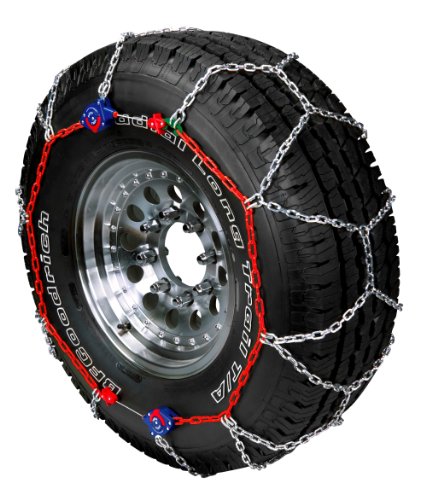
SCC Peerless Auto-Trac 0232105 Light Truck and SUV Chain
Specs
- Type: Link tire chain, diamond-pattern cross chains
- Tensioning: Self-tensioning ratchets that tighten and center while driving
- Material: Manganese alloy steel
- Fit: Light truck and SUV sizes, including 31×10.50-15LT
- Speed limit: 30 mph maximum; set of two
The Auto-Trac gives you genuine link-chain traction without the traditional fight. It installs without moving or jacking up the vehicle: connect the inside cable, hook up the two outside self-tighteners, and drive — the ratchets take up slack and center the chain themselves. The diamond pattern also smooths the ride compared with a ladder design. It still needs normal chain clearance, so check the manual before assuming it fits a tight wheel well.
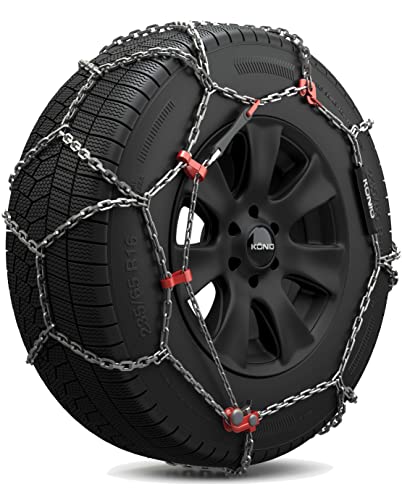
König XB-16 265 Snow Chains
Specs
- Type: Link tire chain for SUVs, pickups, and vans
- Clearance: 16 mm inside and on the tread — not Class S
- Tensioning: Manual; two stops, one to fit, one to re-tension
- Fit: Sizes including 265/70-16, 265/65-17, and 265/60-18
- Certifications: ÖNORM 5117 and 5119, UNI 11313, TÜV
The XB-16 is the heavy-duty end of this comparison: a 16 mm link chain for larger SUVs and trucks with the wheel room to run it. Manual tensioning is deliberate work — fit it, drive a short distance, stop, and take up the slack. In exchange you get the strongest, most durable device here, best suited to repeated mountain use and deep snow. If your manual demands Class S clearance, though, this chain is simply not an option.
SCC Super Z6 SZ429 Cable Chain
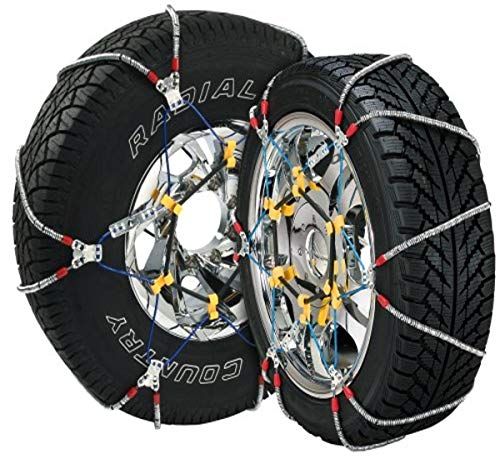
Specs
- Type: Cable tire chain
- Clearance: Exceeds SAE Class S; needs only 6.33 mm (0.25 in) of sidewall clearance
- Cross members: Manganese alloy steel links
- Tensioning: Split outside cable, two fastening positions; rubber tensioners included
- Fit: Pickup and SUV sizes up to roughly 265 mm widths; set of two
The Super Z6 is the cable that best answers the crossover problem. Designed for very limited clearance, its alloy cross members give it more bite and durability than roller-style cables while keeping the flat profile tight wheel wells demand. It installs without moving the vehicle and is designed to avoid scratching alloy wheels. For an SUV whose manual allows Class S devices only, this is the benchmark.
SCC Z-Chain Z-575 Extreme Performance Cable Chain
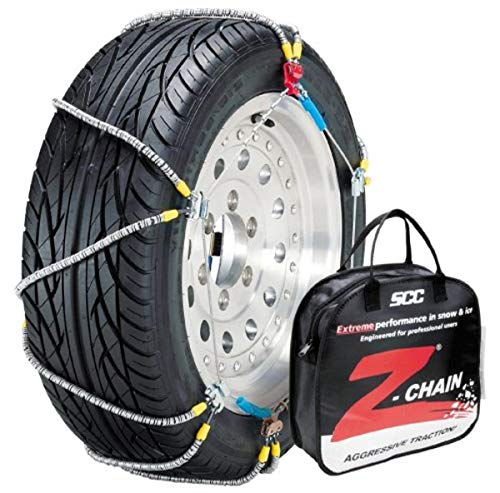
Specs
- Type: Cable tire chain, Z-pattern cross cables
- Cross members: Manganese alloy steel
- Fit: Light truck sizes including 6.50-16C, 7.00-16, and 7.00-16LT
- Compatibility: Low-profile design intended for ABS and all-wheel drive vehicles
- Sold as a set of two
The Z-Chain sits between the two camps: cable side members keep it flat and light, while the Z-shaped cross pattern and alloy cross members close much of the traction gap to a link chain. The diagonal layout keeps a cross member in the contact patch almost constantly, which helps on ice, where ladder cables can lose grip between rungs. A sensible middle path for light trucks and older SUVs.
SCC Shur Grip Z SZ329 Passenger Cable Chain
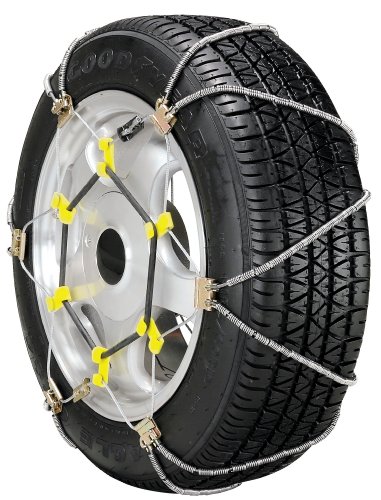
Specs
- Type: Cable tire chain, Z-pattern cross cables
- Fit: Passenger car sizes; suits smaller car and crossover tires
- Clearance: Low-profile design for restricted wheel wells
Shur Grip Z is the straightforward, budget-friendly cable for cars and small crossovers that only occasionally meet chain controls. It shares the Z-pattern layout of its bigger sibling, in sizes aimed at passenger tires rather than truck rubber. It will not outlast a link chain in deep-snow service, but as a compact set that lives in the trunk all winter, it does its job.
Usage and Buying Notes
Fit your new chains or cables at home first, in daylight, on a dry driveway. A practice run teaches your hands the connections and confirms the size closes on your tire, instead of leaving you reading instructions by flashlight at the roadside.
Mount devices on the drive axle: front wheels on front-wheel drive, rear wheels on rear-wheel drive. For all-wheel-drive SUVs, follow the owner’s manual — most specify one axle; some allow all four tires. Never guess on AWD, because the wrong setup can stress the drivetrain.
After fitting, drive a few hundred feet, then stop and re-tension manual chains and cables. Self-tensioning designs handle this themselves. Keep speed at or below the maker’s limit, typically 30 mph, avoid spinning the tires, and remove the devices at clear pavement; dry roads destroy them.
Laws vary widely. Some regions require you to carry chains in winter zones even if you never fit them, and some checkpoints accept cables where others insist on link chains for heavier vehicles. Check the rules for your route.
Finally, store the set dry in its bag, with instructions, gloves, and a flashlight. Inspect for broken links and frayed cables every season, and replace a damaged set.
FAQ
Are tire cables legal where chains are required?
Often, yes. Many chain-control laws accept traction cables meeting SAE Class S as an approved alternative device, and checkpoints in several states treat them as compliant for passenger vehicles and light SUVs. Some jurisdictions, however, require link chains on heavier vehicles or at severe control levels. Check the rules for your route.
Can I use tire chains on an all-wheel-drive SUV?
Only if the owner’s manual allows it, and only on the axle it specifies. Some AWD crossovers prohibit chains completely and permit only Class S cables, or nothing at all, because there is not enough clearance around the tires. Fitting a prohibited device risks damage to brake lines, sensors, and liners.
How fast can I drive with chains or cables fitted?
Slowly. Manufacturers typically set a maximum of 30 mph, printed in the instructions for most products here. Treat it as a ceiling, not a target: conditions requiring chains usually call for far lower speeds. Exceeding the limit is the fastest way to break a cross member or cable, and a broken device can wrap around suspension parts.
Do chains or cables damage tires and wheels?
A correctly sized, correctly tensioned device should not damage a tire. Damage usually comes from a loose fit — a slack chain slaps the wheel and wheel well — or from dry pavement, which grinds cross members and chews tread. Some designs add rim-protection parts for alloy wheels. Stop and check if you hear new banging after fitting.
How long do tire cables last compared with chains?
Link chains are the durability winners by a wide margin; thick steel links tolerate seasons of use and rough handling. Cables have thinner cross members and cables that can fray, so their service life is shorter, especially if spun on ice or run on bare pavement. For occasional use, though, a cable set can last years if stored clean and dry.
Conclusion
The chains-versus-cables choice is really a clearance-and-conditions choice. If your manual allows link chains and you face deep snow or frequent chain-ups, a self-tensioning chain like the Auto-Trac or a heavy manual chain like the König XB-16 delivers the strongest traction and longest life. If your SUV has tight wheel wells, a Class S cable such as the Super Z6, Z-Chain, or Shur Grip Z is the only device it was designed to accept. Either way: exact size, practice at home, re-tension after the first short drive, and keep your speed down.
More from Amazon
Programs that pair well with the guide above. Offers and eligibility are set by Amazon and may change.
Free shipping on eligible items, Prime Video and more. Eligible new members can start with a free trial.
Start a Prime free trialAudiobooks and podcasts to listen to on the go. Eligible new members can start with a free trial.
Try Audible freeAd-free music streaming. Eligible new subscribers can start with a free trial.
Try Music Unlimited freeA free business account with business pricing and bulk-buying tools for work, shop or home office.
Create a business accountAs an Amazon Associate we earn from qualifying purchases.