
Key takeaways
- Remove baked-on bugs, tar and tree sap without harming clear coat. Compare the best bug and tar removers, from fast sprays to wash-and-rinse formulas.
Few contaminants punish paint like bug splatter and tar. Insect residue is acidic, and when it bakes onto a hot hood or mirror cap it can etch clear coat in a matter of days. Tar arrives as black specks kicked up from fresh asphalt, bonding to lower doors and rocker panels where a normal wash barely touches it. Tree sap completes the trio, hardening into amber dots that laugh at shampoo. Scrubbing any of these with a wash mitt grinds grit across the finish, so the correct tool is chemistry: a remover that softens and dissolves the deposit so it wipes or rinses away. This guide compares five bug and tar removers by format, dwell time, coating safety and how each fits into a wash routine.
As an Amazon Associate, we earn from qualifying purchases.
Quick answer
Stoner Tarminator is the fast, targeted pick for tar and sap, Turtle Wax Bug and Tar Remover clings as a gel for dried splatter, and Meguiar’s Heavy Duty formula foams over large front ends. Griot’s Bug and Smudge Remover works as a gentle pre-wash soak, while Chemical Guys Bug and Tar Remover turns the whole wash into the treatment.
Stoner Car Care Tarminator Tar, Sap, and Asphalt Remover, 10 oz

Tarminator is the specialist’s aerosol, built to dissolve the three stickiest contaminants on a car: tar, tree sap and fresh asphalt. The solvent formula attacks on contact, breaking the bond between the deposit and the paint so a microfiber towel can lift it away without scrubbing pressure. It is safe on clear coat, paint, chrome and metal when used as directed, and it works quickly enough that a single spot treatment usually takes under a minute.
The aerosol format suits targeted work. Spray it directly onto a tar-flecked rocker panel or a sap dot on the roof, wait briefly while the deposit softens, then wipe and follow with a rinse or a wash to clear the residue. Because it is a true solvent, a little goes a long way, and the compact 10 oz can lasts through many spot treatments. It will soften and can remove waxes and sealants in the treated area, so plan to reapply protection afterward. For drivers who mostly fight tar spots and sap rather than whole panels of bugs, Tarminator is the most direct tool in this group.
Turtle Wax Bug and Tar Remover, 16 oz
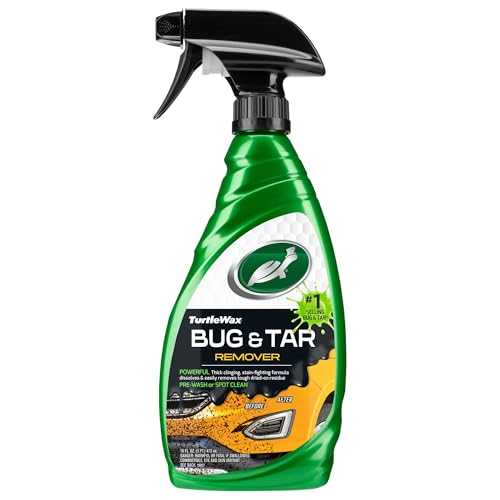
Turtle Wax’s Bug and Tar Remover uses a thick gel formula, and that consistency is its defining advantage. Sprayed onto a vertical bumper or grille, the gel stays where it lands instead of running down the panel, giving the cleaning agents time to work on dried, crusty splatter that a thin liquid would barely wet. Given a few minutes of dwell, the gel softens bug residue so it wipes away with far less effort.
The trigger-spray bottle covers larger areas more economically than an aerosol, making it practical for a full front-end treatment after a highway trip. The formula is safe for paint, clear coat, chrome and plastic trim, and it leaves a light protective barrier behind as it works, which helps the treated area resist new deposits until the next wash. It is less surgical than Tarminator for a single tar speck, and thick deposits may need a second application, but for the classic summer scenario of a bug-covered bumper and windshield surround, the clinging gel is the most forgiving choice. Rinse or wash the area afterward to remove loosened residue completely.
Meguiar’s Heavy Duty Bug and Tar Remover, 15 oz

Meguiar’s Heavy Duty Bug and Tar Remover is a foaming aerosol designed for the worst accumulations. The foam spreads across broad surfaces such as hoods, bumpers and mirror caps, clinging long enough to soften sun-baked insect residue that has been sitting for days. Meguiar’s rates it as a professional-strength formula, and it is positioned for dried-on contamination rather than fresh splatter.
The application pattern suits a pre-wash routine: foam the front end, let it dwell while you prepare buckets and the wash mitt, then rinse or wash as normal and watch the softened residue release. It is safe for clear coat and paint when used as directed, and the aerosol gives even coverage without hand fatigue on large panels. Like other strong removers, it can diminish wax on treated areas, and it should not be allowed to dry on the surface or used on hot paint in direct sun. Drivers who return from long road trips to a genuinely crusted front clip will get the most from this one; for a few fresh bugs, the gentler options below are simpler.
Griot’s Garage Bug and Smudge Remover, 22 oz

Griot’s Garage Bug and Smudge Remover takes a gentler, wash-integrated approach. It is a trigger-spray pre-treatment meant to be misted over the front of the car a few minutes before washing: the formula softens and loosens bug residue so the wash mitt and shampoo can carry it away safely, rather than dissolving it outright like a solvent.
That mildness brings real advantages. It is safe on paint, plastic, chrome and protective coatings, and it will not strip wax or sealant the way solvent removers can, so it fits into a careful maintenance routine for coated or freshly waxed cars. The generous 22 oz bottle supports full-panel application every wash during bug season. The trade-off is power: thick tar spots and hardened sap are beyond its brief, and truly baked-on splatter may need a repeat soak. Griot’s also suggests it for general smudges and road film on lower panels. For owners whose cars wear coatings or sealants they want to preserve, this is the remover that respects the rest of the detailing system.
Chemical Guys Bug and Tar Remover Fast Acting Car Wash, 16 oz

Chemical Guys Bug and Tar Remover is not a spot spray at all; it is a concentrated wash formula that turns the entire wash into a bug and tar treatment. Added to a bucket or foam cannon, or used as a pre-soak on the worst panels, its heavy-duty surfactants are designed to break down splatter, tar specks and road grime while you wash, combining two steps into one.
This format suits drivers who wash at home on a schedule and face moderate, widespread contamination rather than a few stubborn spots. Because the product dilutes across the whole car, it is economical per wash, and the wash process itself provides the gentle agitation that lifts softened deposits. It will not match a solvent aerosol on a single hardened sap dot, and like most strong wash formulas it can reduce the life of wax on the car. Used in a foam cannon as a pre-soak, then followed with a normal contact wash, it handles seasonal bug buildup efficiently. If your routine already includes a full wash after every trip, this is the least disruptive way to add real bug and tar strength.
How to choose
Match the format to the contamination. Solvent aerosols excel at single tar spots and sap dots; gels and foams cling to vertical panels and soften whole areas of dried splatter; pre-wash sprays protect existing wax and coatings; wash additives suit routine home washing. Consider dwell time honestly, because every remover fails when rushed, and never let one dry on hot paint. Check coating compatibility if your car wears a ceramic coating or fresh sealant. Finally, plan the step after removal: strong removers usually call for a wash and a fresh layer of protection on the treated panels.
Who should skip
Skip bug and tar removers if your paint is freshly applied and still curing, since solvents can soften new paint. Owners of matte or satin finishes should skip solvent products unless the maker confirms compatibility, and anyone with only fresh, light splatter can skip dedicated removers entirely: a soaked microfiber towel laid over the area during a normal wash softens new bugs without extra chemistry.
Frequently asked questions
Will a bug and tar remover strip wax or sealant?
Solvent-based removers usually do remove wax and weaken sealants on the panels they touch, because the chemistry that dissolves tar also dissolves wax. Gentler pre-wash formulas are designed to leave protection intact. The safe routine is to wash after spot treatment and reapply wax or sealant to the treated area, which also makes the next cleanup easier.
How long should I let the remover dwell?
Most sprays and gels need two to five minutes to soften deposits, and heavy, sun-baked splatter may need a second application rather than a longer soak. The product should stay wet the whole time; if it starts drying, mist more on. Work in shade on cool panels, because heat accelerates drying and can leave residue harder to rinse away.
Can I use it on headlights and plastic trim?
Most modern removers are safe on clear coat, chrome and exterior plastics, including headlight lenses, but textured black trim can show solvent spotting if product dries on it. Apply carefully, keep dwell times short on trim, and rinse thoroughly. Avoid getting strong solvents on rubber seals repeatedly, and wipe any overspray from trim promptly to be safe.
Should I wash the car before or after using a remover?
Wash after. The standard sequence is to rinse loose dirt first, apply remover to the contaminated areas, let it dwell, then wash the whole car so shampoo and rinse water clear the loosened residue and solvent film. Washing first wastes effort, because the remover needs direct contact with the deposit, and a layer of road dust slows it down.
Final verdict
Tarminator is the precision pick for tar and sap, Meguiar’s Heavy Duty handles the worst baked-on front ends, and Turtle Wax’s gel is the forgiving all-rounder for dried splatter. Griot’s protects your wax and coatings during routine washes, while the Chemical Guys wash formula folds treatment into a wash you were already doing. Choose by contaminant and coating, dwell patiently, and re-wax whatever a solvent touches.
More from Amazon
Programs that pair well with the guide above. Offers and eligibility are set by Amazon and may change.
Free shipping on eligible items, Prime Video and more. Eligible new members can start with a free trial.
Start a Prime free trialAudiobooks and podcasts to listen to on the go. Eligible new members can start with a free trial.
Try Audible freeAd-free music streaming. Eligible new subscribers can start with a free trial.
Try Music Unlimited freeA free business account with business pricing and bulk-buying tools for work, shop or home office.
Create a business accountAs an Amazon Associate we earn from qualifying purchases.


