
Key takeaways
- Compare the best clay bar kits for cars, from beginner-friendly sets to medium-grade bars, and learn how to decontaminate paint safely before waxing.
Washing removes loose dirt, but it leaves behind bonded contamination: brake dust, industrial fallout, tree sap mist, and road film that embed into the clear coat and make paint feel rough to the touch. A clay bar kit solves that problem by gliding a lubricated clay bar across the surface and pulling those particles out, leaving paint genuinely smooth and ready for polish or wax. This guide compares five proven kits, explains the differences between light and medium grades, and walks through how to choose and use the right one for your car.
As an Amazon Associate, we earn from qualifying purchases.
Quick answer
For most car owners, the Meguiar’s Smooth Surface Clay Kit is the easiest starting point, with mild clay, lubricant, and a towel in one box. The Mothers California Gold kit adds a third bar for larger vehicles. Drivers dealing with heavier fallout should look at the medium-grade options from Chemical Guys and Adam’s Polishes, which cut faster but demand more care and lubrication.
Meguiar’s Smooth Surface Clay Kit
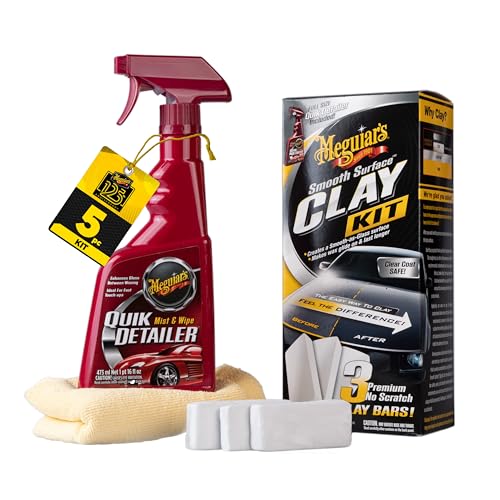
Meguiar’s built this kit for first-time clay users, and the contents reflect that: two clay bars, a bottle of Quik Detailer that doubles as the lubricant, a microfiber towel, and a storage case for the bars. The clay itself is a mild, non-abrasive grade, which means it is forgiving on soft or dark paint where an aggressive bar could leave light marring behind. That mildness is the right trade for most daily drivers, because the contamination on a regularly washed car is usually light to moderate, and a gentle bar removes it without creating extra polishing work afterward.
Working section by section, you knead the bar flat, mist the panel generously, and glide the clay in straight lines until the surface feels slick and the drag disappears. The included detailer keeps the process simple because there is no separate lubricant to buy, and the towel handles the final wipe-down of each panel. One bar typically covers several full vehicles if it is stored clean and dropped clay is discarded rather than reused. Owners who clay once or twice a year before applying wax or sealant will find this kit covers the whole routine with nothing extra to purchase, and the mild formula makes it a sensible default recommendation for beginners.
Mothers California Gold Clay Bar Complete Kit

The Mothers California Gold kit takes the same beginner-friendly approach and scales it up. It includes three clay bars, a bottle of Mothers Instant Detailer for lubrication, and a microfiber towel, so there is enough clay on hand for a large SUV, a truck, or two cars done back to back. Having a spare bar matters more than it sounds: clay that gets dropped on the ground has to be thrown away, and a kit with extra bars means one mistake does not end the job halfway through a vehicle.
The clay grade sits in the same mild category as the Meguiar’s kit, safe for clear coats and suitable for removing overspray, sap residue, water-spot minerals, and general bonded grime. The Instant Detailer is formulated to stay slick under the bar, which reduces the chance of the clay grabbing and streaking on warm paint. Technique is identical to any traditional bar: work in the shade, keep the surface wet, fold the clay often to expose a clean face, and check your progress with the back of your hand inside a thin plastic bag, which amplifies every remaining bump. For households maintaining more than one vehicle, or anyone who wants a complete kit with generous quantities of everything, this is the value pick of the group.
Chemical Guys Clay Bar and Luber Synthetic Lubricant Kit, Light and Medium Duty
Chemical Guys pairs its light to medium grade OG clay bar with a full bottle of Clay Luber, a synthetic lubricant made specifically for clay work rather than adapted from a detail spray. That distinction shows up in use: a dedicated lubricant stays wetter longer and leaves less residue to wipe away, which helps when you are working through an entire car in warm weather and panels dry quickly. The bar itself, at 100 grams, is sized for several vehicles and splits the difference between mild consumer clay and a true medium bar.
This kit suits owners whose cars sit outside, commute on highways, or park near trees and rail lines, where fallout accumulates faster than a mild bar comfortably handles. The slightly stronger grade pulls stubborn contamination in fewer passes, saving time on neglected paint. The trade-off is discipline: medium-leaning clay can leave faint marring on soft paint if lubrication runs dry, so the surface needs constant misting and the bar needs frequent folding. Used patiently, it leaves paint ready for machine polishing or a fresh coat of protection. Enthusiasts who already own Chemical Guys wash and wax products will also appreciate that the Luber works as a quick detailer between washes, giving the bottle a second job in the cabinet.
Chemical Guys Medium Duty Clay Bar and Luber Kit
This is the step up for genuinely neglected paint. The medium duty bar is noticeably more aggressive than the light and medium OG bar above, and it is aimed at heavy overspray, thick fallout, dried sap, and contamination that has been baked on through a season or more of outdoor parking. It ships with the same Clay Luber synthetic lubricant, and with this grade of clay the lubricant is not optional equipment: medium clay on a dry panel will streak and mar, so the surface has to stay flooded while you work.
Because of that aggressiveness, this kit makes the most sense as part of a larger correction plan. If the car is heading for machine polishing anyway, any light marring the clay leaves will be polished out in the next step, and the time saved on heavy contamination is worth it. On a car that will only be waxed afterward, the lighter kits in this guide are the safer choice. Work small areas, knead the bar constantly, and inspect the clay face often, since a medium bar picks up more debris per pass and a loaded face can drag particles across the finish. For detailers reviving a used car purchase or preparing paint for a coating, this is the heavy-duty tool in the lineup.
Adam’s Polishes Medium Grade Clay Bar Detailing Kit
Adam’s Polishes sells its medium grade clay as a two-bar kit, with the clay supplied in a jar that keeps it clean and pliable between uses. The medium formulation targets the middle of the market: stronger than the mild bars from Meguiar’s and Mothers, comparable in intent to the Chemical Guys medium options, and designed to be used with a detail spray as the lubricant. Adam’s own Detail Spray is the natural partner, though any quality clay lubricant works as long as the panel stays wet.
The two-bar format is practical. One bar can be dedicated to the lower panels, rocker areas, and rear of the car where contamination is heaviest, while the second stays clean for the hood, roof, and doors where marring would be most visible. That separation extends the useful life of the cleaner bar and improves results on the panels people actually look at. The clay kneads easily, flattens into a stable patty, and holds together well through a full vehicle. Owners who prefer buying into a single brand’s system of wash, clay, and spray products will find this kit slots in neatly, and the reusable jar is a small but real advantage over bars stored in plastic wrap.
How to choose
Start with the condition of your paint. Run a clean, dry hand over the hood after a wash, ideally with a thin plastic bag over your fingers. A light gritty feel points to a mild kit; heavy, stubborn roughness on a car that lives outdoors calls for a medium grade. Next, consider what happens after claying. If you plan to machine polish, a medium bar is safe because polishing removes any light marring. If you are only waxing, stay mild. Kit contents matter too: a complete kit with lubricant and a towel is better value for a first purchase, while experienced users may only need bars. Finally, think about quantity. Larger vehicles and multi-car households justify three-bar kits, and everyone should budget for the fact that dropped clay is thrown away, so a spare bar is cheap insurance.
Who should skip
Skip clay entirely if your paint is freshly polished and protected and still feels glass-smooth, because claying adds no benefit and every pass is a small marring risk. Owners of matte or satin finishes should not use a standard clay bar, since it can alter the sheen; those finishes need dedicated products. If your car has peeling clear coat, exposed primer, or heavy oxidation, clay will not fix those problems and can make damaged areas look worse; that paint needs correction or refinishing first. And if you are unwilling to keep the surface flooded with lubricant and work patiently in the shade, a clay mitt service at a detailer is the better route.
Frequently asked questions
How often should I clay my car?
Once or twice a year is enough for most drivers, typically before applying fresh wax or sealant. Cars parked outdoors near trees, rail lines, or construction may need it more often. The plastic bag test is the reliable guide: clay when the washed paint still feels gritty, and skip it when the surface already feels smooth.
Can a clay bar remove scratches or swirl marks?
No. Clay removes contamination sitting on top of the paint, such as fallout, sap, and overspray. Scratches and swirls are defects in the clear coat itself, and they require polishing with an abrasive compound or polish to level the surface. Claying before polishing is still worthwhile, because polishing over bonded contamination drags it across the paint.
What happens if I drop the clay bar on the ground?
Throw that piece away. Clay picks up grit and small stones from the ground instantly, and using it again would drag that debris across the paint and cause scratches. This is why kits with multiple bars are practical, and why many people cut a bar into pieces and work with one piece at a time.
Do I need to polish or wax after claying?
Waxing or applying a sealant afterward is strongly recommended, because claying strips existing protection along with the contamination, leaving the paint bare. Polishing is optional and only needed if you want to remove swirls or light marring. At minimum, finish with a spray sealant or wax to restore protection and gloss.
Final verdict
The Meguiar’s Smooth Surface Clay Kit is the right default for most owners: mild, complete, and forgiving. The Mothers kit is the better buy for larger vehicles or two-car households. Step up to the Chemical Guys light and medium kit for faster work on outdoor-parked cars, the Chemical Guys medium duty kit for heavy contamination ahead of polishing, and the Adam’s kit if you want a two-bar medium system with tidy storage. Match the grade to your paint’s condition, keep everything lubricated, and any of these kits will leave paint noticeably smoother.
More from Amazon
Programs that pair well with the guide above. Offers and eligibility are set by Amazon and may change.
Free shipping on eligible items, Prime Video and more. Eligible new members can start with a free trial.
Start a Prime free trialAudiobooks and podcasts to listen to on the go. Eligible new members can start with a free trial.
Try Audible freeAd-free music streaming. Eligible new subscribers can start with a free trial.
Try Music Unlimited freeA free business account with business pricing and bulk-buying tools for work, shop or home office.
Create a business accountAs an Amazon Associate we earn from qualifying purchases.


