
Key takeaways
- The best engine degreasers dissolve oil, grease and road grime for a cleaner engine bay, from classic aerosol sprays to dilutable concentrates compared.
An engine bay collects everything the road and the engine can produce: oil mist from aging gaskets, dust that turns to paste on warm surfaces, belt debris and road salt. Left alone, that layer hides small leaks until they become big ones, traps heat around components and makes every under-hood job miserable. Degreasing is not about vanity; a clean bay is easier to inspect, easier to work in and quicker to reveal a fresh weep of oil or coolant. The products differ sharply, though, from old-school solvent aerosols to water-based concentrates you dilute yourself. This guide compares five engine degreasers by chemistry, strength, application style and how much rinsing each demands, with notes on protecting modern electronics along the way.
As an Amazon Associate, we earn from qualifying purchases.
Quick answer
Gunk Engine Brite Original is the classic strong solvent for greasy, neglected bays, and its Foamy variant clings better on vertical surfaces. Chemical Guys Orange Degreaser and All Clean+ dilute to the strength you need, while Oil Eater Original in the gallon suits frequent, heavy-duty cleaning with a water-based formula.
Gunk Engine Brite Original Heavy Duty Engine Degreaser, 15 oz

Engine Brite Original is the product that defined the category, and it remains the reference for a solvent-based aerosol degreaser. The formula is built to cut through the baked, varnished grease that accumulates on older engines: spray it onto a warm (not hot) engine, give it time to dwell, agitate the worst areas with a brush, and rinse the dissolved grime away with a gentle stream of water.
Its strength is also its demand. Solvent degreasers should be kept off painted surfaces outside the bay, used with ventilation, and kept away from open flames, and modern engine bays require care around the alternator, exposed connectors and aftermarket electronics, which should be covered before rinsing. The payoff for that care is real cleaning power on engines that have never been degreased, where water-based products often need multiple passes. One 15 oz can typically handles a full bay. If your engine wears years of oily buildup and you want the traditional, no-nonsense approach that mechanics have used for decades, Engine Brite Original is still the benchmark the others are measured against.
Gunk Foamy Engine Brite Engine Degreaser, 17 oz
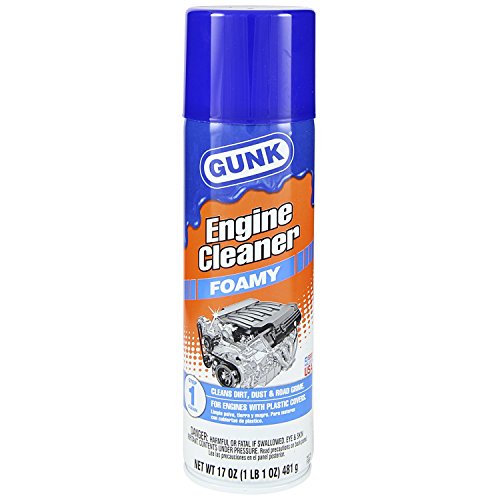
Foamy Engine Brite takes the same degreasing idea and changes the delivery. Instead of a thin solvent stream, it lays down a foam that clings to vertical and overhead surfaces: inner fenders, the underside of the hood, firewall and valve covers. That cling time matters, because degreasers only work while they stay in contact with the grease, and foam simply stays put longer than a running liquid.
The foam also gives a visual map of coverage, showing exactly which areas have been treated. Application follows the same rhythm: apply to a warm engine, dwell, brush the heavy spots, and rinse gently. It is a sensible choice for modern, tightly packed bays where most surfaces are vertical and a liquid would drain straight to the splash shield. The foam format uses product faster than the original, so very large or very greasy bays may need a second can. Drivers who found liquid degreasers messy, or whose engines are dirty mainly on upright surfaces, will find the foaming version easier to control and more effective per application.
Chemical Guys Signature Series Orange Degreaser, 16 oz
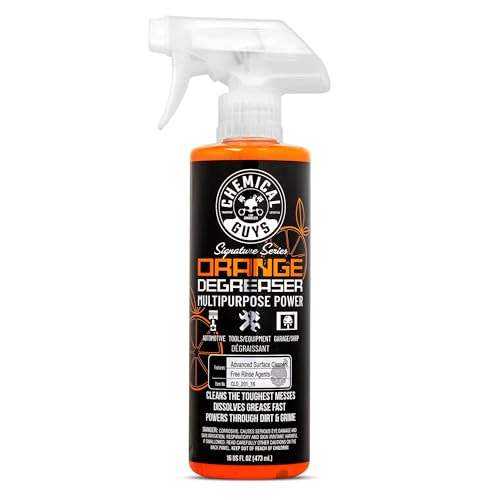
Signature Series Orange Degreaser is a citrus-based, dilutable concentrate, which gives it a flexibility the aerosols cannot match. Used strong, it tackles engine bays, undercarriages and greasy suspension parts; diluted further, it handles tires, wheel wells and other moderately soiled areas. One bottle therefore covers several jobs around the car, and the citrus solvent base cuts grease without the harsh fumes associated with traditional solvent sprays.
For engine work, spray the diluted solution over a cool or warm bay, let it dwell for a few minutes, agitate with brushes, and rinse with low-pressure water. Because you control the dilution, it suits regular maintenance degreasing better than the Gunk aerosols: a car that gets a bay wipe-down twice a year rarely needs full solvent strength. It is also a friendlier choice around the painted edges of the bay when diluted as directed. Owners who prefer one adjustable product for engines, tires and underbody work, and who detail at home on a schedule, will get the most value from this bottle.
Chemical Guys All Clean+ All Purpose Cleaner, 16 oz

All Clean+ is an all-purpose cleaner rather than a dedicated engine product, and that distinction defines its place here. Diluted strongly, it handles light to moderate engine bay soil: dust film, fresh oil mist and the grime of a daily driver that has never been allowed to get truly filthy. Diluted weakly, the same bottle cleans interior plastics, door jambs and other surfaces, making it the most versatile product in this guide.
Its limits are honest ones. Baked-on, years-old grease will defeat it, and owners facing that job should start with a true degreaser from this list and maintain with All Clean+ afterward. Used within its strength, though, it is gentle on the plastics, rubber and painted surfaces that fill a modern bay, and it rinses clean without leaving residue. The dilution flexibility also makes it economical for frequent light cleanings, such as a quick bay refresh at every oil change. If your engine is fundamentally clean and you want one adjustable cleaner for the bay and beyond, All Clean+ is the practical pick; treat it as maintenance chemistry, not restoration chemistry.
Oil Eater Original Cleaner and Degreaser, 1 Gallon
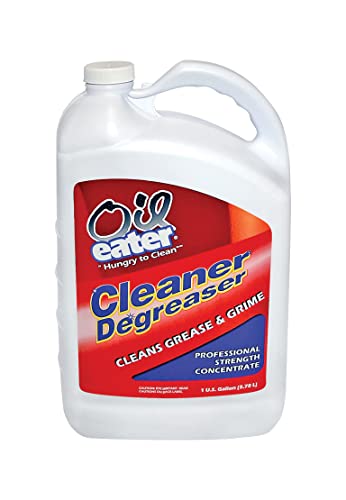
Oil Eater Original is the heavy-user option: a water-based, biodegradable concentrate sold by the gallon and diluted to suit the job. The formula is designed to dissolve grease and oil without the solvent content of traditional degreasers, and it is widely used on engines, shop floors, driveways and equipment, which tells you something about its working strength when mixed at degreasing ratios.
For engine bays, mix it strong, apply with a spray bottle, dwell, brush and rinse; the water-based chemistry is a comfortable choice for owners wary of solvents around modern electronics and plastics, though the same rules about covering sensitive components and rinsing gently still apply. The gallon format makes it the economical pick for households maintaining several vehicles, project cars or small equipment, and the concentrate stores well between jobs. It lacks the instant, spray-can convenience of the Gunk products, and you supply your own spray bottle and dilution discipline. For high-volume, repeatable degreasing with a water-based formula, it is the workhorse of this group.
How to choose
Start with chemistry. Solvent aerosols deliver the most cutting power for neglected engines but demand ventilation and care around paint and plastics. Water-based and citrus concentrates are gentler, adjustable by dilution and better suited to modern bays and regular maintenance. Next, consider format: foams cling to vertical surfaces, liquids reach into recesses, and concentrates reward owners who clean often. Be honest about soil level, because a light all-purpose cleaner on a filthy engine wastes everyone’s time. Whatever you choose, prepare the bay: work on a warm rather than hot engine, cover the alternator, air intake and exposed electronics, use low water pressure, and check local rules about wash runoff before rinsing grease onto a driveway.
Who should skip
Skip degreasing entirely if your engine bay is only dusty; a wipe with a damp microfiber and a light all-purpose cleaner handles that without water near electronics. Owners of hybrids and electric vehicles should skip home rinsing around high-voltage components and follow the manufacturer’s guidance instead. And if you cannot rinse responsibly where you park, use a professional wash facility with proper drainage rather than a strong solvent at the curb.
Frequently asked questions
Is it safe to rinse an engine bay with water?
Generally yes, with preparation and restraint. Modern engines tolerate a gentle rinse, but the alternator, open air intakes, fuse boxes and exposed aftermarket electronics should be covered with plastic first. Use a garden hose at low pressure rather than a pressure washer, avoid aiming directly at connectors and seals, and dry the bay afterward by idling the engine briefly.
Should the engine be warm or cold when degreasing?
Warm, not hot. An engine run for a few minutes softens grease so degreasers work faster, but a fully hot engine can flash-dry product before it works and creates steam and fumes during rinsing. If the car has just been driven, let it cool until the exhaust manifold is safe to be near. Never apply solvent aerosols to a hot engine or near ignition sources.
Can degreaser damage belts and hoses?
Strong solvents can dry out rubber if they are left soaking on belts and hoses repeatedly, which is why dwell times should be minutes, not an afternoon, and rinsing should be thorough. Water-based and citrus formulas are gentler on rubber for routine cleaning. If a belt is already cracked or a hose is soft and swollen, that is wear, not cleaner damage, and replacement is the fix.
How often should I degrease the engine bay?
Once or twice a year suits most drivers, often timed with a spring cleanup or before selling the car. Engines with minor oil weeps may benefit from a light degrease more often, because a clean surface makes fresh leaks easy to spot and trace. Frequent light cleanings with a diluted product are gentler than rare, aggressive solvent sessions on heavy buildup.
Final verdict
For a neglected, greasy engine, Gunk Engine Brite Original remains the strongest traditional choice, with the Foamy version better suited to vertical, modern bays. Chemical Guys Orange Degreaser is the flexible middle ground, All Clean+ covers light maintenance with one adjustable bottle, and Oil Eater Original is the economical gallon for frequent work. Prepare the bay, protect the electronics, rinse gently, and a clean engine becomes a diagnostic tool, not just a nicer view.
More from Amazon
Programs that pair well with the guide above. Offers and eligibility are set by Amazon and may change.
Free shipping on eligible items, Prime Video and more. Eligible new members can start with a free trial.
Start a Prime free trialAudiobooks and podcasts to listen to on the go. Eligible new members can start with a free trial.
Try Audible freeAd-free music streaming. Eligible new subscribers can start with a free trial.
Try Music Unlimited freeA free business account with business pricing and bulk-buying tools for work, shop or home office.
Create a business accountAs an Amazon Associate we earn from qualifying purchases.


