Key takeaways
- Practice installing once at home in dry conditions, so you are not learning on a snowy roadside.
- Pull completely off the road to a flat, safe spot before installing, with hazard lights on.
- Follow the maker’s instructions about re-tightening after driving a short distance, unless the chain is self-tightening.
- Drive slowly. Makers typically list a speed limit, often around 30 mph or less, so check the instructions.
- Avoid spinning wheels or hard braking.
- Remove chains as soon as the road is clear of snow, since driving on pavement damages both the chain and the road.
- Rinse and dry after use to prevent rust, then store in the bag or box provided.
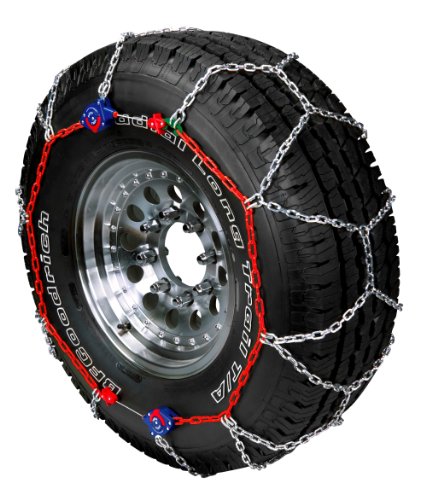
Choose the SCC Auto-Trac or a similar self-tightening cable chain for most cars and SUVs, a low-profile model such as the SCC Super Z6 if your wheel wells are tight, a König XG-12 Pro if you want premium grip on ice, a heavier alloy chain such as the DEDC Auto Lock for trucks, and textile AutoSock-style covers if clearance is very limited or you want to avoid metal on your wheels. Before buying anything, check your owner’s manual: some vehicles do not allow chains at all, and many only allow them on specific axles.
Our top picks


As an Amazon Associate we earn from qualifying purchases at no extra cost to you.
Tire Chains at a Glance
| Product | Type | Best for | Reported strengths | Limits |
|---|---|---|---|---|
| SCC (Peerless) Auto-Trac | Self-tightening cable or link | Most cars and SUVs | Top pick across several roundups; reviewers credit ratchet self-tightening | Check clearance; confirm tire size chart |
| SCC Super Z6 Cable | Low-profile cable | Cars and crossovers with limited clearance | Low-profile design suits tight wheel wells | Cable chains wear faster than heavy links |
| König XG-12 Pro | Premium diamond-pattern | Ice and frequent winter driving | One reviewer reports the best lateral grip on glare ice | Premium tier |
| Michelin Easy Grip Evolution / König CB-12 | Easy-fit compact | Drivers who want quick installation | Named as top choices in another roundup | Confirm vehicle approval and tire size |
| DEDC Auto Lock | Alloy manganese steel | Trucks and heavy-duty use | Marketed with 4.5 mm alloy manganese steel | Heavy; tight clearance can be an issue |
| AutoSock textile covers | Fabric snow socks | Low clearance, quieter ride | Described as vibration-free compared with metal | Wear faster on dry pavement; not for deep ice in some use cases |
| Mytee Twist Link | Hardened carbon steel | Commercial and semi trucks | Heavy-duty build | Not for passenger cars |
Many roundups on this topic are affiliate-style sites, and several claim testing that cannot be confirmed. Treat the picks as a shortlist and rely on the chain maker’s tire size chart.
Step One: Check Whether Your Vehicle Allows Chains
Some vehicles, especially those with low-profile tires and minimal clearance, are not approved for chains. Your owner’s manual will say whether to use chains, which axle to fit them on, and sometimes which types are approved (for example, only certain low-profile or textile designs). Using the wrong kind can damage brake lines, suspension, or bodywork. If the manual forbids chains, consider winter tires or approved textile covers instead.
Which wheels get the chains
Front-wheel-drive vehicles typically use chains on the front axle, rear-wheel-drive on the rear, and for all-wheel-drive the manual may specify. Follow it exactly.
Step Two: Match Tire Size
Chains are sold by tire size, shown on the sidewall as something like 225/60R17. Each maker publishes a chart listing which chain fits which size. Do not guess: chains that are too large can come loose, and chains that are too small will not fit. If you have winter tires and summer tires in different sizes, check both.
Chain Types Explained
Link chains (ladder or diamond)
Traditional steel links give the strongest bite on deep snow and ice. Diamond patterns usually ride smoother than ladder. They are heavy, noisy, and need more clearance.
Cable chains
Cables are lighter and lower profile, so they fit cars with limited clearance. They provide good traction in snow but wear faster and give less bite on thick ice than heavy links.
Self-tightening chains
Models like the Auto-Trac use ratchets or tensioners that adjust as you drive, so you do not need to re-tighten after a short distance. Reviewers value this for convenience.
Textile snow socks
Fabric covers such as AutoSock slip over the tire. They are quieter and gentler on wheels and often fit tighter clearances. They wear down on cleared roads, so remove them when the road is clear.
Installation and Use Notes
- Practice installing once at home in dry conditions, so you are not learning on a snowy roadside.
- Pull completely off the road to a flat, safe spot before installing, with hazard lights on.
- Follow the maker’s instructions about re-tightening after driving a short distance, unless the chain is self-tightening.
- Drive slowly. Makers typically list a speed limit, often around 30 mph or less, so check the instructions.
- Avoid spinning wheels or hard braking.
- Remove chains as soon as the road is clear of snow, since driving on pavement damages both the chain and the road.
- Rinse and dry after use to prevent rust, then store in the bag or box provided.
Chain laws differ by state and region, and some areas require chains in certain conditions. Look up the local rules before travelling to mountain passes.
Budget Tiers
Budget
Generic chains from brands such as taseyok, SCITOO, AUVEBY, and Artizles appear in roundups as inexpensive options. Quality and finish vary, and certification information may be limited.
Mid-range
SCC (Peerless) and DEDC fall in this band, and many reviewers see them as a good balance of strength and ease of use.
Premium
König and Michelin Easy Grip models, plus quality textile covers, cost more but are designed for fast fitting and longer life.
Pick X If… Decision Table
| Pick this | If you… |
|---|---|
| SCC Auto-Trac | Want a well-reviewed self-tightening chain for a typical car or SUV |
| SCC Super Z6 | Have limited wheel-well clearance |
| König XG-12 Pro | Drive on ice often and want premium grip |
| DEDC Auto Lock | Drive a truck and want heavy-duty alloy steel |
| AutoSock or similar | Want a quiet, metal-free option for tight clearance |
| Mytee Twist Link | Run a commercial vehicle |
Alternatives to Chains
Dedicated winter tires
For regions with frequent snow, winter tires give traction all season without stopping to install anything. Chains are best kept as a backup.
All-weather tires
Tires with the three-peak mountain snowflake symbol are rated for severe snow use and may meet legal traction requirements in some areas. Check local rules.
Traction mats and sand
These help free a stuck car but do not replace chains for driving on snowy roads.
Installing Chains Step by Step
Although each design differs, the general process is similar. Lay the chain flat and untangle it, making sure no links are twisted. Drape it over the top of the tire, with the end hooks or fasteners on the inside, then tuck the chain behind the tire as far as you can reach. Connect the inner fastener first, then the outer one, and adjust until the chain is snug and centered on the tread. Drive a short distance, stop, and re-tighten if the maker says to; self-tightening designs reduce this step.
Some designs let you fit chains without rolling the vehicle forward, while others require you to move the car a short distance to reach the rest of the tire. Textile covers usually slip over the tire while it is on the ground and then require the car to roll forward to pull the cover into place. Read the instructions in advance, because the details differ.
Wear gloves and bring a waterproof mat or kneeling pad, a flashlight, and a reflective vest if you might need to install roadside. Keep the chains in a bag with the instructions so you do not have to search for them in the dark. After use, remove packed snow and ice, rinse off salt, and let the chain dry before storing it. Check for bent links or broken cable ends, and replace damaged chains rather than repair them in the field. If a chain contacts the body or brake lines while driving, stop immediately and re-check the fit or remove it.
Frequently Asked Questions
Are snow socks as good as chains?
They work well in light to moderate snow and suit low-clearance vehicles, but reviewers generally find metal chains give more bite on thick ice and deep snow. Check local rules since some jurisdictions only accept specific types.
How fast can I drive with chains?
Makers usually state a maximum speed, often about 30 mph or lower. Follow the instructions that come with your chains and slow down further on ice.
Can I use chains on all-wheel-drive?
Often yes, but the manual may specify which axle or require chains on all four wheels. Do not guess; check the manual.
Will chains damage my wheels?
Poorly fitted metal chains can scratch alloy wheels or contact brake lines. Choose the correct size, follow fit instructions, and consider textile covers or coated designs if you are worried about rims.
How do I know which size chain to buy?
Read your tire size on the sidewall and check the chain maker’s chart. If the manual lists clearance limits, confirm the chain’s stated clearance as well.
How should I store chains?
Dry them after use, then store them in their bag in the trunk or garage. A light coating of protectant, if the maker allows, can slow rust.