Key takeaways
- Compare the best mud flaps for trucks, SUVs and crossovers, including no-drill custom fits, heavy-duty thermoplastic guards and universal sets.
Mud flaps are unglamorous, but they are the only thing standing between your tires and the rocker panels behind them. Every mile, the tread throws gravel, salt, tar and slush at the paint and underbody, and the damage shows up as chipped rockers, rust bubbles and a permanently filthy lower body. The five sets below split into the two real choices in this category: custom-molded guards that fit one vehicle exactly, including two no-drill WeatherTech designs, and a universal set that fits almost anything with a drill and some patience.
As an Amazon Associate, we earn from qualifying purchases.
Quick Answer
Owners of a Ford Explorer or Chevrolet Colorado should choose the matching WeatherTech no-drill sets for a factory-style fit with no holes in the bodywork. Ram 1500 and GMC Sierra 1500 drivers are covered by the Husky Liners custom guards listed here. Everyone else, or anyone on a tight budget, should take the A-Premium universal four-pack and trim it to fit.
WeatherTech Custom No-Drill MudFlaps for Ford Explorer, Front and Rear Set (110111-120111)

WeatherTech’s no-drill system is the reference design in this category, and the Explorer set shows why. The guards are laser-measured and molded from a proprietary thermoplastic resin to match the wheel arch contours of the Ford Explorer, Explorer Hybrid and Explorer ST, so they sit flush like a factory accessory rather than a flat aftermarket flap. Installation uses WeatherTech’s QuickTurn stainless steel fasteners and the vehicle’s existing mounting points, which means no drill ever touches the fender, an important point for leased vehicles and for owners who worry about rust starting at drilled holes. The set covers front and rear, protecting both the rocker panels and the rear quarters, and the material is rigid enough to hold its shape at highway speed without flapping, yet it will flex rather than shatter if it strikes a curb or a snow ridge. Fitment is everything with custom guards, so confirm your exact year and trim with Amazon’s fitment checker before ordering, since the wrong variant simply will not seat. For Explorer owners who want protection that looks dealer-installed, this is the set to buy.
WeatherTech Custom No-Drill MudFlaps for Chevrolet Colorado, Front Pair (110085)
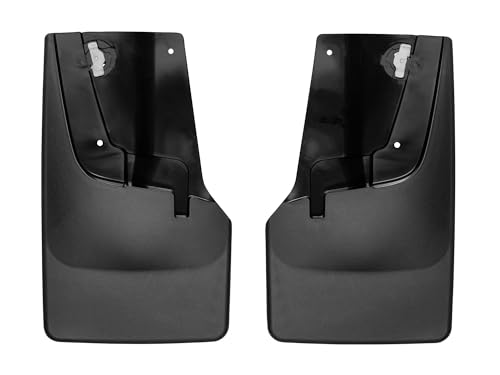
This WeatherTech listing covers the front wheels of the Chevrolet Colorado only, which is a sensible way to buy, because the front tires do most of the damage. They throw debris straight back along the doors and rocker panels, while the rear wheels mostly spray the bumper and whatever is being towed. The guards use the same no-drill QuickTurn fastener system as the Explorer set, mounting to existing holes in minutes with no drilling into the truck’s sheet metal. The thermoplastic resin is molded to the Colorado’s front arch shape, so coverage follows the tire’s spray pattern instead of hanging as a generic rectangle. A front pair also costs less than a full set, which suits owners whose trucks see gravel roads and winter salt but who do not need rear coverage for their own paint. If you tow a trailer or boat, consider adding rear guards later to protect the trailer’s front face from stone chips. Colorado owners should verify cab and bed configuration in the fitment tool, since wheel arch trim varies. As a targeted fix for door and rocker chips, this front pair is the highest-value entry in this roundup.
Husky Liners Custom Mud Guards for Ram 1500, Front and Rear Set (58186)

Husky Liners is the other big name in molded guards, and this four-piece set covers a wide swath of Ram trucks: Ram 1500 models from 2009 to 2024 with OEM fender flares, including the Classic body, plus Ram 2500 and 3500 trucks from 2010 to 2018 with single rear wheels. The guards are molded from a tough thermoplastic that Husky rates for impact resistance in cold weather, when cheap plastic turns brittle. Coverage is generous, with a contoured shape that follows the flare and a lower edge that hangs far enough to catch the spray pattern of oversized tires better than the small factory splash guards. Installation uses included hardware and factory mounting points where available, though some applications call for drilling, so read the instructions for your year before assuming a no-drill job. The matte black finish matches Ram’s factory trim, and the set carries Husky’s lifetime guarantee against cracking and breaking. Ram owners must get the flare question right: this set is for trucks with OEM fender flares, and Husky sells a different part number for trucks without them. Order the wrong one and the contour will not seat against the arch.
Husky Liners Custom Mud Guards for GMC Sierra 1500, Front and Rear Set (58276)

For the GMC Sierra 1500 from 2019 onward, this Husky Liners set provides the same formula: four custom-molded guards, front and rear, shaped to the truck’s wheel arches and finished in matte black thermoplastic. Sierra owners will recognize the problem these solve, since the truck’s squared arches and wide factory tires leave the lower doors and bed sides exposed to gravel spray, especially on the rural and winter roads where these trucks earn their keep. The guards are made in the USA from an impact-resistant material that stays flexible in sub-zero temperatures, and they are backed by Husky’s lifetime guarantee. Mounting uses the factory attachment points with included hardware, and the contoured fit means no trimming or guesswork about placement. As with the Ram set, check the listing’s fitment notes for your cab style and whether your truck has factory splash guards that need removing first. Buyers cross-shopping WeatherTech will find no no-drill Sierra set in this roundup, so the Husky guards are the custom-fit route for this truck, and their coverage and warranty make them an easy recommendation for Sierra owners who drive gravel regularly.
A-Premium Mud Flaps, 4 Pack Universal Splash Guards, Black

The A-Premium set is the universal alternative: four flat splash guards with mounting hardware, designed to be trimmed and drilled to fit most cars, sedans and coupes, and adaptable to SUVs and trucks with enough wheel arch room. Universal flaps trade the molded look for flexibility and price. You position each guard, mark the holes, drill, and screw it into the inner fender lip, and a utility knife trims the outline to clear suspension parts and match the arch. The material is a sturdy plastic that shrugs off gravel and slush, and because the flaps are flat and slightly flexible, they survive the curb strikes and ice ridges that crack rigid molded guards. The compromises are appearance and effort: a flat flap never looks as integrated as a molded one, coverage depends on how carefully you position it, and drilling into the fender lip is permanent, which rules it out for leased cars. For an older vehicle, a winter beater or any car the custom brands ignore, none of which matters much. This is the set for owners whose vehicle has no custom option, or who would rather spend an hour with a drill than pay molded-guard prices.
How to Choose Mud Flaps
Decide custom or universal first. Custom-molded guards fit one vehicle precisely, install fastest and look factory, but they cost more and do not transfer to your next vehicle. Universal flaps fit anything, cost little and demand drilling and trimming. Next, choose your drilling tolerance: no-drill designs that reuse factory holes protect resale value and prevent rust at new holes, which matters on leased and newer vehicles. Coverage is the third call. Front guards protect your own doors and rockers; rear guards protect the rear quarters and anything you tow, so towing owners should buy the full set. Material decides winter survival: thermoplastic guards hold their shape and resist cracking in the cold, while cheap rigid plastic snaps on frozen slush. Check the fitment details that actually break installs, such as factory fender flares, running boards, larger-than-stock tires and existing splash guards. Finally, measure how low the guard hangs; more coverage means more protection, but very low flaps can drag on steep driveways and off-road breakovers.
Who Should Skip Mud Flaps
Skip them if your vehicle already wears well-designed factory splash guards and you drive mostly clean pavement, because the added coverage will be marginal. Serious off-roaders should also think twice about rigid molded guards, which can catch on rocks and ledges and tear away; flexible flat flaps or removable designs suit trail use better. Owners of lowered cars may find that even short guards scrape on speed bumps. And if your paint damage concern is really about the whole lower body, on a truck that lives on gravel, mud flaps help but will not substitute for paint protection film on the rockers. Finally, anyone unwilling to verify fitment should not order custom guards at all: a model-specific part bought for the wrong trim is just an expensive return.
Frequently Asked Questions
Do mud flaps require drilling?
Some do and some do not. No-drill designs, like the WeatherTech sets here, fasten to the vehicle’s existing mounting holes with special clips or fasteners, so the bodywork is untouched. Custom guards from other brands may use factory points or ask for a few drilled holes in the inner fender lip, and universal flaps always need drilling. The listing and instructions for your exact vehicle will say which applies before you start.
Are custom-fit mud flaps worth it over universal ones?
For a vehicle you will keep for years, usually yes. Custom guards install in minutes, sit flush, follow the tire’s spray pattern and hold their resale-friendly no-drill appeal. Universal flaps cost far less and fit vehicles the custom brands ignore, but they demand measuring, trimming and drilling, and the finished look is visibly aftermarket. The performance gap in actual paint protection is smaller than the price gap suggests.
Do mud flaps affect fuel economy?
Only slightly, and mostly at highway speed. A mud flap adds a small amount of aerodynamic drag behind each wheel, and any fuel economy effect is typically too small to measure outside a wind tunnel, especially compared with tire choice, speed and roof cargo. Drivers chasing efficiency will gain far more from removing a roof box than from removing mud flaps, while the paint and rust protection is real and immediate.
Can mud flaps be installed without removing the wheels?
Often yes. Many custom sets install with the wheels on, using a short screwdriver or a right-angle driver for the inner screws, and turning the front wheels to full lock opens up working room. Universal flaps are easier with the wheel off, since you need to mark, drill and test-fit repeatedly. If an install fights you, removing the wheel is five minutes well spent rather than a skinned-knuckle hour.
Final Verdict
Buy the guard that matches your vehicle and your drilling tolerance. Ford Explorer and Chevrolet Colorado owners get the cleanest result from the WeatherTech no-drill sets, Ram 1500 and GMC Sierra 1500 owners from the Husky Liners custom guards, and everyone else from the A-Premium universal pack and an hour of careful fitting. Any of the five will stop the gravel rash that quietly eats rocker panels, which is the entire point of the category.
More from Amazon
Programs that pair well with the guide above. Offers and eligibility are set by Amazon and may change.
Free shipping on eligible items, Prime Video and more. Eligible new members can start with a free trial.
Start a Prime free trialAudiobooks and podcasts to listen to on the go. Eligible new members can start with a free trial.
Try Audible freeAd-free music streaming. Eligible new subscribers can start with a free trial.
Try Music Unlimited freeA free business account with business pricing and bulk-buying tools for work, shop or home office.
Create a business accountAs an Amazon Associate we earn from qualifying purchases.