Key takeaways
- CE-rated armor: Shoulders and elbows should have CE-approved armor. Level 2 armor offers a higher stated impact standard than Level 1. Check which parts the jacket includes and whether back protection is provided or must be bought separately.
- Abrasion resistance: Leather and heavy textile shells are common. Makers may list a protective rating under European standards, such as AA or AAA. Compare the stated class.
- Waterproofing: Membranes such as GORE-TEX are built into some jackets, while others rely on removable liners.
- Visibility: Reflective panels or bright colors help other road users see you.
For most riders, a Rev’It! jacket such as the Tornado 4 H2O (summer) or Defender 3 GTX (all-weather) offers the best protection for the money, Klim jackets such as the Carlsbad and Badlands Pro A3 lead for adventure and touring, and Alpinestars and Dainese suit sport and track riders. The right jacket depends on your climate, riding style, the armor level you want and how well it fits.
Our top picks
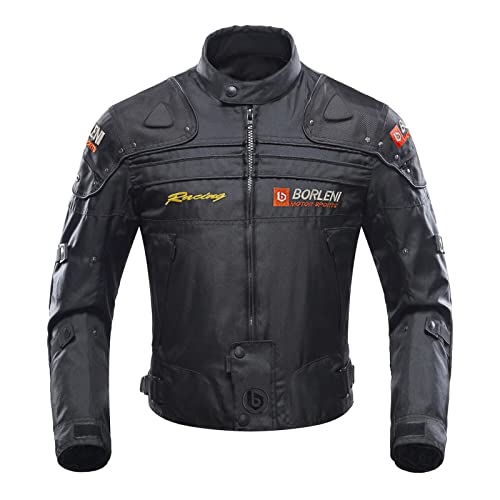

As an Amazon Associate we earn from qualifying purchases at no extra cost to you.
Motorcycle Jackets at a Glance
| Jacket | Category | Best for | Key stated details | Limits |
|---|---|---|---|---|
| Rev’It! Tornado 4 H2O | Summer mesh with waterproof liner | Hot-weather commuting and touring | Reviewers cite CE Level 2 armor and strong ventilation | Less insulation for cold |
| Rev’It! Defender 3 GTX | All-weather touring | Rain and mixed climates | A Bike N Rider review notes a Gore-Tex Pro membrane laminated to the outer shell | Higher budget tier among Rev’It! jackets |
| Rev’It! Eclipse 2 | Budget mesh | Warm-weather riding on a budget | Mesh construction | Not for rain or cold |
| Klim Carlsbad | Adventure | Most adventure and touring riders | Reviewers list GORE-TEX and CE Level 2 armor | Premium budget tier |
| Klim Badlands Pro A3 | Adventure flagship | Maximum weather protection | Reviewers cite AAA-rated armor | Premium tier; heavier |
| Alpinestars Andes V4 Air | Vented all-rounder | Most riders who want airflow | Cited by Bike N Rider as an overall recommendation | Less waterproof than membrane jackets |
| Alpinestars AMT-10R Drystar XF | Touring and ADV | Long-distance touring | CE Level 2 armor reported | Premium tier |
| Dainese Laguna Seca 6 | Leather sport | Sport and track riding | Called the benchmark for sport leather by one outlet | Limited ventilation |
Jacket lines are updated often, with new versions replacing older ones. Check the maker’s page for the current version and its stated armor and certification details.
Match the Jacket to Your Riding
Summer and Hot Weather
Mesh and vented jackets keep you cooler. The Rev’It! Tornado 4 H2O is the most cited summer pick, while the Eclipse 2 covers a tighter budget. The Klim Induction Pro and Alpinestars T-GP Plus R V4 Air are named by outlets as summer adventure and sport options.
All-Weather and Touring
A waterproof membrane and removable liners handle mixed conditions. The Rev’It! Defender 3 GTX, Klim Carlsbad and Alpinestars AMT-10R Drystar XF are the typical picks.
Adventure
Klim leads here, with Rev’It! Sand 5 H2O and Alpinestars Bogota Pro Drystar as value alternatives. Reviewers value pockets, ventilation zippers and adjustable fit for long days.
Sport and Track
Dainese leather, such as the Laguna Seca 6, and Alpinestars sport jackets provide close fit and abrasion resistance. They tend to be hot and less comfortable for casual commuting.
Armor, Materials and Certification
- CE-rated armor: Shoulders and elbows should have CE-approved armor. Level 2 armor offers a higher stated impact standard than Level 1. Check which parts the jacket includes and whether back protection is provided or must be bought separately.
- Abrasion resistance: Leather and heavy textile shells are common. Makers may list a protective rating under European standards, such as AA or AAA. Compare the stated class.
- Waterproofing: Membranes such as GORE-TEX are built into some jackets, while others rely on removable liners.
- Visibility: Reflective panels or bright colors help other road users see you.
No jacket can prevent injury, and protection depends on correct fit and the circumstances of a crash. Always wear a helmet, gloves, boots and pants, and follow local laws.
Fit and Sizing
Armor must sit on the shoulder and elbow to work, so try a jacket in a riding position if possible. Check the maker’s size chart, including chest and sleeve length. A good jacket feels snug but not tight, with no gap between the armor and your body. Women’s cuts, such as the Klim Artemis, offer a different shape. Ensure there is room for a base layer or liner when needed.
Budget Tiers
- Budget: Rev’It! Eclipse 2, Sedici and First Manufacturing jackets.
- Mid-range: Rev’It! Tornado 4 H2O and Alpinestars Andes V4 Air. One buying guide places Rev’It!, Sedici and First Manufacturing in the value range.
- Premium: Klim, Dainese and Alpinestars top-tier jackets with advanced membranes and armor.
Care
Follow the washing and storage instructions, remove armor before washing and avoid fabric softeners that can damage waterproof treatments. Re-proof the outer shell if the maker allows it. Replace armor and the jacket after a significant crash, because damage may not be visible.
Pick X If You Need This
| Pick this | If you need |
|---|---|
| Rev’It! Tornado 4 H2O | A well-vented summer jacket |
| Rev’It! Defender 3 GTX | An all-weather touring jacket |
| Rev’It! Eclipse 2 | A budget mesh jacket |
| Klim Carlsbad | An all-round adventure jacket |
| Klim Badlands Pro A3 | Maximum weather protection |
| Alpinestars Andes V4 Air | A breathable general-purpose jacket |
| Dainese Laguna Seca 6 | A leather jacket for sport riding |
Alternatives
- Airbag vests: Worn under or over a jacket for extra protection.
- Textile two-piece suits: Link a jacket to matching pants for added protection.
- Armored riding shirts: A lightweight base for very hot climates.
Common Mistakes When Buying a Motorcycle Jacket
The first mistake is buying on looks alone. A jacket without proper armor or abrasion-resistant fabric may look the part but offer little protection. Always read the stated armor type, the certification level and whether back protection is included. The second is choosing a size that is too large. Loose jackets let the armor shift away from the shoulders and elbows during a slide, which reduces what it can do. The third is buying a jacket for the wrong climate. A heavily insulated shell in hot weather leads riders to unzip or remove it, while a thin mesh jacket in the cold leaves them tempted to ride without gear.
Many riders solve climate problems with a layered system: a vented shell, a removable waterproof liner and a thermal layer. This lets one jacket cover spring to autumn. If you ride in extreme heat or deep winter, consider owning two jackets, a mesh for summer and a waterproof touring jacket for the rest of the year.
Women’s, Plus-Size and Tall Fits
Makers such as Klim offer women’s cuts like the Artemis, and several brands list extended sizes. Compare the chest, waist and sleeve measurements on the size chart instead of relying on a letter size alone. Where armor is adjustable, set it so that it sits over the joint, and ask a dealer to help fit it if possible. Try the jacket with the layers you intend to wear beneath.
Pairing the Jacket with Other Gear
A jacket is only one part of protective gear. A properly fitted helmet, gloves, boots and abrasion-resistant pants complete the set. Many jackets include a zipper to connect to matching pants, which can keep the jacket from riding up in a slide. Choose high-visibility details if you commute in traffic, and follow local helmet and equipment laws.
Ventilation, Liners and Features Worth Comparing
Beyond armor, small features decide whether a jacket is pleasant to wear every day. Zippered vents on the chest, back and arms let you adjust airflow as temperatures change, and reviewers highlight this on adventure jackets such as the Klim Carlsbad and Alpinestars Andes V4 Air. Removable thermal and waterproof liners make a single shell useful across seasons, though they add bulk to store. Adjustable cuffs, waist straps and collar closures keep wind and rain out, and well-placed pockets, including a waterproof one for a phone, matter on long rides. Reflective panels and bright accents improve visibility at dusk.
For touring, look at how the jacket handles long hours in the saddle: a soft collar, flexible shoulders and a relaxed cut reduce fatigue. For sport riding, a close, athletic cut and a connection zip to the pants matter more than storage. If you carry a hydration pack, check that the jacket has room for it or a compatible hydration pocket. As always, compare the maker’s published specifications and sizing for the exact version you plan to buy, because features change between model years.
Frequently Asked Questions
Is leather or textile better?
Leather offers strong abrasion resistance and suits sport riding, but is warmer and less waterproof. Textile jackets are more versatile for weather and commuting. Choose according to your riding style and climate.
What does CE Level 2 armor mean?
It indicates the armor meets a higher impact-absorption standard than Level 1 in the relevant European test. Check the standard marked on the armor and the jacket’s rating.
Do I need a back protector?
Many jackets include a foam pad or have a pocket for a CE-rated back protector. Check what is included, and consider buying a certified protector if it is not.
How should a jacket fit?
Snug but comfortable, with the armor held in place at shoulders and elbows. Test it in a riding stance and when raising your arms.
Can I wear a waterproof jacket in summer?
Many have removable liners and vents. For very hot weather, a mesh jacket is more comfortable, and some such as the Tornado 4 H2O add a waterproof liner.
When should I replace a jacket?
After a significant crash, or when the shell, stitching or armor shows wear. Follow the maker’s guidance.