Key takeaways
- Best overall for ages 6 to 14: Segway Ninebot C2 Pro, for its parental-friendly speed, long range and certified battery.
- Best for younger beginners: Segway Ninebot C2 Lite or a slow 6 mph first-ride class scooter.
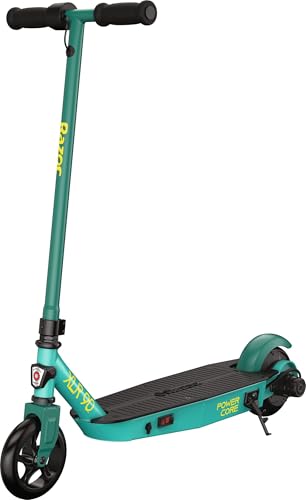
- Best classic pick for ages 8 and up: Razor E100, simple, widely sold and easy to service.
- Best budget: Gotrax GKS, lowest price tier, gentle speed.
- Best with parental speed control: Segway Ninebot Zing E10, with app-set limits and locked ride modes.
- Best for tweens and small teens: Hover-1 Journey 2.0, Hover-1 Jive or Hover-1 Neo V, with faster speed and higher weight capacity.
The best electric scooter for most kids aged 6 to 12 is a model with a speed cap near 10 mph, a weight limit that still fits the child a few years from now, a real rear or hand brake, and a battery certified to UL 2272. For a first ride, the Segway Ninebot C2 family and the Razor E100 are the safest starting points. Older, taller kids who will outgrow those in a season do better on a faster 14 to 16 mph model with pneumatic tires and a higher weight rating.
This guide covers eight named scooters and one spec class, a comparison table with actual numbers, a section on how to choose by age, height and weight, battery and charging realities, safety gear, and the rules that vary by region. Specs below come from manufacturer pages and independent published reviews; where a figure varies between sources or model years, it is given as an approximate range rather than a promise.
Our top picks


As an Amazon Associate we earn from qualifying purchases at no extra cost to you.
Quick Answer: Which Kids’ Electric Scooter Fits Which Child
- Best overall for ages 6 to 14: Segway Ninebot C2 Pro, for its parental-friendly speed, long range and certified battery.
- Best for younger beginners: Segway Ninebot C2 Lite or a slow 6 mph first-ride class scooter.
- Best classic pick for ages 8 and up: Razor E100, simple, widely sold and easy to service.
- Best budget: Gotrax GKS, lowest price tier, gentle speed.
- Best with parental speed control: Segway Ninebot Zing E10, with app-set limits and locked ride modes.
- Best for tweens and small teens: Hover-1 Journey 2.0, Hover-1 Jive or Hover-1 Neo V, with faster speed and higher weight capacity.
Comparison Table: Specs at a Glance
| Scooter | Suggested age | Top speed (approx.) | Range (approx.) | Max rider weight | Tires | Price tier |
|---|---|---|---|---|---|---|
| Segway Ninebot C2 Pro | 6 to 14 | 12 mph | up to 9 miles | 132 lb | Solid, 7 in class | Mid |
| Segway Ninebot C2 Lite | 6 to 10 | 10 mph (Sport mode) | about 6 to 7 miles | 110 lb | Solid, 7 in | Entry to mid |
| Razor E100 | 8 and up | 10 mph | about 40 minutes of use | 120 lb | 8 in pneumatic front | Entry to mid |
| Gotrax GKS | 6 to 12 | 7.5 mph | about 4 miles | 121 lb | Solid, 6 to 8 in class | Budget |
| Segway Ninebot Zing E10 | 6 to 10 | Adjustable, parent-set | about 6 miles | 110 lb class | Solid | Mid |
| Hover-1 Journey 2.0 | 8 and up | up to 14 mph | up to 16 miles | 264 lb | 8.5 in pneumatic | Mid to upper |
| Hover-1 Neo V | 10 and up | up to 15 mph | up to 9 miles | 220 lb class | Pneumatic | Mid |
| Hover-1 Jive | 8 to 14 | up to 16 mph | up to 16 miles | 264 lb | Pneumatic, 8 in class | Mid to upper |
| First-ride 6 mph class (e.g., Gotrax Scout-style) | 4 to 7 | about 6 mph | about 2 to 4 miles | about 100 lb | Solid, small | Budget |
Manufacturers publish range under ideal conditions, meaning a light rider on flat ground in mild weather. Expect real-world range to land at 60 to 80 percent of the printed figure for a child near the weight limit riding up gentle slopes.
1. Segway Ninebot C2 Pro: Best Overall
Spec line: roughly 150 W motor, up to about 12 mph, up to about 9 miles of range, 132 lb rider limit, suggested ages 6 to 14, UL 2272 certified battery system.
The C2 Pro is the scooter that most parent-focused roundups land on, mainly because it sits in a sweet spot. It is fast enough that a 10-year-old does not feel it is a toy, and slow enough that a confident 6-year-old can manage it with supervision. The 132 lb rider limit gives it a longer life than many competitors, which matters because kids grow quickly and a scooter that tops out at 110 lb can be outgrown in two seasons.
Solid, non-pneumatic tires mean no flats and no pressure checks. The trade-off is a rougher ride on cracked pavement or concrete expansion joints, so it suits smooth sidewalks and cul-de-sacs better than neighborhood trails.
Best for: families who want one scooter to last from first grade to middle school, and who value a recognized brand with spare parts and app support.
Skip if: your child is under 5 feet tall and nervous, since the top speed may feel quick, or if you need pneumatic tires for rough ground.
- Pros: long range for the class; high weight limit; certified battery; no tire maintenance; folds for storage.
- Pros: brand support and replaceable parts are easy to find.
- Pros: speed modes allow a parent to start slower.
- Cons: solid tires transmit bumps; heavier than basic kick-style models; price tier is above budget options.
2. Segway Ninebot C2 Lite: Best for Younger Beginners
Spec line: small battery in the 50 Wh range, up to about 10 mph in Sport mode, 7 in solid tires, 110 lb limit, suggested ages 6 to 10 and heights roughly 3 ft 8 in to 4 ft 8 in per the maker.
The C2 Lite is essentially the gentler sibling. It has the same friendly design and a lower weight and height envelope, which makes it more manageable for smaller riders to lift into a trunk or carry up porch steps. The lower weight cap is the main limitation: a growing 10-year-old can reach 100 lb faster than many parents expect, and then the scooter is finished.
The battery is smaller than the Pro, so range and hill performance are a step down. On flat sidewalks it is fine for a short neighborhood loop, but it is not the pick for a hilly street.
Best for: 6 to 9-year-olds who are small for their age, and households with a short buying window in mind.
Skip if: your child is already above the middle of the growth chart for height, or you want a scooter to last through middle school.
- Pros: light and easy to handle; low price tier among certified models; Sport and gentler modes; solid tires.
- Pros: compact fold for apartments and car trunks.
- Cons: 110 lb limit is outgrown quickly; shorter range; struggles on slopes.
3. Razor E100: Best Classic Pick for Ages 8 and Up
Spec line: 100 W class motor, up to 10 mph, up to about 40 minutes of continuous use, 8 in pneumatic front tire, hand-operated front brake, 120 lb rider limit, ages 8 and up per Razor.
Razor has sold kids’ electric scooters for over two decades, and the E100 is the model most people picture. Its pneumatic front tire softens bumps more than the solid tires on rivals, and the hand brake is intuitive for kids who already ride a bicycle. Replacement parts, chargers and aftermarket tires are easy to source, which counts as an ownership advantage.
The limitations are speed and runtime. Ten miles per hour is plenty for a kid, but the 40 minute runtime means a long afternoon of riding needs a recharge, and the charge itself takes several hours. There is also no app, no speed lock and no regenerative features: this is a simple machine, which some parents consider a feature.
Best for: 8 to 12-year-olds, parents who want a familiar brand, and riders who will mostly use smooth driveways and sidewalks.
Skip if: you want parental speed controls, long range, or a scooter that fits a 13-year-old.
- Pros: pneumatic front tire; hand brake; very widely available parts; straightforward operation.
- Pros: proven design with a long track record in the segment.
- Cons: fixed top speed with no limiter; modest runtime; long charge time; 120 lb cap.
4. Gotrax GKS: Best Budget Pick
Spec line: 150 W motor, about 7.5 mph, about 3.75 to 4 miles of range, 121 lb rider limit, suggested ages 6 to 12.
The Gotrax GKS is the scooter to look at when the budget is tight and the rider is young. Its lower top speed is, for a first-time rider, arguably a plus. Kids who are still learning balance tend to ride cautiously, and 7.5 mph is closer to a fast jog than a bike sprint.
The compromise is range. Around four miles on a charge is fine for the street in front of the house, but not for a trip to the park and back with a detour. Build materials are also more basic than premium brands, so expect more flex in the stem and a shorter service life if the scooter is dropped or stored outdoors.
Best for: younger kids, first-time electric scooter buyers, and families unsure whether the child will keep riding.
Skip if: your child is nearly a teen, or you want a scooter that will hold resale value.
- Pros: lowest price tier in this list; gentle speed for beginners; reasonable 121 lb limit for the cost; light enough to carry.
- Cons: short range; basic build quality; slower pickup on slopes.
5. Segway Ninebot Zing E10: Best for Parental Speed Control
Spec line: app-linked speed limiting with three locked ride modes, suggested ages roughly 6 to 10, solid tires, certified battery system.
The Zing E10 is built around a concern parents raise often: how to keep a young rider at a speed they can handle without standing over them. The Segway app lets an adult set a speed ceiling and lock it. A younger sibling can use a low setting, then an older child can graduate to a higher mode on the same scooter.
The weakness is the dependence on the app. If the phone is not paired or the app is not updated, you lose the feature that justified the purchase. Check that the scooter functions properly in its default mode before relying on the app.
Best for: households with a safety-first approach, mixed-age siblings, and parents who like to adjust settings as skills develop.
Skip if: you do not want to use an app or you prefer a no-electronics approach.
- Pros: adjustable and lockable speed limits; scalable as the child improves; recognized brand; solid tires.
- Cons: app dependency; middle price tier; weight limit similar to smaller models.
6. Hover-1 Journey 2.0: Best for Longer Rides
Spec line: 300 W class motor, up to about 14 mph, up to about 16 miles of range, 264 lb rider limit, 8.5 in pneumatic tires, UL certified.
The Journey 2.0 moves out of the little-kid category and into the “will fit a teenager” category. The 264 lb limit means it can also be shared with a parent for a short ride, though that is not what it is designed for. The pneumatic 8.5 in tires cushion bumps considerably better than the solid 7 in options and make the scooter more useful on mixed surfaces.
The speed ceiling is where a cautious parent should pause. At 14 mph and with a heavier frame, a mistake costs more than on a 10 mph scooter. It is also heavier, so a small child will struggle to carry it. Treat it as a scooter for the 10-plus crowd, not an upgraded first scooter for a 6-year-old.
Best for: 10 to 15-year-olds, longer commutes to school or friends’ houses, and rougher pavement.
Skip if: your child is small or inexperienced, or you need something light to carry upstairs.
- Pros: long range; large weight capacity; pneumatic tires; faster pickup on slopes.
- Cons: too fast for beginners; heavier; higher price tier; pneumatic tires can get flats.
7. Hover-1 Neo V: Best Value Step-Up
Spec line: 250 W class motor, up to about 15 mph, up to about 9 miles of range, pneumatic tires, foldable frame.
The Neo V takes some of the Journey’s speed and trims the range to bring the price tier down. It is for a child who has already used a slower scooter and now finds it too limited. For many families, this represents the second scooter, bought when the first one is outgrown.
Nine miles of range is adequate for a typical local ride, and the 15 mph ceiling is similar to the top gear of a casual bicycle ride. As with any faster model, helmet, elbow pads and knee pads should be treated as mandatory and not optional.
Best for: 10 to 14-year-olds who have outgrown a beginner scooter and ride mostly on paved neighborhood routes.
Skip if: your child is a first-time rider or you need the longest possible range.
- Pros: good speed for the price tier; pneumatic tires; folds; reasonable range.
- Cons: not for beginners; range shorter than the Journey or Jive; limited parental controls.
8. Hover-1 Jive: Best for Older Kids and Teens
Spec line: 300 W class motor, up to about 16 mph, up to about 16 miles of range, 264 lb limit, suggested ages roughly 8 to 14 but better suited to the upper end.
The Jive is the fastest scooter on this list, and it is aimed at the child who rides frequently and wants some performance. Specs overlap with the Journey 2.0, and the choice often comes down to current availability, styling and promotions. Both are meant for older kids.
Although the manufacturer lists a lower starting age, it makes sense to read that as a ceiling on the youngest rider and not a recommendation. A 16 mph scooter is a vehicle in practical terms, and in some regions local rules apply, discussed below.
Best for: experienced riders ages 11 and up, longer routes, and families who want a scooter that will not be outgrown.
Skip if: the rider is under 10, a beginner, or will mostly ride in a cul-de-sac.
- Pros: highest speed and range in the roundup; high weight limit; pneumatic tires.
- Cons: fast for young kids; heavier; higher price tier; may fall under stricter local rules.
9. First-Ride 6 mph Class: Best for Ages 4 to 7
Spec class: a small, solid-tire electric scooter with a speed cap around 6 mph, a weight limit near 100 lb, a rear foot brake, and a battery rated for roughly 2 to 4 miles. Gotrax and a few other brands sell models in this class.
Younger children who are still building balance on a kick scooter often do better on a very slow electric model. The point is not distance; it is a lower consequence if they fall or lose control. Look for a deck low to the ground, a tall stem that does not wobble, a brake they can reach, and a clear speed limit stated by the manufacturer.
The weakness is short usable life. Many children outgrow the class within a year or two, so it is worth considering only if a hand-me-down is available or the price tier is low.
Best for: children aged 4 to 7 who already ride a kick scooter confidently.
Skip if: your child is over 8 or tall for their age.
- Pros: very low speed; lightweight; low price tier; easy first step.
- Cons: outgrown quickly; short range; limited hill ability.
How We Chose These Scooters
This list is based on published manufacturer specifications and independent reviews, not on personal use. Models were included when they met a few criteria: sold under a recognized brand with replacement parts available, a stated child-appropriate age or weight range, a battery with safety certification such as UL 2272 where the maker publishes it, and a documented speed that matches the age band. Priority went to models that parents can reasonably find in late 2026 and described a spec class rather than a specific model when current availability was uncertain.
Where manufacturers and reviewers disagreed on a number, the conservative figure or a range. Always confirm current specs on the maker’s product page before buying, because model years and variants change.
How to Choose a Kids’ Electric Scooter
1. Match speed to age and experience
- Ages 4 to 7: 6 mph or less.
- Ages 6 to 10: 7.5 to 10 mph, ideally with a speed limiter.
- Ages 10 to 13: 10 to 15 mph for riders who have logged hours on a slower scooter.
- Teens: 15 mph and above is typical, but check local rules first.
2. Check the weight limit against growth
A good rule is to choose a scooter whose weight limit is at least 20 to 30 lb above the child’s current weight. A 70 lb child on a 110 lb scooter has room for about two years of growth; on a 264 lb scooter, the child will probably outgrow interest before outgrowing the frame.
3. Solid versus pneumatic tires
Solid tires never go flat and need no maintenance, but they transmit vibration. Pneumatic tires give a smoother ride and better grip on wet pavement but can puncture and need periodic pressure checks. For smooth sidewalks, solid is fine; for rough roads or a longer commute, pneumatic is the more comfortable choice.
4. Brakes
Look for at least one reliable brake the child can operate: a hand brake, a rear foot brake, or both. Electronic braking alone is not sufficient for a young rider because it may not engage in every situation.
5. Weight of the scooter itself
If the child will carry the scooter up steps or into school, weigh it. A scooter around 15 lb is manageable for most 8-year-olds, while one around 30 lb will be carried by a parent.
6. Battery certification
Lithium-ion batteries have been involved in fires, mostly with uncertified products or poor charging habits. Look for UL 2272 or equivalent certification on the scooter system, and charge with the supplied charger only.
How Long Do Kids’ Electric Scooter Batteries Last?
Two different things are meant by battery life: how long a charge lasts, and how many years the battery lasts overall.
- Per charge: a typical kids’ scooter gives 40 minutes to about 2 hours of riding, or roughly 4 to 16 miles depending on the model. The number falls with a heavier rider, hills, headwind and cold weather.
- Charge time: usually 3 to 6 hours for a full charge, so plan overnight charging.
- Lifespan: most lithium-ion packs are rated for several hundred full charge cycles before capacity drops noticeably, which commonly means two to four years of regular family use.
To extend battery life, avoid leaving the scooter fully drained for weeks, store it indoors at moderate temperatures, and avoid charging immediately after a hot ride or in direct sun. Unplug when the charger shows full.
Safety Tips and Gear for Young Riders
- Helmet: a properly fitted helmet certified to a recognized standard such as CPSC in the US. It should sit level, snug, and not tilt back.
- Elbow and knee pads, and wrist guards: scooter falls tend to land on hands and knees first.
- Closed shoes: no sandals or loose slip-ons.
- Daylight riding: if riding near dusk, add lights and reflective clothing.
- Supervised practice: begin in an empty parking lot, practice stopping first, then turning, then riding in a straight line.
- Keep off roads: unless local rules and age permit, stay on sidewalks, paths or private areas.
- Wet conditions: avoid puddles and rain unless the scooter publishes a water-resistance rating, and even then, treat it as splash protection only.
Check Regional Rules on Age Limits and Speed
Laws vary widely. Some US states and cities regulate electric scooters by speed or motor power, with minimum ages for riding on public roads or sidewalks, and many treat low-powered kids’ models differently from adult scooters. In the UK, privately owned electric scooters may be ridden legally only on private land, and EU countries set different speed ceilings and age rules. Always check your city or state transportation department and your homeowner association rules before riding off private property.
Wrap-Up: Which Scooter to Pick
If you want one answer, choose the Segway Ninebot C2 Pro for a child between 6 and 12. If budget is tight and the child is young, the Gotrax GKS is a reasonable low-price option. If you want a simple, classic scooter with a pneumatic front tire, the Razor E100 remains an easy recommendation. Parents who want control should consider the Zing E10, and families with older, experienced kids can look at the Hover-1 line for speed and range.
Frequently Asked Questions
What age is appropriate for an electric scooter?
Most manufacturers recommend 6 or 8 as a starting age, depending on the model. Children aged 4 to 7 can use very slow models around 6 mph with close supervision. Age is a guide, and balance, height and the ability to use the brake matter as much.
How fast should a kid’s electric scooter go?
For ages 6 to 10, roughly 7 to 10 mph is a sensible range. Faster models of 14 to 16 mph suit experienced riders aged 11 and up, and only with full protective gear.
Are kids’ electric scooters safe?
They carry risks, mainly falls, like any wheeled toy. Risk is reduced by a helmet, pads, a speed limit that suits the child, supervised practice and avoiding traffic. Choose models with certified batteries and working brakes.
Do kids need a helmet on an electric scooter?
Yes, a properly fitted helmet is strongly recommended for every ride, and local law may require one. Add elbow and knee pads for children still learning.
How long does it take to charge a kids’ electric scooter?
Typically 3 to 6 hours for a full charge. Overnight charging with the supplied charger, on a hard non-flammable surface and away from bedding, is the usual approach.
Solid or pneumatic tires: which is better for a child?
Solid tires are maintenance-free and good for smooth pavement. Pneumatic tires ride more comfortably over rough surfaces but can puncture and need pressure checks. Pick based on where your child will ride.
Can a kids’ scooter be used on the road?
Usually not for young children. Rules differ by state and country, and many places limit road use or require a minimum age and a license for higher-powered models. Check your local regulations before riding outside private property.
More from Amazon
Programs that pair well with the guide above. Offers and eligibility are set by Amazon and may change.
Free shipping on eligible items, Prime Video and more. Eligible new members can start with a free trial.
Start a Prime free trialAudiobooks and podcasts to listen to on the go. Eligible new members can start with a free trial.
Try Audible freeAd-free music streaming. Eligible new subscribers can start with a free trial.
Try Music Unlimited freeA free business account with business pricing and bulk-buying tools for work, shop or home office.
Create a business accountAs an Amazon Associate we earn from qualifying purchases.