Our Short List of 3

- Best for: First-time machine users who want a complete, ready-to-work kit.
- Brand: KIMO
- Voltage: 20V
- Speed: 6 variable speed, up to 3634RPM
- Batteries: 2 x 2000mAh batteries included
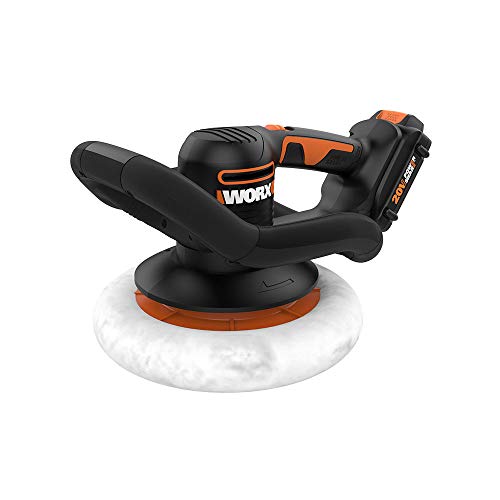
- Best for: Fast wax application and buffing on large vehicles.
- Brand: WORX
- Model number: WX856L
- Voltage: 20 Volts
- Speed: 3000 RPM

- Best for: Enthusiasts who want a versatile 6-inch kit with spare battery power included.
- Brand: Avhrit
- Model: LCP04 (as stated in listing description)
- Pad size: 6 inch
- Speed: 6 variable speed, up to 5500 RPM
All 4 Picks at a Glance
| Product | Specs | Action |
|---|---|---|
| KIMO 20V Cordless Buffer Polisher Kit |
| Check price on Amazon |
| WORX WX856L 20V Power Share 10″ Cordless Polisher & Buffer |
| Check price on Amazon |
| Avhrit 6 Inch Cordless Car Buffer Polisher |
| Check price on Amazon |
 DEWALT DCM849B 20V MAX XR Cordless Polisher |
| Check price on Amazon |
Key takeaways
- Compare cordless car buffer polishers by pad size, speed range, batteries included and rotary or orbital action, with four verified picks for every skill level.
A cordless car buffer polisher removes the two annoyances that ruin home detailing: a cable dragging across wet paint, and a job planned around the nearest socket. The real decision, though, is not cordless versus corded. It is orbital versus rotary, pad size, and what actually arrives in the box. A gentle 10-inch orbital buffer that spreads wax beautifully will disappoint someone hoping to correct swirls, while a powerful 7-inch rotary in a bare-tool box will overwhelm a beginner and still need a battery bought separately before it can spin at all.
This guide is for owners who want to wax and lightly polish at home without a cable, enthusiasts stepping up to machine correction, and detailers adding a flexible second machine. Every pick below was chosen from the product name and specifications on its Amazon listing, with the action type, speed range and battery contents stated as the listing states them, so you can match the machine to your skill and your existing battery platform.
Quick Picks
As an Amazon Associate we earn from qualifying purchases.
| Product | Best for | Key spec from title |
|---|---|---|
| KIMO 20V Cordless Buffer Polisher Kit | Beginners who want everything in one box | 6 variable speed up to 3634RPM, 2 x 2000mAh batteries |
| WORX WX856L 20V Power Share 10″ Cordless Polisher & Buffer | Waxing large panels with a big orbital buffer | 10-inch, 3000 RPM |
| Avhrit 6 Inch Cordless Car Buffer Polisher | Complete dual-battery kit for longer sessions | 6 inch, 6 variable speed up to 5500 RPM |
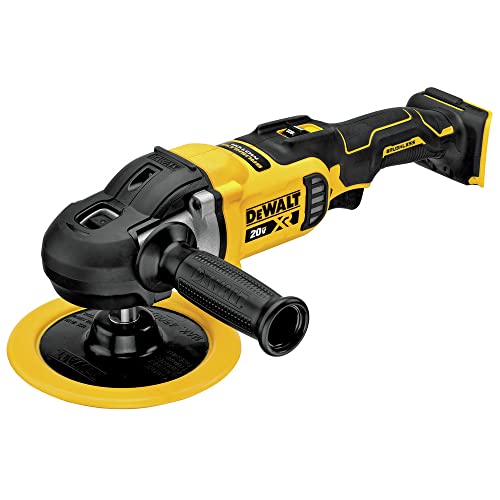
| DEWALT DCM849B 20V MAX XR Cordless Polisher | Experienced users already on the DEWALT 20V platform | 7-inch, 800-2200 RPM, tool only |
How to Choose
Understand orbital, random orbital and rotary before anything else
An orbital buffer moves the pad in a circular wobble and is the forgiving choice for spreading wax and light polish, which is why large 10-inch buffers like the WORX exist. A rotary polisher spins the pad on a single axis, cuts faster, builds heat faster, and punishes mistakes on edges and curves, which is why the DEWALT DCM849B belongs in practised hands. Dual action machines sit between the two. Read the listing wording carefully, because sellers use the word polisher loosely. Your experience level, not the headline speed, should decide which action you buy, and a first machine should almost always be the forgiving kind.
Match pad size to your car and your panels
Pad size controls both coverage and control. A 10-inch pad covers a bonnet, roof or van side quickly but cannot work neatly around mirrors, pillars and curved bumpers. A 6-inch pad is the general purpose middle ground most cars need, while a 7-inch rotary plate suits large flat panels in experienced hands. Think about your actual vehicle: a small hatchback with tight curves argues for the smaller pad, a large SUV or truck argues for coverage. Many owners end up happiest with a mid-size machine first, then add spot pads later for the areas the big pad cannot reach safely.
Check what the box actually includes
Cordless kits differ more in the box than in the tool. Some listings include two batteries, a charger and a bag of accessories, like the KIMO kit with its stated 24 accessories. Others, like the DEWALT DCM849B, are explicitly tool only, with batteries required but not included. A bare tool is good value only if you already own compatible batteries and a charger on that platform. Otherwise the real cost is the tool plus batteries plus charger, and a complete rival kit may be the cheaper route to your first polished panel. Read the included components line of every listing before comparing anything else.
Compare speed ranges in the right units
Listings quote speed as RPM or OPM depending on the action, and the numbers are not directly interchangeable between a rotary and an orbital machine. What matters practically is whether the range is variable and low enough at the bottom for spreading product without slinging it across the garage. The KIMO states six variable speeds up to 3634RPM, the Avhrit states six variable speeds up to 5500 RPM, and the DEWALT rotary states 800 to 2200 RPM, a lower range that reflects rotary cutting power rather than weakness. Judge the range against the action type, and favour a machine whose lowest setting you can control comfortably.
The 4 Best Options
KIMO 20V Cordless Buffer Polisher Kit
- Best for: First-time machine users who want a complete, ready-to-work kit.
- Brand: KIMO
- Voltage: 20V
- Speed: 6 variable speed, up to 3634RPM
- Batteries: 2 x 2000mAh batteries included
First-time machine users who want a complete, ready-to-work kit.
The 2000mAh batteries are modest capacity, so plan on swapping between the pair during a full-car session.
This is the easiest starting point in the guide because the listing describes a complete kit: a 20V cordless polisher with six variable speeds up to 3634RPM, two 2000mAh batteries and 24 accessories. A beginner can open the box and polish the same day, swapping batteries instead of waiting on a charger, and the accessory count covers the pads and bonnets a first year of waxing and light polishing actually uses. Its speed ceiling suits maintenance work and light correction rather than heavy defect removal, which is the right side of the line for a first machine that will mostly maintain a family car.
WORX WX856L 20V Power Share 10″ Cordless Polisher & Buffer
- Best for: Fast wax application and buffing on large vehicles.
- Brand: WORX
- Model number: WX856L
- Voltage: 20 Volts
- Speed: 3000 RPM
Fast wax application and buffing on large vehicles.
A 10-inch orbital buffer is not a correction machine, and its size cannot reach tight areas around trim and mirrors.
Choose the WORX when the job is waxing and buffing large areas rather than correcting defects. Its listing describes a 10-inch orbital buffer and polisher running at 3000 RPM on the 20V Power Share platform, with a steering wheel style handle and an extra bonnet included, and the product description notes it weighs less than five pounds in use and ships with a battery and charger usable across the Power Share range. That big pad and simple single-purpose design suit owners of large cars, SUVs and vans who apply wax by machine a few times a year and value speed and ease over correction ability.
Avhrit 6 Inch Cordless Car Buffer Polisher
- Best for: Enthusiasts who want a versatile 6-inch kit with spare battery power included.
- Brand: Avhrit
- Model: LCP04 (as stated in listing description)
- Pad size: 6 inch
- Speed: 6 variable speed, up to 5500 RPM
Enthusiasts who want a versatile 6-inch kit with spare battery power included.
The listing title and its own description disagree on battery capacity, stating different amp hour figures in each place, so check the exact battery specification on the product page before ordering.
The Avhrit is the kit for someone who wants a general purpose 6-inch machine and long sessions without buying into a major tool platform. Its listing describes a 6-inch cordless polisher with six variable speeds up to 5500 RPM, supplied with two batteries, a quick charger and a toolbag, and positions it for detailing, wax buffing and even boat work. The 6-inch pad is the versatile size for most car panels, and the twin battery arrangement answers the main weakness of budget cordless polishers, which is stopping mid-car. It suits an enthusiast maintaining several family vehicles across a weekend.
DEWALT DCM849B 20V MAX XR Cordless Polisher
- Best for: Experienced rotary users already owning DEWALT 20V MAX batteries.
- Brand: DEWALT
- Model number: DCM849B
- Voltage: 20 Volts
- Speed: 2200 RPM maximum, 800-2200 RPM range in listing data
Experienced rotary users already owning DEWALT 20V MAX batteries.
Tool only means no battery or charger in the box, and rotary action can damage paint quickly in inexperienced hands.
This is the professional end of the guide: a brushless 20V MAX XR rotary polisher with a 7-inch plate and a variable speed range of 800 to 2200 RPM, controlled by trigger and dial, with side and bail handles listed among its accessories. Rotary action corrects faster than orbital machines and is the choice of experienced users who understand heat and edge control. The listing is equally clear about the catch: it is a tool only package, batteries are required and none are included, and it weighs 4.8 pounds before a battery is fitted. Buy it because you already run DEWALT 20V batteries and have the skill, not as a first polisher.
Which One Fits Your Situation
You have never used a machine polisher before
Start with the KIMO kit. Everything you need is in the box, the variable speeds let you begin slowly, and its character suits the waxing and light polishing that make up most beginner jobs. Practise on a single panel, learn how little pressure the machine needs, and you will get the visible improvement you want without the risk profile of a rotary machine or the extra purchases a bare tool demands.
You mainly wax a large car, SUV or van
Take the WORX 10-inch buffer. Its large orbital pad and simple operation are built for covering big flat panels with wax quickly and buffing them off again, which is ninety percent of what large vehicle owners actually do. Accept that tight areas will still be finished by hand with a cloth, and the machine will still save you most of the effort on the panels that used to take the longest.
You maintain several cars and hate stopping to charge
Choose the Avhrit kit. Two batteries, a quick charger and a mid-size 6-inch pad make it the session-length pick, able to move from one family car to the next across a day. Just resolve the battery capacity question from the listing before you buy, since its title and description state different figures, and confirm the pad and accessory contents match the work you plan to do.
You already own DEWALT 20V tools and know rotary work
The DCM849B is your machine. It drops onto batteries you already own, its brushless rotary drive and 800 to 2200 RPM range give you genuine correction ability, and the dual handle options help control a 7-inch plate on large panels. If either half of that sentence does not describe you, one of the complete orbital kits above will serve you better and cost you less to start.
Common Mistakes
- Buying a bare tool without owning compatible batteries, then facing a second large purchase.
- Choosing a rotary polisher as a first machine and learning about heat on your own paint.
- Pressing down hard, when the machine weight plus light guidance is what the pad needs.
- Using one large pad everywhere and polishing over trim, badges and sharp edges.
- Comparing RPM figures between rotary and orbital machines as if they meant the same thing.
Frequently Asked Questions
Can a cordless polisher correct swirls, or only spread wax?
It depends on the action. Orbital buffers like the WORX 10-inch are mainly for waxing and light work. Variable speed 6-inch machines like the KIMO and Avhrit handle light correction with a suitable polish and pad. A rotary like the DEWALT DCM849B corrects fastest of all. Match the machine to the defect honestly, and remember the polish and pad do as much of the work as the motor.
How long does a cordless polisher run on one battery?
Listings rarely promise a runtime, because it varies with speed, pressure and pad size. The practical answer is in the box contents: kits with two batteries, like the KIMO and Avhrit listings, are designed around swapping mid-job. If you polish whole cars regularly, choose a two-battery kit or a platform whose batteries you already own in larger capacities, rather than hoping one small battery lasts a full session.
Is a bigger pad always better?
No. A 10-inch pad covers flat panels quickly but cannot work safely around mirrors, pillars, badges and curved bumpers, and it is harder to control on vertical doors. A 6-inch pad is slower on a bonnet yet far more useful across a whole car. Most owners are best served by the mid-size machine first, finishing tight areas by hand or with small pads later.
What else do I need besides the polisher?
A suitable polish for your goal, the right pads or bonnets, clean microfibre towels for residue, and a properly washed car to work on. Check the listing contents carefully: the KIMO kit states 24 accessories, while the DEWALT is tool only with no battery, charger or pads implied. Budget for the missing pieces before you buy, especially batteries and a charger on a new platform.
More from Amazon
Programs that pair well with the guide above. Offers and eligibility are set by Amazon and may change.
Free shipping on eligible items, Prime Video and more. Eligible new members can start with a free trial.
Start a Prime free trialAudiobooks and podcasts to listen to on the go. Eligible new members can start with a free trial.
Try Audible freeAd-free music streaming. Eligible new subscribers can start with a free trial.
Try Music Unlimited freeA free business account with business pricing and bulk-buying tools for work, shop or home office.
Create a business accountAs an Amazon Associate we earn from qualifying purchases.