Key takeaways
- Compare the best brake master cylinders, learn the sinking-pedal sign of internal bypass, and match bore and ports exactly for a firm, safe pedal.
Disclosure: As an Amazon Associate, I earn from qualifying purchases.
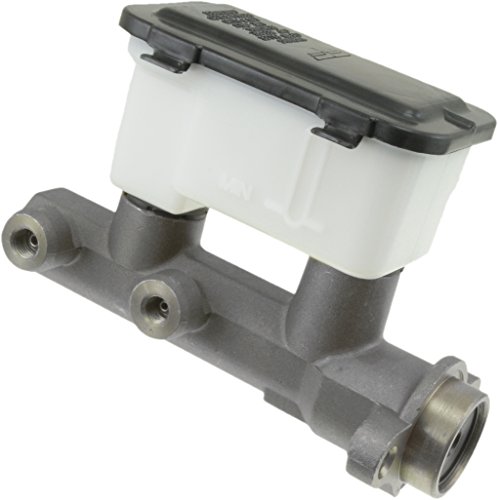

The brake master cylinder is the hydraulic heart of your braking system: it turns pedal force into the pressure that squeezes every caliper and wheel cylinder. When it fails, it rarely does so dramatically. The classic sign is internal bypass — you sit at a stoplight with steady pressure on the pedal and the pedal slowly sinks toward the floor, even though there is no puddle under the car, no wet line or caliper, and the reservoir is still full. The fluid is not leaving the system; it is slipping past worn internal seals back to the reservoir side instead of holding pressure. No amount of bleeding fixes that. The cylinder itself is done.
One thing needs saying plainly: brakes are life-safety components, and replacing a master cylinder is a shop job for most owners. The job involves open hydraulic lines, a mandatory bench bleed, a full system bleed, and on many ABS cars a scan-tool bleed cycle. A mistake does not show up as a strange noise — it shows up as a pedal that goes to the floor when you need it most. If you are not already comfortable bleeding brakes, hand this job to a professional.
How to Choose
Match the bore size and port layout exactly. A master cylinder is not a generic part. The replacement must have the same bore diameter as the original: a larger bore moves more fluid but demands more pedal effort; a smaller bore gives a softer, longer pedal with less pressure. The outlet ports must also sit in the same positions with the same thread sizes, because your car’s hard lines were bent for one specific layout. Match by part number or application lookup, never by appearance.
Match the brake system configuration. ABS and non-ABS cars often use different master cylinders, and a front disc/rear drum vehicle uses different internal proportioning behavior than an all-disc car. Order the cylinder listed for your exact year, make, model, and brake configuration.
Decide new versus remanufactured honestly. A remanufactured cylinder is a used original casting cleaned, honed or sleeved, and rebuilt with new seals. Good rebuilders test every unit, and a quality reman restores genuine OE fit because it starts from a genuine OE casting. The trade is consistency: quality varies by rebuilder, and a borderline bore stays borderline. A brand-new cylinder costs more but removes that doubt — every surface is new, including the bore. For a part this safety-critical, many owners reasonably decide new is worth it.
Plan for the bench bleed, fresh fluid, and a full bleed. Every master cylinder must be bench bled before installation — mandatory, not a suggestion. Air trapped in the bore cannot reliably be pushed out by pedal bleeding alone, and skipping the bench bleed is the most common reason a brand-new master “doesn’t fix” a soft pedal. Check whether the unit ships with a bleeder kit; if not, buy one with the cylinder. Never reuse old fluid, and never use fluid from a long-opened bottle — brake fluid absorbs moisture from the air. After installation the entire system gets bled, and on many ABS cars the module holds air only a scan-tool bleed cycle can purge.
The 5 Best Brake Master Cylinders
1. Dorman M390259 Brake Master Cylinder
Specs
- Construction: 100% new, not remanufactured
- Fitment: GM full-size trucks and SUVs, 1994–2000 (C/K1500, C/K2500, Suburban, Tahoe, Yukon, Escalade)
- OE interchange numbers: 174-723, 18M1492, 18029967
- Warranty: limited lifetime
The M390259 covers the GMT400-generation GM trucks and SUVs still everywhere in the used market, built entirely from new materials rather than a rebuilt core. Dorman engineers it to match the original cylinder’s design and function — which matters here because these model years span ABS and non-ABS configurations, so confirm your exact application before ordering. For owners who want the reman question off the table on a high-mileage truck, this is the straightforward pick.
2. Dorman M630734 Brake Master Cylinder
Specs
- Construction: 100% new, not remanufactured
- Fitment: Buick LaCrosse 2010–2015, Regal 2011–2017, Verano 2012–2017; Chevrolet Cruze 2010–2015, Malibu 2013–2015; Saab 9-5 2010–2011
- OE interchange numbers: 13286445, 22908217
- Housing matched to the original casting material
Modern GM midsize cars package the master cylinder tightly against the booster, and port position is unforgiving — the hard lines have no slack to reach a port sitting a few millimeters off. The M630734 is a new-manufacture replacement matched to the original design, with casting material chosen to mirror the OE part. Verify the application against your car’s year and trim, and bench bleed it before it goes near the booster.
3. Dorman M39646 Brake Master Cylinder

Specs
- Construction: 100% new, not remanufactured
- Housing material: aluminum, matched to the original casting
- Rubber components: EPDM compound, resistant to glycol-based brake fluid
- Fitment: Chevrolet and GMC C/K trucks 1988–1994; Dodge Ram 1500 1994
- OE interchange numbers: 174-668, 18M1746, 18013977
The M39646 serves the earlier GM trucks and the first-year 1994 Ram 1500, applications old enough that many surviving originals are on their second or third set of seals. Dorman builds it with an aluminum housing matched to the original part and EPDM rubber throughout — the correct compound for glycol-based DOT 3 and DOT 4 fluids. On a truck this age, check the booster face while the cylinder is off: a leaking master often weeps fluid into the booster, and a soaked booster is a second failure waiting its turn.
4. Cardone 10-3791 Remanufactured Brake Master Cylinder
Specs
- Construction: remanufactured OE casting
- OE interchange number: 52013873AE (Mopar applications)
- Seals and cups: new, OE-quality
- Pistons: 100% height-gauged; bores micro-finished
- Includes: bleeder kit and bench-bleeding instructions
The Cardone 10-3791 is the remanufactured option in this list, and it shows what a reputable rebuilder does: the OE casting is reused for exact fit, but every rubber seal and cup is new, piston assemblies are height-gauged, and the bore is finished to a micro-finish specification intended to eliminate the pitting that causes internal bypass in the first place. It ships with the bleeder kit needed for the mandatory bench bleed. The honest caveat applies — reman quality lives and dies with the rebuilder — but Cardone’s process addresses the specific failure points.
5. Raybestos MC36440 Professional Grade Brake Master Cylinder

Specs
- Line: Raybestos Professional Grade, new unit
- Bore size: 15/16 in
- Port layout: left-side ports
- Application type: front disc / rear drum systems, classic Ford applications
Classic-car owners face a different problem: the car predates perfectly reliable application lookups, so the physical specification is what matters. The MC36440 is a 15/16-inch bore cylinder with left-side ports, the combination used on classic Ford front-disc/rear-drum setups. That bore size keeps pedal effort and travel in the range the rest of the vintage system was designed around. Measure the bore of the cylinder coming off the car and compare port positions first — a previous owner may already have swapped in whatever fit.
Usage and Buying Notes
Bench bleeding is the step that decides whether this job works. Clamp the new cylinder level in a vise, fit the bleeder tubes from the outlet ports back into the reservoir, fill with fresh fluid of the DOT grade your cap specifies, and stroke the piston slowly with a blunt tool until the returning fluid runs bubble-free. Keep the reservoir topped up — let it run dry once and you start over. Only then does the cylinder go on the car.
A few more rules are not negotiable. Never reuse old fluid, and discard any fluid that comes out of the system. Use flare-nut wrenches on the line fittings; a standard open-end wrench rounds them. Check pushrod engagement as the cylinder seats — a pushrod holding the piston slightly applied causes dragging brakes. After a full bleed, many ABS cars still hide air in the ABS hydraulic unit; if the pedal is not firm, the car needs the scan-tool automated bleed procedure, not more pedal pumping. Finally, test the pedal with the engine off and then running before the car moves: firm, high, and not creeping downward under steady pressure.
FAQ
What are the symptoms of a failing brake master cylinder?
The signature symptom is a pedal that slowly sinks toward the floor under steady pressure at a stop, with no external leak and a full reservoir — internal bypass past worn seals. Other signs: a spongy pedal that bleeding never firms up, a pedal that pumps up after a few strokes, and fluid weeping at the booster.
Can I drive with a bad master cylinder?
No. Internal bypass gets worse, not better, and the pedal that sinks an inch today can go to the floor under a hard stop tomorrow. Park the car until the cylinder is replaced and the system fully bled.
Is a remanufactured master cylinder safe to use?
A remanufactured cylinder from an established rebuilder — new seals and cups, a properly finished bore, bench-tested before sale — is a legitimate repair that restores an OE casting. The risk is variability between rebuilders; a brand-new cylinder removes that variability for more money. Either way, the part must be bench bled and the system fully bled afterward.
Why is my pedal still soft after installing a new master cylinder?
The most common cause is a skipped or rushed bench bleed, which leaves air trapped in the bore that pedal bleeding cannot remove. Other causes: air in the ABS module (needing a scan-tool bleed cycle on many cars), a leaking fitting, or old flex hoses ballooning under pressure. Complete the full bleed procedure before condemning the new part.
Does the brake booster need replacing at the same time?
Not automatically — only for its own symptoms: a hard pedal, hissing at the pedal, or an idle change when you press the brakes. One exception: if the old master leaked fluid into the booster, that fluid damages the diaphragm, and the booster should be replaced with the cylinder.
Conclusion
Diagnose first: a pedal that sinks at a stoplight with a full reservoir and no leaks is internal bypass, and the cylinder is the repair. Buy by exact application, match bore and port layout to the original, and choose between new and a reputable reman with your eyes open. Then respect the process — bench bleed, fresh fluid, full system bleed, ABS cycle where required. Done that way, these five restore the firm, high pedal the car left the factory with.
More from Amazon
Programs that pair well with the guide above. Offers and eligibility are set by Amazon and may change.
Free shipping on eligible items, Prime Video and more. Eligible new members can start with a free trial.
Start a Prime free trialAudiobooks and podcasts to listen to on the go. Eligible new members can start with a free trial.
Try Audible freeAd-free music streaming. Eligible new subscribers can start with a free trial.
Try Music Unlimited freeA free business account with business pricing and bulk-buying tools for work, shop or home office.
Create a business accountAs an Amazon Associate we earn from qualifying purchases.