Key takeaways
- Capacity: Barrel sizes of 200 to 300 lb are typical for tripods. Bigger barrels mean fewer refills but are harder to lift.
- Placement: Choose level ground, avoid water sources and consider wind direction and cover. Keep it well away from roads and boundaries.
- Anchoring: Loaded tripods are heavy and can tip. Follow the instructions for legs and bracing.
- Batteries and solar: Use the battery type the maker specifies. A solar panel keeps a 6V battery topped up in sunny areas.
- Critter protection: Raccoons and bears can damage feeders. Check local guidance on bears in particular, since feeding may attract them.
- Feed type: Use the feed the maker states, and keep it dry. Mouldy feed can harm animals.
- Handling: Lifting heavy barrels can cause injury, so use a second person or a hoist.
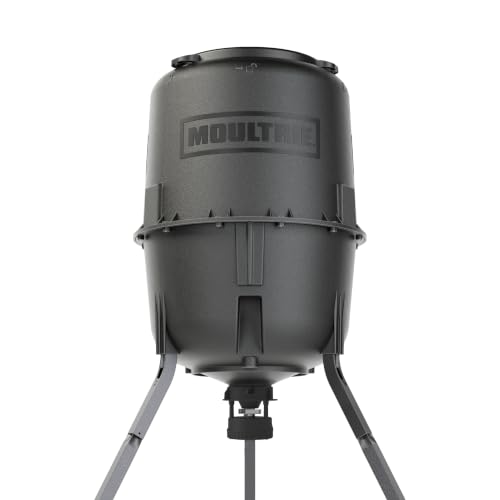
For most hunters and land managers who want a timed feeder, a tripod model with a digital timer, such as the Moultrie 200 lb Tripod with Bluetooth or the Wildgame Innovations Quick-Set 270 lb, is the practical choice, while those who want to feed in a particular direction can look at a spin-cast model like the Moultrie 250 lb Pro Hunter III, and people who do not want batteries can use a gravity feeder. Check your local rules first, because baiting and feeding deer is restricted or banned in some places.
Our top picks


As an Amazon Associate we earn from qualifying purchases at no extra cost to you.
Legal and Practical Note First
Feeding or baiting deer is regulated differently from state to state and sometimes by county or season, and some areas restrict feeding because of disease concerns such as chronic wasting disease. Read your wildlife agency’s current regulations before buying or setting up any feeder. Nothing in this guide is legal advice, and the feeder maker’s manual and your local agency should guide use.
Automatic Deer Feeders at a Glance
| Model | Type | Best for | Reported features | Limits |
|---|---|---|---|---|
| Moultrie 200 lb Tripod with Bluetooth | Tripod, timer | Hunters who want app control | One review’s top pick for 2026; Bluetooth control, up to four feed times, AA batteries | App and phone range needed for programming |
| Moultrie All-in-One II Kit | Hanging or tripod kit | Lower-tier timed feeding | Reviewers describe Bluetooth app control, with optional cellular access when paired with a compatible trail camera | Smaller capacity than barrel tripods |
| Moultrie 250 lb Pro Hunter III | Spin-cast, directional | Directional feeding with remote control | Reviewers list Bluetooth or cellular control, a rechargeable 6V battery, solar-ready design, up to 10 feeds a day | Mid-range tier; accessories add cost |
| Wildgame Innovations Quick-Set 270 lb | Tripod | Value and beginners | Reviewers call it a value tripod with a 30-foot feed radius | Basic timer controls |
| Wildgame Innovations Quick-Set Pro 270 lb | Spin-cast tripod | Upgrade from the standard Quick-Set | One review labels it a top automatic spin-cast, with powder-coated legs and a galvanized spin plate | Heavier to move |
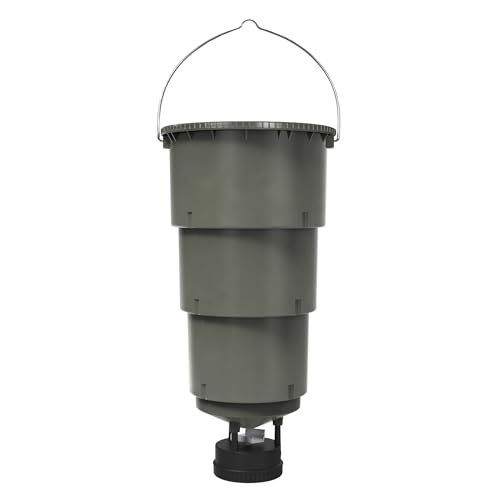
| Wildgame Innovations Treehugger 100 lb | Gravity bag | Low maintenance | Described as a low-maintenance gravity bag feeder | No timer; feed available all day |
| Boss Buck gravity feeder | Gravity barrel, 200 lb | Mid to large properties | Named as one site’s overall winner | Constant availability may attract non-target animals |
Texas Hunter is also a known feeder brand with solar options and extended warranties according to one site, but none of the roundups ranked a specific model, so no particular Texas Hunter product is recommended here.
Timed Feeders vs Gravity Feeders
Timed (automatic) feeders
These use a digital timer and a motor to drop or throw feed at set times. Timers let you set short feeding windows, which can condition animals to a schedule and reduces feed waste. They need power, usually from a battery, and a solar panel can extend battery life. Timers and motors are the main failure points, so check the maker’s warranty.
Gravity feeders
Gravity models release feed as animals eat. They need no power and have fewer parts to break. However, feed is available all day, which can draw raccoons, squirrels and other animals. Feed can also clump in wet weather.
Spin-Cast vs Drop Feeders
Spin-cast (broadcast) feeders throw feed in a pattern around the unit, so several deer can feed at the same time and the radius spreads feed out. Drop feeders place feed beneath the unit, which concentrates it for easier trail camera views but can lead to crowding. Reviewers cite a 30-foot radius for the Quick-Set, so keep the feeder at a safe, legal distance from stands and property lines.
Models Worth Considering
Moultrie tripod with Bluetooth
One review picked this model as its 2026 top choice after multi-season use across several states. It offers Bluetooth control, up to four feed times and AA battery power. Programming through a phone is convenient, especially at a remote location, though the phone must be near the feeder.
Moultrie All-in-One II Kit
Reviewers describe it as a smart timed option with Bluetooth app control, and cellular connectivity is possible when paired with the Moultrie Edge 3 trail camera. It is a good choice if you want to monitor a feeder and camera together.
Moultrie Pro Hunter III
A directional spin-cast feeder with remote control through Bluetooth or cellular, a 6V rechargeable battery and a solar-ready design. Reviewers list up to 10 feeds per day. Its directional throw suits setups where you want feed placed away from the feeder.
Wildgame Innovations Quick-Set
Reviewers call the 270 lb Quick-Set a value tripod and beginner-friendly option, with a 30-foot feed radius. The Pro version adds a galvanized spin plate and powder-coated legs according to one review.
Setup and Safety Notes
- Capacity: Barrel sizes of 200 to 300 lb are typical for tripods. Bigger barrels mean fewer refills but are harder to lift.
- Placement: Choose level ground, avoid water sources and consider wind direction and cover. Keep it well away from roads and boundaries.
- Anchoring: Loaded tripods are heavy and can tip. Follow the instructions for legs and bracing.
- Batteries and solar: Use the battery type the maker specifies. A solar panel keeps a 6V battery topped up in sunny areas.
- Critter protection: Raccoons and bears can damage feeders. Check local guidance on bears in particular, since feeding may attract them.
- Feed type: Use the feed the maker states, and keep it dry. Mouldy feed can harm animals.
- Handling: Lifting heavy barrels can cause injury, so use a second person or a hoist.
Pick X If You Want Y
| If you … | Pick | Why |
|---|---|---|
| Want app-programmed timing | Moultrie 200 lb Tripod with Bluetooth | Bluetooth and multiple feed times |
| Want cellular camera pairing | Moultrie All-in-One II Kit | Optional cellular access |
| Want directional feeding and remote control | Moultrie Pro Hunter III | Directional spin-cast |
| Are a beginner on a tighter budget tier | Wildgame Innovations Quick-Set 270 lb | Value tripod |
| Want no batteries | Gravity feeder, such as Boss Buck or Treehugger | No power needed |
Alternatives
Hunters who prefer not to feed can plant food plots, which provide natural forage and are often legal where baiting is not. Mineral stations are another approach but are also regulated. Trail cameras let you observe activity without feeding. In some regions, a mineral or feed ban makes these alternatives the only legal route.
Maintenance and Seasonal Care
Automatic feeders reward a little routine upkeep. Before each season, inspect the motor housing, the spinner plate and the legs for cracks or rust, and replace worn parts using the maker’s listed replacements. Clean out old feed and clumps, because damp or mouldy feed can harm wildlife and can jam the feed mechanism. Replace or recharge batteries on a schedule, and keep spare cells nearby, since a dead battery is the most common reason a timer stops dropping feed. If you use a solar panel, wipe it clean and angle it toward the sun. Rodents and insects can enter through gaps, so seal the lid and store partly used bags in a closed container. When you refill a heavy barrel, lift with another person or use a hoist, and never climb on a loaded tripod. Finally, keep a note of the programmed feed times and quantities so you can adjust them as animal activity changes through the season.
How to Set Feed Quantity and Timing
Most timers let you set how many seconds the motor runs, which controls the amount thrown or dropped each time. Start with a short run time, watch the area with a trail camera and adjust upward only if feed is consistently gone before the next cycle. Spreading small portions across a few windows is generally reported to waste less than a single large drop. Set the clock carefully after changing batteries, since many timers reset, and remember to update times when daylight saving changes.
Frequently Asked Questions
Is it legal to use a deer feeder?
That depends on your state, county and season. Some places allow feeding outside hunting season, others ban feeding or baiting entirely, so check your wildlife agency’s rules before use.
How many times a day should a feeder run?
Many hunters set one to a few short feed times, often around dawn and dusk. Models list different limits, such as up to four times on some Moultrie units and up to ten on the Pro Hunter III.
What size feeder do I need?
Barrels of 200 to 300 lb are common. Bigger barrels need fewer refills, while smaller ones are easier to load by hand.
Do automatic feeders need batteries?
Timed feeders use batteries, with some models using AA cells and others a rechargeable 6V battery that can pair with a solar panel. Gravity feeders do not need power.
How do I keep raccoons and squirrels out?
Timed feeders reduce all-day access, and placement, height and guards help. Gravity feeders are more exposed to pests because feed is always available.
Can I control a feeder from my phone?
Some models offer Bluetooth control for use near the feeder, and a few support cellular access with a compatible camera. Read the maker’s description to see which features are included.