Key takeaways
- Ten rideshare dash cams compared: Eivikga, COOAU, IIWEY, 70mai and more, with channel counts, night vision, storage math and listing warnings.
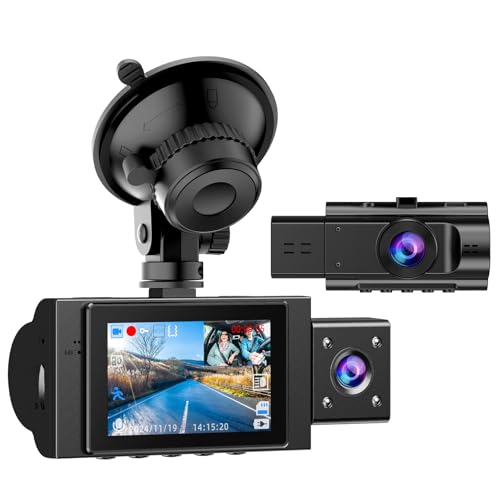
Rideshare drivers get the most from a dual-channel or three-channel dash cam with a cabin camera and infrared night vision. The Eivikga 3 Channel and COOAU D30S are the clearest fits here because their titles name rideshare use or a supercapacitor, while the IIWEY and ZMOPO four-channel kits give all-around coverage. Ten listings are covered below, and titles with unclear specs are flagged so you can check them first. Storage, power and recording rules matter as much as resolution on a shift that runs eight hours or more.
Short list by driving style
Our top picks



As an Amazon Associate we earn from qualifying purchases at no extra cost to you.
- Full-time drivers: Eivikga 3 Channel or Befumly 3 channel
- Hot climate: COOAU D30S or ZMOPO, both listing a supercapacitor
- All-around coverage: IIWEY N6 or ZMOPO 360 View
- Hands-free control: 70mai T800E
- Basic setup: Yansoo dual or Wagoyo dual
Ten dash cams compared
| Model | Key point from title | Best for |
|---|---|---|
| Eivikga 3 Channel | 4K+2.5K+2.5K, GPS, WiFi, 64GB | Full coverage for a shift |
| Yansoo dual | Front and inside, 1080P, IR | Basic two-camera setup |
| COOAU D30S | Front and inside, GPS, supercapacitor | Heat-friendly power |
| ZMOPO 360 View | 4 channels, 128GB, GPS | All-around coverage |
| IIWEY N6 | 4 channels, 128GB, 8 IR lights | Feature-rich 360 view |
| COOAU dual 2.5K+1080P | Front and inside, GPS, WiFi | Mid-level two-camera kit |
| 70mai T800E | 3 channels, voice control, 64GB | Hands-free control |
| Befumly 3 channel | Front, rear, inside, 64GB | Three views, card included |
| IIWEY N5 | 4 channels, 2K front, 128GB | Simpler 360 view |
| Wagoyo dual | Front and inside, spec-light title | Basic, verify specs |
The cams, one by one
Eivikga 3 Channel (4K+2.5K+2.5K), rideshare and taxi
The title promises three channels at 4K plus two 2.5K feeds, WiFi and GPS, an IMX675 STARVIS 2 sensor for night video, HDR, a G-sensor, 24 hour parking monitor, time lapse and a 64GB card. It is marketed straight at rideshare and taxi use, but the title does not say which three views are covered, so check that front, cabin and rear are all included before ordering. Treat the sensor and HDR lines as the seller’s claims, since night video quality is not something we confirmed.
Pros
- Three channels with a card included, per the title
- Named for rideshare and taxi use
Cons
- Title does not name which three views it records
- 64GB goes quickly with three feeds
Who it’s for: full-time drivers who want front, cabin and rear coverage in one kit.
Yansoo dual dash cam, front and inside, 1080P
A two-channel unit: the title says front and inside, 1080P, infrared night vision, 24H parking monitor with motion detection and G-sensor, and calls it ideal for taxis and Uber. The title leaves out GPS, WiFi and any included card, so assume you will buy storage separately and verify the rest in the listing. A simple choice for a driver who only needs the cabin and the road ahead. Check whether a hardwire cable is included if you want the parking monitor to run overnight.
Pros
- Front and cabin view in the title
- Parking monitor with motion detection listed
Cons
- No GPS or WiFi mentioned in the title
- 1080P only, per the listing
Who it’s for: part-time drivers who want a basic two-camera setup.
COOAU D30S 4K, front and inside
Titled as a 4K dash cam with GPS and WiFi, front and inside dual cameras at 2.5K and 1080P, infrared night vision, a supercapacitor, 4 IR LEDs, a G-sensor, parking mode and loop recording. The resolution wording is confusing (4K, then 2.5K and 1080P), so confirm which camera records at what resolution, and the listing does not give the reach of the four IR LEDs. The supercapacitor is a plus if the car bakes in summer heat.
Pros
- Supercapacitor and 4 IR LEDs named in the title
- GPS and WiFi included per the title
Cons
- Resolution wording is unclear between front and cabin
- No card mentioned in the title
Who it’s for: drivers who want a two-channel unit with GPS and a heat-friendly power part.
ZMOPO 360 View 4 Channel
This is a four-channel listing: front, rear, left, right and inside cameras, with GPS, 5G WiFi, night vision, a 160 degree wide angle, WDR, 24H parking mode, a supercapacitor and a 128GB card. The title says 160 without a unit and lists no resolution, so check those details. Four feeds mean heavy storage use and more cabling to route through the cabin. Check each lens position and the install path before committing to this many cameras.
Pros
- Covers left and right sides, rare in this list
- 128GB card and supercapacitor in the title
Cons
- No resolution given in the title
- More cables, and a harder install
Who it’s for: drivers in busy cities who want all-around coverage.
IIWEY N6 360, 4 channel
The title lists four channels, a free 128GB card, 8 IR lights for night vision, STARVIS 2K sensors, 5.8G WiFi-6 with a quoted 20MB/s, an app, 24/7 parking mode, a 3.16 inch IPS screen, GPS and a G-sensor. The 20MB/s is the seller’s wording, not a figure we confirmed. It sounds like the most feature-packed IIWEY, so compare it to the N5 below. Confirm that the app works with your phone before relying on clip transfer.
Pros
- 8 IR lights named for cabin video
- App, GPS and 128GB card included per the title
Cons
- Speed claim is the seller’s, not confirmed
- Four channels mean a longer installation
Who it’s for: drivers who want a full 360 degree view and fast clip transfer.
COOAU dual dash cam, 2.5K+1080P
A two-channel COOAU with built-in GPS and WiFi, front and inside, aimed at Uber and taxi drivers, with night vision, accident record and 24 hour parking mode. The pairing of 2.5K and 1080P suggests the front camera is the higher resolution, though the title does not say. No card is mentioned. This is a straightforward alternative to the D30S if you do not need 4K wording. Compare the included parts with the D30S to see what extra it adds.
Pros
- GPS and WiFi built in per the title
- Written for Uber and taxi drivers
Cons
- Which camera is 2.5K is not stated
- No SD card named
Who it’s for: drivers on a middle budget who want a two-camera kit with GPS.
70mai T800E 4K, front and rear inside
The title says 4K, front and rear inside, 3 channel, with GPS, WiFi 6, voice control, parking monitor, night vision, loop recording and a 64GB card. The phrase front and rear inside is awkward, so confirm whether the third camera sits in the cabin or at the rear window. It includes a card and voice control, which suits hands-free use. Check which commands the voice control understands before counting on it.
Pros
- Voice control and 64GB card per the title
- WiFi 6 and GPS listed
Cons
- Awkward title wording on camera positions
- Three channels, but not clearly front, rear and cabin
Who it’s for: drivers who want hands-free control and an included card.
Befumly 3 channel, 4K+2.5K+1296P
Here the title offers 4K, 2.5K and 1296P across front, rear and inside, a 64GB card, WiFi 6 and GPS, a 15 minute setup claim, 4 IR cabin LEDs for night vision and a 3.2 inch IPS screen. The 15 minute figure is the seller’s claim, and it likely assumes plug-in power rather than hardwiring. A good option for drivers who want all three views, and the 3.2 inch screen helps if you like to look back at clips on the device.
Pros
- Front, rear and inside in the title
- 4 IR LEDs for cabin night view
Cons
- Install-time claim is the seller’s
- Check warranty and support terms with the seller
Who it’s for: drivers who want three views and an included card.
IIWEY N5 4 channel 360
A four-channel listing with a 2K front camera, 1080P rear and inside, 128GB card, 5G WiFi and app control, IR night vision, G-sensor and 24 hour parking mode. It reads like a lower-spec sibling of the N6, with fewer sensor and speed claims in the title. If you want 360 degree coverage but do not need the extras listed on the N6, this is the simpler one. Compare the rear and cabin resolution with the N6 before choosing.
Pros
- 4 channels and 128GB card in the title
- App control and 5G WiFi listed
Cons
- No GPS mentioned in the title
- 1080P on the rear and inside feeds
Who it’s for: drivers who want 360 degree coverage with fewer upgrades.
Wagoyo dual dash cam, front and inside
The shortest title in the list: front and inside, IR night vision, loop recording, wide angle, 3.16 inch IPS screen and parking mode, with Dark at the end (probably a color, but the title does not say). It gives no resolution, no GPS and no WiFi, so it is a basic option. Check the details carefully, since the title is vague on what you get. It may still serve as a spare or second-car cam if the specs check out.
Pros
- Front and cabin cameras per the title
- Parking mode and loop recording listed
Cons
- No resolution, GPS or WiFi in the title
- Vague title with an unexplained Dark tag
Who it’s for: drivers who want a basic front and cabin pair and will verify every spec.
How we picked these
We read the listing titles, manufacturer wording and buyer reviews, and ranked each dash cam by how clearly it states channels, night vision and parking support for rideshare use. Nobody on the team used or measured these units, so claims such as speed or setup time are the seller’s. Where a title is vague, we flag it and tell you what to check. Treat this as a shortlist and confirm details on the live listing, including what is in the box and how the camera is powered.
What a rideshare driver should check
Cabin camera and infrared
A camera aimed at the back seat needs infrared night vision, because the cabin is dark on night shifts. Listings that mention IR LEDs, such as the 4 IR LEDs on the COOAU D30S, address this directly. A cabin lens also records audio on many models; check if you can turn the microphone off. Glare off the windshield or the rear glass can wash out a cabin view, so choose a mounting spot that keeps the lens clear of reflections. Also check that the cabin lens sees both rear seats, not just the driver.
Channels you actually need
Two channels (front and cabin) cover the usual dispute, such as a passenger complaint or a minor collision. Three add the rear window, and four add the sides. More channels mean more cabling, more storage use and a longer install, so choose coverage for the risks you face, not the biggest number on the box.
Storage and loop recording
Loop recording overwrites the oldest video when the card fills. Worked example, using an assumed combined recording rate of 20 megabits per second across all channels (an illustration only; the real rate varies by model and settings): a 128GB card holds roughly 14 hours of footage. That is under two eight-hour shifts. Save important clips from the app straight after an incident, and consider a card made for continuous recording.
Parking mode and power
A 24 hour parking mode usually needs a hardwire kit or a constant-power source, and some listings do not include one. A supercapacitor handles heat better than a small battery in many cabins. Have a professional fit a hardwire kit if you are unsure, and never splice into airbag or safety wiring. A low-voltage cutoff protects the car battery during long parking sessions.
Rules and passenger notice
Rules on recording passengers, especially audio, differ by place and by platform. Read your platform’s policy and local rules before you install, and consider a visible notice. This is general guidance, not legal advice, and it applies to any in-car audio recording as well.
Mistakes buyers make
Buying on resolution alone is the top mistake, since a 4K front camera does little if the cabin camera is 1080P and the card is full. Others include skipping the memory card check, forgetting to hardwire for parking mode, mounting the cam where it blocks the view, and buying a cam without a cabin lens. Do not rely on a spec in the title that is only a seller claim, such as quoted transfer speeds or setup times. Another is leaving the lens unwiped, then wondering why night footage looks soft. A last one is trusting a card that has run for months without formatting it; a failed card means no footage when you need it most.
Verdict
The Eivikga 3 Channel is the strongest all-round pick on its title, with the Befumly as a clear alternative. Choose the COOAU D30S or ZMOPO if heat is a concern, and the IIWEY N6 for 360 degree coverage. The Yansoo and Wagoyo are basic and need extra checking. Confirm every spec on the live listing, buy a high-endurance card if none is included, and set up the parking mode power before the first long shift.
Rideshare dash cam questions
Do rideshare drivers need a dash cam with a cabin camera?
It is not required, but a cabin camera is the main reason rideshare drivers buy a dash cam. It records passenger disputes, damage claims and incidents inside the car. Check your platform’s rules and local recording rules first, and look for a model with infrared night vision and a lens that covers the back seat.
Is a 2-channel dash cam enough for Uber or Lyft?
For most drivers, yes: a front camera plus a cabin camera covers the road and the passengers. Add a rear camera if you often park on busy streets or want rear-end evidence. More channels mean more storage use and more cables to route, so choose the smallest setup that covers your real risks.
How big a memory card do I need?
More than most people expect, because multi-channel recording fills a card quickly. As a rough illustration, 128GB may hold about 14 hours at an assumed 20 megabits per second across all channels. Pick a card rated for continuous recording and save clips right after any incident from the app or the card.
Do I need to hardwire a dash cam for parking mode?
Usually yes. Parking mode needs power while the engine is off, which means a hardwire kit or a constant-power source. If you are unsure about fuse box work, have a professional fit it. Check whether the listing includes the kit, and whether the cam stops recording before it drains the car battery.
Is recording passengers allowed?
Rules differ by place and by platform, and audio is often treated more strictly than video. Read your platform policy and your local rules, and consider a visible notice. This is general guidance, not legal advice, so check your local requirements and your platform’s policy before you start driving with audio switched on.
Related guides
- How To Find The Right Wiper Blade Size For Your Car
- All Weather Floor Mats For Pickup Trucks
- How To Hardwire A Dash Cam To The Fuse Box