Our Short List of 3

- Best for: Drivers in hot climates who want the strongest heat rejection from a small roll.
- 20 in x 10 ft uncut roll
- 25% VLT
- 2-ply nano-ceramic film
- 2 mil thick

- Best for: SUVs and large cars where a wide roll is needed to cover big windows without seams.
- 36 in x 15 ft uncut roll
- 20% VLT
- 2-ply premium carbon film
- Polyethylene Terephthalate (PET) construction

- Best for: Leased or rented cars and anyone who wants dark, removable privacy without a permanent install.
- 24 in x 78 in sheet (2 ft x 6.5 ft)
- 5% VLT, Super Limo Black
- Static-cling installation, no adhesive
- Vinyl material
All 3 Picks at a Glance
| Product | Specs | Action |
|---|---|---|
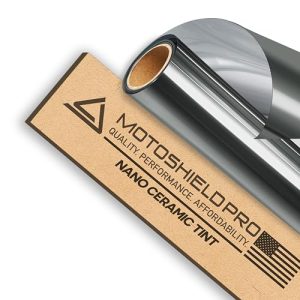
| MotoShield Pro Premium Nano Ceramic Tint 25% VLT, 20 in x 10 ft Roll |
| Check price on Amazon |
| RockRose 20% Premium Carbon Film 36 in x 15 ft Roll |
| Check price on Amazon |
| Gila Static Cling 5% VLT Automotive Window Tint, 24 in x 78 in |
| Check price on Amazon |
Key takeaways
- Compare the best window tint film for cars: carbon and ceramic rolls plus a removable static-cling film, with VLT, roll size, and DIY fit explained.
Buying window tint film for a car is really a decision about how much light, heat, and visibility you are willing to trade for privacy and a cooler cabin. The film you choose decides the shade of every window, how much glare reaches your eyes, and whether the job is a forgiving afternoon project or a frustrating one. Roll size, film material, and visible light transmission all matter before the first cut is made.
This guide is for drivers who want to tint their own windows with uncut film rolls rather than ordering pre-cut kits. It covers carbon film, nano-ceramic film, and a removable static-cling option, and every pick below is described using the film name, size, shade, and construction stated on its Amazon listing.
Quick Picks
As an Amazon Associate we earn from qualifying purchases
| Product | Best for | Key spec from title |
|---|---|---|
| LEXEN 2Ply Premium Carbon Roll | First-time DIY tinting on a budget | 20 in x 10 ft roll, 35% VLT |
| MotoShield Pro Premium Nano Ceramic Tint | Maximum heat rejection on a small roll | 25% VLT, 20 in x 10 ft roll |
| RockRose 20% Premium Carbon Film | Covering large windows and SUVs | 36 in x 15 ft roll, 20% VLT |
| Gila Static Cling 5% VLT Tint | Temporary privacy without adhesive | 24 in x 78 in static-cling sheet |
How to Choose
Film material decides heat rejection and longevity
Dyed film is the cheapest option and mainly changes the look of the glass, but it fades over time and blocks little heat. Carbon film sits in the middle: carbon particles give it a stable charcoal colour that resists fading, and it blocks more heat than dyed film without using metal. Nano-ceramic film is the top tier for heat rejection, blocking most infrared heat while staying non-metallic, so it does not interfere with radio, GPS, or mobile signals. Static-cling film is a different category altogether, using no adhesive and suiting temporary or rented vehicles. Match the material to how long you plan to keep the tint and how hot your summers get.
VLT percentage decides shade and legality
Visible light transmission, or VLT, states how much light passes through the film. A 5% film lets through very little light and gives strong privacy, while a 50% film is light and mainly cuts glare. A 35% film is a common middle ground for side windows, and a 20% film looks noticeably darker. Tint laws vary by state and by window position, and front side windows usually have stricter limits than rear windows. Check the rules for your state and each window before ordering, because a shade that is legal on rear glass may not be legal up front.
Roll size decides coverage and waste
A 20-inch-wide roll covers most car side windows, but a tall SUV rear window or a wide rear windscreen may need a 24-inch or 36-inch roll to lay the film in one piece. A 10-foot roll is usually enough for the side windows of one car, while a full vehicle job with a large rear window often needs 15 feet or more. Measure each window at its widest and tallest points, then add a margin of a few inches on every side for trimming. Buying too small a roll forces seams, and seams are where a tint job starts to look homemade.
Installation skill decides which film to buy first
Tinting is a wet-application job that needs a clean window, a soapy slip solution, a squeegee, and a sharp blade, plus patience while shrinking the film to curved glass with heat. Carbon and ceramic rolls shrink with a heat gun, which takes practice on curved rear windows. Static-cling film skips the adhesive and the shrinking, so it is the most forgiving first attempt. If you have never tinted before, start with side windows, keep a spare piece of film for practice, and work in a dust-free space out of direct sun.
The 4 Best Options
LEXEN 2Ply Premium Carbon Roll 20 in x 10 ft, 35% VLT
The LEXEN 2Ply Premium Carbon roll is a sensible starting point for a first DIY tint job. Its 35% medium shade darkens side windows enough for privacy and glare control without turning night driving into guesswork, and the 20-inch by 10-foot roll covers the side glass of most cars. Carbon construction keeps the colour stable instead of fading purple the way dyed film can, and the film is built to shrink to curved glass. It is the pick for drivers who want a straightforward roll, a mid-range shade, and enough material to learn on.
Specs
- 20 in x 10 ft uncut roll
- 35% VLT medium shade
- 2-ply premium carbon film
- Blocks 99% of UV rays
- Shades available from 5% to 50% VLT
- Scratch-resistant surface
Best for: Drivers tinting their side windows for the first time who want a mid-shade carbon roll.
Watch out for: A 20-inch roll may be too narrow for a tall rear window, so measure before ordering.
MotoShield Pro Premium Nano Ceramic Tint 25% VLT, 20 in x 10 ft Roll
- Best for: Drivers in hot climates who want the strongest heat rejection from a small roll.
- 20 in x 10 ft uncut roll
- 25% VLT
- 2-ply nano-ceramic film
- 2 mil thick
Drivers in hot climates who want the strongest heat rejection from a small roll.
The 25% shade may exceed the legal limit for front side windows in some states, so check local rules first.
The MotoShield Pro nano-ceramic roll is for drivers whose main complaint is heat rather than looks. Its ceramic particles block infrared heat far more effectively than dyed or carbon film, and the listing states it blocks up to 99% of infrared heat and 99% of UV rays while cutting interior temperatures by up to 25 degrees Fahrenheit. The 25% shade gives strong privacy on rear and side glass, and the 2-mil film is made to shrink for a DIY install. It is a compact roll, so it suits side windows and smaller cars rather than a full large SUV.
Watch out for: The 25% shade may exceed the legal limit for front side windows in some states, so check local rules first.
RockRose 20% Premium Carbon Film 36 in x 15 ft Roll
- Best for: SUVs and large cars where a wide roll is needed to cover big windows without seams.
- 36 in x 15 ft uncut roll
- 20% VLT
- 2-ply premium carbon film
- Polyethylene Terephthalate (PET) construction
SUVs and large cars where a wide roll is needed to cover big windows without seams.
The 20% shade is dark for night driving on front windows, so reserve it for rear glass where the law allows.
The RockRose carbon roll is the pick when coverage is the problem. At 36 inches wide and 15 feet long, it is wide enough to cover a large rear window or SUV glass in a single piece, which avoids the seams that smaller rolls force. The 20% shade is darker than the 35% middle ground, giving real daytime privacy, and the 2-ply carbon film blocks up to 99% of UV rays. It is heat-shrinkable and plotter friendly, so it suits both hand cutting and machine cutting. One roll covers a full car with material to spare for practice cuts.
Watch out for: The 20% shade is dark for night driving on front windows, so reserve it for rear glass where the law allows.
Gila Static Cling 5% VLT Automotive Window Tint, 24 in x 78 in
- Best for: Leased or rented cars and anyone who wants dark, removable privacy without a permanent install.
- 24 in x 78 in sheet (2 ft x 6.5 ft)
- 5% VLT, Super Limo Black
- Static-cling installation, no adhesive
- Vinyl material
Leased or rented cars and anyone who wants dark, removable privacy without a permanent install.
Static-cling film is not a substitute for adhesive film on curved glass, and the 5% shade is far darker than the legal limit for front windows in most states.
The Gila Static Cling film is the only pick here that uses no adhesive at all, which makes it the right choice for temporary privacy. It clings to the glass with static, so it can be removed and reused, and it suits leased cars, rented vehicles, or drivers who want to try a dark shade before committing to a permanent install. The 5% Super Limo Black shade blocks 95% of light, giving strong daytime privacy. The sheet measures 24 inches by 78 inches, enough to cut panels for several side windows.
Watch out for: Static-cling film is not a substitute for adhesive film on curved glass, and the 5% shade is far darker than the legal limit for front windows in most states.
Which One Fits Your Situation
You want the easiest first tint job
Pick the LEXEN 2Ply Premium Carbon roll. Its 35% shade is forgiving at night, the carbon film holds its colour, and the 20-inch by 10-foot size is enough for side windows with a little spare material for a practice cut. Start on a flat side window before attempting curved glass.
You park in strong sun and want a cooler cabin
Pick the MotoShield Pro nano-ceramic roll. Ceramic film is the strongest of these picks for infrared heat rejection, and the listing states it blocks up to 99% of infrared heat and UV rays. The compact 20-inch by 10-foot roll suits side windows, so pair it with a larger roll if the rear window needs covering too.
You drive an SUV or need to cover a wide rear window
Pick the RockRose 36-inch by 15-foot carbon roll. The extra width lets you lay a large rear window in one piece instead of joining seams, and the 20% shade gives real privacy. Keep it to rear glass where your state allows that darkness. Measure the rear window first, since the roll is generous but not endless.
You cannot commit to a permanent tint
Pick the Gila Static Cling film. It goes on without adhesive, comes off without residue, and can be reused, which makes it the safe choice for a lease, a rental, or a trial run at a dark shade before paying for a professional job. Try the shade for a week before deciding whether to commit.
Common Mistakes
- Choosing a VLT shade before checking the tint law for your state and window position.
- Ordering a roll narrower than the tallest window, which forces visible seams on the rear glass.
- Tinting in direct sun or a dusty garage, which traps dirt and bubbles under the film.
- Skipping the practice cut and wasting the only piece large enough for a window.
- Using a household glass cleaner with ammonia on tinted windows, which can damage the film over time.
- Fitting dark film on front side windows and then failing an inspection or a roadside check.
Frequently Asked Questions
What VLT should I choose for a first tint job?
A 35% film is a practical starting point for side windows because it cuts glare and adds privacy while keeping night visibility reasonable. Darker films such as 20% or 5% look better in daylight but make night driving harder and are more likely to break local tint limits. Check your state rules for each window before ordering, and keep darker shades for rear glass.
Is ceramic tint film better than carbon tint film?
Ceramic film rejects more infrared heat than carbon film and stays non-metallic, so it does not interfere with radio, GPS, or mobile signals. Carbon film costs less, holds its colour well, and still blocks UV and some heat. Drivers who mainly want looks and privacy are usually happy with carbon, while drivers in hot climates who want a cooler cabin get more from ceramic.
Can I install window tint film myself?
Yes, most DIY drivers can tint flat side windows with a roll, a slip solution, a squeegee, and a sharp blade. Curved rear windows are harder because the film must be shrunk with heat to follow the curve. Practice on a spare piece first, work in a clean shaded space, and expect the first window to take much longer than the rest.
How do I clean windows after tinting?
Wait until the film has fully cured and any water under it has dried, which can take several days. Then clean with a soft cloth and a cleaner made for tinted windows, avoiding ammonia-based glass cleaners. Wipe gently and never scrape the film with a blade or a rough pad, since scratches in tint cannot be polished out.
More from Amazon
Programs that pair well with the guide above. Offers and eligibility are set by Amazon and may change.
Free shipping on eligible items, Prime Video and more. Eligible new members can start with a free trial.
Start a Prime free trialAudiobooks and podcasts to listen to on the go. Eligible new members can start with a free trial.
Try Audible freeAd-free music streaming. Eligible new subscribers can start with a free trial.
Try Music Unlimited freeA free business account with business pricing and bulk-buying tools for work, shop or home office.
Create a business accountAs an Amazon Associate we earn from qualifying purchases.