Key takeaways
- Compare the best DIY AC refrigerant recharge kits for R134a and R1234yf, with gauges, hoses and honest notes on leaks, overcharging and stop-leak risks.
When a car’s air conditioning starts blowing lukewarm, a low refrigerant charge is one of the most common causes, and a DIY recharge kit can top the system off in about fifteen minutes. But a kit is a top-off tool, not a repair. Refrigerant does not get used up like fuel: if the charge is low, it escaped through a leak, and any refill is temporary until that leak is found and fixed. The kits below cover both refrigerants in modern cars, R134a and R1234yf, in complete can-and-gauge packages and reusable gauge-and-hose tools. Pick the format that matches your car and your expectations, charge slowly, and treat the gauge as a guide rather than a guarantee.


Disclosure: As an Amazon Associate, I earn from qualifying purchases.
How to Choose
Match the refrigerant first. Check the underhood emissions label or the owner’s manual for the refrigerant type and the system’s total charge weight. R134a and R1234yf are not interchangeable, and they cannot be mixed. The low-side service fittings are deliberately different sizes, so the wrong hose physically will not connect — that mismatch is a safety feature, not a defect. As a rough guide, most cars built before the mid-2010s use R134a and many newer models use R1234yf, but the label, not the model year, decides.
Decide between a complete kit and a tool-only kit. Complete kits bundle refrigerant, dispenser and gauge in one can, which suits a one-time top-off. Gauge-and-hose tools cost nothing in refrigerant but pay off if you maintain several cars or expect repeat top-offs while you track down a slow leak.
Check the can valve style. Modern small cans use self-sealing valves that close when the dispenser is removed. Older piercing-style cans need a matching tap. Several dispensers accept both styles; others accept only one. Buy the tool that matches the cans you can actually get locally.
Read the gauge honestly. A single low-side gauge with color zones is a rough indicator, because low-side pressure swings with ambient temperature. Digital gauges with guided prompts reduce guesswork but still read only the low side. Neither replaces a manifold gauge set and a scale, which is how professionals charge by weight.
Be skeptical of additives. Most complete kits include seal conditioner or stop-leak. These products can swell dried rubber O-rings and slow a seep, but they do nothing for a cracked hose, a holed condenser or a failed compressor seal. There is a real downside: stop-leak circulating in a system can contaminate a shop’s recovery machine, and many shops will refuse to service a car they know contains sealant, or charge extra to protect their equipment. If you think the car will need professional AC work later, a plain refrigerant or tool-only kit keeps that door open.
The 5 Best AC Refrigerant Recharge Kits
1. A/C Pro ACP-100 Ultra Synthetic R134a Recharge Kit
Specs
- Refrigerant: synthetic R134a with seal conditioner and anti-wear additives
- Can size: 20 oz
- Dispenser: reusable trigger dispenser with built-in pressure gauge
- Hose length: 24 inches
- Model: ACP-100 (InterDynamics)
This is the benchmark complete kit for R134a cars and the easiest recommendation for a first top-off. The can carries enough refrigerant for a meaningful charge on most passenger cars, the trigger meters flow in short bursts so you can creep up on the target pressure instead of overshooting it, and the dispenser unscrews and stays in your toolbox for the next can. The formula includes additives meant to condition rubber seals and protect the compressor. That is also its caveat: if you want a system with nothing in it but refrigerant and oil, choose a tool-only kit below and a plain can instead.
2. EZ Chill Auto A/C Recharge with Charging Hose and Gauge, 18 Oz
Specs
- Refrigerant: R134a with compressor oil and leak sealer for rubber components
- Can size: 18 oz
- Gauge: in-line pressure gauge, color coded for fill range
- Hose: reusable charging hose, fits EZ Chill cans
- Format: self-dispensing can, no separate tap needed
The EZ Chill kit takes the simplest possible approach: the hose and gauge attach directly to the can, you connect to the low-side port, and the color-coded gauge tells you when to stop. The formula adds oil along with refrigerant, which suits an older system that has lost both through the same slow seep. Two honest limitations: the sealer targets leaks in rubber hoses, gaskets and O-rings only, and the reusable hose is designed for EZ Chill products, so it does not turn into a universal tool for other brands of cans. As a one-car, one-job kit, though, it is hard to beat for simplicity.
3. Pro-C A/C Professional Digital Display Gauge and Hose, ACP400AD
Specs
- Refrigerant compatibility: R134a cans, sealed and self-sealing styles
- Gauge: digital display with guided recharge commands
- Hose length: 24 inches
- Dispenser: trigger style with quick-connect low-side coupler
- Manufacturer: InterDynamics; UPC 048168453528
If reading an analog needle against a color band makes you nervous, this tool-only dispenser replaces the guesswork with a digital readout and on-screen prompts that walk through checking pressure and adding refrigerant in stages. It reads actual low-side pressure numbers rather than zones, which makes it easier to stop at a specific target for the day’s ambient temperature. Refrigerant is not included, so the total job cost depends on the can you pair with it, and the guidance still comes from low-side pressure alone — it cannot weigh the charge or see the high side. For repeat use across several R134a vehicles, it is the most informative DIY dispenser here.
4. A/C Pro Arctic Freeze Gauge and Hose, AFGBM3-6
Specs
- Refrigerant compatibility: R134a cans with self-sealing valves only
- Gauge: analog gauge displaying low-side pressure
- Coupler: 90-degree fitting for tight service ports
- Dispenser: trigger style
- Part number: AFGBM3-6; item weight 4.8 oz
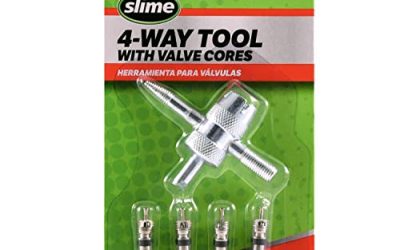
This compact tool-only option exists for one annoying situation: the low-side port buried where a straight coupler and a stiff hose simply will not seat. The 90-degree coupler solves that, and the trigger dispenser gives the same controlled, burst-by-burst charging as the larger A/C Pro tools. The trade-off is can compatibility — it works only with self-sealing R134a cans, not older piercing-style cans, so check what your local store stocks before buying. It is also the lightest tool in this roundup, which makes it a sensible glovebox or trunk spare for a car with a known slow leak that you are monitoring rather than ignoring.
5. Ketofa R1234yf Refrigerant Charge Hose Kit
Specs
- Refrigerant compatibility: R1234yf sealed cans only; not for R134a or self-sealing cans
- Can tap: 1/2-inch left-hand thread piercing opener
- Coupler: R1234yf 14 mm low-side quick coupler
- Gauge: 200 PSI color-coded low-side gauge
- Hose: rated 600 PSI working pressure, 3000 PSI burst
Owners of newer R1234yf cars get far fewer DIY choices, and this hose kit is the practical entry point. R1234yf cans use a left-hand thread, and this kit’s piercing tap, 14 mm low-side coupler and color-coded gauge are all built specifically for that standard, so nothing here can be accidentally connected to an R134a car. Note exactly what it fits: sealed (piercing-style) R1234yf cans, not self-sealing ones, so match your can before ordering. It includes no refrigerant. Given how expensive R1234yf is per ounce and how small the correct charge window is on many newer systems, charge in very short bursts and recheck the gauge between each one.
Usage and Safety Notes
Work with the engine running, the AC on maximum and the blower on high, and add refrigerant in short bursts, pausing to let the pressure stabilize and the vent temperature respond. More is not better: an overcharged system cools worse, builds excessive high-side pressure and strains the compressor, and correcting an overcharge means recovering refrigerant with proper equipment, not cracking a fitting. Never connect a can to the high-side port, never vent refrigerant to the atmosphere, and wear eye protection and gloves — escaping refrigerant can cause cold burns. Keep cans upright unless the instructions say otherwise, and store spares away from heat. Finally, rules differ by place: some states and countries restrict who can buy small refrigerant cans or require deposits and self-sealing valves, so check your local regulations before ordering, and take a system that loses its charge every few weeks to a shop for a proper leak repair.
FAQ
How do I know which refrigerant my car uses?
Read the underhood label, which lists the refrigerant type and the full charge weight, or check the owner’s manual. Do not guess from the model year alone, because manufacturers switched from R134a to R1234yf at different times across model lines.
Can I use an R134a kit in an R1234yf car, or top one refrigerant with the other?
No. The two refrigerants are not interchangeable, must never be mixed, and use different service fittings precisely to prevent cross-charging. Mixing them creates a contaminated charge that a shop must recover and dispose of.
Why did my AC get warm again a month after recharging?
Because the leak is still there. Refrigerant is not consumed in normal operation, so a system that needed a top-off is leaking, and the refill only bought time. Repeated recharging without repair wastes refrigerant and money; a shop can find the leak with dye or an electronic detector.
Can I overcharge the system with a DIY kit?
Yes, and it is the most common DIY mistake. Overcharging raises pressures, reduces cooling and can damage the compressor. Charge in short bursts, watch the gauge, and stop at the bottom of the recommended range rather than aiming for the top.
Should I avoid kits with stop-leak?
It depends on your plans. Seal conditioners can slow a seep at a rubber O-ring, but they cannot fix metal damage, and sealant in the system can contaminate a shop’s recovery equipment — many shops refuse cars with known stop-leak or charge more. If professional repair is likely, use plain refrigerant or a tool-only kit.
Conclusion
For most R134a cars, the A/C Pro ACP-100 is the straightforward complete kit, and the Pro-C digital dispenser is the better long-term tool if you recharge more than once. The Arctic Freeze gauge earns its place for hard-to-reach ports, the EZ Chill kit is the simplest one-and-done option, and the Ketofa hose gives R1234yf owners a workable DIY path. Whichever you choose, remember what a kit can and cannot do: it replaces refrigerant that leaked out, slowly and carefully, and the cooling lasts exactly as long as the leak allows.
More from Amazon
Programs that pair well with the guide above. Offers and eligibility are set by Amazon and may change.
Free shipping on eligible items, Prime Video and more. Eligible new members can start with a free trial.
Start a Prime free trialAudiobooks and podcasts to listen to on the go. Eligible new members can start with a free trial.
Try Audible freeAd-free music streaming. Eligible new subscribers can start with a free trial.
Try Music Unlimited freeA free business account with business pricing and bulk-buying tools for work, shop or home office.
Create a business accountAs an Amazon Associate we earn from qualifying purchases.