Key takeaways
- Compare the best mechanic gloves for garage and engine work, from dexterous reusable pairs to impact and heavy-duty nitrile picks, with safety notes.
Disclosure: As an Amazon Associate, I earn from qualifying purchases.


Anyone who has scraped a knuckle on a fan shroud or finished an oil change with grease worked deep under their fingernails understands why a good pair of mechanic gloves earns its place in the toolbox. The right gloves protect your skin from cuts, scrapes, solvents, and hot grime while still letting you feel a small bolt well enough to start it by hand. The wrong pair either tears on the first sharp bracket or feels so bulky that you take them off within five minutes, which defeats the purpose entirely.
This guide compares five well-regarded options across the main styles a home mechanic actually uses: a dexterous all-rounder, two impact-protected pairs for heavier work, an abrasion-focused pair built for long wear, and a box of heavy-duty disposable nitrile gloves for the messiest fluid jobs. Each pick lists real specifications so you can match the glove to the work you do most, whether that is routine maintenance, brake jobs, or full weekend engine projects.
One honest note before the picks: a mechanic glove is skin protection and grip, nothing more magical than that. Unless a glove carries a specific published rating, it is not cut-proof and it is not heat-proof, and no glove on this page will protect you from a spinning belt, a moving fan, or a rotating drill chuck. Fit and task matching matter far more than marketing language.
How to Choose
Decide between reusable and disposable first. Reusable synthetic-leather gloves are the better default for general wrenching: they survive repeated use, cushion your knuckles, and wash clean. Disposable nitrile gloves make more sense for fluid work such as oil changes, brake cleaner, coolant, and parts washing, where you want to peel the mess off and throw it away instead of soaking a reusable pair in solvent.
Match thickness to feel. Thin palms in the 0.5 to 0.8 mm range give the fingertip feel you need for starting fasteners and handling small clips. Thicker palms and padded models trade some of that feel for abrasion life and impact cushioning. Many home mechanics keep both: a thin pair for assembly work and a heavier pair for teardown, suspension, and exhaust jobs.
Check the protection ratings that actually exist. Look for published ANSI/ISEA abrasion levels and, on impact models, thermoplastic rubber (TPR) armor across the knuckles and fingers. If you genuinely need cut or heat protection, buy a glove rated for that specific hazard rather than assuming a mechanic glove covers it; standard mechanic gloves are not rated for either.
Prioritize fit and closure. A glove that is too large snags and bunching at the fingertips ruins dexterity, while one that is too small splits at the seams. Hook-and-loop wrist closures keep grit out and stop the glove shifting mid-job. Elastic slip-on cuffs are faster but let in more debris. Measure your hand and follow the maker’s size chart instead of guessing.
Think about heat honestly. Engine work means warm components. Mechanic gloves tolerate brief contact with warm parts, but they are not welding or exhaust gloves, and synthetic materials can melt against a genuinely hot manifold. Let the engine cool before reaching in, and use rated heat gloves for hot work.
Respect the spinning-parts rule. Never wear loose gloves around rotating machinery: drill presses, lathes, bench grinders, spinning belts, and cooling fans can grab fabric and pull a hand in faster than you can react. For those tasks, take the gloves off entirely, no matter how well they fit.
The Picks
1. Mechanix Wear Original Work Gloves (Large, Black)
The Original is the glove most home mechanics start with, and it remains the benchmark for fingertip feel. The synthetic leather palm is thin enough to pick up a washer or start a lug nut by hand, the breathable back keeps hands from overheating during long sessions, and the touchscreen-capable fingertips mean you can check a torque spec on your phone without peeling a glove off. It is the pair to reach for during general maintenance, interior work, and light engine jobs.
Specs
- Model: MG-05-010 (Large, Black)
- Palm: synthetic leather, touchscreen capable
- Back: breathable TrekDry material
- Closure: hook-and-loop wrist strap
- Rating: ANSI/ISEA abrasion level 3
- Care: machine washable
2. Mechanix Wear M-Pact Impact Resistant Gloves (Large, Black/Grey)
Step up to the M-Pact when the work involves breaker bars, rusty suspension bolts, and knuckles that keep meeting frame rails. Molded thermoplastic rubber covers the back of the hand and fingers to absorb knocks, and D3O padding in the palm softens vibration and hard grips. You give up a little of the Original’s fingertip delicacy, but for teardown days and heavy fastener work the trade is worth it.
Specs
- Model: MPT-58-010 (Large, Black/Grey)
- Protection: TPR knuckle and finger impact armor
- Palm: synthetic leather with D3O impact padding
- Fingertips: touchscreen capable
- Recommended uses listed by maker: automotive, mechanic, towing
- Care: machine washable
3. Ironclad EXO Motor Impact Gloves (Large, Black)

Ironclad built the EXO Motor Impact specifically around motorsport and mechanic use, with impact protection that wraps the full back of the hand rather than stopping at the knuckles. Open-cell memory foam pads in the palm absorb vibration from impact tools and long sessions on a ratchet, and the brand’s 16-point measurement system aims for a close, low-bulk fit. A terry cloth sweat wipe on the thumb is a small touch you will use more than you expect.
Specs
- Model: EXO2-MIG-04-L (Large, Black)
- Protection: 360-degree TPR back-of-hand impact coverage
- Palm: synthetic leather with memory foam padding
- Rating: ANSI/ISEA abrasion level 3
- Recommended uses listed by maker: motorsports, mechanics, utility
- Closure: hook-and-loop
4. Mechanix Wear Material4X Original Gloves (Large, Brown/Black)
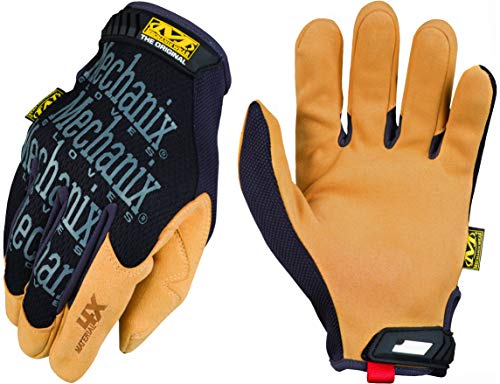
If your complaint about mechanic gloves is that the palms wear through, the Material4X version of the Original is the answer. Its proprietary synthetic leather is engineered to resist abrasion and tearing better than the standard palm material while keeping the same close fit, breathable back, and wrist closure as the regular Original. It suits mechanics who do frequent rough work — brakes, wheels, underbody panels — and want one pair to last through many months of it.
Specs
- Model: Material4X Original (Large, Brown/Black)
- Palm: Material4X synthetic leather for abrasion and tear resistance
- Back: breathable, form-fitting material
- Closure: hook-and-loop wrist strap
- Care: machine washable
- Fit: same sizing pattern as the standard Original
5. Gloveworks HD Orange Nitrile Disposable Gloves, 8 Mil (X-Large, Box of 100)
For oil, transmission fluid, brake cleaner, and coolant, a disposable glove you can throw away beats ruining a reusable pair. These Gloveworks HD gloves are 8 mil thick — far sturdier than thin exam-style nitrile — with a raised diamond texture that keeps grip on oily drain plugs and filter housings. The bright orange color makes it easy to spot a tear, and the latex-free nitrile suits anyone with a latex sensitivity. Expect a box to cover many fluid jobs.
Specs
- Model: GWON series (X-Large, box of 100)
- Material: 100 percent nitrile, latex-free and powder-free
- Thickness: 8 mil with thicker fingertips
- Texture: raised diamond grip pattern
- Use: single-use disposable for fluid and chemical work
- Length: approximately 9.5 inches
Notes on Use and Safety
Wash reusable gloves regularly; ground-in grit acts like sandpaper on both the glove and the parts you handle. Let them air-dry rather than baking them in a hot dryer, which can stiffen synthetic leather. Replace any glove with a torn fingertip or split seam, because a flap of loose material near moving parts is a hazard, not protection.
Keep the spinning-parts rule front of mind: gloves come off around drill presses, lathes, bench grinders, and any belt or fan that is turning. The same applies to loose sleeves and jewelry. And remember that disposable nitrile tears easily on sharp edges, so for jagged teardown work switch back to a reusable pair, then change into fresh nitrile for the greasy cleanup stage.
FAQ
Are mechanic gloves cut-proof or heat-proof?
Not unless the specific model carries a published cut or heat rating. The gloves in this guide protect against scrapes, grime, and minor knocks. For exhaust or welding work, buy rated heat gloves; for sheet metal and blade work, buy rated cut gloves.
Reusable or disposable: which should a home mechanic buy first?
A reusable pair first, because it covers the majority of jobs. Add a box of heavy-duty nitrile disposables when you start doing your own oil, coolant, and brake work, and the combination will cover nearly everything in a home garage.
How should mechanic gloves fit?
Snug, with fingertips reaching the ends of the glove fingers and no excess material bunching in the palm. Too loose ruins feel and can snag; too tight splits seams. Measure the circumference of your dominant hand and use the maker’s chart.
Can I wear gloves while using a drill press or grinder?
No. Rotating tools can catch glove material and pull your hand in. Remove gloves, secure the workpiece, and keep hands clear of the spin zone. Gloves are for hand tools and handling parts, not for work at spinning machinery.
How long do reusable mechanic gloves last?
It depends on the work. Light maintenance use can stretch a pair across many months, while frequent brake, wheel, and underbody work wears palms faster. Abrasion-resistant palms such as Material4X extend that life, and washing out grit slows wear noticeably.
Conclusion
For most home mechanics, the Mechanix Wear Original is the right first pair: it preserves the fingertip feel that makes gloves worth wearing at all. Add the M-Pact or Ironclad EXO Motor Impact when your work turns heavier and your knuckles need armor, choose the Material4X Original if palm wear is your usual failure point, and keep a box of Gloveworks HD nitrile on the shelf for every fluid job. Buy for the tasks you actually do, respect the limits of what a glove can protect against, and your hands will finish each project in far better shape than they started.
More from Amazon
Programs that pair well with the guide above. Offers and eligibility are set by Amazon and may change.
Free shipping on eligible items, Prime Video and more. Eligible new members can start with a free trial.
Start a Prime free trialAudiobooks and podcasts to listen to on the go. Eligible new members can start with a free trial.
Try Audible freeAd-free music streaming. Eligible new subscribers can start with a free trial.
Try Music Unlimited freeA free business account with business pricing and bulk-buying tools for work, shop or home office.
Create a business accountAs an Amazon Associate we earn from qualifying purchases.