Key takeaways
- Pods: 15 growing sites
- Lighting: 36W LED grow light
- Control: App control for lighting and monitoring
- Type: Recirculating indoor hydroponic garden kit
- Footprint: Countertop or small-table scale
- Best crops: Herbs, lettuce, leafy greens, small fruiting plants
Top 3 Picks
The owltron Smart Hydroponics Growing System Kit (15 pods, 36W LED, app control) is the best overall pick for most indoor growers who want a compact, connected, low-maintenance system that grows herbs and leafy greens reliably. The VEVOR Hydroponics Growing System Kit (3-tier, 108 sites, UPVC pipe, timed irrigation) is the best budget pick for anyone who wants maximum plant count per dollar and doesn’t mind a more manual, DIY-adjacent setup. The Growell Hydroponics Growing System Kit with 48 Large Buckets is the best premium pick for serious commercial-scale growers who need high crop density, expandability, and the structural durability that large-bucket DWC provides.
Quick Comparison
| Product | Best For | Key Specs | Price Tier |
|---|---|---|---|
| owltron Smart Hydroponics Growing System Kit | All-around indoor growing, herbs and greens | 15 pods, 36W LED, app control, compact footprint | Mid-range |
| VEVOR Hydroponics Growing System Kit (3-Tier 108 Sites) | Budget bulk growing, high site count | 108 sites, 3-tier UPVC pipe, timed irrigation | Budget |
| Growell Hydroponics Growing System Kit (48 Buckets) | Premium commercial scale, expandability | 48 large buckets, high crop density, deep water culture | Premium |
| DRYADES Large Hydroponics Growing System Kit (44-Pod) | Premium indoor gardening, seed variety | 44 pods, includes 3 seed packs, large capacity | Premium |
| VEVOR DWC Hydroponic System (5 Gallon, 8 Buckets) | Mid-range DWC for medium crops | 5-gallon buckets, 8-bucket setup, deep water culture | Mid-range |
| AOONEG 42-Pod Hydroponics Growing System | Mid-range high-pod indoor garden | 42 pods, LED grow light, indoor herb garden kit | Mid-range |
| VEVOR Hydroponic Tower (50 Pods, 10 Tiers) | Vertical space-saving growing | 50 pods, 10 tiers, app control, casters | Mid-range |
| Ahopegarden Indoor Garden Hydroponics Growing System (66 Pods) | Premium high-density germination and growing | 66 pods, LED grow light, germination kit | Premium |
| LETPOT LPH-SE Hydroponics Growing System (12 Pods) | Budget compact smart garden | 12 pods, app and WiFi control, compact | Budget |
| LETPOT LPH-Max 21-Pod Hydroponic Growing System | Premium smart mid-size garden | 21 pods, app and WiFi control, auto watering | Premium |
| Ahopegarden Hydroponics Growing System (12 Pods) | Budget entry-level indoor herbs | 12 pods, LED grow light, compact | Budget |
| General Hydroponics FloraPro Grow (25 lb) | Nutrient supply for any system | Water-soluble 10-12-22 NPK powder, 25 lb | Budget |
How We Chose
This roundup was assembled by comparing published specifications, category conventions, and the practical requirements of commercial and serious hobbyist hydroponic growing. We focused on growing capacity (number of sites or buckets), crop density (how many plants fit per square foot), lighting type and wattage, automation features (timed irrigation, app control, auto watering), water and nutrient monitoring capability, energy consumption, maintenance burden, and expansion potential. We prioritized products that represent a genuine step up from basic starter kits and that serve distinct buyer situations: compact smart gardens for limited space, high-site-count pipe systems for budget-minded bulk growers, and large-bucket systems for commercial-scale operations. Price tiers (budget, mid-range, premium) reflect relative market positioning rather than specific prices, which change daily. No products were tested or handled; all descriptions are based on what the manufacturer listings state and well-established category facts.
1. owltron Smart Hydroponics Growing System Kit – Best Overall
As an Amazon Associate we earn from qualifying purchases at no extra cost to you.
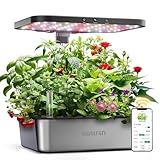
The owltron Smart Hydroponics Growing System Kit is the product we’d recommend first to the majority of indoor growers. With 15 growing pods, a 36W LED grow light, and app control, it hits a sweet spot between capacity, automation, and physical footprint that most other systems in this list overshoot in one direction or another. It suits home growers who want fresh herbs, lettuce, and leafy greens year-round without dedicating an entire room to the project.
Key Specs
- Pods: 15 growing sites
- Lighting: 36W LED grow light
- Control: App control for lighting and monitoring
- Type: Recirculating indoor hydroponic garden kit
- Footprint: Countertop or small-table scale
- Best crops: Herbs, lettuce, leafy greens, small fruiting plants
Strengths
The 36W LED is well matched to 15 pods, which means you get adequate light coverage per plant without the heat and energy draw of higher-wattage panels. The app control adds scheduling convenience that budget kits lack, and 15 pods is enough to keep a household supplied with basil, cilantro, mint, and salad greens if you stagger plantings. Because it’s a self-contained kit, there’s no plumbing, no external reservoir, and no bucket assembly — you fill, plant, and let the system run. That low setup friction is a major reason it’s the best overall pick: it removes the most common failure point for beginners, which is inconsistent watering and nutrient management.
Pros
- Balanced 15-pod capacity for a household
- 36W LED gives good coverage without excessive energy use
- App control simplifies scheduling and monitoring
- Self-contained design — no plumbing or bucket assembly
- Compact enough for a counter or small table
Cons
- Not expandable in the way pipe or bucket systems are
- 15 pods limits commercial-scale output
- App features depend on stable WiFi and a supported device
- Smaller reservoir means more frequent refills than large-bucket systems
How It Compares
Against the AOONEG 42-Pod system, the owltron offers fewer sites but a more manageable footprint and a wattage that scales sensibly to its pod count. The AOONEG’s higher pod count is attractive if you want sheer quantity, but it demands more space and more attention. Against the LETPOT LPH-Max 21-Pod, the owltron trades a few pods for a cleaner, more compact form factor and comparable app control. If your priority is a system that just works with minimal fuss, the owltron wins; if you want maximum pods per dollar, look at the AOONEG or the VEVOR pipe kit.
2. VEVOR Hydroponics Growing System Kit (3-Tier 108 Sites) – Best Budget

The VEVOR 3-Tier 108-Site Hydroponics Growing System Kit is the highest site count in this roundup at the lowest price tier. It uses UPVC pipe construction with timed irrigation, which means it’s closer to a genuine commercial NFT-style setup than the countertop garden kits. It suits growers who want to produce volume — leafy greens, herbs, strawberries — and who are comfortable with a more involved assembly and a more manual nutrient-management routine.
Key Specs
- Sites: 108 growing sites across 3 tiers
- Construction: UPVC pipe
- Irrigation: Timed irrigation pump
- Type: Multi-tier recirculating pipe system
- Footprint: Floor-standing, wall or frame mounted
- Best crops: Leafy greens, herbs, strawberries, small root vegetables in net pots
Strengths
108 sites for a budget-tier price is the headline. If you measure value in plants per dollar, nothing else here comes close. The UPVC construction is durable and resistant to the nutrient solutions and pH adjustments you’ll be running through it. Timed irrigation takes the guesswork out of watering cycles, and the three-tier layout uses vertical space efficiently, so you can run a serious production garden in a corner of a garage, basement, or spare room. It’s also genuinely expandable in the sense that pipe systems can be extended or duplicated more easily than sealed countertop units.
Pros
- 108 sites — by far the highest capacity-per-dollar here
- UPVC pipe construction is durable and chemically resistant
- Timed irrigation reduces manual watering
- Three-tier vertical layout saves floor space
- Closer to commercial NFT-style growing than countertop kits
Cons
- Assembly is more involved than a self-contained kit
- 108 sites demand a large nutrient reservoir and regular monitoring
- No app control or advanced automation out of the box
- More failure points: pump, lines, and fittings all need occasional attention
- Lighting is not included, so you’ll add your own grow lights
How It Compares
Compared with the owltron 15-pod kit, the VEVOR pipe system is a different category entirely: seven times the sites, but no integrated lighting, no app, and a steeper learning curve. It’s the better choice if you’re chasing output; the owltron is better if you want convenience. Against the Growell 48-bucket premium system, the VEVOR offers more sites for less money but lacks the bucket-based root-space and the structural robustness of a commercial DWC setup. If you’re a beginner, start with the owltron; if you’re a budget-minded grower with space and time, the VEVOR is unmatched on capacity per dollar.
3. Growell Hydroponics Growing System Kit (48 Large Buckets) – Best Premium

The Growell Hydroponics Growing System Kit with 48 Large Buckets is the most serious commercial-scale option in this roundup. Forty-eight large buckets means each plant gets substantial root volume, which translates to larger plants, better fruiting crops, and more forgiving nutrient and pH swings. It suits growers running a commercial operation or a high-output home grow who need durability, density, and room to expand.
Key Specs
- Buckets: 48 large growing buckets
- Type: Large-bucket deep water culture / recirculating system
- Root volume: High per-plant, suitable for fruiting crops
- Scale: Commercial or high-output home
- Best crops: Tomatoes, peppers, cucumbers, leafy greens, herbs
Strengths
Large buckets are the defining feature. In hydroponics, root-zone volume is one of the biggest determinants of plant size and yield. A 48-bucket layout gives each plant meaningful root space, which means less frequent topping-off, more stable nutrient concentration, and better resilience against temperature swings in the reservoir. For commercial growers, this is the difference between a system that produces consistently and one that needs babysitting. The bucket format is also the most maintainable: each bucket can be inspected, cleaned, and replaced individually, so a single failure doesn’t take down the whole run. Expansion is straightforward — bucket systems scale by adding buckets and reservoir capacity, not by rebuilding the entire frame.
Pros
- 48 large buckets deliver high crop density and generous root volume
- Best system here for fruiting crops like tomatoes and peppers
- Bucket-by-bucket maintenance isolates problems
- Durable construction suited to continuous commercial operation
- Highly expandable by adding buckets and reservoir capacity
Cons
- Premium price tier and significant space requirement
- Large total water volume means large nutrient inputs
- Full-system assembly and initial fill take real time
- Lighting is a separate, significant investment at this scale
- Overkill for a household that just wants fresh herbs
How It Compares
Against the VEVOR 108-site pipe kit, the Growell offers fewer sites but far more root volume per plant and a much more robust commercial architecture. The VEVOR wins on raw site count and price; the Growell wins on yield per plant, durability, and expandability. Against the VEVOR 8-bucket DWC mid-range system, the Growell is simply the same idea scaled up — six times the buckets and a premium build. If you’re growing commercially or want to, the Growell is the pick; if you’re growing for a family, it’s more than you need.
4. DRYADES Large Hydroponics Growing System Kit (44-Pod) – Best Premium Indoor Garden

The DRYADES Large Hydroponics Growing System Kit is a 44-pod indoor garden that ships with three seed packs, making it one of the most complete out-of-the-box premium kits here. It suits growers who want high pod density indoors with lighting integrated and seeds included, so they can start a full grow immediately without sourcing seeds separately.
Key Specs
- Pods: 44 growing sites
- Includes: 3 seed packs
- Type: Indoor hydroponic garden kit with integrated lighting
- Scale: Large indoor garden
- Best crops: Herbs, lettuce, leafy greens, flowering herbs
Strengths
The 44-pod count puts the DRYADES well above typical countertop kits and closer to a small commercial indoor garden. Including three seed packs removes the friction of sourcing compatible seeds and gives you a clear starting point — you can plant a mixed crop immediately and learn what grows best in your environment. As a premium indoor unit, it’s designed for integrated lighting and a self-contained growing environment, which keeps the setup indoors and clean. It’s a strong choice for growers who want volume without committing to a floor-standing pipe or bucket system.
Pros
- 44 pods for high indoor crop density
- Includes 3 seed packs — ready to grow on arrival
- Integrated lighting keeps the setup self-contained
- Premium build aimed at serious indoor growers
- Good middle ground between countertop kits and commercial systems
Cons
- Premium price tier
- 44 pods need consistent nutrient and pH attention
- Indoor lighting adds to electricity use
- Less expandable than bucket or pipe systems
- Requires dedicated indoor space
How It Compares
Against the Ahopegarden 66-pod premium kit, the DRYADES offers fewer pods but includes seeds and a cleaner integrated-garden format. The Ahopegarden’s 66 pods are better if germination volume is your goal; the DRYADES is better if you want a complete indoor garden experience with seeds in the box. Against the owltron 15-pod mid-range kit, the DRYADES is nearly triple the capacity at a premium tier. Choose the DRYADES if you want maximum indoor pods with included seeds; choose the owltron if you want a simpler, cheaper first step.
5. VEVOR DWC Hydroponic System (5 Gallon, 8 Buckets) – Best Mid-Range DWC

The VEVOR DWC Hydroponic System with 5-gallon buckets and an 8-bucket layout is the most approachable entry into true deep water culture. It suits growers who want the root-volume benefits of DWC without the scale and cost of a 48-bucket commercial system.
Key Specs
- Buckets: 8
- Bucket size: 5 gallons each
- Type: Deep water culture (DWC)
- Scale: Mid-size home grow
- Best crops: Tomatoes, peppers, lettuce, herbs, cucumbers
Strengths
Five gallons per bucket is a real root zone — enough to grow fruiting crops like tomatoes and peppers, not just herbs. Eight buckets gives you a manageable garden that’s still large enough to produce meaningfully. DWC is also one of the simplest hydroponic methods to understand: roots sit in oxygenated nutrient solution, and as long as you maintain water level, nutrient concentration, and aeration, plants thrive. Maintenance is individual per bucket, so a single problem plant doesn’t compromise the rest.
Pros
- 5-gallon buckets provide substantial root volume
- 8-bucket layout is manageable for a home grow
- DWC is simple to learn and forgiving
- Individual bucket maintenance isolates issues
- Mid-range tier makes DWC accessible
Cons
- Requires an air pump and aeration per bucket
- No integrated lighting or timer automation
- Larger water volume means more nutrient use than small kits
- Eight buckets take up real floor space
- Not expandable to commercial scale without adding many components
How It Compares
Against the Growell 48-bucket system, the VEVOR 8-bucket is the same DWC concept at one-sixth the scale and a mid-range price. It’s the right choice if you want to learn DWC without committing to commercial infrastructure. Against the VEVOR 108-site pipe kit, the DWC system offers far fewer sites but much more root volume per plant, making it better for fruiting crops. If you want big plants on a modest budget, the 8-bucket DWC is the sweet spot.
6. AOONEG 42-Pod Hydroponics Growing System – Best Mid-Range Pod Count

The AOONEG 42-Pod Hydroponics Growing System is a mid-range indoor herb garden with an LED grow light. It suits growers who want high pod count indoors at a price below the premium tier.
Key Specs
- Pods: 42 growing sites
- Lighting: Integrated LED grow light
- Type: Indoor hydroponic herb garden kit
- Scale: Mid-size indoor garden
- Best crops: Herbs, lettuce, leafy greens
Strengths
42 pods at a mid-range price is aggressive value. You get nearly the pod count of premium indoor gardens without the premium price. The integrated LED keeps the setup self-contained, and as an indoor herb garden it’s designed for clean, soil-free growing on a shelf, table, or dedicated stand. For growers who want to run a large herb and greens operation indoors without stepping into commercial pipe or bucket territory, it’s a strong middle option.
Pros
- 42 pods at a mid-range price
- Integrated LED grow light
- Self-contained indoor format
- Good for herbs and leafy greens at volume
- Simpler than pipe or bucket systems
Cons
- No app control mentioned in the listing
- Smaller reservoir relative to pod count means frequent refills
- Less root volume per plant than bucket systems
- Not designed for large fruiting crops
- Indoor lighting adds electricity cost
How It Compares
Against the owltron 15-pod kit, the AOONEG roughly triples the pod count at a similar or slightly higher tier, but it lacks app control and the refined, compact form factor. The owltron is easier to live with; the AOONEG produces more. Against the DRYADES 44-pod premium kit, the AOONEG is nearly the same capacity for less money, but the DRYADES includes seeds and a premium build. If pod count per dollar is your metric, the AOONEG is compelling; if you want app control, choose the owltron.
7. VEVOR Hydroponic Tower (50 Pods, 10 Tiers) – Best for Vertical Growing

The VEVOR Hydroponic Tower is a 50-pod, 10-tier vertical growing system with app control and casters. It suits growers with limited floor space who want to maximize plant count by growing upward rather than outward.
Key Specs
- Pods: 50 growing sites
- Tiers: 10
- Control: App control
- Mobility: Casters for repositioning
- Type: Vertical hydroponic tower
- Best crops: Herbs, lettuce, leafy greens, strawberries
Strengths
Vertical growing is the single best way to increase yield per square foot, and a 10-tier tower with 50 pods does exactly that. The casters are a genuinely useful detail: you can roll the tower to a sunny spot or out of the way for cleaning, which matters in apartments and small grow rooms. App control adds scheduling and monitoring convenience. Compared with three-tier pipe systems, the tower takes up less floor area for a comparable site count.
Pros
- 50 pods in a small floor footprint
- 10 tiers maximize vertical space
- App control for scheduling and monitoring
- Casters make repositioning and cleaning easy
- Great for apartments and small grow rooms
Cons
- Tall towers can be top-heavy if not balanced
- Lower tiers may receive less light in some setups
- Vertical systems can be harder to inspect tier by tier
- Smaller per-plant root volume than bucket systems
- Reservoir capacity may limit how long you can go between refills
How It Compares
Against the VEVOR 108-site pipe kit, the tower has half the sites but a fraction of the floor footprint, and it adds app control and casters. The pipe kit wins on raw capacity; the tower wins on space efficiency. Against the AOONEG 42-pod indoor garden, the tower offers more pods and vertical efficiency, while the AOONEG is simpler and more horizontal. If floor space is your constraint, the tower is the clear choice.
8. Ahopegarden Indoor Garden Hydroponics Growing System (66 Pods) – Best Premium Germination Capacity

The Ahopegarden 66-Pod Indoor Garden Hydroponics Growing System is a premium germination and growing kit with an LED grow light. It suits growers who want the highest pod count in an indoor, self-contained format — especially for starting large batches of seedlings before moving them into a larger system.
Key Specs
- Pods: 66 growing sites
- Lighting: Integrated LED grow light
- Type: Indoor hydroponic garden and germination kit
- Scale: Premium, high-density indoor
- Best crops: Herbs, lettuce, leafy greens, seedlings for transplant
Strengths
66 pods is the highest indoor pod count in this roundup. As a germination kit, it’s particularly useful as a nursery: start 66 seedlings, then move them into a bucket or pipe system once they’re established. That makes it a strong companion to a commercial setup rather than a competitor to it. The integrated LED keeps everything self-contained, and the premium build is aimed at growers who plan to run it continuously.
Pros
- 66 pods — the highest indoor capacity here
- Excellent as a germination nursery for larger systems
- Integrated LED grow light
- Premium build for continuous use
- High density per square foot
Cons
- Premium price tier
- 66 plants at maturity is a lot to manage indoors
- Smaller root volume per plant than bucket systems
- Needs consistent nutrient and pH management at this density
- Requires significant indoor space and electricity
How It Compares
Against the DRYADES 44-pod premium kit, the Ahopegarden offers 22 more pods but doesn’t include seed packs. If you want maximum germination volume, the Ahopegarden wins; if you want a ready-to-grow kit with seeds, the DRYADES wins. Against the AOONEG 42-pod mid-range kit, the Ahopegarden adds 24 pods and a premium build at a higher tier. Choose the Ahopegarden if you’re running a nursery or want the highest indoor pod count available.
9. LETPOT LPH-SE Hydroponics Growing System (12 Pods) – Best Budget Smart Garden

The LETPOT LPH-SE is a 12-pod smart herb garden with app and WiFi control. It suits beginners and small-space growers who want a connected, low-cost introduction to hydroponics.
Key Specs
- Pods: 12 growing sites
- Control: App and WiFi control
- Type: Compact smart indoor herb garden
- Scale: Countertop
- Best crops: Herbs, small leafy greens
Strengths
Getting app and WiFi control at a budget tier is the standout feature. Most budget kits are manual, so the LETPOT LPH-SE lets you schedule lighting and monitor the garden from your phone without paying mid-range prices. Twelve pods is enough for a steady supply of kitchen herbs, and the countertop footprint means it fits almost anywhere. It’s a low-risk way to find out whether hydroponics suits you before investing in a larger system.
Pros
- App and WiFi control at a budget tier
- Compact 12-pod countertop footprint
- Low cost of entry
- Simple operation for beginners
- Good for kitchen herbs
Cons
- 12 pods is limited for anything beyond herbs
- Small reservoir needs frequent refills
- Not suited to fruiting crops
- No expandability
- WiFi dependency for smart features
How It Compares
Against the Ahopegarden 12-pod budget kit, the LETPOT LPH-SE adds app and WiFi control, which the Ahopegarden entry kit doesn’t emphasize. If connectivity matters, the LETPOT wins; if you just want the cheapest basic 12-pod garden, the Ahopegarden is a fine alternative. Against the owltron 15-pod mid-range kit, the LETPOT costs less and still offers app control but has three fewer pods and less refined hardware. For a first smart garden, the LETPOT is the budget pick.
10. LETPOT LPH-Max 21-Pod Hydroponic Growing System – Best Premium Smart Garden

The LETPOT LPH-Max is a 21-pod smart indoor garden with app and WiFi control and auto watering. It suits growers who want a premium smart experience in a mid-size indoor format.
Key Specs
- Pods: 21 growing sites
- Control: App and WiFi control
- Automation: Auto watering
- Type: Smart indoor hydroponic garden
- Best crops: Herbs, lettuce, leafy greens
Strengths
Auto watering is the feature that separates the LPH-Max from most pods-count systems. By automating the water cycle, it reduces the most common beginner mistake — inconsistent watering — and makes the system more forgiving of busy schedules. Combined with app and WiFi control, it’s one of the most hands-off indoor gardens here. Twenty-one pods is a solid middle capacity: more than a starter kit, less overwhelming than a 66-pod unit.
Pros
- Auto watering reduces manual maintenance
- App and WiFi control
- 21-pod capacity suits a household
- Premium smart features
- Manageable size for indoor growing
Cons
- Premium tier for a 21-pod system
- Smaller capacity than the AOONEG or Ahopegarden units
- Auto watering still requires reservoir refills
- Not expandable
- Fruiting crops remain limited by root volume
How It Compares
Against the owltron 15-pod kit, the LPH-Max adds six pods and auto watering at a higher tier. If automation is worth the premium to you, the LPH-Max wins; if you want the best balance of price and capability, the owltron remains the better overall pick. Against the AOONEG 42-pod mid-range kit, the LPH-Max has half the pods but far more automation. Choose the LPH-Max if you travel or want the smartest low-maintenance garden; choose the AOONEG if pod count is the priority.
11. Ahopegarden Hydroponics Growing System (12 Pods) – Best Budget Entry Kit

The Ahopegarden 12-Pod Hydroponics Growing System is a straightforward, budget-tier indoor herb garden with LED lighting. It suits absolute beginners who want the lowest-cost way to try hydroponics.
Key Specs
- Pods: 12 growing sites
- Lighting: Integrated LED grow light
- Type: Compact indoor herb garden
- Scale: Countertop
- Best crops: Herbs, small leafy greens
Strengths
It does the basics well and costs the least. Twelve pods, integrated LED, countertop size — that’s the whole proposition, and for a first-time grower it’s enough. There’s no app dependency, no plumbing, and no bucket assembly, which means fewer things to troubleshoot. If you want to prove to yourself that you’ll actually keep a hydroponic garden alive, this is the lowest-risk way to find out.
Pros
- Lowest-cost entry point
- Integrated LED lighting
- Simple, no-connectivity operation
- Compact countertop size
- Good for learning the basics
Cons
- No app or WiFi control
- 12 pods limits output
- Small reservoir requires frequent refills
- Not for fruiting crops
- No expansion path
How It Compares
Against the LETPOT LPH-SE, the Ahopegarden offers no smart control but a lower cost. If you don’t need connectivity, the Ahopegarden is the cheaper way in; if you want app control at a budget tier, the LETPOT LPH-SE is worth the small premium. Against the owltron 15-pod kit, the Ahopegarden saves money but gives up three pods, app control, and a more capable 36W light. Start here if budget is the deciding factor.
12. General Hydroponics FloraPro Grow (25 lb) – Best Nutrient Supply

The General Hydroponics FloraPro Grow is a 25 lb water-soluble fertilizer with a 10-12-22 NPK ratio, formulated as plant food for hydroponic systems. It suits anyone running any of the systems above who wants a bulk nutrient supply from a well-established hydroponics brand.
Key Specs
- Form: Water-soluble powder
- NPK: 10-12-22
- Weight: 25 lb
- Use: Hydroponic plant food
- Brand: General Hydroponics — a long-established nutrient manufacturer
Strengths
A 25 lb bag of powder is far more economical per feeding than small liquid bottles, and the 10-12-22 ratio is a grow-oriented blend with elevated potassium, which supports flowering and fruiting development. Powder also stores longer than liquid nutrients and ships without the water weight. For growers running 108-site pipe systems or 48-bucket commercial setups, bulk powder is the only sensible way to feed. General Hydroponics is one of the most established names in the category, so the formulation is a known quantity rather than an unknown.
Pros
- 25 lb bulk size lowers cost per feeding
- 10-12-22 NPK supports growth and fruiting
- Powder stores well and ships light
- From an established hydroponics nutrient brand
- Works across DWC, NFT, pipe, and tower systems
Cons
- Requires accurate measuring and mixing
- Powder can clump if stored in humid conditions
- Not a complete multi-part program on its own for every crop stage
- Oversized for a 12-pod countertop garden
- Needs a scale or measuring scoop for precision
How It Compares
Nutrients aren’t really competing with the growing systems here — they feed them. The comparison that matters is powder versus liquid: powder wins on cost per feeding and storage life, liquid wins on convenience for tiny kits. If you’re running the VEVOR 108-site pipe kit, the Growell 48-bucket system, or any multi-bucket DWC setup, bulk powder like FloraPro Grow is the practical choice. For a 12-pod countertop garden, a small bottle is easier.
How to Choose
Choosing among premium commercial hydroponic systems comes down to eight variables: growing capacity, crop density, lighting, automation, water and nutrient monitoring, energy use, maintenance, and expansion potential. Work through them in that order and most decisions resolve themselves.
Growing Capacity: Sites vs. Root Volume
Capacity isn’t just pod count. A 108-site pipe system and a 48-bucket DWC system look far apart on paper, but the bucket system will out-yield the pipe system for fruiting crops because each plant gets 5+ gallons of root zone instead of a narrow channel. Use this rule of thumb:
- Leafy greens and herbs: 1–2 plants per square foot in pipe or pod systems. A 108-site system can run in roughly 12–18 square feet of wall or rack space.
- Fruiting crops (tomatoes, peppers, cucumbers): plan on 2–4 square feet per plant and 3–5 gallons of root volume each. An 8-bucket DWC at 5 gallons per bucket handles 8 fruiting plants comfortably; a 48-bucket system handles 48.
- Strawberries and compact fruiting plants: 1–2 plants per square foot in tower or tiered systems.
If your goal is salad and herbs, prioritize site count. If your goal is fruit, prioritize root volume.
Crop Density and Vertical Efficiency
Floor space is usually the binding constraint, not budget. A 10-tier tower with 50 pods occupies a fraction of the floor area of a 3-tier 108-site pipe rack. If you’re growing in an apartment, a spare closet, or a corner of a garage, vertical systems give you the most plants per square foot. If you have a basement or dedicated grow room, horizontal pipe or bucket layouts are easier to work with, inspect, and light evenly.
Lighting: Wattage, Coverage, and Cost
Integrated LED kits like the owltron (36W), AOONEG, DRYADES, and Ahopegarden units handle lighting for you, which is a real convenience. Pipe and bucket systems generally don’t include lights, so you’ll buy them separately. As a starting point:
- Herbs and lettuce need roughly 15–30 watts of LED per square foot of canopy.
- Fruiting crops need roughly 30–50 watts per square foot.
- Run lights 14–16 hours per day for leafy greens, 12–14 for fruiting crops, and 18–20 for germination.
Energy use adds up. A 36W light running 16 hours a day uses about 0.58 kWh per day — roughly 17 kWh per month before pumps. A 400W lighting array over a commercial grow uses about 6.4 kWh per day at 16 hours, roughly 190 kWh per month. That’s the real cost difference between a countertop kit and a commercial system, and it’s usually larger than the price difference between the systems themselves.
Automation: Timers, App Control, Auto Watering
Automation tiers look like this:
- Manual: you water and adjust on a schedule. Cheapest, highest failure risk.
- Timed irrigation: a pump cycles nutrient solution on a timer. Standard on pipe systems like the VEVOR 108-site kit.
- App/WiFi control: scheduling and monitoring from a phone. Found on the owltron, VEVOR tower, and LETPOT units.
- Auto watering: the system maintains water level itself. The LETPOT LPH-Max is the clearest example here.
If you travel or have an irregular schedule, don’t buy a manual system. Auto watering and timed irrigation aren’t luxuries at that point — they’re the difference between a crop and a dead reservoir.
Water and Nutrient Monitoring
Every system here needs some monitoring. The essentials:
- pH: keep hydroponic solution between 5.5 and 6.5 for most crops. Check every 2–3 days in small systems, daily in high-density ones.
- EC/PPM: electrical conductivity measures nutrient strength. Leafy greens run around 0.8–1.6 EC; fruiting crops 1.6–2.4 EC. High-density systems like the 108-site pipe kit and the 66-pod Ahopegarden drift faster and need more frequent checks.
- Water level: 5-gallon buckets can go several days; a 12-pod countertop reservoir may need topping off every 2–3 days.
- Temperature: keep reservoir solution between 65–75°F. Above 75°F, dissolved oxygen drops and root disease risk rises.
Bigger reservoirs are more stable. This is the strongest argument for the large-bucket systems: more water volume means pH and EC swing slower, so you correct less often.
Energy Use Beyond Lighting
Pumps and air stones are modest — typically 5–50W total for home-scale systems — but they run continuously. A 30W pump running 24/7 uses about 21.6 kWh per month. At commercial scale with multiple pumps and air blowers, budget for 100–200 kWh per month on top of lighting. Vertical towers and multi-tier pipe systems use the same floor space more efficiently, which means lower lighting cost per plant harvested.
Maintenance: What Wears Out First
Know the consumables and failure points before you buy:
- Pumps: the most common failure. Expect 12–24 months of continuous service from a budget pump; keep a spare.
- Air stones and tubing: degrade and clog within 3–6 months in DWC setups. Cheap to replace, easy to forget.
- Net pots and grow media: reusable for many cycles if cleaned, but media like rockwool is single-use.
- LED diodes: lose output gradually over years. A 36W integrated light may dim noticeably after 3–5 years of daily use.
- Fittings and seals: the slow leak is the classic pipe-system problem. Inspect quarterly.
- Reservoir cleaning: full drain and scrub every 2–4 weeks depending on system size and crop. This is the chore nobody warns beginners about and the one most often skipped.
Common mistakes: overfeeding (more nutrient is not better), letting pH drift for a week, running without aeration in DWC, and buying a system bigger than the time you have to maintain it. Match capacity to available weekly maintenance hours, not to ambition.
Expansion Potential
Sealed countertop kits — owltron, LETPOT, Ahopegarden, DRYADES — are effectively fixed capacity. Bucket and pipe systems scale. If you think you’ll want to grow more in a year, buy into a modular format now: the VEVOR 8-bucket DWC can be expanded with more buckets and reservoir capacity, and the Growell 48-bucket system is designed for scale from the start. Pipe systems can be extended with additional tiers or runs. This is the single biggest long-term cost decision in the category.
Decision Matrix
| Your Situation | Recommended Pick | Why |
|---|---|---|
| First-time grower, kitchen herbs, tight budget | Ahopegarden 12-Pod or LETPOT LPH-SE | Low cost, simple, proven format |
| Want app control without spending much | LETPOT LPH-SE | WiFi and app control at budget tier |
| Best all-around for a household | owltron 15-Pod | Balanced capacity, 36W LED, app control |
| Travel often, want minimal maintenance | LETPOT LPH-Max 21-Pod | Auto watering plus app control |
| High pod count indoors on a budget | AOONEG 42-Pod | 42 pods at mid-range price |
| Want seeds included, premium indoor garden | DRYADES 44-Pod | 3 seed packs, integrated lighting |
| Maximum indoor pods, nursery use | Ahopegarden 66-Pod | Highest pod count in an indoor kit |
| Small floor space, many plants | VEVOR Hydroponic Tower 50-Pod | 10 tiers, casters, app control |
| Bulk leafy greens on a tight budget | VEVOR 108-Site Pipe Kit | Highest site count per dollar |
| Learn DWC with fruiting crops | VEVOR 8-Bucket DWC | 5-gallon buckets, mid-range price |
| Commercial scale, maximum yield per plant | Growell 48-Bucket | Large root volume, expandable, durable |
| Feeding any medium-to-large system | General Hydroponics FloraPro Grow 25 lb | Bulk powder, 10-12-22, economical per feeding |
Frequently Asked Questions
How many plants can a 108-site hydroponic pipe system realistically support?
All 108 sites can be planted, but leafy greens and herbs are the realistic crops for that density. Each site holds a net pot with limited root volume, so fruiting crops like tomatoes won’t reach full size. For lettuce, basil, and similar crops, 108 sites is a genuine production capacity of roughly 100+ plants per cycle.
Is a 5-gallon DWC bucket enough for tomatoes?
Yes, for a single determinate or dwarf tomato plant. Five gallons provides adequate root volume and buffering for one fruiting plant. For indeterminate varieties that grow large and fruit over a long season, larger reservoirs or a recirculating system give better stability.
Do I need a separate grow light for a bucket or pipe system?
Yes. Countertop kits include integrated LEDs, but pipe and bucket systems generally don’t. Budget roughly 15–30W of LED per square foot for greens and 30–50W per square foot for fruiting crops, and plan for a timer to run the lights 12–16 hours daily.
How often do I need to change the nutrient solution?
Small countertop reservoirs should be drained and refilled every 2–3 weeks. Large-bucket and pipe systems can go 3–4 weeks between full changes because the larger water volume holds nutrient balance longer. Top off with plain water between changes and check EC and pH every few days.
What wears out first on a commercial hydroponic system?
Pumps are the most common early failure, typically after 12–24 months of continuous duty. Air stones and tubing in DWC setups degrade within 3–6 months. Seals and fittings develop slow leaks over time. Keeping spare pumps and air stones on hand prevents a single failure from ending a crop cycle.
Can a tower system replace a horizontal rack?
For herbs, lettuce, and strawberries, yes — a 10-tier tower can match or exceed the plant count of a horizontal rack in far less floor space. For fruiting crops, no: vertical systems don’t provide the root volume or the light penetration that large horizontal layouts do.
Is powder fertilizer better than liquid for hydroponics?
Powder is more economical per feeding, stores longer, and ships without water weight, which is why bulk products like the 25 lb FloraPro Grow make sense for large systems. Liquid nutrients are more convenient for small countertop gardens where mixing precision matters less than ease of use.
How much electricity does a commercial hydroponic system use per month?
Lighting dominates. A small 36W integrated kit uses roughly 17 kWh per month; a 400W commercial lighting array uses roughly 190 kWh per month at 16 hours daily. Pumps and aeration add another 20–200 kWh depending on scale. Vertical and multi-tier systems reduce lighting cost per plant by improving space efficiency.
Closing Recommendation
If you want one system and don’t want to think about it further, buy the owltron Smart Hydroponics Growing System Kit — 15 pods, 36W LED, and app control cover most household needs with minimal fuss. If your budget is the hard constraint, the VEVOR 108-Site 3-Tier Pipe Kit delivers unmatched capacity per dollar for leafy greens, or the Ahopegarden 12-Pod if you just want the cheapest possible start. If you’re growing commercially or plan to, the Growell 48-Bucket System is the only pick here built for serious, expandable, high-yield production. And whichever system you choose, budget for the General Hydroponics FloraPro Grow 25 lb powder if you’re running more than a countertop garden — bulk nutrients are the quiet line item that decides whether a large system stays affordable to operate.