Key takeaways
- Ozone generator vs enzyme cleaner for car odors: how each method works, when ozone is safe to use, and when enzymes fix the source for good.
Disclosure: As an Amazon Associate, I earn from qualifying purchases.
Some car smells survive every spray, shampoo and vent clip you throw at them. Cigarette smoke baked into a headliner, mildew after a window leak, sour milk deep in seat foam — these are the jobs where owners end up choosing between two very different tools: an ozone generator, which attacks odor molecules in the air and on every exposed surface, and an enzyme cleaner, which digests the organic material causing the smell in the first place.
They are not interchangeable. Ozone is a whole-cabin, unoccupied treatment with real safety rules attached. Enzyme cleaner is a targeted treatment that only works where you apply it — but it removes the source instead of neutralizing the symptom. This guide explains how each works, where each one fails, and which products represent each side honestly.
The Core Difference
An ozone generator produces O3, an unstable gas that reacts with odor molecules on contact and breaks them down. Because it is a gas, it reaches places a spray bottle cannot: inside the HVAC ducts, through headliner foam, into the weave of every seat at once. It does not clean anything — dirt, spill residue and mildew colonies are still physically there afterward; only the compounds they release have been oxidized.
An enzyme cleaner works the opposite way. It is a liquid carrying enzymes (and often beneficial bacteria) that break organic matter — urine, vomit, milk, sweat, food spills — into smaller compounds the bacteria then consume. It only works where it touches the source, needs dwell time, and does nothing for non-organic odors or places liquid cannot reach.
So the real question is not which is stronger. It is where your odor lives. A specific spill you can find and soak: enzymes win. An odor that is everywhere and nowhere — smoke saturation, a car that sat closed with mildew — is ozone’s job, provided the underlying problem is fixed first.
How to Choose
Identify the source before choosing the weapon. Sniff seats, carpet and trunk separately, and check the cabin air filter and AC evaporator drain. If you can point at the stain or spill, start with enzymes. If the smell is uniform with no single source, ozone is the realistic option.
Be honest about mg/h ratings. Ozone output figures are measured at the plate, not delivered into your cabin, and headline numbers vary wildly between brands. A car interior is a tiny space, so even a modest machine saturates it quickly. More output mainly means shorter runs — not better results.
Respect run-time discipline with ozone. Short cycles — typically 15 to 30 minutes for a car — with the HVAC fan on recirculate so the gas reaches the ducts. Never run one in an occupied car: ozone irritates lungs, eyes and airways. After the cycle, open every door and air the car out thoroughly before driving, keeping people and pets away until it smells neutral.
Remember ozone ages materials. Repeated or prolonged exposure degrades rubber seals, elastic and fabrics. It is a last-resort, occasional treatment — not a weekly routine.
Give enzymes their dwell time. Enzyme products are not spray-and-wipe. The area must stay damp for the time the maker specifies — often several hours for deep carpet padding — because the enzymes stop working once they dry out. Covering the spot with plastic helps; rushing this step is why enzyme cleaners get blamed for not working.
Fix the cause first, whichever you choose. Neither method masks anything permanently. A leaking seal, a clogged evaporator drain, a forgotten spill or a saturated cabin filter will bring the smell back within days. Ozone resets the air, but if mildew is still growing in wet carpet backing, the odor returns. Find it, clean it, dry it — then treat.
Match the enzyme product to the mess. Extraction shampoos suit large carpet areas, bio-enzymatic sprays suit spot treatment, and lighter enzyme sprays suit refreshing surfaces afterward. Test a hidden spot first.
The Products
Enerzen O-777 Ozone Generator (60,000 mg/h)

The ozone side’s high-output representative. The O-777 uses corona-discharge plates with a mechanical timer: set a short cycle, close the doors and walk away. Its output is far beyond what a cabin needs, so keep run times short — treat the rating as headroom, not a target.
Specs
- Rated ozone output: 60,000 mg/h (manufacturer figure, measured at the unit)
- Timer: mechanical dial, up to 2 hours plus a constant-on hold setting
- Coverage class: marketed for medium to large rooms, far above cabin volume
- Power: standard household outlet; park within cord reach
- Construction: metal housing with carry handle
Airthereal MA10K-PRO Ozone Generator (10,000 mg/h)
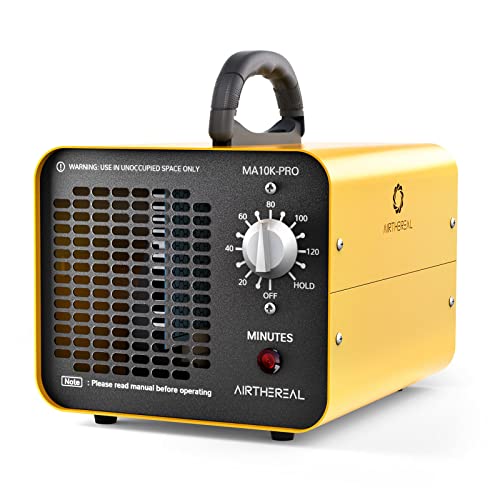
A more moderately rated machine that makes the output-honesty point well: 10,000 mg/h is still more than enough to saturate a car interior in minutes. Its timer and replaceable ozone plate suit owners who also want to treat a garage or room occasionally.
Specs
- Rated ozone output: 10,000 mg/h (manufacturer figure)
- Timer: adjustable, up to 2 hours, with auto shut-off
- Ozone plate service life: rated up to 20,000 hours, replaceable
- Coverage class: marketed for spaces of 3,500+ square feet
- Extras: remote control included; industrial-style metal case
Chemical Guys Foaming Citrus Fabric Clean (64 oz)
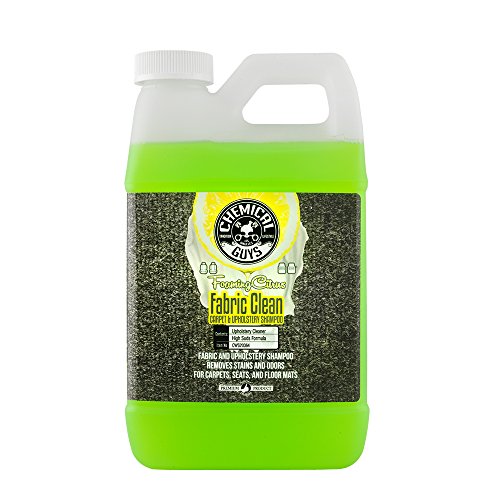
The enzyme side’s heavy-duty option for carpet and upholstery. Fabric Clean is a dilutable, oxygen-infused foaming shampoo blended with an enzymatic odor eliminator, worked into carpet and seats and then extracted or vacuumed out — the right format when the source is spread through footwell carpet or a whole bench seat rather than one small spot.
Specs
- Size: 64 fl oz concentrate (half gallon), model CWS20364
- Formula: foaming citrus shampoo with enzymatic odor elimination technology
- Use: carpets, fabric seats, floor mats and upholstery; dilute per label
- Application: brush in, allow dwell, extract or wet-vacuum for best results
- Scent: citrus, which fades rather than lingering as a perfume layer
Rocco & Roxie Professional Strength Stain & Odor Eliminator (32 oz)

A ready-to-use bio-enzymatic spray built for organic accidents — urine, vomit and similar messes — the natural fit for pet and kid incidents in a back seat. No mixing, no machine: saturate the spot so the product reaches as deep as the spill did, keep it damp for the label’s dwell time, and let the enzymes finish.
Specs
- Size: 32 fl oz ready-to-use spray bottle
- Formula: professional-strength bio-enzymatic cleaner for organic stains and odors
- Targets: urine, vomit, feces and other organic matter in carpet and upholstery
- Application: saturate, dwell, blot; no rinsing or extraction required
- Notes: color-safe and chlorine-free per the maker; test a hidden area first
Chemical Guys New Car Smell Air Freshener & Odor Eliminator (16 oz)

The light-duty end of the enzyme approach. This spray pairs a fresh scent with odor-eliminating enzymes, and it works as the finishing step after a deep enzyme treatment or an ozone cycle — or as routine upkeep on fabrics. It will not rescue a saturated cabin on its own; treat it as maintenance, not remediation.
Specs
- Size: 16 fl oz spray bottle, model AIR_101_16
- Formula: water-based spray with odor-eliminating enzymes
- Use: mist on fabric, carpet and into vents; safe across cars, trucks and RVs
- Scent profile: clean “new car” fragrance rather than a heavy perfume
- Role: maintenance step, not a substitute for source removal
Safety and Use Notes
Ozone safety is not optional fine print. Run the machine only in an empty, closed car, stand clear while it works, and ventilate thoroughly afterward — doors open, several minutes minimum — before anyone gets in. Never let children or pets ride in a treated car that still smells sharp or metallic; that smell means ozone is still present.
Keep ozone sessions short and infrequent to limit wear on door seals, seat elastic and rubber trim. If a car needs ozone every few weeks, the source was never fixed — find it instead of escalating treatment time.
With enzyme cleaners, the discipline is patience: saturate to the depth of the spill, keep the area damp for the full dwell time, and dry completely before judging the result. Do not mix enzyme products with antibacterial cleaners or hot water, which can deactivate the enzymes.
Whichever route you take, replace the cabin air filter afterward if it is old or part of the smell — the cheapest step in the job, and the most often skipped.
FAQ
Which is better for cigarette smoke smell?
Ozone, usually. Smoke saturates the headliner, ducts and every soft surface at once — exactly the whole-cabin pattern ozone handles. Clean all surfaces and replace the cabin filter first, then run short cycles with thorough airing-out between them.
Which is better for a pet accident or spilled milk?
An enzyme cleaner, because the source is specific and organic. Saturate to the depth of the spill, keep it damp for the full dwell time, and repeat if needed. Ozone over an unremoved spill only buys a few quiet days.
Can I use both methods on the same car?
Yes — for the worst cases that is the right order: enzyme-treat the source first, let everything dry fully, then run a short ozone cycle to clear what soaked into unreachable places. Air the car out well afterward.
Why did the smell come back after ozone treatment?
Because the source is still there. Ozone neutralizes odor molecules in air and on surfaces, but a live mildew colony, wet carpet backing or clogged AC drain keeps producing new ones. Fix the moisture or spill problem, then re-treat.
Is ozone safe for leather and electronics?
Occasional short cycles are generally tolerated, but ozone ages rubber, elastic and some plastics with repeated exposure. Keep sessions brief, avoid routine use, and never exceed the run times the maker recommends for small spaces.
Conclusion
Choose by where the odor lives. A findable, organic source — a spill, an accident, a stained patch of carpet — calls for an enzyme cleaner, dwell time and patience. A sourceless, whole-cabin smell like smoke saturation calls for an ozone generator, short disciplined cycles and strict airing-out before anyone drives. Either way, the treatment only holds if the underlying cause is fixed first.
More from Amazon
Programs that pair well with the guide above. Offers and eligibility are set by Amazon and may change.
Free shipping on eligible items, Prime Video and more. Eligible new members can start with a free trial.
Start a Prime free trialAudiobooks and podcasts to listen to on the go. Eligible new members can start with a free trial.
Try Audible freeAd-free music streaming. Eligible new subscribers can start with a free trial.
Try Music Unlimited freeA free business account with business pricing and bulk-buying tools for work, shop or home office.
Create a business accountAs an Amazon Associate we earn from qualifying purchases.