Key takeaways
- Compare the 3 best protectants for car interiors, from matte UV sprays to satin dressings for vinyl, rubber, and plastic dashboards, trim, and door panels.
Sunlight streaming through the windshield fades dashboards, dries out vinyl, and cracks plastic trim long before the rest of the cabin shows its age. A good interior protectant slows that wear by adding a UV barrier and a thin layer that keeps dust and grime from clinging to the surface, so a quick wipe keeps the cabin looking cared for instead of tired. The right product depends on the finish you want and the surfaces you have, because a glossy dressing that suits black trim can look wrong on a matte dashboard.

This guide covers three protectants that suit different cabins and habits. One dries to a matte finish for drivers who dislike shine, one restores faded vinyl, rubber, and plastic with a satin sheen, and one adds a clear-coat style layer for dashboards and trim that face strong sun. Each one works on vinyl, rubber, and plastic, and each states clearly where it should not go, so you can match the bottle to your interior before you spray.
Quick Picks
As an Amazon Associate we earn from qualifying purchases.
| Product | Best for | Key spec from title |
|---|---|---|
| 303 Aerospace Protectant, 32 Fl. Oz. | Matte, non-greasy UV protection | UV Protection, repels dust, dirt, and staining |
| Chemical Guys VRP Vinyl, Rubber, and Plastic Dressing, 16 oz | Satin shine on vinyl, rubber, and plastic | Non-greasy, dry-to-the-touch shine |
| Meguiar’s Ultimate Protectant, 15.2 Oz Spray Bottle | UV clear-coat protection for vinyl, rubber, and plastic | UV Clear Coat Technology, non-greasy formula |
How to Choose
Match the finish to your taste
Protectants leave very different finishes, and the bottle rarely shows that clearly on the shelf. Matte formulas dry with almost no shine, which suits dashboards and door panels where glare matters, while satin and gloss dressings darken faded trim and give it a richer look. Think about what bothers you more: a dashboard that reflects sunlight into your eyes, or trim that looks dry and grey. If you are unsure, a matte or satin product is the safer first buy, because a high-gloss finish is hard to tone down once it is on the surface, and it shows fingerprints and dust more readily on dark interiors.
Check surface compatibility before you buy
Most interior protectants are made for vinyl, rubber, and plastic, but the exceptions matter. Some formulas are not meant for unfinished leather such as suede, fabrics, clear plastics, gauge panels, or flooring, and using them there can leave marks or a cloudy film. Leather seats often need a dedicated leather conditioner instead, and touchscreens should be cleaned with a screen-safe product rather than a dressing. Read the label for the surfaces your cabin actually has, and if your car mixes leather, vinyl, and piano-black trim, plan on using more than one product rather than forcing one bottle to do every job.
Think about sun exposure and how often you will reapply
A protectant is not a one-time treatment. Most formulas need reapplying every three to five weeks to keep their UV barrier working, and cars parked outdoors in strong sun need that schedule more than garaged cars do. If you know you will forget a monthly routine, pick a product that is quick to apply with a spray and wipe, so the job takes minutes rather than an afternoon. A larger bottle also makes sense for drivers who treat the whole cabin, since dashboards, door panels, and console trim add up to a lot of surface, and running out halfway through leaves an uneven finish.
Decide between a spray and a dressing you rub in
Spray protectants cover large flat areas fast, which suits dashboards and door panels, but they can drift onto glass and screens if you spray directly at the surface. Cream and liquid dressings applied with a foam pad or microfiber towel give more control on textured trim and tight corners, though they take longer. A practical approach is to spray the product onto a towel rather than onto the surface itself, which keeps overspray off the windshield and lets you work the product into the material evenly. Whichever form you choose, work out of direct sun so the product does not dry before you wipe it.
The 3 Best Options
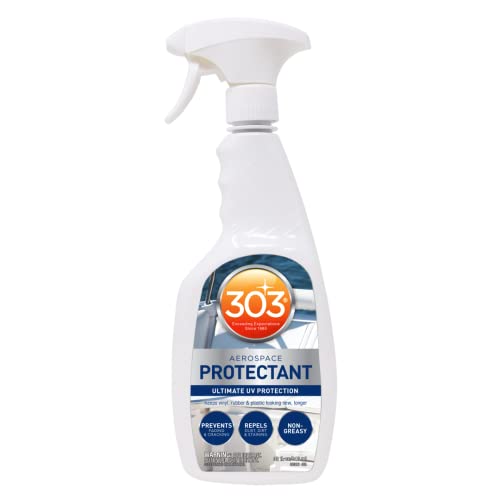
1. 303 Aerospace Protectant, 32 Fl. Oz.
303 Aerospace Protectant is the quiet choice in this guide, and that is exactly its appeal. It dries to a smooth matte finish with no oily residue, so treated dashboards and door panels look clean rather than coated, and it keeps dust, dirt, and staining from clinging to the surface. The water-based formula suits vinyl, plastic, and rubber, along with finished leather, and its UV protection helps prevent the fading and cracking that sun-baked cabins develop over time. Apply it every three to five weeks for steady protection.
Specs
- UV protection that helps prevent fading and cracking
- Repels dust, dirt, and staining
- Smooth matte finish with no oily or greasy residue
- Water-based formula for vinyl, plastic, rubber, PVC, and finished leather
- 32 fl. oz. spray bottle, model 30306
- Not for use on unfinished leather, suede, fabrics, clear plastics, or flooring
Best for: Drivers who want a matte, non-greasy finish on dashboards, door panels, and trim.
Watch out for: The label lists several surfaces to avoid, including unfinished leather and clear plastics, so check your trim before applying.
2. Chemical Guys VRP Vinyl, Rubber, and Plastic Dressing, 16 oz
Chemical Guys VRP is the pick for faded trim that needs visible restoration. It is a water-based dressing that brings back a deep, rich look on vinyl, rubber, and plastic, drying to a satin shine that feels dry to the touch rather than slick or oily. It works on dashboards, door panels, weatherstripping, and exterior trim alike, which makes one bottle useful across the whole car. The formula also helps repel dirt and water, so treated surfaces stay cleaner between washes. Apply it with a foam applicator or a microfiber towel for an even coat.
Specs
- Restores vinyl, rubber, and plastic surfaces inside and outside the vehicle
- Non-greasy, dry-to-the-touch satin shine
- Water-based formula, model TVD_107_16
- Helps repel dirt and water
- 16 oz bottle
- Made for vinyl, rubber, and plastic only, not leather
Best for: Faded vinyl, rubber, and plastic trim that needs a richer satin finish.
Watch out for: The brand states this dressing is for vinyl, rubber, and plastic only, so leather seats need a separate product.
3. Meguiar’s Ultimate Protectant, 15.2 Oz Spray Bottle
Meguiar’s Ultimate Protectant suits drivers who want a protective layer that lasts between applications. Its UV Clear Coat Technology is designed to shield vinyl, rubber, and plastic from sun damage while leaving a non-greasy shine, and the spray format makes it easy to cover a dashboard, console, and door panels in one session. The formula works on interior and exterior surfaces, so the same bottle can treat interior trim and exterior vinyl. It is a straightforward choice for a cabin that gets a lot of sun through the glass.
Specs
- UV Clear Coat Technology for vinyl, rubber, and plastic
- Non-greasy formula that shines and protects
- Works on interior and exterior surfaces
- 15.2 oz spray bottle, model G14716
- Is Discontinued By Manufacturer: No
Best for: Sun-exposed dashboards and trim that need lasting UV protection with a shine.
Watch out for: The finish has more shine than a matte protectant, so it may not suit drivers who dislike gloss on the dashboard.
Which One Fits Your Situation
You hate glare and shiny dashboards
Pick the 303 Aerospace Protectant. Its matte finish keeps the dashboard from reflecting sunlight toward the driver, and the non-greasy feel means the wheel and trim never feel slick. It is the most discreet of the three, and it suits cabins where the goal is a clean, factory look rather than a dressed-up shine.
Your trim looks faded and grey
Pick Chemical Guys VRP. Its satin dressing darkens tired vinyl and plastic and restores a richer tone, which makes the biggest visible difference on older cars. Use a foam applicator to work it into textured surfaces, and keep it away from leather, which needs its own conditioner instead. A second thin coat can deepen the finish on badly faded panels.
Your car sits in the sun all day
Pick Meguiar’s Ultimate Protectant. Its UV clear-coat layer is aimed squarely at sun damage, and the spray bottle covers a whole cabin quickly, so reapplying every few weeks is a short job. It also works on exterior vinyl, so one bottle covers trim inside and out. Reapply after a deep interior clean so the coating bonds to a fresh surface.
You want one bottle for the whole car
Pick Chemical Guys VRP or Meguiar’s Ultimate Protectant, since both are made for interior and exterior vinyl, rubber, and plastic. VRP gives a satin finish with more visible restoration, while Meguiar’s leans toward lasting UV protection with a shine. Choose VRP for faded trim and Meguiar’s for sun-baked cabins. Either way, apply with a towel to keep the product off glass and screens.
Common Mistakes
- Spraying protectant directly onto the dashboard, where mist drifts onto the windshield, glass, and screens; spray it onto a towel instead.
- Using a vinyl and plastic dressing on leather seats, which need a dedicated leather conditioner.
- Applying protectant to a dirty surface, which traps dust and grime under the coating instead of protecting clean material.
- Treating clear plastics, gauge panels, or touchscreens with a dressing, which can leave a cloudy film that is hard to remove.
- Forgetting to reapply, since most protectants need a fresh coat every three to five weeks to keep their UV barrier working.
Frequently Asked Questions
Can I use an interior protectant on leather seats?
Most interior protectants in this guide are made for vinyl, rubber, and plastic, not leather. The 303 formula suits finished leather, but Chemical Guys states VRP is for vinyl, rubber, and plastic only. Leather seats do better with a dedicated leather cleaner and conditioner, which nourishes the hide without leaving a slick dressing on the surface. Check the label for your seat material before applying anything.
How often should I reapply interior protectant?
Most formulas need reapplying every three to five weeks to keep their UV protection working. Cars parked outdoors in strong sun need that schedule more than garaged cars, since ultraviolet light breaks the barrier down faster. A quick spray and wipe every few weeks is enough for most cabins, and it takes only a few minutes once the surfaces are already clean.
Will protectant make my dashboard shiny or greasy?
It depends on the product. Matte formulas such as 303 Aerospace Protectant dry with almost no shine and no oily residue, while satin and gloss dressings deliberately add shine to faded trim. If you dislike gloss, choose a matte product and apply a thin coat with a microfiber towel, wiping away any excess before it dries so the surface feels dry to the touch.
Should I clean the interior before applying protectant?
Yes, always clean first. Protectant applied over dust and grime traps dirt under the coating, which dulls the finish and can scratch soft trim when you wipe. Vacuum the cabin, wipe surfaces with an interior cleaner or a damp microfiber cloth, let everything dry, and then apply the protectant to a clean, dry surface out of direct sun for the best result.
More from Amazon
Programs that pair well with the guide above. Offers and eligibility are set by Amazon and may change.
Free shipping on eligible items, Prime Video and more. Eligible new members can start with a free trial.
Start a Prime free trialAudiobooks and podcasts to listen to on the go. Eligible new members can start with a free trial.
Try Audible freeAd-free music streaming. Eligible new subscribers can start with a free trial.
Try Music Unlimited freeA free business account with business pricing and bulk-buying tools for work, shop or home office.
Create a business accountAs an Amazon Associate we earn from qualifying purchases.