Our Short List of 3

- Best for: Mustang drift builds that need real lockup on throttle.
- 31-spline fitment for Ford 8.8 in. axles
- 4-spring clutch-style positraction
- Forged 4320 chromoly spider gears
- High-strength nodular case

- Best for: Street-driven Mustangs that drift on weekends.
- Ford 8.8 in. ring gear, 31 splines, all gear ratios
- 1.32 in. axle shaft diameter
- Helical-gear design with no clutches to wear
- 25.25 lb unit weight (Eaton specification)
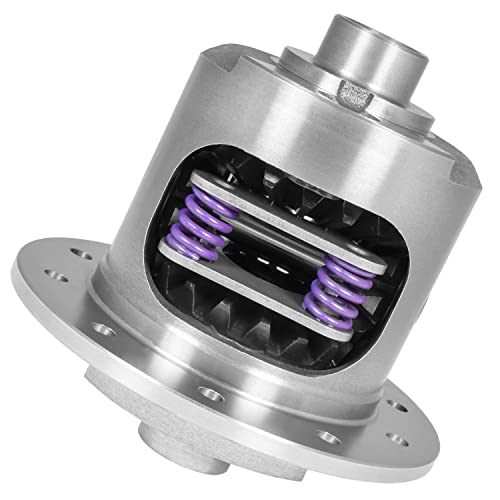
- Best for: GM F-body and G-body drift builds on the 10-bolt axle.
- GM 8.5 in. and 8.6 in. differentials, 2.73 and up ratios
- 30-spline axle fitment
- 4-spring clutch-style positraction
- Forged 4320 steel internals
All 5 Picks at a Glance
| Product | Specs | Action |
|---|---|---|
| Yukon Dura Grip Limited Slip Differential Positraction, 31 Spline, Ford 8.8 in. |
| Check price on Amazon |
| Eaton Detroit Truetrac Differential, Ford 8.8 in., 31 Spline |
| Check price on Amazon |
| Yukon Dura Grip Limited Slip Differential Positraction, GM 8.5 in., 30 Spline |
| Check price on Amazon |
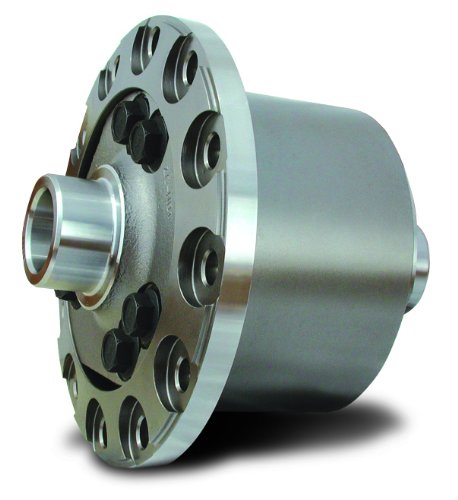 Eaton Detroit Truetrac Differential, GM 12-Bolt Truck, 30 Spline |
| Check price on Amazon |
| Eaton Detroit Truetrac Differential, Ford 8 in., 28 Spline |
| Check price on Amazon |
Key takeaways
- Five limited slip differentials for drift cars, from clutch-type positraction units to helical Truetracs, matched to Ford 8.8, GM 8.5 and GM 12-bolt axles.
A drift car lives or dies by its rear differential. An open differential sends power to the wheel with the least grip, which is why a stock car one-wheel-peels when it steps sideways, while a welded differential locks both wheels together always and makes the car fight every parking manoeuvre. A limited slip differential sits between those extremes, and the decision is which kind: a clutch-type unit that locks hard under power, or a helical unit that biases torque smoothly but never fully locks. Get that choice wrong and the car refuses to hold a slide or is miserable to drive between events.
This roundup is for Mustang and GM drift builds, street-driven slide cars and learners moving up from a welded diff. Every unit below was picked from the name and specifications on its Amazon product page, and every one fits a US-market axle — Ford 8.8, GM 8.5 or GM 12-bolt — because the Japanese clutch LSDs most drifters know sell through specialty importers rather than Amazon.
Quick Picks
As an Amazon Associate we earn from qualifying purchases
| Product | Best for | Key spec from title |
|---|---|---|
| Yukon Dura Grip Ford 8.8 | Mustang drift builds needing hard lockup | 31-spline clutch-type positraction for Ford 8.8 in. |
| Eaton Detroit Truetrac 913A561 | Street-driven Mustangs that drift on weekends | Helical-gear LSD, Ford 8.8 in., 31 spline |
| Yukon Dura Grip GM 8.5 | GM F-body and G-body drift builds | 30-spline clutch-type positraction for GM 8.5 in. |
| Eaton Detroit Truetrac 913A315 | GM 12-bolt truck-axle builds | Helical-gear LSD, GM 12-bolt, 30 spline |
| Eaton Detroit Truetrac 912A616 | Early Ford 8 in. axles in vintage builds | Helical-gear LSD, Ford 8 in., 28 spline |
How to Choose
Clutch-type or helical: the lockup decision
This is the first choice and it shapes everything else. A clutch-type LSD uses friction plates to push both rear wheels together under power, so when the car steps sideways both tyres keep turning and the slide stays controllable. A helical LSD uses gears instead of clutches, which means it biases torque toward the wheel with grip but never locks the two wheels together. For competition drifting the clutch-type unit is the standard because it holds a slide with less throttle input. For a car that still commutes, the helical unit is quieter, needs no rebuilds and asks nothing of the driver between events.
Fitment is not optional
An LSD is not a universal part, and ordering by car model alone is how drifters end up with a unit that does not fit. Three numbers decide fitment: ring gear size, axle spline count and gear ratio range. A Ford 8.8 inch unit will not fit a Ford 8 inch housing, and a 30-spline GM 8.5 unit will not slide onto 28-spline axles. Read the tag on the axle housing, check the ratio stamped on the ring gear and count the splines before ordering anything. Every pick below names its axle, spline count and ratio range, and that is the information to match against the car in the garage.
One-way, 1.5-way or 2-way
Clutch LSDs are also described by when they lock. A one-way unit locks under acceleration only, which suits grip driving but lets the rear go loose when the driver lifts off mid-slide. A 1.5-way unit locks fully on power and partially on deceleration, which is the most common compromise for cars that drift and still drive on the street. A 2-way unit locks hard in both directions, giving the most predictable slides and the most noise and tyre scrub in tight parking turns. Preload, the spring pressure that sets the initial lock, decides how aggressively the unit engages before the ramps take over.
Installation, oil and break-in
Fitting an LSD means removing the differential carrier, setting backlash and carrier bearing preload, and pressing on new bearings, so most drifters hand this job to a shop that builds rear ends. The oil matters as much as the hardware: helical units such as the Truetrac call for petroleum-mineral based GL5 80w-90 gear oil with no synthetic oil and no friction modifier, while clutch-type units need a limited-slip additive or the plates will chatter. After installation, gentle figure-eight driving beds the plates in, and clutch packs should be treated as a wear item with a rebuild interval that shortens with hard drift use.
The 5 Best Options
Yukon Dura Grip Limited Slip Differential Positraction, 31 Spline, Ford 8.8 in.
- Best for: Mustang drift builds that need real lockup on throttle.
- 31-spline fitment for Ford 8.8 in. axles
- 4-spring clutch-style positraction
- Forged 4320 chromoly spider gears
- High-strength nodular case
Mustang drift builds that need real lockup on throttle.
Clutch packs wear with hard use, so budget for rebuilds and use the correct limited-slip additive in the gear oil.
Built around a four-spring clutch pack, this Dura Grip is the most drift-appropriate unit in the roundup for the Ford 8.8 axle. The clutch design pushes both rear wheels together under power, which is exactly what a slide demands: the inside tyre keeps turning instead of spinning free while the outside tyre does all the work. Forged 4320 chromoly spider gears and a nodular case give the unit the strength to survive repeated clutch kicks, and the fully rebuildable design means worn clutches can be refreshed instead of replacing the whole carrier. It fits 31-spline 8.8 axles, the standard rear end under most drift-built Mustangs.
Eaton Detroit Truetrac Differential, Ford 8.8 in., 31 Spline
- Best for: Street-driven Mustangs that drift on weekends.
- Ford 8.8 in. ring gear, 31 splines, all gear ratios
- 1.32 in. axle shaft diameter
- Helical-gear design with no clutches to wear
- 25.25 lb unit weight (Eaton specification)
Street-driven Mustangs that drift on weekends.
Use petroleum-mineral based GL5 80w-90 gear oil only; the maker warns against synthetic oils and friction modifiers.
The Truetrac takes the opposite approach to the Dura Grip: helical gears instead of clutches. There is nothing to wear out and nothing to rebuild, and the unit engages smoothly and quietly, which makes it the easiest LSD in this roundup to live with on a car that still drives to the track. The trade-off matters for drifting, because a helical unit biases torque toward the wheel with grip rather than locking both wheels together, so holding a long slide takes more throttle commitment than a clutch-type unit. For a Mustang that splits its time between the street and the skid pad, that compromise is often the right one.
Yukon Dura Grip Limited Slip Differential Positraction, GM 8.5 in., 30 Spline
- Best for: GM F-body and G-body drift builds on the 10-bolt axle.
- GM 8.5 in. and 8.6 in. differentials, 2.73 and up ratios
- 30-spline axle fitment
- 4-spring clutch-style positraction
- Forged 4320 steel internals
GM F-body and G-body drift builds on the 10-bolt axle.
Confirm the spline count and ratio range against the axle tag before ordering; 28-spline and 30-spline GM 8.5 units are not interchangeable.
GM 10-bolt axles underpin a huge share of budget drift builds, from third- and fourth-generation F-bodies to G-body cars, and this Dura Grip is the clutch-type answer for them. The same four-spring clutch pack as the Ford 8.8 version delivers lockup under power, while the forged 4320 steel internals and nodular case are built to take the shock loads that come with clutch kicks and aggressive transitions. It fits 30-spline GM 8.5 and 8.6 inch differentials with 2.73 and up gear ratios. As with any clutch LSD, the plates are a wear item, so the rebuildable design is a genuine long-term advantage rather than a marketing line.
Eaton Detroit Truetrac Differential, GM 12-Bolt Truck, 30 Spline
- Best for: GM 12-bolt truck-axle builds that need a quiet, service-free LSD.
- GM 12-bolt truck axle, 8.875 in. ring gear
- 30 splines, 1.30 in. axle shaft diameter
- 3.73 and up gear ratios
- Helical-gear design with no clutches
GM 12-bolt truck-axle builds that need a quiet, service-free LSD.
The 3.73 and up ratio limit rules out taller gears, so check the ratio stamped on the ring gear first.
This Truetrac covers the GM 12-bolt truck axle, the heavy rear end found under older GM pickups and full-size cars that sometimes donate their drivetrains to drift builds. The helical gear set works the same way as the Ford version: smooth, quiet, automatic bias with no clutches to service and no additive to worry about. It is rated for 30-spline axles with 3.73 and up gear ratios and an 8.875 inch ring gear. The 12-bolt is a strong axle, but it is also a heavy one, so this pick suits a build where durability and street manners matter more than shaving weight from the rear end.
Eaton Detroit Truetrac Differential, Ford 8 in., 28 Spline
- Best for: Early Ford 8 inch axles in vintage or moderate-power drift builds.
- Ford 8.0 in. ring gear, 28 splines
- 1.20 in. axle shaft diameter, 3.25 and up ratios
- Helical-gear design with no clutches
- 16.27 lb unit weight (Eaton specification)
Early Ford 8 inch axles in vintage or moderate-power drift builds.
Order the required bearing and race with the unit, and respect the lighter duty rating of the 8 inch housing.
The smallest and lightest unit here, this Truetrac fits the Ford 8 inch rear axle found under early Mustangs, Falcons and other classic Fords that are increasingly being turned into vintage drift cars. The helical design keeps the car civilised on the road while still sending torque to the wheel with grip when the rear steps out. It takes 28-spline axles with 3.25 and up ratios. Two details matter at ordering time: the listing states that bearing LM102949 and race LM102910 are required, and the 8 inch axle is a lighter-duty housing than the 8.8, so it suits moderate-power builds rather than high-horsepower competition cars.
Which One Fits Your Situation
Mustang drift build that still drives to the track
If the car is a Mustang with a Ford 8.8 rear end that drives to events under its own power, the choice is between the two 8.8 units in this roundup. Pick the Yukon Dura Grip when holding long slides matters most, because the clutch pack locks both wheels together under power. Pick the Eaton Truetrac 913A561 when the car is mostly street-driven, because the helical gears are silent, need no rebuilds and never chatter in parking lots.
First LSD after a welded differential
Drivers moving up from a welded diff usually want lockup without the punishment, and the helical Truetrac units are the gentle landing. They engage automatically, they never clunk through slow corners, and there are no clutch plates to bed in or replace. Start with the Truetrac that matches the axle — 913A561 for a Ford 8.8, 913A315 for a GM 12-bolt, 912A616 for an early Ford 8 inch — and add a clutch-type unit later if the driving outgrows it.
GM F-body or G-body on a 10-bolt axle
Budget GM drift builds almost always run the 8.5 inch 10-bolt, and the Yukon Dura Grip for that axle is the pick here. The clutch-type lockup suits the way these cars are driven, with clutch kicks and hard transitions, and the rebuildable design matters because the plates will wear. Measure the spline count first: 30-spline axles take this unit, while 28-spline axles need the matching 28-spline version.
Classic Ford or GM truck-axle build
Older axles need older fitments. A classic Ford on the 8 inch housing takes the Truetrac 912A616, remembering to order the LM102949 bearing and LM102910 race the listing calls for. A build on a GM 12-bolt truck axle takes the Truetrac 913A315, provided the gears are 3.73 and up. Both are helical units, so they keep a vintage car pleasant on the road while still curing the one-wheel spin.
Common Mistakes
- Ordering by car model instead of ring gear size, spline count and ratio range — the axle tag decides fitment, not the badge on the car.
- Expecting a helical LSD to lock like a clutch-type unit, then blaming the diff when a slide will not hold.
- Skipping professional backlash and carrier bearing preload setup; a wrong setup destroys the ring and pinion in short order.
- Using the wrong gear oil — Truetrac units need mineral GL5 80w-90 with no synthetics or friction modifiers, while clutch units need a limited-slip additive.
- Forgetting bearings, races and install hardware, including the LM102949 bearing and LM102910 race the Ford 8 inch Truetrac requires.
Frequently Asked Questions
Can a helical LSD drift as well as a clutch-type LSD?
It can drift, but it does not hold a slide the same way. A helical unit biases torque toward the wheel with grip and never locks both wheels together, so the driver needs more throttle to keep the rear end out. A clutch-type unit locks under power and holds the slide with less effort. Learners and street cars often prefer the helical unit, while competition drivers choose the clutch type.
Is a welded differential better than an LSD for drifting?
A welded diff locks both wheels all the time, which makes slides very predictable and costs almost nothing, but it fights the car in every slow turn, scrubs tyres and stresses axles. An LSD gives most of the lockup under power while letting the wheels turn at different speeds off throttle. For a car that also drives on the road, the LSD is the better compromise.
Do I need a professional to install an LSD?
In most cases, yes. Fitting a carrier means setting backlash and bearing preload with shims and a dial indicator, and a small error can destroy the ring and pinion within a few miles. A shop that builds rear ends will also press on the new bearings and check the pattern on the gear teeth before the car goes back on the road.
How often does a clutch-type LSD need rebuilding?
It depends on how hard the car is driven. Street use can go a long time between rebuilds, while regular drift use wears the friction plates much faster. The rebuildable units in this roundup let a shop replace the clutch pack without buying a whole new carrier, which is why rebuildability matters more for a drift car than for a daily driver.
More from Amazon
Programs that pair well with the guide above. Offers and eligibility are set by Amazon and may change.
Free shipping on eligible items, Prime Video and more. Eligible new members can start with a free trial.
Start a Prime free trialAudiobooks and podcasts to listen to on the go. Eligible new members can start with a free trial.
Try Audible freeAd-free music streaming. Eligible new subscribers can start with a free trial.
Try Music Unlimited freeA free business account with business pricing and bulk-buying tools for work, shop or home office.
Create a business accountAs an Amazon Associate we earn from qualifying purchases.