Key takeaways
- Compare the best hood deflectors for trucks and SUVs, with honest notes on fitment, mounting styles, materials, and what they actually protect.
Disclosure: As an Amazon Associate, I earn from qualifying purchases.
The leading edge of a truck or SUV hood takes the worst of highway driving. Sand, gravel, and road grit blast that strip of paint first, and it is where stone chips and rust spots show up earliest. A hood deflector, also sold as a bug shield or hood protector, is a molded strip of acrylic, ABS, or similar plastic that mounts along that edge to take the hits instead.
It is worth being clear about what these parts do and do not do. A deflector genuinely protects the hood’s leading edge from stone chips, and its raised lip pushes some airflow, light debris, and insects up and over the hood. What it will not do is make your windshield bug-proof. Marketing photos suggest a clean windshield at highway speed, but in practice plenty of bugs and road spray still reach the glass. Buy a deflector to protect paint, and treat any windshield benefit as a modest bonus.
Fitment matters just as much. Hood deflectors are vehicle-specific parts, molded for one hood shape. A shield built for one generation of a truck will not fit the next, even if the model name is the same. Every pick below lists its exact fitment, so match the years to your vehicle first.
How to Choose
Start with exact fitment. Confirm the year range, model, and any trim exclusions in the listing against your vehicle. Hoods change with facelifts and special editions, and some trims with different hood shapes are excluded. If your trim is not listed, assume it does not fit rather than hoping it will.
Pick a profile. Low-profile, flush-mount shields sit tight against the hood and mainly guard the paint directly beneath them. High-profile shields stand off the hood on mounts, wrap further around the edges, and deflect more air and debris, but they are more visible and their raised edge can catch automatic car-wash brushes. Choose based on whether you want subtle paint protection or maximum deflection.
Check the material. Impact-modified acrylic is the traditional choice: rigid, glossy, and proven. ABS and TPE shields are more flexible and forgiving of minor impacts, and textured or matte finishes hide dust and light scuffs better than gloss.
Understand the mounting method. Tape-on shields use automotive adhesive and are only as good as the surface prep: clean, dry paint, warm weather, and firm, even pressure. Clip and fastener designs use existing holes under the hood edge and avoid adhesive entirely. Either way, install the supplied rubber bump stops wherever the instructions call for them. A shield that vibrates against bare paint will wear through the clear coat and damage the very paint it was bought to protect.
The Best Hood Deflectors
AVS Aeroskin II Hood Protector for Ford Bronco

Specs:
– Vehicle fit: 2021–2025 Ford Bronco
– Material: ABS thermoplastic
– Finish: Textured black
– Mounting: 3M automotive adhesive tape, no drilling
– Profile: Low profile, flush mount
The Aeroskin II is AVS’s flush-mount design, and this version is molded for the current-generation Bronco. It follows the hood’s leading edge closely, so it reads as a styling accent as much as a protective part. The textured black finish suits the Bronco’s rugged trim pieces and hides dust better than a gloss shield. Because it tapes directly to the hood surface, the paint underneath has to be thoroughly cleaned and dried first, and the adhesive needs warm conditions to bond properly. Protection is concentrated on the strip of hood the shield physically covers, which is exactly where Bronco hoods pick up chips on gravel roads and trails.
AVS Bugflector II Hood Shield for Ford F-150

Specs:
– Vehicle fit: 2021 and newer Ford F-150 (part 25621)
– Material: Impact-modified acrylic
– Finish: Dark smoke
– Mounting: Mechanical fasteners and tape, included; no drilling
– Profile: High profile, full wrap-around design
– Dimensions: 75.88 x 14.25 x 6.75 inches; 4 pounds
The Bugflector II is the classic raised-profile shield. It stands off the hood rather than lying on it, which leaves room to wash and wax behind it and gives its lip more leverage to redirect airflow, grit, and insects over the roofline. The wrap-around shape also covers the front corners of the fenders, an area flush shields leave exposed. The trade-offs are visibility and car-wash manners: a high-profile shield is a deliberate styling statement, and spinning wash brushes can catch its upper edge, so hand or touchless washes are safer. For a highway-driven F-150, this is the maximum-deflection option here.
Husky Liners Aeroskin Hood Protector for Honda Pilot

Specs:
– Vehicle fit: 2023–2026 Honda Pilot
– Material: DuraFlex polymer
– Finish: Smoke
– Mounting: Adhesive tape, no drilling
– Profile: Low profile, contour-molded
Family SUVs chip their hood edges too, mostly from highway commuting rather than trails. This Aeroskin is molded to the current Pilot’s hood contours and sits low and tight, so it looks close to a factory accessory. Husky’s DuraFlex material is a flexible polymer rather than rigid acrylic, which tolerates the small flex and minor impacts of daily driving well. As with every tape-on shield, the result depends on preparation: wash, dry, wipe the area down, test-fit before peeling any tape backing, and press evenly along the full length. Once bonded, it guards the most chip-prone strip of the Pilot’s hood without changing how the vehicle looks from the driver’s seat.
TripleAliners Hood Deflector Protector for Toyota Tacoma
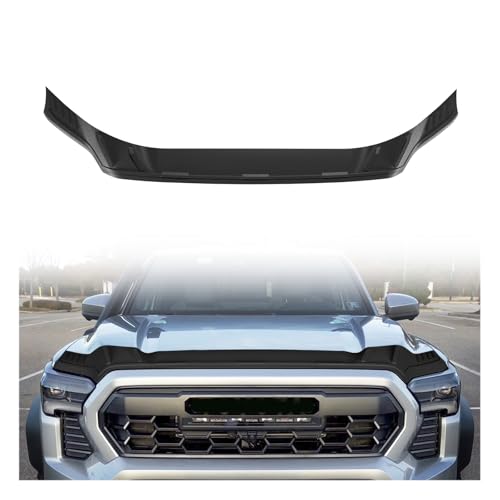
Specs:
– Vehicle fit: 2024–2026 Toyota Tacoma
– Material: TPE (thermoplastic elastomer)
– Finish: Matte black
– Fitment method: 3D laser-scanned, vehicle-specific molding
– Profile: Low profile
TripleAliners builds this shield from a 3D laser scan of the fourth-generation Tacoma’s hood, which is the right approach for a truck whose hood has pronounced sculpting. TPE is a rubber-like material, so the shield can flex slightly on contact instead of cracking the way a brittle part might, and the matte black finish matches the Tacoma’s black trim and fender flares. Because the fit is scan-based, alignment matters during installation: dry-fit the shield, mark its position, and only then commit to the mounting hardware and tape. Owners of 2023 and earlier Tacomas should not order this part, since the previous generation’s hood is a different shape entirely.
WeatherTech Hood Protector for Toyota Tacoma

Specs:
– Vehicle fit: 2016–2023 Toyota Tacoma (model 55100)
– Material: High-strength polycarbonate
– Finish: Black
– Mounting: No-drill installation with included fasteners and bump-ons
– Profile: Low profile, aerodynamic
For the previous Tacoma generation, WeatherTech’s hood protector is the established option. It is made from polycarbonate, a rigid and shatter-resistant plastic, and shaped to flow with the third-generation truck’s hood lines. The low-profile design keeps the look understated while covering the leading edge where gravel spray concentrates. WeatherTech supplies the fasteners and rubber bump-ons in the box; fit those bump-ons exactly where the instructions show, because they are what keep the shield from fretting against the paint at highway speed. This is a sensible pick for a high-mileage Tacoma whose hood edge is starting to show its age.
Usage and Buying Notes
Surface preparation decides whether a tape-on shield lasts for years or peels in a month. Install in warm, dry weather, wash and fully dry the hood edge, and use any adhesion promoter supplied in the kit. Avoid washing the vehicle during the curing period in the instructions.
Whichever style you choose, fit the bump stops. Shields flex and vibrate at speed, and an unprotected contact point will rub through clear coat and paint over a season or two.
Think about your wash routine before buying a high-profile shield. Brush-style automatic washes can snag a raised lip, flex it, and in the worst case tear it loose. Low-profile flush shields are far more forgiving in automatic washes, though touchless washing is gentler on both.
Removal, years later, is a patience job. Warm the shield gently with a heat gun or hair dryer to soften the adhesive, work it loose slowly, and clean residue with an automotive adhesive remover. Never pry against paint with a metal tool; a levered screwdriver does more damage in seconds than the deflector prevented in years.
Finally, set expectations honestly. A deflector protects the hood edge it covers and reduces some debris reaching the glass. It does not stop every bug or protect the rest of the hood, and it is no substitute for touching up chips before they rust.
FAQ
Does a hood deflector really keep bugs off the windshield?
Only partly. A raised shield redirects some airflow and light debris over the roof, so you may see fewer bugs on the glass, but it will not keep the windshield clean. The reliable benefit is stone-chip protection for the hood’s leading edge, and that is the reason to buy one.
Will a hood deflector fit my truck if the model name matches?
Not necessarily. Deflectors are molded for specific year ranges and sometimes exclude certain trims with different hoods. A shield for one generation of a truck will not fit the next generation. Always match the exact years and trim notes in the listing to your vehicle.
Can a hood deflector damage my paint?
It can if installed carelessly. If the shield contacts the hood without the supplied rubber bump stops, vibration will wear the paint at those points. Tape residue and trapped grit under a flush shield are lesser risks that proper prep and installation largely prevent.
Are hood deflectors safe in automatic car washes?
Low-profile, flush-mount shields usually are, but high-profile shields that stand off the hood can catch spinning brushes. If you use brush washes regularly, choose a low-profile design or switch to touchless washes, and check the shield’s mounting after the first few washes.
How do I remove an old hood deflector without hurting the paint?
Warm the adhesive with a heat gun or hair dryer on a low setting, ease the shield off slowly with steady pressure rather than prying, then remove leftover adhesive with a purpose-made automotive adhesive remover and a soft cloth. Work patiently and keep metal tools away from the paint.
Conclusion
The right hood deflector is the one molded for your exact vehicle, in the profile that matches how you drive and wash it. The Bugflector II offers the most deflection for F-150 owners, the flush AVS and Husky Liners options keep things subtle on the Bronco and Pilot, and Tacoma owners are covered for both generations by TripleAliners and WeatherTech. Buy for paint protection first, install the bump stops, and treat any cleaner windshield as a welcome extra.
More from Amazon
Programs that pair well with the guide above. Offers and eligibility are set by Amazon and may change.
Free shipping on eligible items, Prime Video and more. Eligible new members can start with a free trial.
Start a Prime free trialAudiobooks and podcasts to listen to on the go. Eligible new members can start with a free trial.
Try Audible freeAd-free music streaming. Eligible new subscribers can start with a free trial.
Try Music Unlimited freeA free business account with business pricing and bulk-buying tools for work, shop or home office.
Create a business accountAs an Amazon Associate we earn from qualifying purchases.