Key takeaways
- Five bench vises for garage work, from a reversible Yost and a rotating-head Forward to compact Wilton and TEKTON models, with jaw and throat specs.
A bench vise is the third hand every garage job eventually needs. Holding an alternator steady while its pulley nut comes off, gripping a U-joint cap for pressing, or keeping a bracket still under a drill all go faster and safer when the part is clamped instead of balanced on the bench. The five vises below cover the realistic spread of home garage work: a heavy reversible model for big castings, a rotating-head vise for long parts, two compact 4-inch vises for smaller benches, and a mid-size combination vise with pipe jaws. Each pick is a current Amazon listing with its key dimensions and ratings stated, so the differences come down to capacity, materials and mounting rather than marketing.
As an Amazon Associate, we earn from qualifying purchases.
Quick answer
For most home garages, the Yost 855-D2 is the buy once choice: ductile iron, a reversible jaw that opens to 9.75 inches, and pipe jaws in one fixture. The Forward HY-DT150B-6IN suits long parts thanks to its rotating head, the Wilton 11104 and TEKTON 54004 fit smaller benches, and the Yost 445 splits the difference with pipe jaws at 4.5 inches.
Yost Vises 855-D2 Industrial Grade Reversible Vise

The Yost Vises 855-D2 is the heavy-duty anchor of this group, built around a 5.5-inch jaw and a body cast from 60,000 PSI ductile iron, a material grade rated at twice the strength of the gray iron used in lighter vises. Its defining feature is the reversible front jaw. In the standard position the jaws open to 6 inches with a 3.75-inch throat depth; reverse the front jaw and capacity grows to 9.75 inches, enough for wide brackets, small subframe parts and bulky castings that will not fit a conventional vise. Clamping force is rated at 7,500 pounds, driven by a 5/8-inch screw with a redesigned nut and collar. The machinist jaws are reversible as well, with a serrated face for metal and a smooth face for finished parts, and the pipe jaws below them are replaceable and grip round stock from 0.125 to 3 inches. Two machined anvils provide flat striking surfaces for shaping and straightening. The 360-degree swivel base locks down with two handles, and four mounting tabs bolt the 42-pound vise to the bench, though mounting hardware is not included. Yost covers the 855-D2 with a limited lifetime warranty. It suits a permanent garage bench where one vise has to cover everything from pressing bearings to straightening bent brackets.
Forward HY-DT150B-6IN Heavy Duty Bench Vise
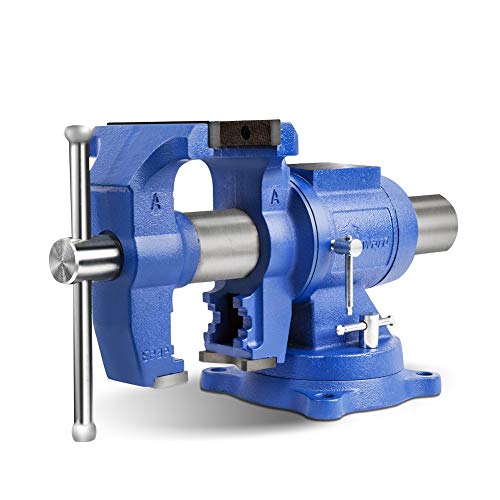
The Forward HY-DT150B-6IN takes a different approach to versatility: both its base and its head rotate a full 360 degrees, so a clamped part can be repositioned without being released. The ductile iron body carries 6-inch jaws that open to 5 inches, with a throat depth of 2-5/8 inches and a separate pipe jaw rated for stock from about 0.6 to 2.5 inches in diameter. Forward rates the clamping force at 5,500 pounds. A built-in anvil sits behind the rear jaw for light hammer work such as flattening brackets or setting rivets. At 42 pounds net, it is a substantial bench fixture, and the maker specifies four 7/16-inch bolts, sized about 2 inches longer than the bench top is thick, for mounting; the Amazon listing shows bolts among the included components. The rotating head is the real draw for automotive work: exhaust sections, driveshaft components and long trim pieces can be swung into a comfortable working angle instead of being wrestled around a fixed vise, and the head locks with its own handle once positioned. The trade-off is throat depth, which is shallower than the Yost and Wilton designs here, so tall parts held vertically sit closer to the screw. Forward backs the vise with a one-year parts replacement warranty against manufacturing defects.
Wilton 11104 General Purpose Bench Vise
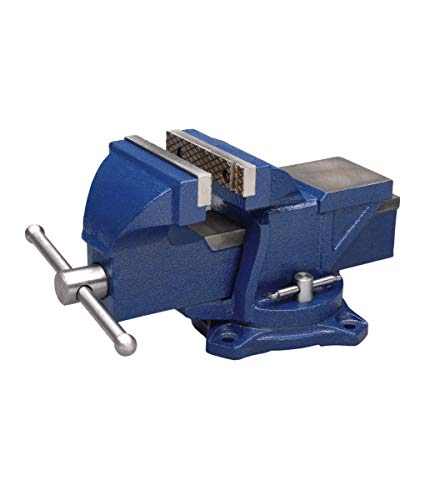
The Wilton 11104 is the traditional choice in this group: a compact general-purpose vise from the best-known name in bench vises. Its 4-inch jaws open to 3 inches, with a throat depth of 2-1/4 inches, dimensions aimed at small and medium parts rather than large castings. The body is cast from 30,000 PSI gray iron, and the grooved steel jaw inserts bite into metal stock and can be replaced when they wear smooth. The swivel base rotates 120 degrees and secures with double lockdowns, which keeps the vise from creeping when a breaker bar leans on a clamped fastener. A large anvil work surface behind the rear jaw handles light straightening and forming work. At about 16 pounds, the 11104 is the lightest bolt-down vise in this roundup, which makes it a sensible fit for a smaller bench or a bench top that cannot carry a 40-pound fixture. Wilton lists a lifetime warranty for the model. For holding alternator brackets, small suspension hardware, mower blades and similar garage staples, it covers the everyday workload without dominating the bench, but the 3-inch opening rules it out for wide stock, and there are no pipe jaws, so round tubing needs a different solution or a set of soft jaw caps.
TEKTON 54004 4-Inch Swivel Bench Vise

The TEKTON 54004 is the compact light-duty pick, a 4-inch vise built from 30,000 PSI cast iron with a black powder-coated finish. Its jaws open to 3 inches and the throat depth is 2 inches, so it is sized for small parts: carburetor and throttle-body hardware, bicycle and mower components, fasteners that need filing or drilling, and similar bench-scale jobs. The serrated steel jaw inserts are replaceable, which matters on a vise at this size because the jaw teeth take most of the wear. A polished anvil area behind the rear jaw gives a flat spot for light hammer taps and small forming work. The base swivels 120 degrees and locks with dual lockdown nuts, and the base mounts through three holes. Mounting bolts are not included, so plan on sourcing hardware matched to the bench top thickness. At just under 15 pounds, it is easy to unbolt and store if bench space is shared with other projects. TEKTON backs the 54004 with a lifetime warranty. It is not the vise for pressing bearings or wrestling rusted suspension bolts loose, and there are no pipe jaws, but as a first vise or a second small vise dedicated to detail work, it covers the light-duty end of the garage spectrum honestly and without taking over the bench.
Yost Vises 445 Combination Vise

The Yost Vises 445 is the smaller combination vise in Yost’s utility line, pairing 4.5-inch main jaws with a permanent pipe jaw underneath. The body is cast from 30,000 PSI gray iron with a steel U-channel bar, and the hardened steel top jaws are serrated and replaceable. Jaw opening is 4 inches, throat depth is 2-5/8 inches, and the pipe jaw handles stock from 0.125 to 2 inches, which covers common garage jobs such as holding tie rods, threaded rod and small pipe steady while it is cut or threaded. A large anvil work surface sits behind the rear jaw for flattening and light shaping. The base swivels a full 360 degrees and locks down, so long parts can be angled across the bench instead of into the wall behind it. That combination layout is what separates the 445 from the two 4-inch vises above: it gives up a little jaw width to the 855-D2 but keeps the pipe capacity those compact vises lack, in a footprint that suits a home garage bench. Yost lists a one-year warranty for the 445. It fits a mechanic who wants one mid-size vise for mixed flat and round stock without stepping up to the weight and bench space the reversible 855-D2 demands.
How to choose
Start with capacity. Jaw width tells you how wide a part the vise can grip, jaw opening tells you how thick, and throat depth tells you how far from the jaw edge the screw sits, which decides whether tall parts clear the slide. A 4-inch vise handles most small hardware; suspension and driveline work pushes toward 5.5 or 6 inches. Next, look at the casting. Ductile iron rated at 60,000 PSI resists cracking under hammer blows and heavy clamping better than 30,000 PSI gray iron, which is adequate for ordinary holding but less forgiving of abuse. Pipe jaws matter if round stock is part of the workload; combination vises build them in, while plain machinist vises omit them. A swivel base earns its keep on long parts, but only if the lockdowns hold firmly. Replaceable jaw inserts extend service life because the teeth wear first. Finally, plan the mounting: through-bolts with washers and lock nuts, sized to the bench top, hold far better than lag screws. None of the five models in this guide appears in a CPSC recall notice; even so, check any used vise’s model number against the recall database before bolting it down.
Who should skip
Skip this category if the work is woodworking joinery, which calls for a front vise with wide wooden jaws, or precision machining, which needs a ground machine vise rather than a bench vise. Anyone with only a thin or hollow bench top should look at clamp-on vises instead of these bolt-down models, and drill-press work belongs in a drill-press vise that mounts to the machine table.
FAQ
What size bench vise do most home mechanics need?
A 4-inch vise covers small parts and light hardware, but a 5- to 6-inch vise is the better single choice for automotive work because suspension brackets, brake components and driveline parts are wider and heavier. Match jaw opening and throat depth to the largest part expected, not just jaw width, since all three dimensions limit what fits.
Is ductile iron worth choosing over cast iron?
Ductile iron rated around 60,000 PSI bends further before it fractures, so it tolerates hammer work on the anvil and heavy clamping loads better than 30,000 PSI gray cast iron. Gray iron remains fine for holding parts during cutting, filing and drilling. The gap shows up under abuse, not in everyday clamping, so occasional users can accept the lighter casting.
Can a bench vise hold exhaust pipe and threaded rod?
Yes, if it has pipe jaws. The shaped or serrated pipe jaws below the main jaws grip round stock without it spinning while it is cut or threaded. Vises without pipe jaws can hold short round pieces in the main jaws with soft jaw caps, but long pipe will rotate under a hacksaw, so a combination vise is the safer pick.
How thick should a workbench be for a bolt-down vise?
A solid top around 1.5 to 2 inches thick handles a mid-size vise; heavier vises deserve a thicker top or a reinforcing plate underneath. Use through-bolts with large washers and lock nuts rather than lag screws, and position the vise so the fixed jaw hangs just past the bench edge, letting long parts hang vertically to the floor.
Final verdict
The Yost 855-D2 is the strongest all-round pick here, with ductile iron construction, a reversible jaw and pipe capacity that covers nearly any garage job. Choose the Forward HY-DT150B-6IN when long parts and working angles matter most, the Yost 445 for a mid-size combination vise, and the Wilton 11104 or TEKTON 54004 when bench space and weight set the limit.
Product and ASIN Reference
| Product | ASIN |
|---|---|
| Yost Vises 855-D2 Industrial Grade Reversible Vise | B00YS405Z4 |
| Forward HY-DT150B-6IN Heavy Duty Bench Vise | B08SVQDR6J |
| Wilton 11104 General Purpose Bench Vise | B00101V1S8 |
| TEKTON 54004 4-Inch Swivel Bench Vise | B00FJXYKCW |
| Yost Vises 445 Combination Vise | B009ACC7GY |
More from Amazon
Programs that pair well with the guide above. Offers and eligibility are set by Amazon and may change.
Free shipping on eligible items, Prime Video and more. Eligible new members can start with a free trial.
Start a Prime free trialAudiobooks and podcasts to listen to on the go. Eligible new members can start with a free trial.
Try Audible freeAd-free music streaming. Eligible new subscribers can start with a free trial.
Try Music Unlimited freeA free business account with business pricing and bulk-buying tools for work, shop or home office.
Create a business accountAs an Amazon Associate we earn from qualifying purchases.